
Too Many Ideas, Too Little Breath: Yeon Sang-ho Stumbles in the Overstuffed VR Thriller ‘Paradise Lost’
By Film Critic & Entertainment Staff
Published following the premiere at the Toronto International Film Festival
Main Facts
South Korean cinematic maestro Yeon Sang-ho, celebrated internationally for high-octane blockbusters like Train to Busan and Psychokinesis, returns with a starkly different stylistic offering in his latest feature, Paradise Lost. Premiering to a mixed response at the 2026 Toronto International Film Festival, the film shifts away from visceral action set-pieces to grapple with high-concept science fiction, grief, and morality.
However, Paradise Lost struggles under the weight of its own ambition. The narrative collides three distinct, sprawling concepts: virtual reality as an artificial coping mechanism for parental grief; the shocking return of a missing child after a decade-long absence; and a convoluted, malformed saga exploring sociopathy and learned violence.
While the film boasts a strong central performance by Kim Hyun-joo as a grieving mother, critics have noted that the project suffers from a distinct lack of narrative focus. By attempting to juggle a tri-pronged story within a tight runtime, Yeon fails to afford any single theme enough room to breathe. Currently seeking U.S. distribution following its festival debut, the film has drawn comparisons to Hirokazu Kore-eda’s Cannes entry Sheep In the Box, yet it ultimately stumbles by refusing to deeply interrogate its own profound moral and emotional implications.
Chronology of a Premise: From Tragedy to Virtual Obsession
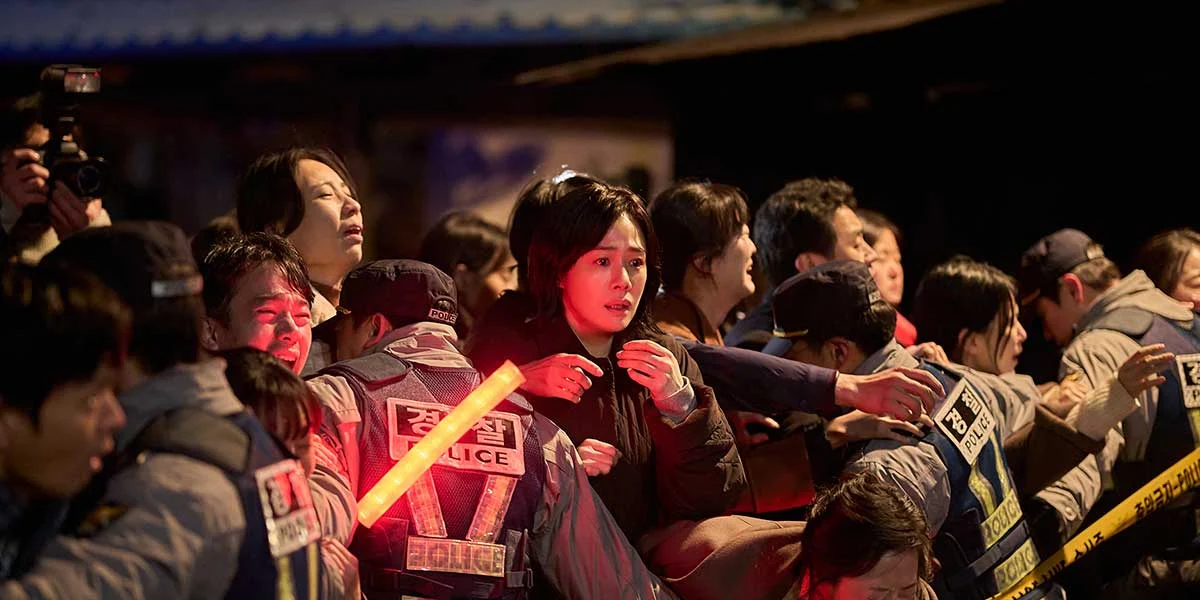
For roughly its first half hour, Paradise Lost establishes its foundational premise with an effective, if familiar, sense of dread. The film opens by establishing the "how" and "why" of its central tragedy. Single mother So-young (Kim Hyun-joo) waves goodbye to her adorable tween son, Sun-woo, as he boards a bus for a school camp. An ominous atmosphere hangs over the departure, and So-young’s maternal instincts immediately register that something is wrong.
Her worst fears are realized when the bus goes missing. Authorities eventually recover the vehicle near an unstable mine, revealing a horrific crime scene: the bus driver and a teacher are found dead alongside about half of the students. The remaining children are never found, officially classified as missing and presumed dead.

This tragedy paves the way for "Children of Paradise," a project spearheaded by a powerful tech conglomerate named Transhuman. The corporation swoops in to offer grieving parents a digital lifeline, creating virtual reality avatars of the deceased children to aid in the mourning process.
For the next nine years, So-young lives on the precipice of a digital dream state. Through specialized VR glasses, she interacts with a perpetual ghost-child—a Sun-woo who remains forever frozen at the age he was when he vanished, running through their home and offering a simulated illusion of family.
While most other parents eventually step away from their digital avatars, choosing to confront reality and move on with their lives, So-young remains trapped in amber. Her fragile routine is shattered when she receives an unexpected call from the police, asking her to come down to the station. A breakthrough DNA test reveals that a troubled young drifter (Bae Hyun-sung) is, in fact, her long-lost son, setting up a jarring collision between pristine digital memories and a harsh, complicated truth.
Abdication of Emotional Conflict
As the narrative progresses, Paradise Lost begins throwing an excessive number of plot devices at the wall to see what sticks. Rather than maintaining a tight focus on the psychological tug-of-war between an artificial coping mechanism and a real-world reunion, Yeon expands the scope into thriller territory.
It is soon revealed that the teenage Sun-woo possesses a violent streak and is a prime suspect in a parallel criminal investigation. Instead of forcing So-young—and the audience—to wrestle with the agonizing philosophical questions of whether her virtual memories hold more value than a deeply flawed reality, the film relies on predictable twists. By introducing violent extremes and criminal culpability, the movie conveniently sidesteps nuanced moral decisions, opting instead for a lurid procedural format.

Furthermore, Bae Hyun-sung’s character is underutilized as a dramatic vehicle. Rather than embodying the emotional complexity of a broken family reunion, the troubled young adult serves primarily as an expository device to verbalize the film’s underlying themes.
Supporting Data and Production Context
- Director: Yeon Sang-ho, renowned for Train to Busan (2016), Psychokinesis (2018), and the Netflix sci-fi film Jung_E (2023).
- Cast: Kim Hyun-joo (So-young) and Bae Hyun-sung (the teenage Sun-woo).
- Festival Circuit: Premiered at the 2026 Toronto International Film Festival (TIFF).
- Current Status: Seeking U.S. theatrical and streaming distribution.
- Thematic Parallels: Frequently compared to Hirokazu Kore-eda’s Cannes entry Sheep In the Box, which similarly explores artificial copies of children presumed dead (though utilizing an android rather than VR technology).
- Critical Reception: Awarded a grade of C+ by initial reviewers, who praised the lead performances but criticized the overstuffed script and predictable narrative trajectory.
Official Responses and Critical Consensus
While no major studio press releases have defended the film against its creative choices, the critical consensus from TIFF paints a clear picture of a misfire from a normally reliable auteur. Reviewers have highlighted a stark contrast between Paradise Lost and Yeon’s previous science-fiction outings.
Unlike Jung_E, which utilized bombastic action and whiz-bang futuristic combat to mask its philosophical musings on android consciousness, Paradise Lost strips away the spectacle. Because the film relies entirely on So-young’s quiet, domestic predicament, the lack of narrative depth becomes glaringly apparent.
Critics have pointed out that conversations between So-young and Transhuman executives constantly gesture toward profound ethical quandaries regarding technology and grief. However, because the script telegraphs its conclusions in "bright lights," there is little room left for audience interpretation, doubt, or genuine emotional resonance.
Implications: The Limits of Digital Coping and Sci-Fi Tropes
Paradise Lost ultimately serves as a cautionary tale within contemporary cinema about the perils of over-complicating a premise. By refusing to engage directly with the emotional "Catch-22s" of its futuristic setup, the film highlights a recurring trap in modern sci-fi storytelling: prioritizing plot mechanics over human stakes.
- The Commercialization of Grief: The introduction of Transhuman’s "Children of Paradise" touches upon a very real, growing societal anxiety regarding artificial intelligence, digital legacy, and the commodification of grief. Yet, by turning the narrative into a crime procedural, the film waters down its commentary on how technology alters the human mourning process.
- Auteur Fatigue and Scope Management: Yeon Sang-ho has long been praised for his ability to nestle intimate character drama within high-concept genre frameworks (such as zombie outbreaks or superhero awakenings). Paradise Lost demonstrates the limits of this approach when multiple disparate genres—domestic drama, virtual reality sci-fi, and gritty crime thrillers—are forced into a single, constrained narrative without adequate room to breathe.
- The Future of the Project: As Paradise Lost searches for a U.S. home, its festival reception suggests that its primary appeal will rest on the star power of Kim Hyun-joo and Yeon Sang-ho’s brand recognition, rather than word-of-mouth enthusiasm for the narrative itself. Whether future audiences will look past its structural flaws to appreciate its bleak musings on memory and motherhood remains to be seen.
