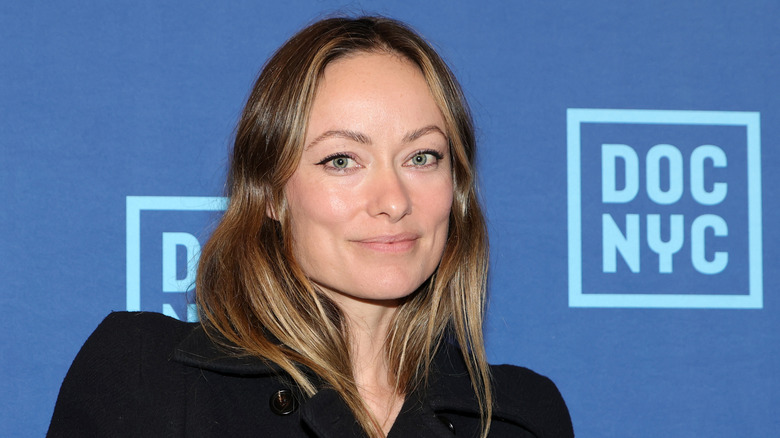
Breaking New Ground: Deconstructing Olivia Wilde’s Philosophy on Comfort, Art, and Creative Risk
Main Facts
In an industry defined by calculated risks and commercial formulas, actor and director OliviaWilde has consistently championed the disruptive power of discomfort. Central to her artistic philosophy is a profound conviction that true innovation only occurs when creators willingly step away from security.
This ethos is encapsulated in one of her most defining reflections:
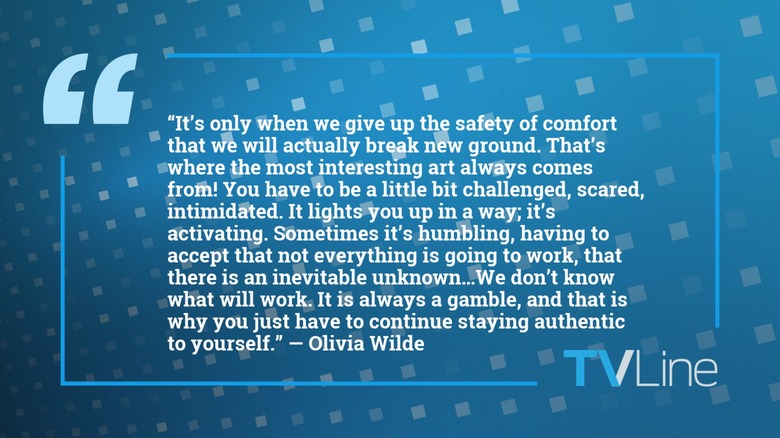
"It’s only when we give up the safety of comfort that we will actually break new ground. That’s Where the most interesting art always comes from! You have to be a little bit challenged, scared, intimidated. It lights you up in a way; it’s activating."
Drawn from a retrospective look at her career and a revealing 2022 interview with The Talks, this perspective underpins Wilde’s evolution from a recognizable face in teen television dramas to a daring feature film director. Whether portraying complex characters like Alex Kelly in The O.C. or Remy "Thirteen" Hadley in House, or stepping behind the camera to helm critically acclaimed projects like Booksmart and Don’t Worry Darling, Wilde has routinely rejected creative complacency. Her philosophy serves as a blueprint for modern artists navigating the delicate balance between commercial viability and authentic expression.
Chronology: From Television Staple to Feature Filmmaker
Early Career and Television Breakthroughs
Olivia Wilde’s trajectory in the entertainment industry spans more than two decades, marked by a steady transition from prominent television roles to cinematic storytelling.
The Early 2000s: Wilde established her presence on the small screen with memorable arcs in high-profile television series. Most notably, she portrayed the charismatic and boundary-pushing Alex Kelly across the fourth season of Fox’s teen drama phenomenon, The O.C.
The Mid-2000s to Early 2010s: She cemented her dramatic range by starring as the brilliant, enigmatic intern Dr. Remy "Thirteen" Hadley on the medical procedural juggernaut House. Alongside these breakout roles, she lent her talents to diverse projects, including HBO’s rock-and-roll drama Vinyl, animated staples like BoJack Horseman and Robot Chicken, and indie comedy landscapes like Portlandia.
Crossing Over into Feature Films
As her television footprint expanded, Wilde concurrently built a diverse filmography. Her movie credits span multiple genres, featuring major studio blockbusters like Tron: Legacy and Cowboys & Aliens, alongside psychological thrillers and dramas such as The Lazarus Effect and I Want Your Sex. However, her most transformative professional pivot occurred when she transitioned from acting to directing.
Directorial Ascendance
2019 (The Directorial Debut): Wilde made her feature-length directorial debut with Booksmart, a sharp, critically lauded coming-of-age comedy chronicling two high-achieving graduating seniors determined to reclaim their social adolescence before heading to college.
2020: The gamble paid off substantially when Booksmart earned the Independent Spirit Award for Best First Feature, proving Wilde’s viability as a distinctive voice behind the camera.
2022 (The Release of Don’t Worry Darling): Wilde followed her debut with the psychological thriller Don’t Worry Darling, a high-concept feature that demanded immense logistical and creative navigation amid unprecedented global challenges.
Supporting Data and Context: The Making of Don’t Worry Darling
To fully appreciate the weight of Wilde’s statement regarding comfort and risk, one must examine the real-world crucible in which her second feature film, Don’t Worry Darling, was produced.
While promoting the film, Wilde frequently contextualized her artistic philosophy against the immense hurdles encountered during production. Conceptualized as a commentary on societal control and revolutionary awakening, the film was subjected to the compounding pressures of the COVID-19 pandemic—an event that fundamentally disrupted global filmmaking protocols.
Production Realities: According to behind-the-scenes accounts shared by Wilde, keeping a massive studio production afloat during a global health crisis required navigating rigid safety protocols, budget anxieties, and intense media scrutiny.
The Director’s Mandate: Speaking on the realities of leadership during this period, Wilde noted that her primary responsibility as a director was to "keep people on the path, despite challenges that ranged from the typical filmmaking challenges like budget to others like a global pandemic."
Statistical and Critical Reception: Despite polarizing discourse surrounding its theatrical release, Don’t Worry Darling grossed over $87 million worldwide against a production budget estimated at $35 million, proving that bold, high-concept original cinema could still command box office attention in a post-pandemic market.
Wilde’s willingness to lean into the chaos of production directly mirrors her alignment with creative icon David Bowie’s philosophy, which she frequently invokes: “Swim out creatively. Swim out just past the point where your feet touch the ground, that’s when you’re getting somewhere.”
Official Responses and Industry Perspectives
Wilde’s candid discussions about the vulnerability required to make art have resonated widely across the entertainment community. Industry peers and critics have frequently analyzed her directorial choices through the lens of calculated risk-taking.
Navigating the Unknown
In her 2022 interview with The Talks, Wilde elaborated on the psychological toll—and subsequent reward—of embracing uncertainty:
"Sometimes it’s humbling, having to accept that not everything is going to work, that there is an inevitable unknown… We don’t know what will work. It is always a gamble, and that is why you just have to continue staying authentic to yourself."
Critics have often pointed to this sentiment when evaluating her career choices. Moving from the secure, highly lucrative world of established network television into the precarious realm of independent and mid-budget original directing embodies the exact artistic gamble she describes.
Industry Reactions to Her Directorial Style
Praise for Boldness: Supporters within the critical establishment have lauded Wilde for avoiding safe, predictable career trajectories. Her choice to tackle ambitious thematic material—from female adolescent sexuality in Booksmart to subverted domesticity in Don’t Worry Darling—demonstrates a commitment to challenging audiences rather than pandering to them.
The Discourse of Resilience: Public relations and production challenges surrounding Don’t Worry Darling thrust Wilde into the center of relentless media speculation. Observers noted that her public response mirrored her private philosophy: maintaining forward momentum and creative authenticity even when facing intense public scrutiny and industry-wide intimidation.
Implications: What Wilde’s Philosophy Means for Modern Storytelling
Olivia Wilde’s meditation on the necessity of discomfort carries broad implications for the future of cinematic and television storytelling. In an era dominated by intellectual property revivals, sequels, and algorithm-driven content, creative safety has arguably never been more financially incentivized.
The Cost of Creative Homogeneity
When studios and creators prioritize risk-aversion, the resulting art often lacks the friction necessary to provoke thought or inspire cultural conversation. Wilde’s assertion—that "the most interesting art always comes from" giving up comfort—serves as a vital counter-narrative to corporate risk mitigation. By advocating for projects that make creators feel "scared" or "intimidated," she highlights the functional necessity of tension in the creative process.
Redefining Success and Failure
Furthermore, Wilde’s framing of failure as an "inevitable unknown" destigmatizes the messy realities of artistic ambition. In an ecosystem quick to punish missteps, her perspective encourages both emerging and established creators to view setbacks not as career-ending catastrophes, but as natural byproducts of breaking new ground.
As Wilde continues to expand her portfolio—including television contributions to projects like The Studio—her steadfast refusal to retreat into comfort zones remains a defining characteristic of her career. For artists, actors, and directors alike, her journey stands as a persistent reminder that the most rewarding creative territory always lies just beyond the shoreline, where the feet can no longer touch the bottom.