
The 2026 Oscar Race: How the Fall Festival Circuit Reshaped the Academy Landscape
As the frenetic, neon-soaked energy of the fall film festival season—spanning the canals of Venice, the high-altitude air of Telluride, and the sprawling urban corridors of Toronto—begins to settle, the hazy outlines of the 2026 Academy Awards race have finally snapped into sharp, unforgiving focus. For months, industry pundits and awards strategists have been engaged in a high-stakes game of speculation, but the "stress test" of public and critical reception has now acted as the ultimate arbiter. While some films have withered under the heat of early hype, others have emerged as undeniable juggernauts, positioning themselves as the heavyweights for the upcoming Oscar season.
The Titans of the Season: Blockbuster Aspirations
At this critical juncture, the narrative of the Best Picture race is dominated by two massive, critically lauded blockbusters. Amazon MGM’s Project Hail Mary and Universal’s The Odyssey have separated themselves from the pack, not merely through sheer scale, but by managing to balance the spectacle of modern cinema with the narrative depth that Academy voters crave.
Both films are currently projected to dominate the "below-the-line" craft categories. Industry insiders suggest that these titles are near-certainties for nominations in Best Cinematography, Best Production Design, Best Film Editing, and Best Sound. Their success suggests a return to a trend where the Academy rewards technical mastery on a grand scale, provided it is anchored by a compelling, human-centric story.

A Chronology of Consensus: From Venice to Toronto
The trajectory of this year’s race has been defined by a specific chronology of events. It began with the initial pulses from Cannes and Sundance, where early contenders were introduced to the world. However, the true litmus test occurred in late summer and early autumn.
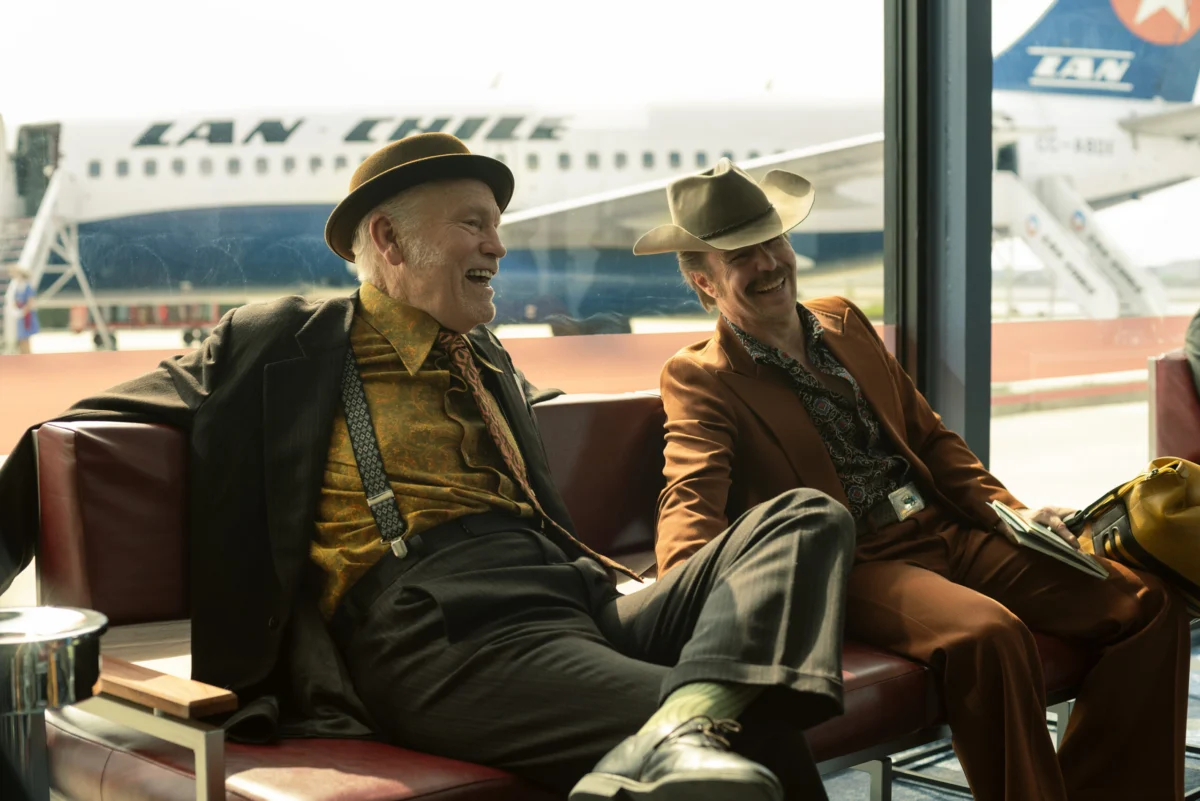
- Venice (The Launchpad): The Volpi Cup for Best Actor, awarded to John Malkovich for his tour-de-force performance in Wild Horse Nine, signaled that Searchlight Pictures had a serious contender on its hands.
- Telluride (The Refinement): The mountain festival served as the venue for the "reassessment" of films like Mike Leigh’s Tender Loving Care. Here, the focus shifted from hype to critical endurance.
- Toronto (The Populist Verdict): The Toronto International Film Festival (TIFF) concluded with the all-important People’s Choice Awards. While TIFF winners have historically mirrored the Best Picture race, the emergence of Netflix’s La Bola Negra as the first-place finisher marks a significant shift. The film is now a bonafide frontrunner, proving that international, non-English language cinema remains a dominant force in the quest for the industry’s top prize.
Supporting Data: The Impact of Audience and Jury Awards
The data provided by the festival circuit is clear: audiences and juries are gravitating toward films that emphasize world-building and ensemble acting. The TIFF People’s Choice runners-up, Being Heumann (Apple) and I Play Rocky (Amazon MGM), underscore this, but the surprise international favorite, Elsinore, highlights a growing appetite for high-concept, English-language UK productions that bypass traditional genre constraints.
Furthermore, the Best Casting Oscar, a relatively new addition to the Academy’s roster, is becoming a primary indicator of a film’s overall strength. Films that utilize complex, diverse, and world-building casting—such as the top three TIFF winners—are essentially signaling their intent to be considered for the wider Best Picture field. The Academy’s recent history, which saw One Battle After Another take the trophy, suggests that voters are looking for projects that utilize casting to ground expansive, ambitious storytelling.

Critical Analysis: The Contenders by Category
Best Picture: The Heavyweights
Martin McDonagh’s Wild Horse Nine (Searchlight) is perhaps the most stable entry in the current race. Its reception at both Venice and Telluride was uniform in its glowing praise. The film’s 1970s Easter Island aesthetic, captured by cinematographer Ben Davis, provides a visual texture that the Academy historically rewards.
Meanwhile, Jordan Firstman’s Club Kid—a breakout success from Cannes—has defied the odds. Despite not placing at the TIFF People’s Choice, its word-of-mouth momentum is substantial. In an era where social media and cultural conversation drive "event cinema," Club Kid is the quintessential underdog that could realistically disrupt the status quo.
Acting: A Battle of Legends and Newcomers
The acting categories are defined by a clash between veteran icons and fresh, visceral talent. Julianne Moore, starring in Jesse Eisenberg’s The Debut, remains a powerhouse contender for Best Actress, even as the film itself struggles with perceptions of being "too idiosyncratic" for a broad Best Picture win.

In the Best Actor race, the narrative is thick with stars who have yet to take home the gold. Names like Tom Cruise, Matt Damon, and Ryan Gosling are perpetually in the conversation, but John Turturro’s performance in The Only Living Pickpocket in New York has emerged as a dark horse. Given his status as a legendary character actor who has never been nominated, the sentimentality factor alone could propel him into the final five.
International Feature: The Global Vanguard
The category of Best International Feature is effectively a race for second place, with La Bola Negra (Spain) currently appearing untouchable. However, the competition remains fierce. Lee Chang-dong’s Possible Love (South Korea), distributed by Netflix, has gained significant traction as a Venice Grand Jury Prize winner.
The struggle for the remaining shortlist spots is equally intense. While Cristian Mungiu’s Fjord (Romania) and Paweł Pawlikowski’s Fatherland (Poland) entered the season with immense prestige, their momentum has stalled. The Academy’s international branch often pivots toward fresh discovery, which may favor films like the Danish entry Woman Unknown or the French-Russian hybrid Minotaur.

Documentary Feature: The Non-Fiction Conflict
The documentary race is, as always, unpredictable. The presence of Oscar winners like Chai Vasarhelyi and Jimmy Chin with Everest: The Other Side brings a pedigree that voters find hard to ignore. Conversely, the experimental, rule-breaking You Can See Everything (A24) represents the radical side of the genre.
Alex Gibney’s Musk is a wild card. Gibney, a previous Oscar winner, has found himself on the outside looking in during recent years; if the Academy decides to acknowledge his profile of the controversial billionaire, it could be one of the most talked-about nominations of the year. Finally, NAZA has captured the political zeitgeist, and its strong distribution plan makes it a near-certainty for a nomination, even if its subject matter makes it a difficult watch for a broad, traditionalist voting base.
Implications for the Industry
The 2026 awards season is shaping up to be a reflection of the industry’s current identity crisis. Studios are banking on massive, high-budget epics like The Odyssey to bring audiences back to theaters, while the Academy voters themselves seem increasingly drawn to smaller, deeply personal, and highly stylized stories like Tender Loving Care or The Debut.

The rise of international films in the Best Picture conversation is no longer a "surprise" but a structural reality of the modern Academy. This shift necessitates a change in how distributors market their films. A singular focus on domestic box office is becoming less relevant than the "festival footprint" and the ability to generate a narrative that spans multiple international markets.
As we head into the voting window, the final composition of the nominations will depend on which films can maintain their momentum through the quiet months of late autumn. For the frontrunners, the task is to avoid overexposure while staying relevant; for the dark horses, the challenge is to turn the passionate whispers of the festival circuit into a deafening roar that reaches the ears of the Academy’s voting body. One thing is certain: the 2026 Oscars will be a testament to a year where the definition of "prestige" continued to evolve, favoring ambition, diversity, and the relentless pursuit of the singular, human voice.
