
The Shadow of 1974: Hur Jin-ho’s The Assassin(s) Reimagines a National Trauma
In the landscape of South Korean cinema, few directors possess the nuanced sensitivity of Hur Jin-ho. Best known for his evocative romances, Hur takes a sharp, unexpected turn into the territory of high-stakes political thriller with his latest feature, The Assassin(s). The film serves as a stylized, clockwork investigation into the 1974 assassination attempt on South Korean strongman Park Chung-hee—an event that claimed the life of First Lady Yuk Young-soo and a young bystander.
Drawing stylistic parallels to Oliver Stone’s JFK, Hur does not merely recount history; he dissects the "holes" in the official narrative, crafting an imaginative mystery that pits the pursuit of journalistic truth against the suffocating reach of the Korean Central Intelligence Agency (KCIA). While the film bears a clear disclaimer regarding its fictionalized nature, its resonance with the national psyche is palpable, offering a propulsive, cinematic exploration of corruption, censorship, and the high cost of dissent.
The Chronology of a Botched Tragedy
To understand the weight of The Assassin(s), one must look at the historical backdrop of 1974. On August 15th, during a Liberation Day ceremony at the National Theater of Korea in Seoul, Mun Se-gwang, a Zainichi Korean (an ethnic Korean resident of Japan) with alleged ties to North Korean sympathies, opened fire on President Park Chung-hee. The attempt failed to assassinate the leader, but the chaos resulted in the tragic death of First Lady Yuk Young-soo and a high school student in the audience.
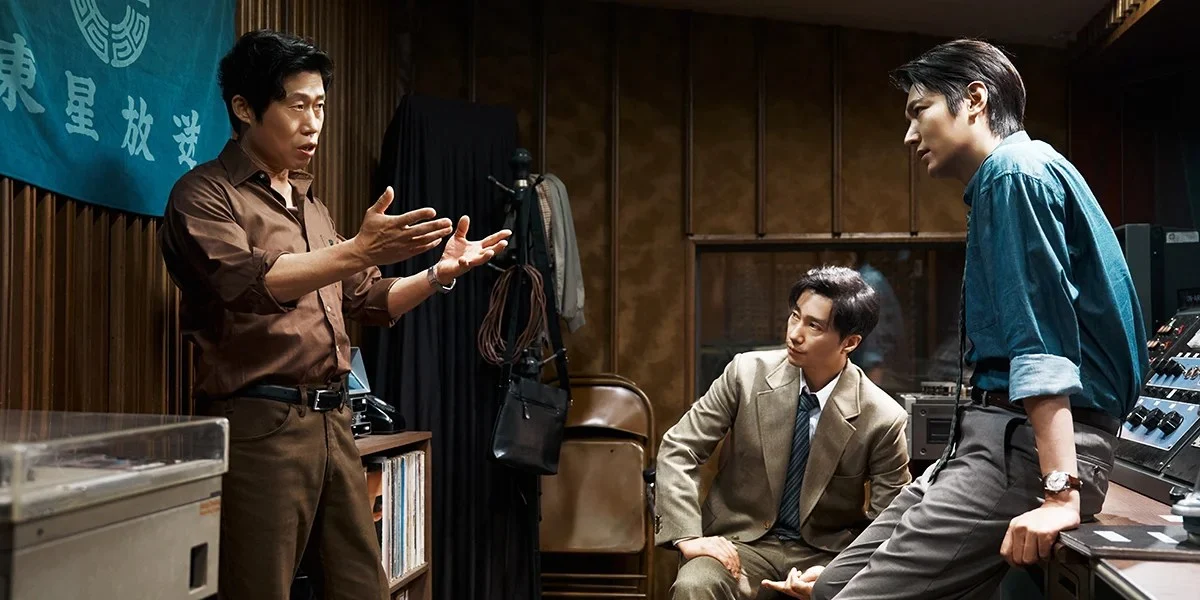
Hur’s narrative begins in the claustrophobic newsrooms of the Dong-sung Daily. The film posits that the assassination was not merely a lone-wolf operation, but a "botched" job that served darker, systemic interests. The story follows three central figures: the fiery rookie reporter Young-il (Lee Min-ho), the world-weary City Desk lead Jae-hwan (Park Hae-il), and the diligent, if beleaguered, detective Cheol-goo (Yoo Hai-jin).
As the film tracks the days leading up to the speech, it builds a procedural tension that mirrors the real-world frustration of a nation under authoritarian thumb. The KCIA is portrayed as an omnipotent force, haranguing the press and suppressing the realities of the political landscape. By centering the investigation on the journalists’ attempt to peel back these layers, Hur turns a historical tragedy into a tense, character-driven cat-and-mouse game.
Supporting Data: A Cast of Conspirators and Truth-Seekers
The strength of The Assassin(s) lies in its ensemble, which effectively grounds the high-concept conspiracy in human stakes. Lee Min-ho’s performance as Young-il provides the emotional anchor for the film; as the younger brother of a government-connected official, he occupies a precarious position between the establishment and his desire to report the truth. His firsthand witness of the shooting becomes the catalyst for the film’s second act.
Park Hae-il, portraying the seasoned Jae-hwan, embodies the exhaustion of the era’s intelligentsia. His collaboration with detective Cheol-goo (Yoo Hai-jin) offers a rare bridge between the legal system and the free press. One of the film’s most riveting sequences involves Cheol-goo’s attempt to bar the assassin from the auditorium, only to be overruled by senior authorities—a moment that serves as the smoking gun for the protagonists’ investigation into state-sponsored collusion.
The supporting cast, featuring Park Hoon as a menacing KCIA agent and Bae Seong-woo as a conflicted newspaper editor, rounds out a "murderer’s row" of talent. These characters are not mere archetypes; they are manifestations of the moral friction inherent in a society where "journalistic integrity" is a revolutionary act. The editing, which cuts between these probes with lightning speed, creates a sense of urgency that makes the eventual revelations feel both earned and explosive.
Official Responses and the Mechanics of Denial
In the context of the film’s internal logic, the state’s response to the tragedy is one of calculated obfuscation. The KCIA is depicted not just as a security apparatus, but as an entity that manages "truth" through censorship and intimidation. The film delves into the complexities of the Zainichi identity, using the assassin’s background to explore the fraying tensions between North and South Korea, and the weaponization of these tensions by domestic actors to maintain control.
While The Assassin(s) is a work of fiction, it mirrors real-world concerns regarding the actual investigation of the 1974 incident. The official account provided by the government at the time was frequently questioned by observers who noted inconsistencies in the security lapses and the assassin’s background. By highlighting these "holes," Hur taps into a long-standing national mood of anti-authoritarianism. The film acknowledges that it is not providing the "answer" to the mystery, but rather a visceral, melodramatic tribute to those who dared to ask the questions that the state sought to bury.
Implications: Cinema as a Mirror of National Trauma
The success of The Assassin(s)—which notably took home the second runner-up for the International People’s Choice Award at the Toronto International Film Festival—lies in its ability to synthesize historical pain into mass entertainment. It is a "cover-up" movie that luxuriates in the process of discovery: the frantic flipping through archives, the hushed meetings in smoke-filled bars, and the realization that the danger is not coming from the shadows, but from the halls of power themselves.
The film’s implications are twofold. First, it serves as a testament to the enduring power of investigative journalism in the face of suppression. Even in a fictionalized environment, the sight of journalists "poking their noses where they shouldn’t" resonates with modern audiences who continue to grapple with the fragility of a free press.
Second, it reflects the evolving relationship between South Korean cinema and the country’s turbulent 20th-century history. By choosing to treat the Park Chung-hee era as the source material for a high-octane thriller, Hur is acknowledging that the wounds of the past are not yet healed. The "frustrated anti-authoritarianism" mentioned in the film’s critical reception is a hallmark of the contemporary Korean zeitgeist—a desire to reclaim history from the narrative of the victors and rewrite it through the eyes of the witnesses.
Ultimately, The Assassin(s) is a triumph of narrative engineering. It transforms forensic malfeasance into a gripping, popcorn-munching experience without stripping the events of their gravity. Whether or not one accepts the film’s specific conspiracy theories, the emotional truth remains: in the face of state-mandated silence, the act of speaking truth to power is the most dangerous—and the most necessary—thing a citizen can do.
Hur Jin-ho has succeeded in creating more than just a political thriller; he has crafted a cinematic monument to the spirit of inquiry. In an era where history is often manipulated for political gain, The Assassin(s) reminds us that the quest for the truth, however incomplete, is the only way to hold the architects of history accountable.
