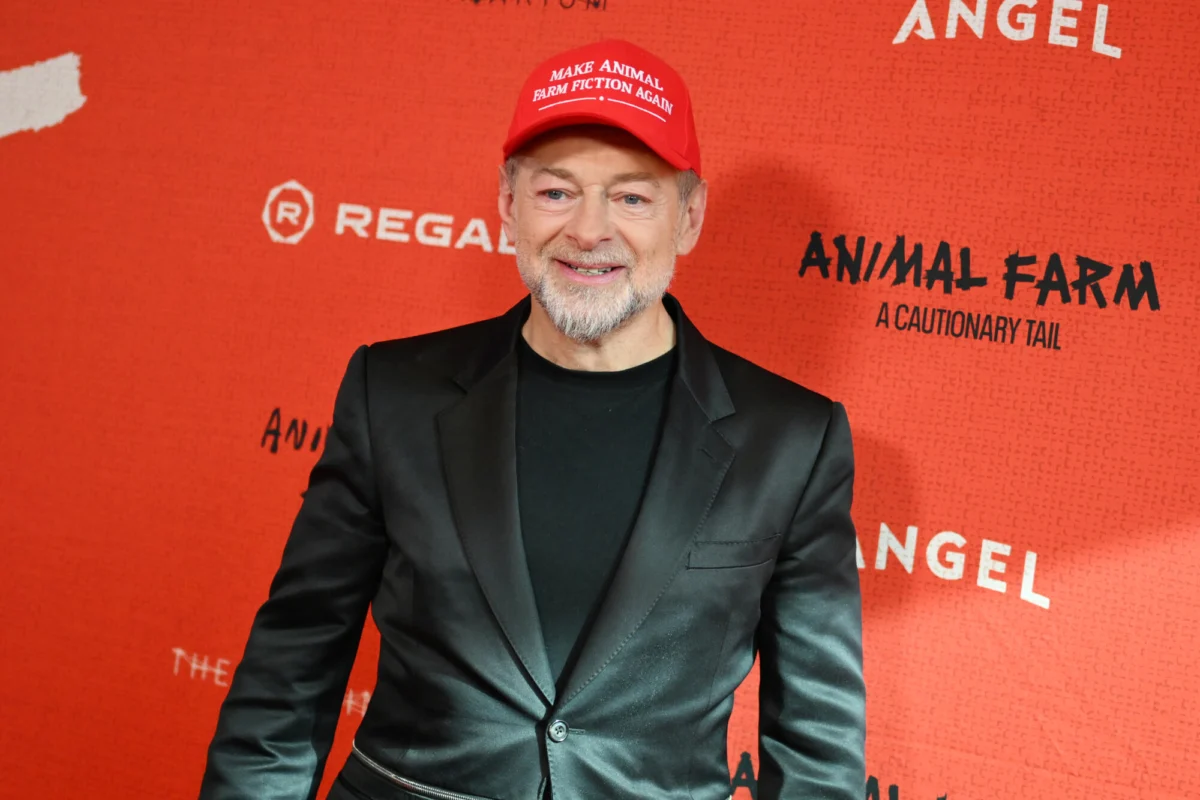
Revolution on the Rebound: Inside Andy Serkis’ Animated Reimagining of George Orwell’s ‘Animal Farm’
Main Facts
GeorgeOrwell’s AnimalFarm has endured for nearly eight decades as literature’s most concise and biting allegory for the corruption of revolutionary ideals and the inevitable slide into authoritarianism. Traditionally understood as a direct satire of the Soviet Union’s political trajectory through the first half of the 20th century, the source material deals in uncompromising cynicism. However, master of performance capture and director AndySerkis has injected a radically different vision into his newly released animated adaptation, distributed by Angel Studios.
Serkis’ Animal Farm is an ambitious cinematic experiment that began its long-form life as a motion-capture project before pivoting decisively toward traditional computer-generated animation. Rather than leaning into the grim, photorealistic aesthetic pioneered by modern blockbusters, the production deliberately threw off the shackles of strict realism. The result is an accessible, family-friendly cautionary tale featuring an all-star voice cast that includes Seth Rogen as the tyrannical pig Napoleon, Laverne Cox as the revolutionary idealist Snowball, Glenn Close as Freida Pilkington, and Serkis himself voicing the oppressive human antagonist, Farmer Jones.
While critics have noted that Serkis’ adaptation broadens the narrative scope to include unconventional elements like rap songs, physical comedy, and an explicit refusal to let absolute evil extinguish all hope, the film stands as a fascinating technical and creative milestone. By stepping away from the grim, harrowing visuals of early concept art, Serkis crafted a world that balances profound political critique with a vibrant, universally accessible aesthetic.
Chronology: From Motion-Capture Ambitions to Animated Reality
The journey of bringing Serkis’ Animal Farm to the screen has been an extended, evolutionary process defined by technical pivots and deep collaboration.
Early Development & The Mo-Cap Phase: Initially conceived as a motion-capture film, the project tapped into Serkis’ unparalleled expertise in translating human acting nuances into digital creatures—a skill set he famously honed bringing characters like Gollum, Caesar, and King Kong to life. Early tests, however, revealed that photorealistic rendering imposed severe limitations on the narrative’s tone. The initial animal designs were unforgiving and brutal, showcasing visible rib cages on starving creatures and far more menacing, gluttonous pigs.
The Pivot to Animation: Recognizing that a hyper-realistic approach would alienate younger audiences and render the violence excessively grim, the production made the bold decision to shift to a stylized animated medium. This transition allowed the filmmakers to establish a visual safety margin, enabling viewers of all ages to engage with the heavy themes of revolution and betrayal.
Worldbuilding and Department Collaboration: With production moving heavily into traditional animation pipelines, Serkis collaborated closely with set designer Amos Sussigan and specialized layout and story teams. Building the world from scratch—from every individual blade of grass and farm machinery to the sweeping landscape of the farm itself—demanded a pace drastically different from live-action filmmaking.
Voice Recording and Iteration: Throughout production, the voice cast recorded scratch tracks and refined their performances. Freed from the physical constraints of camera setups, lens changes, and lighting resets, actors like Rogen and Cox spent years looping dialogue, exploring character choices, and experimenting with delivery in front of the microphone.
Theatrical Release: Following years of meticulous multi-departmental iteration and meticulous editing of animatics, Animal Farm made its official theatrical debut under the banner of Angel Studios.
Supporting Data and Production Metrics
Translating a complex allegorical text into a multi-layered animated feature required a distinct structural methodology, massive cross-departmental coordination, and a tailored approach to vocal performance.
Cast and Crew Highlights:
Director: Andy Serkis
Key Voice Talent: Seth Rogen (Napoleon), Laverne Cox (Snowball), Glenn Close (Freida Pilkington), and Andy Serkis (Farmer Jones).
Key Collaborators: Set Designer Amos Sussigan (from Anaventure).
Distributor: Angel Studios.
The Mechanics of Animation vs. Live-Action:
In live-action film production, a director captures a scene on a given day, securing a tangible version of the footage that moves immediately into the editing room.
In contrast, animated features require directors to hold scenes in various stages of completion in their minds for years. Because scenes pass through multiple hands—from layout and story teams to visual effects and lighting departments—the timeline is heavily protracted.
Economic and Creative Constraints:
Budgetary limitations frequently force directors to "kill their darlings" during the animatic and pre-visualization phases, long before the film ever reaches a final editing timeline or sound mix stage.
Voice Actor Freedom:
Unburdened by physical blockings or technical resets, actors experienced a unique creative liberation. Being stationed solely in front of a microphone allowed the cast to perform multiple rapid iterations of dialogue, fostering an environment where naturalistic acting choices could be precisely mapped onto creature-like faces.
Official Responses and Creative Insights
Reflecting on the challenges and breakthroughs of the production, Andy Serkis has offered extensive commentary on why this specific iteration of Animal Farm required a departure from traditional cinematic norms.
Speaking to IndieWire, Serkis characterized the film’s ultimate aesthetic as "a cautionary tale that has a whole heap of innocence around it." He elaborated on why photorealism was ultimately abandoned in favor of a softer, more stylized visual approach:
"The very early designs for the animal characters were much more unforgiving and brutal. When animals looked like they were starving, you could see their rib cages; the pigs were a lot more gluttonous and just looked meaner. There is a version of that film that could exist, but we wanted to reach out to a younger audience."
This commitment to accessibility did not mean sacrificing emotional resonance. Serkis deliberately utilized tight close-ups and an animation style that emulated the subtle, naturalistic acting choices typical of motion-capture performances:
"I wanted the audience to reach out to the characters and to really feel — when the camera’s pushing in on a character’s face — what they’re going through. And not to feel that the animators had to overperform it, as such. That was a really interesting part of the process."
Addressing the immense logistical shift from live-action and video game direction (such as his work on Mowgli: Legend of the Jungle and Venom: The Last Dance) to full-scale animation, Serkis highlighted the sheer scale of building an animated environment:
"You build every blade of grass, every piece of farm machinery, the entire world… Getting to the end of a scene on an animated movie can take years because it goes through so many different hands and skills. So it was wonderful getting to know all the different departments in the animation team and to work with actors who were animators and be able to direct them in an interesting way."
Finally, praising the unique freedom afforded to his ensemble cast, Serkis noted how the recording booth transformed the traditional acting dynamic:
"If someone gives me the freedom to find a performance, I’ll try lots of different things. Standing in front of the mic, not having to reset camera, change lenses, do setups, you know, just being able to go into another round? It’s a great way of working, and it’s a very creative way of working for an actor."
Implications for Adaptation and Family Cinema
Andy Serkis’ Animal Farm occupies a unique space in contemporary cinema, offering several vital takeaways regarding how classic literature is adapted for modern, multigenerational audiences.
Broadening Political Allegories for All Ages: By intentionally softening the brutal realism found in Orwell’s text and early concept art, Serkis’ film challenges the notion that political satire must be inherently grim or exclusionary. While purists may debate the inclusion of lighter comedic beats and an optimistic rejection of total despair, the film opens a gateway for younger demographics to engage with foundational concepts of power, corruption, and systemic abuse.
The Evolution of Hybrid Performance Techniques: Serkis’ career has consistently bridged the gap between human performance and digital artistry. By applying the emotional granularity of motion-capture direction to traditional animation pipelines, the film sets a stylistic precedent for how character-driven digital features can maintain emotional intimacy without relying on uncanny valley photorealism.
The Marathon of Modern Animation Direction: The production underscores the immense psychological and organizational demands placed on filmmakers transitioning from live-action timelines to multi-year animation pipelines. The necessity of maintaining a unified creative vision across hundreds of artists over extended periods highlights the rigorous discipline required to bring animated literature to life on the big screen.
As Animal Farm continues its theatrical run via Angel Studios, it remains a testament to creative reinvention—proving that even the most well-worn dystopian allegories can find fresh breath when filtered through a lens of stylized imagination and collaborative innovation.