Hollyland Unveils the LARK M3: A Revolutionary Scalable, Broadcast-Grade Audio System Redefining Multi-Person and Multi-Camera Production
In the fast-paced ecosystem of modern digital content creation, the traditional paradigm of a single creator speaking into a solitary wireless microphone has given way to complex, collaborative, and multi-faceted productions. Whether shooting a dynamic panel interview, a multi-host podcast, or an intricate narrative scene utilizing multiple camera angles, capture challenges have historically required cumbersome workarounds, multiple discrete audio kits, and synchronization nightmares in post-production.
Addressing these friction points head-on, Hollyland has announced the official launch of the Hollyland LARK M3, an innovative, scalable, broadcast-grade wireless audio system. Featuring a flexible architecture that supports up to four transmitters and four receivers within a single ecosystem, the LARK M3 promises to bridge the gap between studio-level fidelity and the fluid demands of contemporary videography. Designed to adapt effortlessly to any shooting scenario—from one-to-many broadcasts to many-to-one recording matrices—the LARK M3 is poised to redefine how creators capture pristine audio across diverse production workflows.
Main Facts: The Core Architecture of the LARK M3
At the heart of the Hollyland LARK M3 is a paradigm shift in wireless audio architecture. Moving beyond the rigid limitations of traditional one-to-one or standard two-mic wireless systems, the LARK M3 introduces a highly scalable network of interconnected transmitters (TX) and receivers (RX).
Unprecedented Configuration Flexibility
The system’s standout capability lies in its bi-directional scalability, configurable up to a maximum of four transmitters and four receivers:
Many-to-One Architecture: Up to four independent transmitters can be linked to a single receiver. This allows multi-person panels, group interviews, and collaborative podcasts to ensure every participant wears their own dedicated microphone. Voices are recorded independently, entirely eliminating the awkward shuffling or passing of a single handheld mic.
One-to-Many Architecture: Conversely, a single transmitter can simultaneously broadcast to up to four receivers. This configuration is a game-changer for solo speakers, educators, or event hosts whose voices need to be captured concurrently by multiple cameras, smartphones, or recording decks without signal degradation.
Broadcast-Quality Acoustic Specifications
Despite its compact footprint and high degree of flexibility, the LARK M3 does not compromise on raw audio performance. It captures sound at a pristine 48kHz/32-bit float audio standard, offering immense dynamic headroom that safeguards against clipping during unexpected volume spikes. The system boasts an impressive 70dB signal-to-noise ratio (SNR) and a maximum Sound Pressure Level (max SPL) of 125dB, ensuring that everything from a quiet whisper to a booming vocal performance is rendered with studio-grade clarity.
Advanced Wireless Transmission
Leveraging Hollyland’s proprietary HDT (High-Definition Transmission) wireless technology, the LARK M3 moves audio data 50% faster than conventional systems. This high-speed data rate secures a richer, more detailed sound profile while maintaining rock-solid stability over extended ranges, supporting line-of-sight distances of up to 300 meters (approx. 984 feet).
Chronology: The Evolution Toward Collaborative Content Creation
To understand the industry significance of the LARK M3, it is helpful to trace the chronological evolution of content creation tools over the past decade, a trajectory defined by miniaturization, democratization, and the relentless rise of multi-camera workflows.
Phase 1: The Era of Tethered and Analog Solutions (Pre-2018)
In the early days of digital video and DSLR filmmaking, capturing wireless audio meant dealing with bulky UHF or VHF beltpacks, prone to radio frequency (RF) interference, static, and complex frequency scanning. Multi-person interviews required expensive multi-channel rack units typically reserved for broadcast television studios or high-end professional sound stages. Independent creators relied heavily on wired lavaliers or cumbersome audio recorders tethered directly to subjects.
Phase 2: The Compact 2.4GHz Wireless Boom (2019–2023)
The introduction of compact 2.4GHz digital wireless systems—pioneered by brands like Hollyland with their earlier Lark iterations—revolutionized the market. Creators gained access to lightweight, clip-on transmitters that paired instantly with receivers plugged directly into cameras or smartphones. While these systems democratized professional audio, they remained fundamentally bound to a strict two-transmitter, one-receiver limit. Creators shooting with three or four participants were forced to purchase and synchronize multiple discrete kits, introducing massive complexities in post-production audio mixing.
Phase 3: The Multi-Device Shift and the Birth of the LARK M3 (2024–Present)
As platforms like YouTube, TikTok, and corporate video networks shifted toward highly collaborative, multi-camera formats (such as live-streamed podcasts, reaction channels, and multi-angle event coverage), the limitations of standard two-mic systems became a major bottleneck. Producers routinely faced the challenge of syncing audio feeds across a primary camera, a B-cam, a smartphone for vertical video, and a backup recorder.
Hollyland’s development of the LARK M3 represents the natural culmination of this evolutionary timeline. By engineering a system that natively scales up to four transmitters and four receivers—complemented by intelligent AI noise suppression and four-track isolated recording—Hollyland has directly addressed the modern creator’s need for a unified, highly adaptable audio infrastructure.
Supporting Data: Engineering Excellence and Technical Deep Dive
A closer examination of the LARK M3’s hardware and software ecosystem reveals a suite of thoughtful engineering choices aimed at streamlining professional workflows from set to post-production.
Four-Track Independent Recording in Post-Production
Flexibility on set is only valuable if it translates to control in the edit bay. When paired with a hot shoe adapter, or when connecting a USB-C or Camera receiver directly to a computer, the LARK M3 facilitates four-track independent recording.
Isolated Tracks: Each speaker’s audio is recorded to a completely isolated channel.
Post-Production Control: Sound editors and video creators retain full autonomy in post-production to adjust individual track volumes, apply targeted EQ, or gate background noise without affecting the other participants’ audio stems.
Intelligent AI Noise Cancellation and Voice Tuning
Environmental acoustics can ruin an otherwise perfect take. The LARK M3 integrates advanced AI noise cancellation powered by deep learning and computational auditory scene analysis. This system dynamically targets and suppresses common field disturbances—such as wind buffeting, urban traffic rumble, and running water—across three adjustable intensity levels.
Furthermore, the system features a Custom Voice Tuning utility:
One-Tap Vocal Enhancement: Instantly optimizes vocal clarity across all active transmitters.
Eight Vocal Presets: Users can assign specific presets to individual transmitters via the companion mobile app, tailoring the sound profile to unique vocal characteristics (e.g., warmer tone, crisper highs).
Auto-Limit Clip Protection: Continuously monitors dynamic ranges to prevent digital clipping, ensuring that sudden shouts or laughter do not distort the audio stream.
Primary/Secondary Receiver Redundancy: To guarantee that recording never catastrophically fails, the system supports a Primary and Secondary RX setup. If the primary receiver experiences interference or drops connection, the secondary receiver instantly assumes control of the data stream.
Ergonomics, Form Factor, and Battery Life
Weighing in at a mere 9 grams per transmitter, the LARK M3 is engineered to be virtually invisible and entirely unburdensome when clipped to delicate clothing. It utilizes a flexible magnetic mounting system, allowing creators to attach transmitters securely without damaging fabric.
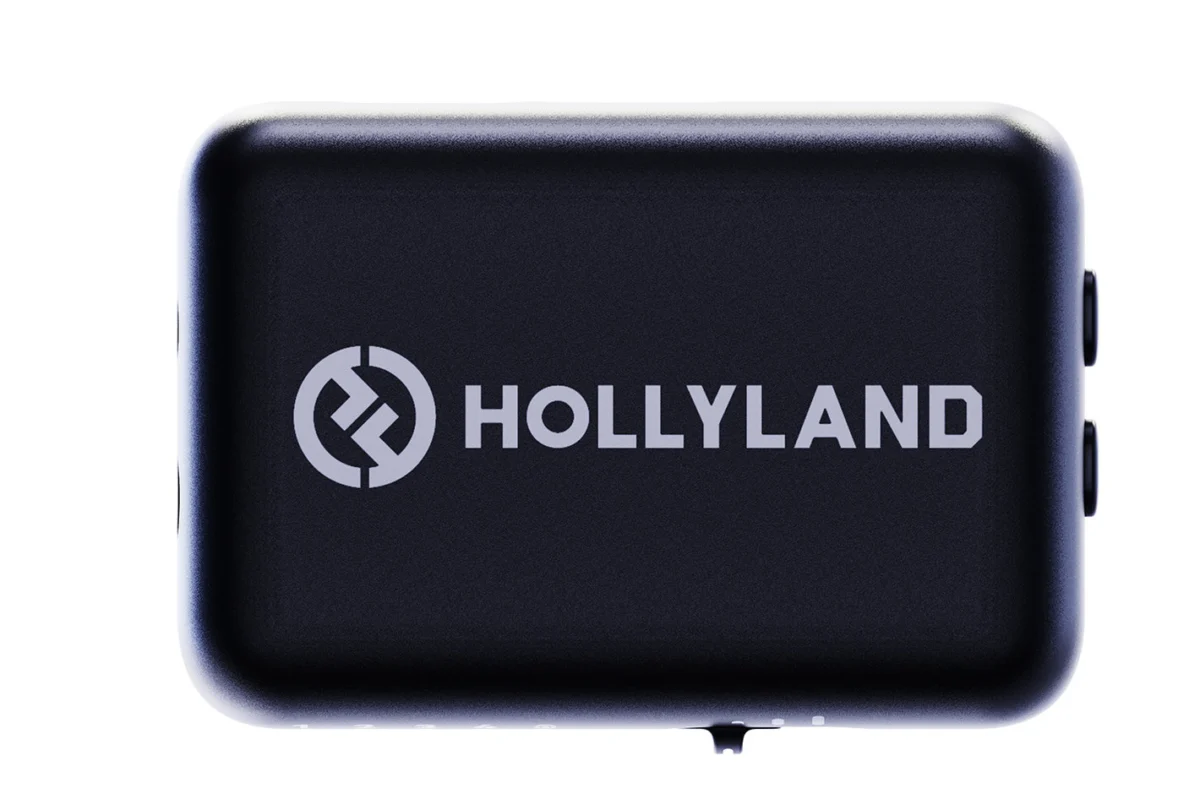
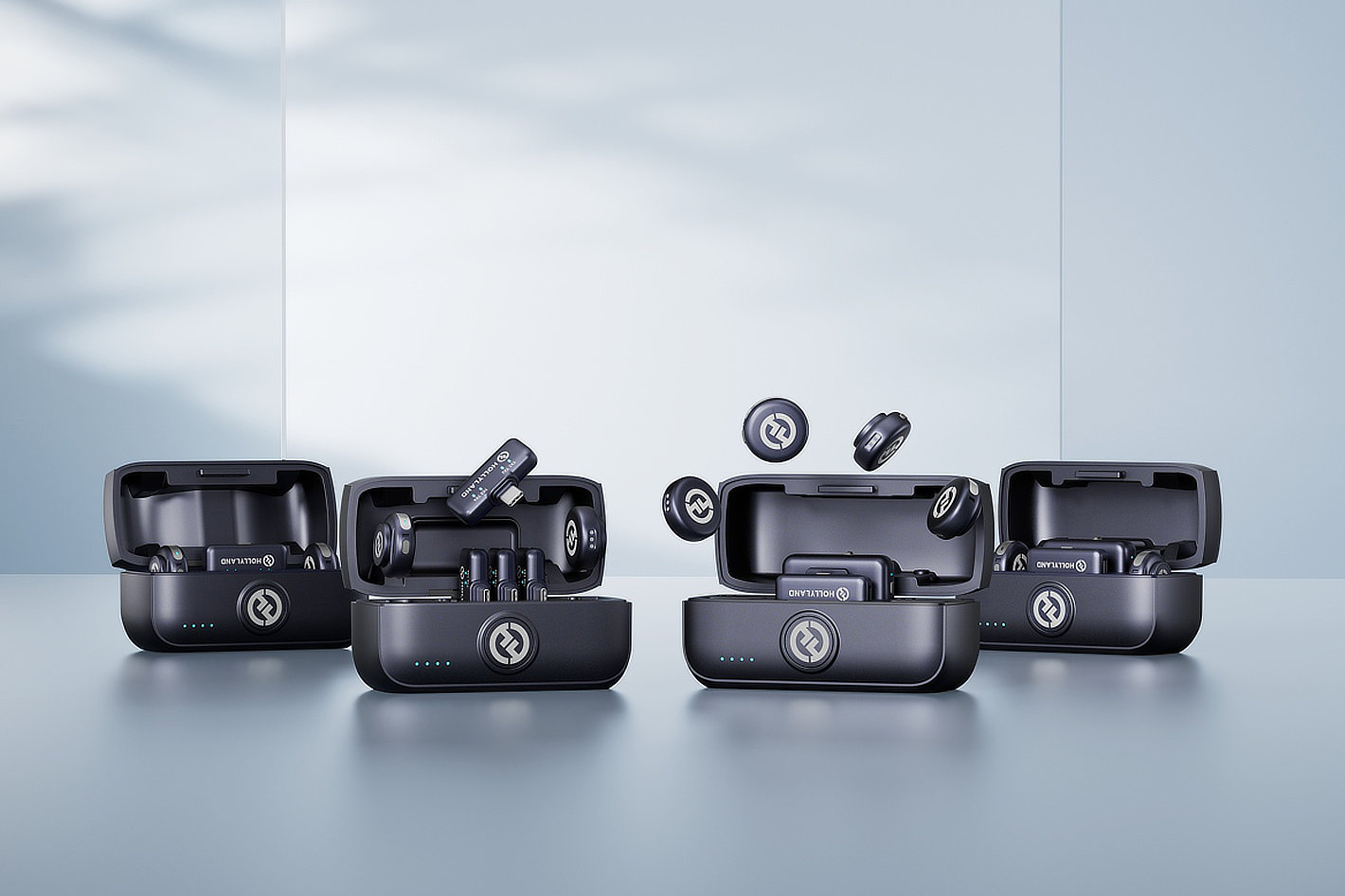
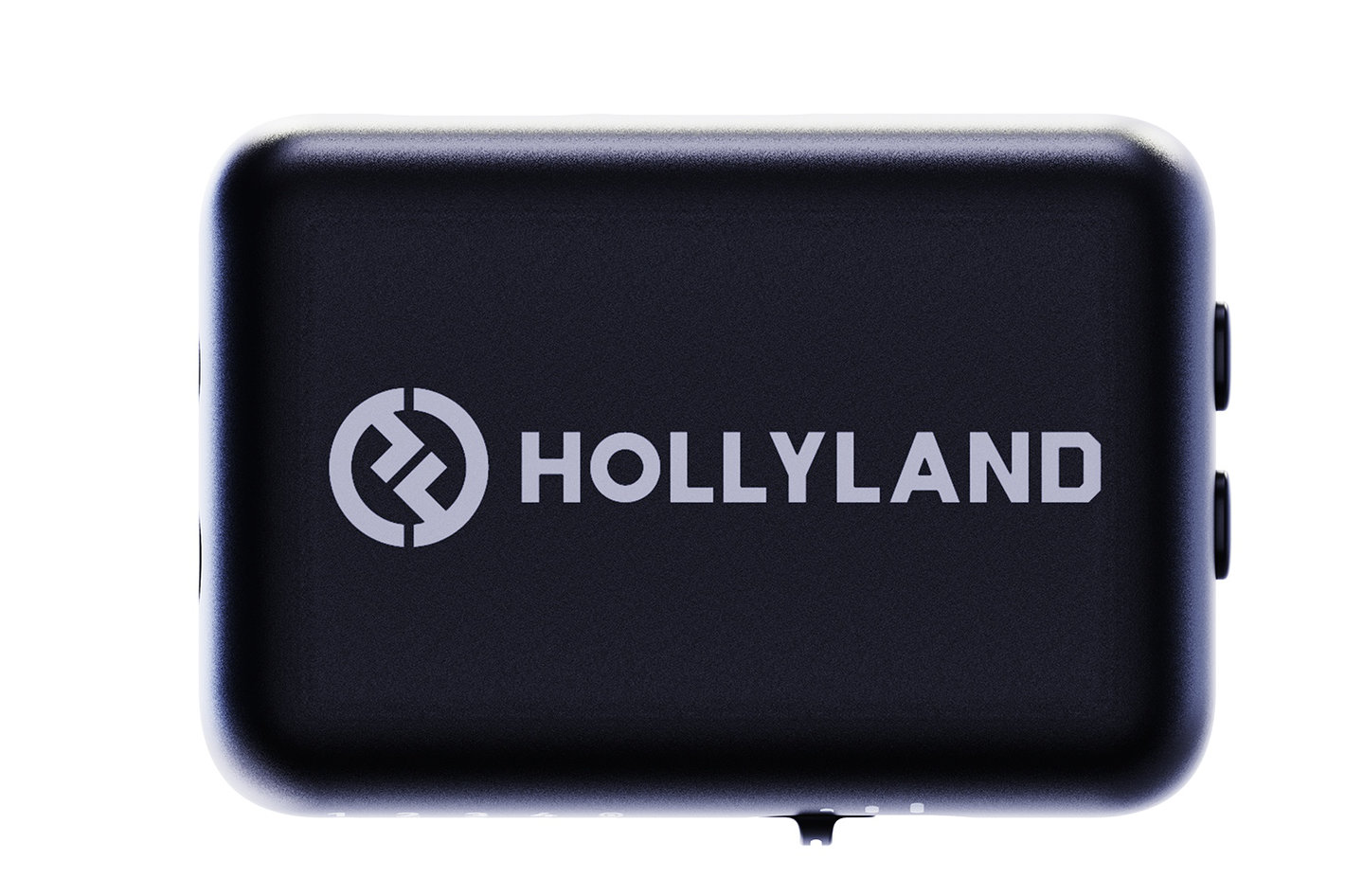
The hardware ecosystem is housed within an all-in-one charging case that serves a dual purpose: it securely stores the transmitters, receivers, necessary cables, and furry windshields while simultaneously recharging the components. Fully charged, the system delivers an impressive 48 hours of total battery life, ensuring it can survive multi-day shoots without requiring access to a wall outlet.
Comprehensive SKU Availability
To accommodate varying budget constraints and production scales, Hollyland is offering the LARK M3 in seven distinct SKUs, encompassing four comprehensive charging-case kits alongside individual a la carte purchases of transmitters and receivers. This modular purchasing model ensures that solo creators can start small and scale their audio infrastructure upward as their production requirements evolve.
Official Responses: Industry Perspective from Hollyland
The conceptual framework behind the LARK M3 stems directly from observing shifting paradigms in modern media production. Speaking on the release, Yena Li, Go-To-Market (GTM) Specialist at Hollyland, highlighted the systemic changes in how video content is conceptualized and executed today.
"We’ve seen video production evolve from one person with one camera or smartphone into collaborative workflows with multiple people and multiple shooting setups," stated Yena Li. "As more shooting setups are involved, everyone’s audio needs to be recorded across different cameras and smartphones at the same time."
Li elaborated on the historical friction points that plagued creators prior to this launch, emphasizing the cumbersome nature of legacy equipment:
"With traditional solutions, multiple wireless microphone systems may be needed to capture audio across multiple people and cameras or smartphones. We wanted LARK M3 to make multi-person, multi-camera shooting simpler with one system that can flexibly connect multiple transmitters and receivers as needed."
Hollyland’s official design philosophy hinges on removing technological barriers, allowing directors, videographers, and independent creators to focus entirely on storytelling rather than managing complex signal chains and synchronization logistics.
Implications: How the LARK M3 Transforms the Content Creation Landscape
The introduction of the Hollyland LARK M3 carries profound implications for several distinct sectors of the media production industry, promising to lower technical barriers while elevating baseline production values.
1. The Podcasting and Panel Interview Renaissance
Independent podcasters and digital media networks frequently record multi-person interviews in unoptimized acoustic environments. Historically, setting up four discrete wireless mics required complex multi-receiver rack gear, external audio mixers, and dedicated sound engineers. By allowing up to four transmitters to feed a single receiver with four-track isolated recording, the LARK M3 democratizes broadcast-level multi-guest recording. Small creators can now produce pristine, television-quality panel discussions from a coffee shop, a convention floor, or a minimalist home studio with minimal gear overhead.
2. Streamlining Multi-Camera Narrative and Event Videography
Wedding videographers, documentary filmmakers, and corporate event producers frequently deploy a primary cinema camera alongside secondary B-cameras and mobile devices for vertical social media cutdowns. Managing separate audio recorders for each camera angle often results in hours of frustrating post-production waveform alignment. The LARK M3’s one-to-many architecture—sending a clean signal from a single speaker to multiple receivers simultaneously—eliminates multi-device audio syncing headaches entirely.
3. Raising the Standard for Mobile and Run-and-Gun Journalism
As digital journalism increasingly relies on mobile-first workflows (MoJo), reporters often need to interview multiple subjects on the fly while recording backup streams to both smartphones and mirrorless cameras. The combination of magnetic 9g transmitters, 48-hour battery life via the charging case, and robust AI noise cancellation makes the LARK M3 an ideal companion for field journalists operating in chaotic, unpredictable outdoor environments.
4. Setting a New Benchmark for Competitors
The launch of a truly scalable, multi-channel 4×4 wireless audio system sets a new competitive benchmark for the pro-audio industry. As creators demand greater interoperability and modularity from their gear, single-purpose, rigid hardware configurations risk obsolescence. Hollyland has signaled that the future of wireless audio is not just about clearer sound or longer range, but about architectural flexibility—giving creators the power to scale their tools dynamically to match the exact scale of their vision.
Conclusion
The Hollyland LARK M3 represents a significant milestone in the evolution of digital production audio. By fusing studio-grade acoustic specifications—such as 48kHz/32-bit float recording, HDT wireless transmission, and advanced AI noise cancellation—with an infinitely flexible multi-transmitter, multi-receiver architecture, Hollyland has delivered a tool that speaks directly to the needs of modern collaborative creators.
Whether deployed for an intimate two-person dialogue, a complex four-way roundtable, or a synchronized multi-camera broadcast, the LARK M3 strips away the technical friction of professional audio acquisition. Available now across its diverse array of seven SKUs, the LARK M3 is well-positioned to become an indispensable asset in the kits of videographers, podcasters, and content creators worldwide.