
Beyond the Frozen Frontier: Amanda Kernell’s ‘Brace Your Heart’ Challenges the Myth of the Arctic
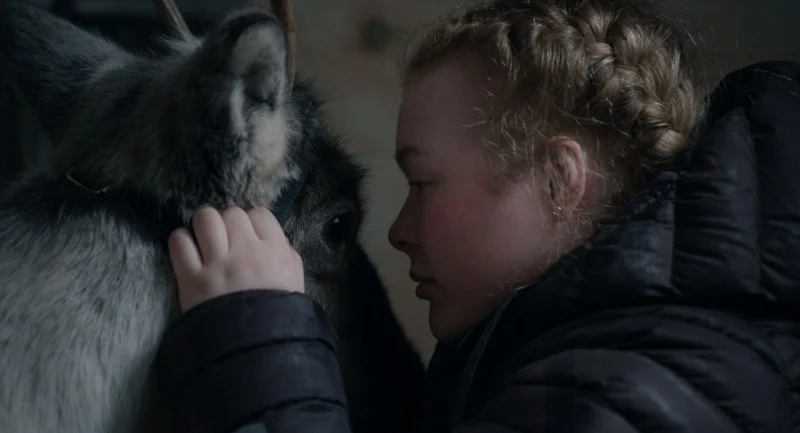
For those whose cultural consciousness of reindeer is limited to December carols and holiday kitsch, Swedish writer-director Amanda Kernell’s latest feature, Brace Your Heart, arrives as a sharp, flinty reality check. The film strips away the fairytale veneer of the Arctic, presenting a rugged, contemporary portrait of the Sápmi region that demands the audience confront the grueling physical, economic, and social realities of indigenous life in the 21st century.
Following her celebrated debut Sámi Blood (2016) and the 2020 drama Charter, Kernell—who herself hails from the Sámi community—continues her mission to document the resilience and evolution of her people. While Sámi Blood was a searing period piece examining the historical trauma of Swedish colonial oppression, Brace Your Heart shifts the focus to the present, exploring the intersection of modern womanhood, ancestral legacy, and the survival of a culture in an increasingly demanding global climate.
Main Facts: A Portrait of Resilience in the High North
Brace Your Heart centers on Ejva, a 20-year-old woman thrust into an impossible position following the sudden death of her father. As the heir to her family’s reindeer herding business, Ejva must immediately transition from daughter to leader, navigating a professional landscape that remains stubbornly patriarchal.
The film is not merely a drama; it is an immersive study of labor. Through the lens of cinematographer Sophia Olsson, the film captures the relentless, visceral toll of herding. Scenes that might be played for high-octane drama in Hollywood—such as a snowmobile plunging through thin ice into freezing, black waters—are filmed with a detached, documentary-like calm. This stylistic choice emphasizes the film’s central thesis: in the Sápmi wilderness, life-threatening accidents are not cinematic spectacles; they are "bad days at the office."
The film stars Elli Sara Valkeapää, a real-life reindeer herder whose performance is marked by a raw, stoic subtlety. Valkeapää’s ability to convey the crushing weight of familial expectation through silence and gaze echoes the breakthrough performance of Lene Cecilia Sparrok in Sámi Blood, grounding the narrative in the authenticity of lived experience.
Chronology: From the Festival Circuit to Global Stages
The journey of Brace Your Heart began with significant critical momentum. The film held its world premiere at the Toronto International Film Festival’s (TIFF) prestigious Platform program, where it earned a special mention from the jury. This recognition was followed by a European premiere in the main competition at the San Sebastian International Film Festival.
- September (TIFF): The film debuts in Toronto, establishing its presence as a major arthouse contender. The jury praises its "unflinching look at contemporary indigenous identity."
- Late September (San Sebastian): The European premiere cements the film’s status as a critical darling, proving that its remote, niche subject matter possesses broad, universal resonance.
- Post-Festival Distribution: Following the success of Kernell’s previous films in international markets, industry analysts predict a robust release strategy. While traditional theatrical runs are expected in Scandinavia and select European territories, specialists note that the film’s youthful energy and contemporary themes make it a prime candidate for curated streaming platforms that focus on world cinema and indigenous voices.
Supporting Data: The Socio-Economic Landscape of Sápmi
The film serves as an unofficial sociological study of the modern Sámi reindeer herding industry. It highlights several key challenges that distinguish this work from traditional agrarian roles:
- The Gender Gap: Despite the Sámi community’s deep-rooted egalitarian history, the professional sphere of herding remains male-dominated. Ejva’s struggle is not just against the elements, but against the "jockish" gatekeepers of the industry who view her authority as a temporary anomaly.
- Technological Integration: The reliance on snowmobiles and modern tracking equipment emphasizes that this is not a static, "primitive" culture. The film showcases how traditional pastoralism has been forced to adapt to modern technology, and the inherent risks that come with such reliance.
- The Urban Pull: A recurring theme is the allure of the urban south. Ejva is constantly forced to weigh the immense difficulty of maintaining her cultural heritage against the relative ease and anonymity of life in Swedish cities. This mirrors the real-world trend of migration among indigenous youth, who often find themselves caught between two worlds.
Official Responses and Creative Direction
In interviews, Amanda Kernell has described the film as a testament to the "persistence of the individual." By focusing on a female protagonist, she intentionally subverts the archetype of the rugged male Arctic explorer.
"I wanted to see a woman in the landscape who wasn’t just a visitor or a victim of the cold," Kernell noted during the San Sebastian press junket. "I wanted to see her as the owner of that landscape."
The film’s score, composed by Rebekka Karijord and Kristian Eidnes Andersen, provides an ethereal, a capella backdrop that serves as the only nod to "whimsy." It acts as a bridge between the harsh, grounded cinematography and the internal spiritual life of the characters. By utilizing a largely non-professional cast, Kernell has effectively created a piece of fiction that feels like a vital, living record of a specific place and time.
Implications: A New Era for Indigenous Cinema
The implications of Brace Your Heart go beyond its critical reception. The film is part of a growing movement of indigenous-led cinema that rejects the "victimhood" narrative often imposed by Western directors.
The Evolution of Masculinity
One of the most striking elements of the film is its exploration of masculinity. Ejva’s interactions with two distinct male characters—the toxic, ambitious Heaika and the gentle, stoic Nejla—serve as a microcosm for the evolution of social roles within the community. By framing this as a choice between two futures, Kernell elevates the story from a simple drama to a meditation on how communities change when they are forced to confront the "toxic" remnants of their past.
The "Schematic" Challenge
Critically, some observers have noted that the film’s screenplay can feel slightly "schematic." Because it attempts to funnel massive, complex sociological issues—colonialism, gender inequality, climate change, and cultural preservation—through the singular life of one woman, it occasionally risks over-explaining its own metaphors. However, most critics agree that the strength of Valkeapää’s performance and the visual language of the film more than compensate for these structural rigidities.
Cultural Authenticity vs. Accessibility
The film poses a question to the global film market: How do we consume stories that are culturally specific but geographically remote? Brace Your Heart succeeds by refusing to "translate" the Sámi experience for a foreign audience. There are no subtitles for the cultural nuances that aren’t meant for outsiders; the audience is invited to witness, not to interpret. This approach has secured the film a place in the current arthouse canon, proving that there is a significant, hungry audience for stories that are rooted in the specific realities of indigenous survival.
Conclusion: A Window into the Unyielding
Brace Your Heart is a powerful, restrained, and deeply moving work. It manages to capture the breathtaking beauty of the Sápmi region without ever losing sight of the fact that this landscape is, first and foremost, a workplace—a site of struggle, growth, and endurance.
As Ejva stands on the precipice of her future, contemplating whether the legacy of her ancestors is a burden or a gift, the audience is left with a profound appreciation for the tenacity of the human spirit. Amanda Kernell has provided more than just a film; she has provided a detailed, unvarnished window into a way of life that is often invisible to the rest of the world. In doing so, she has ensured that when we think of reindeer, we will no longer think of holiday fairytales, but of the cold, hard, and deeply human reality of those who live alongside them.
