
Retconning the Final Frontier: How Strange New Worlds Finally Makes Sense of Scotty and Uhura’s Baffling Romance
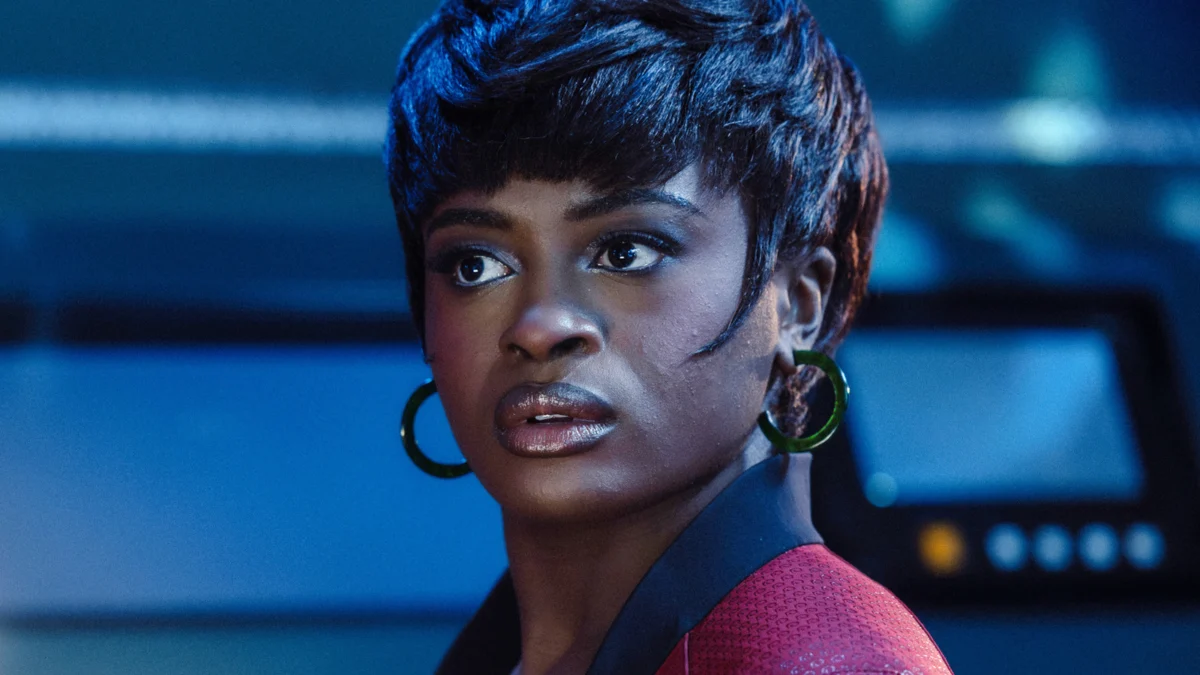
For nearly four decades, Star Trek fans have harbored a collective, bewildered question regarding one of the franchise’s most incongruous character beats: Why, in the 1989 film Star Trek V: The Final Frontier, were Montgomery "Scotty" Scott and Nyota Uhura behaving like a long-married, affectionate couple?
In a franchise where character relationships are typically meticulously charted—or, at the very least, consistently professional—the sudden, unexplained intimacy between the Enterprise’s chief engineer and its communications officer felt jarringly out of place. It was a creative choice that left audiences scratching their heads for thirty-seven years. However, with the climactic conclusion of the fourth season of Star Trek: Strange New Worlds, the creative team at Paramount+ has finally provided a narrative bridge, retroactively legitimizing one of the most confusing moments in Star Trek history.
The Mystery of The Final Frontier
To understand why this development is so significant, one must revisit the troubled production of William Shatner’s Star Trek V. The film, which famously struggled with budget constraints and a truncated production schedule, opened with the USS Enterprise—still undergoing refits—being diverted to the planet Nimbus III.
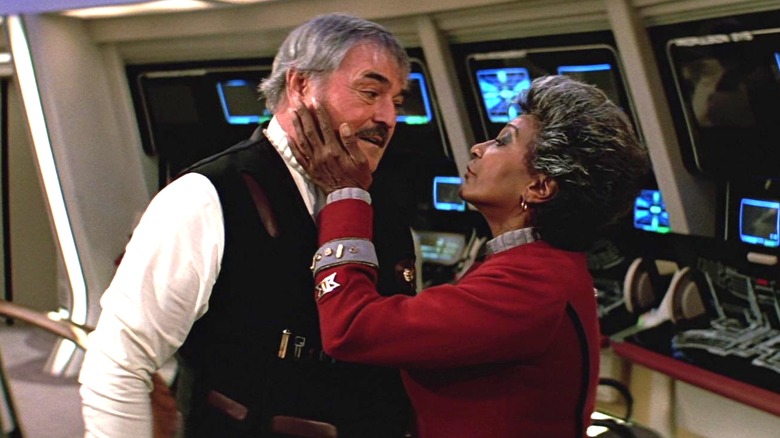
Amidst the bridge’s tension, a quiet, domestic moment occurred: Scotty, played by the late James Doohan, was visibly flustered by the ship’s maintenance failures. Uhura, portrayed by the late Nichelle Nichols, approached him, offering comfort that transcended professional courtesy. She stroked his face and spoke with a tenderness that suggested a deep, intimate history. For a fanbase that had watched these two characters serve together for over two decades without a single hint of romantic tension, the scene was an anomaly. It was as if the writers had suddenly decided to insert a subplot from an entirely different show into the middle of a motion picture. When the relationship was never referenced again in Star Trek VI: The Undiscovered Country, the moment was relegated to the status of a bizarre, "best-ignored" cinematic footnote.
Chronology: Building the Foundation of Strange New Worlds
Star Trek: Strange New Worlds has consistently functioned as a bridge between the era of Captain Christopher Pike and the eventual command of James T. Kirk. By placing characters like Celia Rose Gooding’s Uhura and Martin Quinn’s Scotty in the same proximity, the show has spent its duration carefully positioning the pieces of the Original Series puzzle.
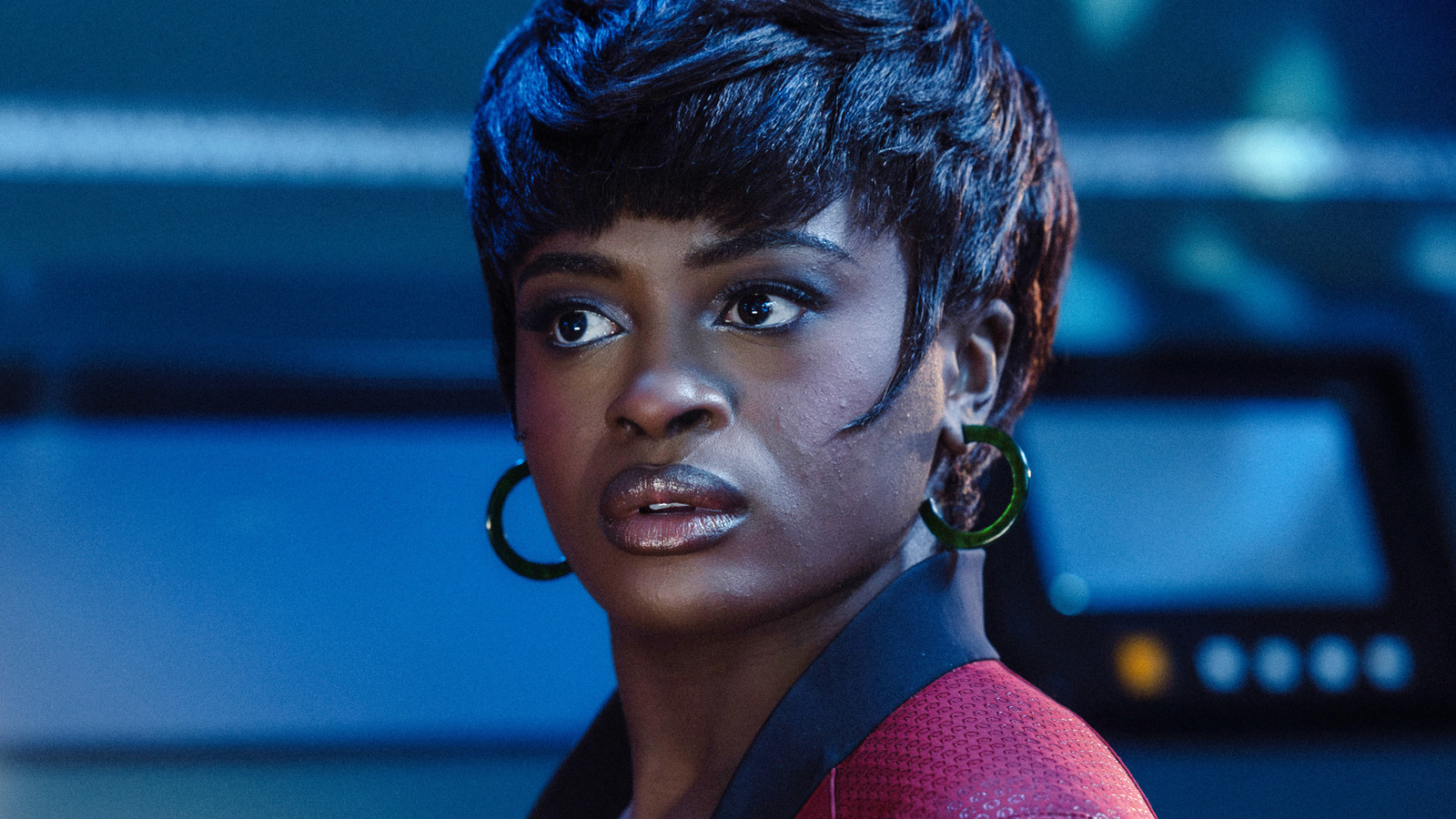
The Season 4 finale, titled "Tomorrow’s Enterprise," utilizes a classic Star Trek trope—a spatial anomaly—to explore the shifting timelines of its cast. In this narrative arc, the Enterprise encounters a localized, reality-bending phenomenon that bridges the gap between the present and a potential future. Through this, Uhura is confronted by a version of herself from one year in the future.
The revelation provided by this encounter is pivotal: in this alternate timeline, Scotty has been killed in the line of duty. The trauma of this loss is compounded by the fact that, in this future, the two had recently begun a budding, giddy romance. This discovery forces the "past" Uhura to grapple with the emotional weight of a relationship she has only just begun to consider, while the "future" Uhura weighs the ethical implications of altering the timeline to save a man she has grown to love.
The Anatomy of a Retcon
The term "retcon"—retroactive continuity—is often viewed with skepticism in genre fiction. However, when executed with the narrative precision displayed in Strange New Worlds, it serves to enrich the lore rather than merely paper over plot holes.
By establishing that Scotty and Uhura shared a brief, intense romantic history during their early years aboard the Enterprise, the writers have successfully reframed the behavior seen in The Final Frontier. If the two had experienced a passionate, perhaps ill-fated romance early in their careers, their professional distance during the five-year mission of the original series becomes a conscious choice of maturity and discipline.
The flirtation in The Final Frontier is no longer an out-of-character hallucination; it is the natural behavior of two people who, having spent decades maintaining a stoic professional silence, finally felt the security of long-standing friendship to let their guard down. They weren’t "acting like a married couple" because they were secretly married; they were acting like two veterans who had long ago resolved the "what ifs" of their youth.
Supporting Data: A History of "Baffling" Romances
It is worth noting that Star Trek has a long, storied history of controversial romantic pairings that have polarized the fandom. The franchise often treats romance as a secondary consideration to the "high-concept" science fiction plots, leading to pairings that sometimes feel forced or underdeveloped.
- Troi and Worf (The Next Generation): Many fans felt this pairing lacked the necessary chemistry, viewing it as a distraction from the characters’ individual arcs.
- Chakotay and Seven of Nine (Voyager): This remains perhaps the most cited example of a "forced" romance, with actor Robert Beltran famously expressing his own confusion regarding the pairing’s sudden emergence in the show’s final season.
- Spock and Uhura (2009 Star Trek reboot): The decision to pair these two in the Kelvin timeline caused significant debate, as it diverged sharply from the established character dynamics of the prime timeline.
By contrast, the Strange New Worlds approach succeeds because it does not attempt to force a romance into the current timeline of the show. Instead, it provides a backstory that contextualizes a specific, older moment of confusion. It respects the canon by explaining it, rather than overwriting it.
The Ethics of Temporal Interference
The climax of "Tomorrow’s Enterprise" touches on a common Star Trek philosophical dilemma: Is it worth sacrificing a timeline to save a loved one?
For Uhura, the choice is excruciating. Knowing that Scotty is destined to die, she is tempted to intervene. Yet, the narrative highlights the professional evolution of the character. Uhura is a communications officer—someone trained to listen, translate, and facilitate understanding. Her struggle to save Scotty is not merely about a romantic interest; it is about the preservation of a colleague and a friend. The resolution of this plot line—whether or not they ultimately save him—serves to cement the emotional bond between the two, providing the logical "reason" for why, years later, their interaction in The Final Frontier felt so deeply comfortable. They share a history of life-and-death stakes that few others on the bridge can fully comprehend.
Implications for the Franchise
The success of this narrative patch holds significant implications for the future of the Star Trek franchise. It demonstrates a willingness by the current showrunners to engage with the franchise’s uneven history with a sense of reverence and cleverness.
Rather than ignoring the "bad" movies or the "baffling" moments, Strange New Worlds treats them as raw material. This approach encourages viewers to revisit the older films with a new lens, effectively breathing new life into decades-old scenes. It suggests that the franchise is moving toward a more unified, cohesive canon where even the most disjointed moments can be woven into a larger, more satisfying tapestry.
Moreover, this serves as a masterclass in character development. By showing us the "why" behind the "what," the writers have elevated both Scotty and Uhura from archetypal bridge officers to fully realized individuals with complex personal histories.
Conclusion: The Long Road to Redemption
In the world of science fiction, few things are as satisfying as a well-placed answer to a long-standing mystery. For thirty-seven years, the intimacy between Scotty and Uhura was a source of confusion—a moment that felt disconnected from the established reality of the crew.
Thanks to the deft storytelling in Star Trek: Strange New Worlds, that confusion has been replaced with a sense of narrative closure. We now understand that the warmth seen in The Final Frontier was not a mistake; it was a testament to a deep, shared past that was forged in the fires of earlier adventures. We had to wait until 2026 for the pieces to finally click into place, but for the fans who have spent decades analyzing the minutiae of the bridge crew’s lives, the wait has been more than worth it. Star Trek remains a franchise that, at its best, respects its history while daring to grow, proving that even the most "baffling" moments can eventually find their place in the stars.
