
The Atomic Shadow Lengthens: A Deep Dive into Godzilla Minus Zero
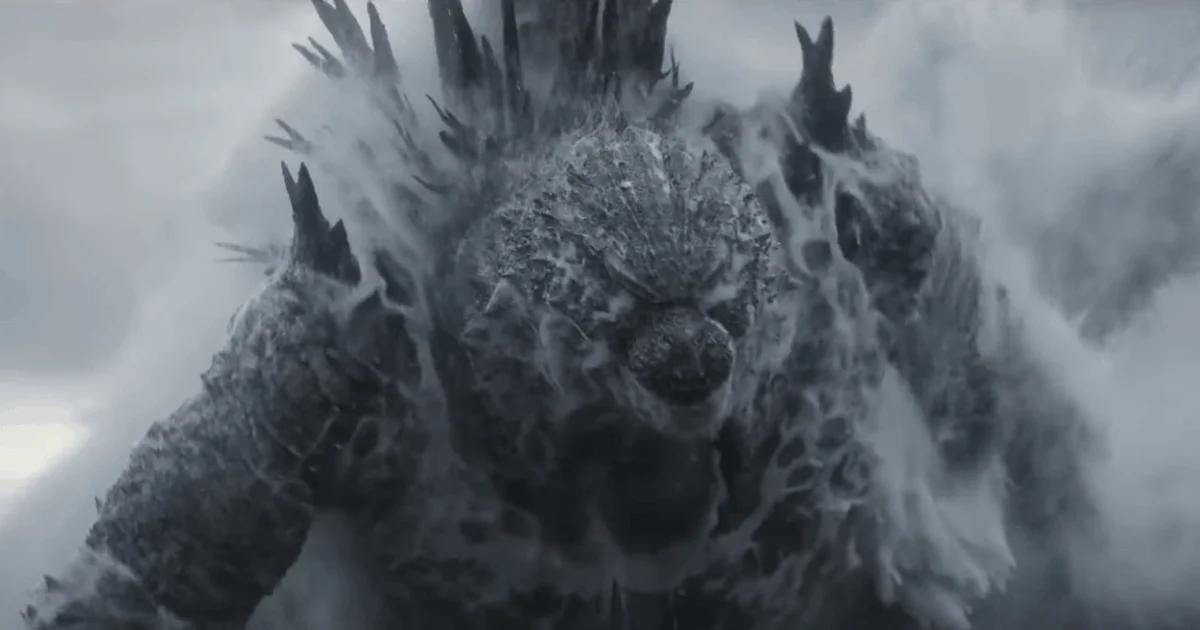
When writer-director Takashi Yamazaki unveiled his 2023 kaiju masterclass, Godzilla Minus One, the title was widely perceived as a stroke of marketing genius. It wasn’t merely a branding exercise; it was a philosophical statement. As Yamazaki explained, the "Minus" represented the precarious state of a postwar Japan that had been reduced to zero, only to have its fragile recovery shattered by the arrival of the King of the Monsters, pushing the nation into a negative, existential deficit.
Now, as the franchise continues its unprecedented critical and commercial resurgence, Yamazaki has returned with a direct sequel. Despite the inevitable groan-inducing nature of its title—Godzilla Minus Zero—the film proves that the director is not merely repeating his previous success, but rather expanding his thematic canvas. If Minus One was about the trauma of survival, Minus Zero is about the excruciating, often violent process of deciding what a life worth living actually looks like in the shadow of the apocalypse.
The Chronology of Destruction: From the Ocean Floor to the Skies
Godzilla Minus Zero picks up two years after the harrowing events of its predecessor, set against the backdrop of 1949 Japan. The film’s narrative arc is deceptively simple: while the immediate threat of the original Godzilla was seemingly neutralized at the conclusion of the previous film, the vacuum left by his absence has been filled by a more celestial, and arguably more malevolent, terror.
The film introduces King Ghidorah, a three-headed, extraterrestrial entity that descends upon the mountains of Nagano via a meteorite. The timing is catastrophic. Just as the civilian population—led by figures like the traumatized former kamikaze pilot Kōichi Shikishima (Ryunosuke Kamiki)—begins to forge a new sense of normalcy, the sky literally opens up. The film posits a grim reality: for a nation still grappling with the horrors of Hiroshima and the subsequent wreckage of the Ginza attack, the arrival of a second, more powerful kaiju is not just a disaster; it is a test of national soul.
The film’s pacing is deliberate. It utilizes the same slow-burn, character-first approach that made Minus One a global phenomenon, focusing on the domestic lives of Shikishima, his partner Noriko, and their young charge, Akiko. By delaying the full-scale monster spectacle, Yamazaki forces the audience to inhabit the quiet, desperate hope of his protagonists, making the eventual arrival of the creature feel like a genuine violation of their hard-won peace.

Supporting Data: The Architects of Resistance
The film shifts its focus from the ragtag civilian rebellion of the first film to a more institutional, albeit unconventional, defense strategy. Central to this is the Large-Scale Disaster Response Bureau, an agency that emerges from the wreckage of the government’s previous inaction.
The bureau is led by three distinct archetypes, each representing a different facet of the post-war Japanese psyche:
- Noda (Hidetaka Yoshioka): The eccentric, Einstein-haired naval engineer whose intellect provides the only plausible counter-strategy to the encroaching kaiju.
- Makoto Aoyama (Masami Nagasawa): A meteorologist whose scientific precision is essential for tracking Ghidorah’s erratic, storm-chasing movements.
- Kanji Murakami (Min Tanaka): A biologist whose personal history serves as the film’s moral compass. As a survivor of the Hiroshima bombing and the subsequent monster attacks, his cynicism is matched only by his desperation to ensure that the cycle of destruction does not repeat itself.
The inclusion of the U.S. military as a tertiary force provides a sharp geopolitical critique. Unlike the civilian heroes who are motivated by a desire to protect their homes, the American forces are portrayed as opportunistic and detached. Their failure to understand the existential weight of the kaiju threat serves as a biting commentary on the limitations of cold-war era interventionism.
Official Perspectives: The Director’s Intent
In various press junkets surrounding the 2026 New York Film Festival, Takashi Yamazaki has been vocal about the "Minus Zero" naming convention. He notes that the title reflects the internal state of his characters. "They are at zero," he remarked in a recent interview. "They have reached a state of equilibrium, a fragile peace. But the arrival of Ghidorah reminds them that they are perpetually existing on a precipice. The ‘Zero’ represents the point of no return."
Yamazaki’s direction is marked by a clear commitment to practical, visceral horror over digital spectacle. While the CGI in Minus Zero has seen an exponential leap in quality compared to the "resourceful but weightless" effects of its predecessor, the director maintains a focus on the human scale. He is less interested in the physics of the fight and more interested in the sound of a human heartbeat under duress.

Thematic Implications: Grief, Vengeance, and Growth
At its core, Godzilla Minus Zero asks the audience to grapple with the "impossible questions" of existence. How does a person move past the guilt of survival? How does a society balance the desire for vengeance with the need for long-term peace?
Shikishima’s journey is the film’s emotional anchor. Haunted by his past as a pilot and his inability to prevent the suffering of his loved ones, he represents the quintessential post-war subject. His internal struggle—whether to return to the cockpit to protect his family or to reject the violence that defined his youth—mirrors the national struggle of Japan itself. Is the country defined by its capacity to fight, or its capacity to heal?
The film also makes a profound choice in its treatment of Godzilla. By limiting his screen time, the film treats him less as an antagonist and more as a recurring, terrifying weather phenomenon—a force of nature that cannot be negotiated with, only endured. This, coupled with the introduction of the more "hateable" and predatory King Ghidorah, shifts the narrative focus from survival to confrontation.
Technical Mastery and Cinematographic Scope
The technical achievements of Godzilla Minus Zero cannot be overstated. The aerial combat sequence above Matsumoto stands as a high-water mark for the kaiju genre. By utilizing Wagnerian-influenced orchestral scores composed by Naoki Satō, the film creates a sense of operatic grandeur that elevates the carnage above simple monster-movie tropes.
The film earns its "R" rating not through gratuitous gore, but through the sheer intensity of its choreography. The final brawl between the two titans is a masterclass in scale and weight. It captures the Darwinian brutality of two apex predators fighting for supremacy in a world that neither of them truly belongs to. The choice to utilize grayscale atmospherics adds a layer of documentary-like authenticity, grounding the supernatural events in the aesthetic of 1940s newsreels.

Critical Reception and Future Outlook
As the film prepares for its wide release on November 6, 2026, via GKIDS, the early consensus suggests that Godzilla Minus Zero is a worthy, if slightly more cynical, companion to Minus One. While some critics have noted that it lacks the sheer emotional novelty of its predecessor, it succeeds in providing a more sophisticated, nuanced look at the cost of survival.
The film feels like the middle chapter of a trilogy, leaving enough narrative loose ends to suggest that the "Minus" series is far from over. It is a film that demands to be seen on the largest screen possible, not just for the spectacle, but for the quiet, haunting moments that define its human characters.
In an era of franchise fatigue, Godzilla Minus Zero reminds us why the King of the Monsters remains relevant. It is a mirror for our own anxieties, a projection of our fears about the environment, war, and the fragility of our social contracts. By forcing its characters to confront the impossible, the film asks us to do the same. In a world that often feels like it is hovering at zero, perhaps the only way to survive is to stop running and start building.
Grade: B+
Godzilla Minus Zero premiered at the 2026 New York Film Festival. GKIDS will release the film in U.S. theaters on Friday, November 6.
