
The Untouchable Golden Age: Why Five 1970s Sitcoms Defy Modern Remake Culture
By [Your Name/Staff Writer]
Published: October 2023
Main Facts: The Nostalgia Trap in Modern Television
In the contemporary television landscape, nostalgia is no longer just a warm sentiment—it is a primary business model. Driven by risk-averse studio executives operating under the assumption that pre-sold IP guarantees an audience, the entertainment industry has entered an era of relentless reboots, revivals, and reimaginings. If a concept worked once, the modern Hollywood calculus dictates that it can be made to work again.
Yet, as viewers and critics alike have observed, this assembly-line recycling often yields diminishing returns. While exceptions exist, the graveyard of failed television reboots is vast, littered with series that fundamentally misunderstood what made their predecessors magical.
Nowhere is this truer than when Hollywood casts its covetous gaze back upon the 1970s. While the situation comedy was not invented during that decade, the ’70s unquestionably served as its artistic golden age. It was a transformative era when television writers broke free from the toothless domestic escapism of the 1950s and 1960s, using the multi-cam format to tackle social revolutions, workplace dynamics, and the psychological complexities of the human condition.
Industry analysts, cultural historians, and television critics increasingly argue that certain creative lightning strikes simply cannot be bottled twice. Five specific masterworks from the 1970s—Taxi, WKRP in Cincinnati, Happy Days, All in the Family, and M*A*S*H—stand as structural and artistic pinnacles of the medium. Perfectly engineered for their specific cultural moments, these five pillars of television history are fundamentally too pure, too distinct, and too complete to ever warrant a remake.
Chronology: How the ’70s Redefined the Sitcom
To understand why these shows resist modern reproduction, one must trace the evolutionary timeline of television comedy during the decade of bell-bottoms, political disillusionment, and cultural shifts.
- 1971 (The Paradigm Shift): The landscape changed forever when Norman Lear introduced All in the Family to CBS. Up until this point, network television largely avoided contemporary sociopolitical issues. Lear broke the mold by importing British social satire and wedding it to an American working-class milieu, proving that comedy could simultaneously provoke thought and outrage.
- 1972 (The Tragicomedy Standard): M*ASH debuted on CBS, initially struggling in the ratings before evolving into a sophisticated hybrid of screwball comedy and harrowing dramatic realism. Its historic 11-year run spanned the end of the Vietnam War era, fundamentally altering how television handled the psychological toll of conflict.
- 1974 (The Nostalgia Wave): As the country reeled from the Watergate scandal and economic stagflation, Garry Marshall’s Happy Days premiered on ABC. Rather than looking forward, it invited audiences to retreat into a sun-drenched, sanitized, and deeply comforting version of 1950s Americana, eventually spawning a merchandising and cultural juggernaut.
- 1978 (The Ensemble Apex): Taxi premiered, showcasing the brilliance of James Brooks, Stan Daniels, and creators Glen and Les Charles. It gathered a disparate group of working-class dreamers in a gritty New York City garage, setting a high-water mark for character-driven ensemble writing.
- 1978 (The Workplace Chaos): Shortly after Taxi arrived, Hugh Wilson unleashed WKRP in Cincinnati on CBS. It captured the frantic, counter-cultural energy of the late-1970s media landscape, cementing the workplace sitcom as a vehicle for systemic satire.
By the close of the decade, the sitcom had evolved from a simple theatrical sketch with a laugh track into a mirror reflecting a rapidly modernizing nation.
Supporting Data & Deep Dives: The Five Untouchable Masterpieces
1. Taxi (1978–1983)
When Taxi hit airwaves, it introduced viewers to the Sunshine Cab Company, an enterprise staffed by individuals for whom driving a cab was not a career, but a holding pattern for bigger dreams.
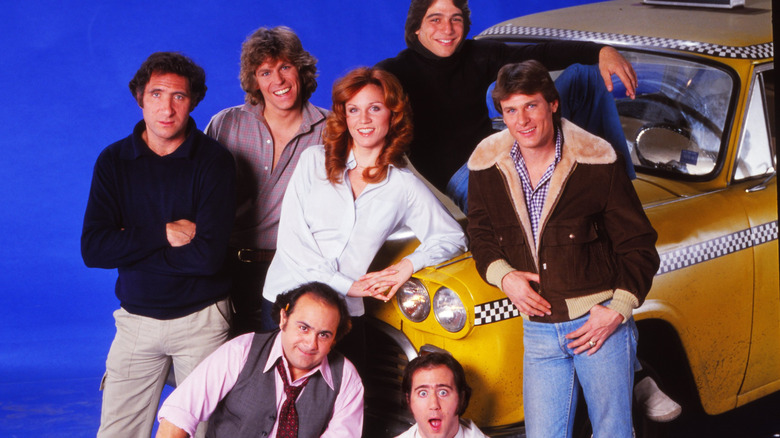
- The Ensemble Phenomenon: The show’s casting remains one of the greatest alignments of raw talent in television history. It featured seasoned veterans like Judd Hirsch and Marilu Henner, launched the careers of young talents Tony Danza and Andy Kaufman, and served as the launching pad for Danny DeVito and Christopher Lloyd, both of whom evolved into cinematic legends.
- The Writing Pedigree: Behind the scenes, the show was anchored by writers like Glen and Les Charles, whose foundational work here directly paved the way for the creation of Cheers.
- Why It Can’t Be Remade: The socio-economic reality of the American taxicab has been utterly transformed by ridesharing apps, GPS navigation, and the gig economy. Replicating the distinct ecosystem of a physical, late-night NYC garage filled with eccentric dreamers is nearly impossible in an era of app-dispatched transit. Furthermore, assembling a cast with the lightning-in-a-bottle chemistry of Hirsch, DeVito, and Kaufman is a fool’s errand.
2. WKRP in Cincinnati (1978–1982)
Created by Hugh Wilson, this workplace comedy chronicled the flailing efforts of a fictional AM radio station attempting to pivot its formatting to rock-and-roll to survive in a corporate media landscape.
- Cultural Snapshot: The series functioned as a living museum for the death of independent, locally owned radio stations—an institution that has since become almost entirely extinct in the age of algorithmic streaming and massive corporate conglomerates.
- Iconic Moments: Episodes like "Turkeys Away"—consistently ranked among the funniest television scripts ever written, featuring a live turkey drop promotion gone disastrously wrong—tackled hyper-specific local radio culture while managing broader cultural commentary on censorship and commercialism.
- Why It Can’t Be Remade: The ecosystem of local radio that birthed the eccentric disc jockeys, sleazy ad executives, and panicked station managers has evaporated. A modern reboot would have to pivot to podcasting or digital streaming networks, losing the frantic, crackling immediacy of live analog broadcasting.
3. Happy Days (1974–1984)
Garry Marshall’s creation was born out of a cultural weariness with the turbulent, cynical news cycles of the early 1970s. By transporting viewers to a mythologized, sepia-toned Milwaukee of the 1950s, Happy Days offered comfort food television at its finest.
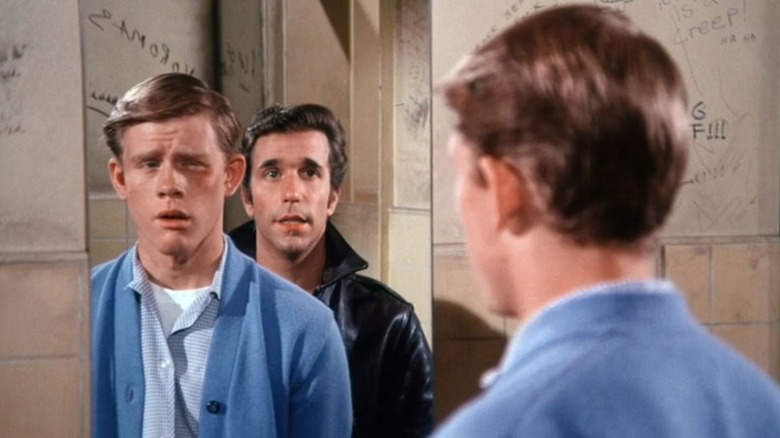
- The Fonz Effect: Henry Winkler’s portrayal of Arthur Fonzarelli transformed a secondary greaser archetype into a towering pop-culture icon. The character’s charisma, physical comedy, and cultural impact single-handedly steered the show’s trajectory.
- The Linguistic Legacy: The series literally altered our cultural lexicon; a specific third-season episode featuring Fonzie water-skiing over a shark spawned the immortal idiom "jumping the shark," a phrase still used globally to describe the creative tipping point of a declining franchise.
- Why It Can’t Be Remade: Lightning struck with Winkler’s inimitable blend of machismo and vulnerability. Attempting to artificially manufacture that specific brand of 1950s innocence through a modern lens would inevitably curdle into cynical, hyper-ironic pastiche.
4. All in the Family (1971–1979)
Norman Lear’s adaptation of the British sitcom Till Death Us Do Part changed television forever by holding a funhouse mirror up to American bigotry, generational friction, and political polarization.
- The Archie Bunker Paradox: Carroll O’Connor’s Archie Bunker was a masterclass in complex character writing. He was bombastic, prejudiced, and intellectually stagnant—yet millions of viewers grew to love him. Lear never asked audiences to endorse Archie’s views; instead, he weaponized comedy to expose the absurdity of closed-mindedness.
- Social Impact: By setting raw debates about civil rights, feminism, and the Vietnam War inside a modest living room in Queens, the show proved that network comedies could handle profound national anxiety without sacrificing laugh-out-loud humor.
- Why It Can’t Be Remade: In today’s hyper-sensitized media ecosystem, attempting to weaponize bigotry as a satirical vehicle requires a razor-thin narrative tightrope walk. The nuance, grace, and cultural permission that allowed All in the Family to challenge audiences without alienating them no longer exist in modern network television development rooms.
5. M*ASH (1972–1983)
Adapted from the 1968 novel and 1970 feature film, M*ASH followed the personnel of the 4077th Mobile Army Surgical Hospital during the Korean War, though its allegorical target was unmistakably the ongoing conflict in Vietnam.
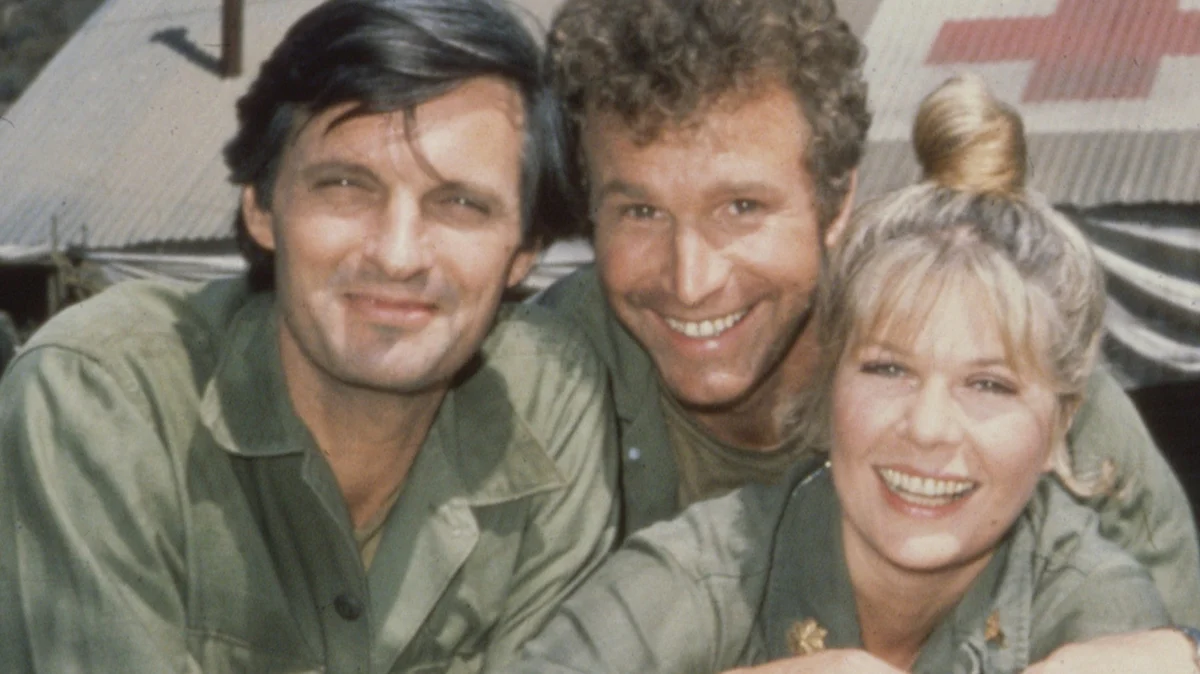
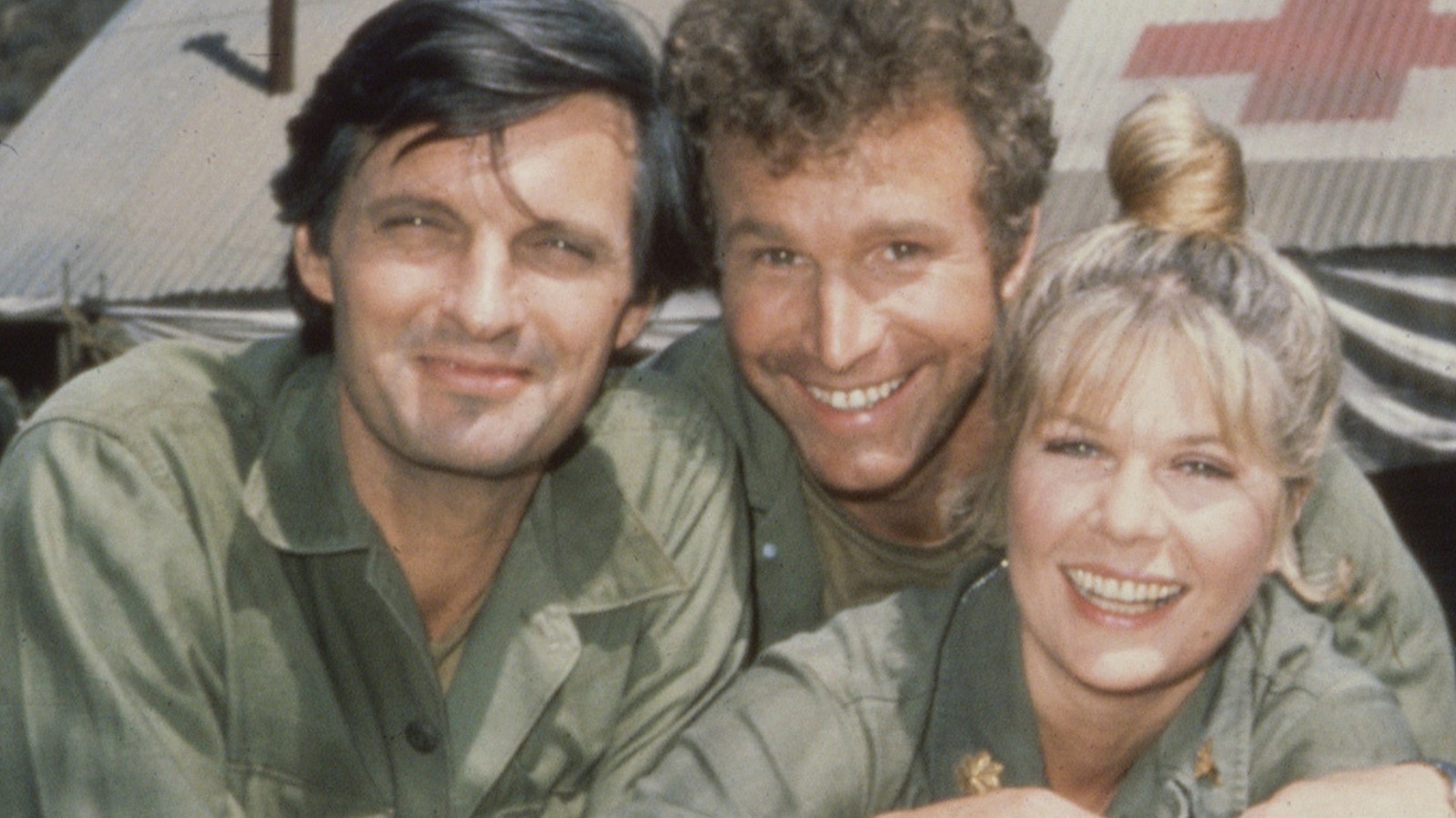
- Genre-Defying Architecture: Led by Alan Alda’s Hawkeye Pierce, the series achieved the near-impossible: a tonal balancing act that could shift effortlessly from screwball farce to devastating, emotionally searing drama within the span of a single 22-minute episode.
- The Finale Milestone: Its 1983 series finale, "Goodbye, Farewell and Amen," drew an astonishing 105.7 million viewers, holding the record for the most-watched television broadcast in U.S. history for decades.
- Why It Can’t Be Remade: M*ASH was an undeniable product of the pre-internet, pre-24-hour cable news era. At the time, average Americans relied on curated evening news broadcasts to understand the realities of overseas conflict. M*ASH educated, shocked, and comforted a generation. Today, with instantaneous digital journalism, frontline combat footage accessible on handheld devices, and countless war documentaries, a modern dramatic comedy set in a field hospital would find its thematic ground already thoroughly plowed.
Official Industry Responses and Creative Perspectives
The consensus among veteran showrunners, network executives, and cultural critics is remarkably uniform: leave the monoliths alone.
While networks occasionally test the waters with live television specials (such as Jimmy Kimmel’s Live in Front of a Studio Audience recreations produced by Norman Lear), original creators and surviving cast members have repeatedly cautioned against full-scale reboots.
"You can recreate a set, and you can cast talented young actors, but you cannot recreate the sociopolitical atmosphere that forced these stories out of our writers’ rooms," noted one veteran television producer speaking on condition of anonymity. "These shows weren’t just products; they were cultural pressure valves."
Furthermore, actors such as Henry Winkler have frequently expressed reverence for the past, noting that the unique chemistry and innocence of productions like Happy Days belonged strictly to their historical moment. The fear of tarnishing a pristine legacy often outweighs the financial incentive to reboot—a rare instance where artistic integrity aligns with common sense.
Implications: What the Obsession with Reboots Cost Modern TV
The persistent temptation to reboot 1970s classics carries a troubling implication for the current state of television: a crisis of institutional imagination.
When studios lean on intellectual property that is fifty years old, it signals a lack of faith in contemporary writers to capture the anxieties of our current decade. The 1970s succeeded because creators like Norman Lear, Garry Marshall, and Larry Gelbart were encouraged to look directly at the messy, chaotic world around them and invent something entirely new.
By insisting on recycling Taxi, WKRP, Happy Days, All in the Family, and M*ASH, modern television risks falling into a state of cultural stagnation. These five series are not merely nostalgic artifacts; they are masterclasses in television engineering that solved creative equations that do not need to be calculated again.
Ultimately, the best way to honor the golden age of the 1970s sitcom is not to subject them to the modern reboot grinder, but to leave them untouched on their pedestals—shining examples of what television was, what it can be, and why some stories are simply too perfect to ever touch again.
