
The Laowa ACRIS 35mm f/2.8: Bridging the Gap Between Wide-Angle Context and Macro Detail
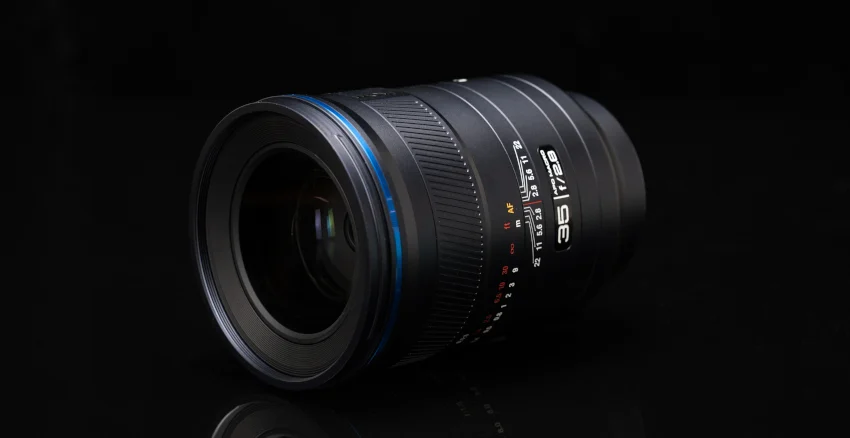
In the specialized world of optical engineering, few focal lengths are as ubiquitous or as versatile as the 35mm lens. Often dubbed the "storyteller’s lens," it has long been the gold standard for street photography, environmental portraiture, and documentary cinematography. However, Laowa—a company renowned for pushing the boundaries of what is optically possible—has just challenged the conventions of this classic focal length.
With the announcement of the ACRIS 35mm f/2.8 1X AF Macro APO, Laowa is introducing the world’s first full-frame, autofocus-enabled 35mm lens capable of true 1:1 macro reproduction. By merging the expansive, context-heavy perspective of a wide-angle lens with the extreme, life-size magnification usually reserved for long-telephoto macro optics, Laowa has created a unique tool for photographers and filmmakers who demand both environmental storytelling and microscopic detail.
Main Facts: A Paradigm Shift in Macro Photography
The Laowa ACRIS 35mm f/2.8 1X AF Macro APO represents a departure from traditional macro lens design. Typically, macro lenses range from 90mm to 105mm, or even 150mm, because these longer focal lengths allow the photographer to capture small subjects from a comfortable distance without obstructing light or intimidating the subject.
By compressing this capability into a 35mm format, Laowa has achieved a feat that changes how macro work is composed. Key specifications include:
- Magnification Ratio: True 1:1 life-size reproduction.
- Aperture: A fast, versatile f/2.8, capable of isolating subjects while maintaining a 63.4-degree angle of view.
- Optical Design: A sophisticated 13-element, 10-group construction featuring APO (Apochromatic) elements to suppress chromatic aberrations.
- Focusing: A hybrid system that blends traditional AF (from 0.5m to infinity) with a specialized "Macro Focus Assistance" manual system for extreme close-up work.
- Build: All-metal, weather-resistant construction with an internal focusing mechanism.
At a retail price of $449, the ACRIS is positioned as a highly accessible professional tool, bridging the gap between high-end optics and the needs of independent creators.
Chronology: The Evolution Toward the ACRIS
The path to the ACRIS 35mm f/2.8 reflects Laowa’s broader corporate strategy. Over the past decade, Venus Optics (the parent company of Laowa) has systematically targeted niches ignored by the "Big Three" (Canon, Nikon, and Sony).
- Early Innovation: Laowa first gained industry recognition for its ultra-wide-angle lenses and specialized "probe" macro lenses, such as the famous 24mm f/14 Probe. These lenses proved that Laowa was willing to sacrifice mass-market appeal for unique optical utility.
- The Shift to Autofocus: For years, Laowa remained a manual-focus-only brand. However, recent releases have seen the integration of high-speed stepper motors, marking a transition toward hybrid workflows. The ACRIS represents the pinnacle of this transition, combining advanced AF with the mechanical precision required for macro.
- Announcement and Availability: The product was officially unveiled in late 2026, with global retail availability commencing on September 30, 2026. This launch was preceded by a series of teaser campaigns highlighting the lens’s ability to capture "the whole story" rather than just the isolated subject.
Supporting Data: Engineering and Performance
The Hybrid Focusing Philosophy
One of the most debated aspects of the ACRIS is its dual-stage focusing system. Laowa recognizes that "standard" autofocus can be unpredictable at a 1:1 magnification ratio, where the depth of field is measured in fractions of a millimeter.

To combat this, the lens utilizes a hybrid approach. From 0.5 meters to infinity, the lens functions like any standard 35mm prime, utilizing modern AF algorithms for quick acquisition. When the focus ring is rotated into the macro range (closer than 0.5m), the lens engages a proprietary Macro Focus Assistance mode. This provides tactile, micro-step manual control, allowing users to make the minute adjustments necessary for focus stacking or precise focus pulling in a cinematic macro scene.
Optical Integrity (APO Design)
Macro photography is notoriously difficult due to the "purple fringing" and longitudinal chromatic aberrations (LoCA) that occur when light hits a sensor at extreme magnification. The ACRIS’s Apochromatic (APO) design is specifically engineered to bring the three primary wavelengths of light to a single focal plane. By minimizing these aberrations, the lens ensures that high-contrast textures—such as the veins of a leaf or the circuitry on a microchip—are rendered with clinical clarity.
Internal Focusing and Ergonomics
The internal focusing mechanism is a critical feature for macro work. Because the front element does not extend as the lens focuses, the physical length of the barrel remains constant. This is essential for:
- Macro Cinematography: Avoiding the shifting of the center of gravity during focus pulls.
- Field Work: Preventing the front of the lens from accidentally bumping into a delicate subject at a 48.6mm working distance.
Official Responses and Manufacturer Intent
In its official product briefing, Laowa emphasizes that the ACRIS is not merely a "macro lens." Instead, it is an "everyday lens that happens to do macro."
"We wanted to solve the problem of context," says the Laowa engineering team. "When you use a 100mm macro lens, you get a beautiful shot of a beetle, but you have no idea where that beetle lives. With the ACRIS, you see the beetle in its environment, with the blurred forest floor behind it, all at 1:1 magnification."
Laowa also addresses the potential confusion surrounding the "AF" designation. By being transparent about the transition from AF to manual-assisted macro, the company is managing expectations for professional cinematographers who might otherwise expect a continuous-AF experience that is technically impossible—and often undesirable—in the 1:1 range.
Implications: A New Language for Visual Storytelling
The release of the Laowa ACRIS 35mm f/2.8 has profound implications for several sectors of the imaging industry.

1. Macro Cinematography and Commercial Product Work
In the past, filmmakers shooting product commercials often required multiple lenses: a 35mm for wide shots and a 100mm macro for extreme close-ups. The ACRIS allows a shooter to maintain a consistent aesthetic throughout a sequence. Because the lens retains the 35mm field of view, the "look" of the production remains uniform, even when transitioning from a medium shot of a product to a extreme close-up of its texture.
2. The Rise of "Environmental Macro"
Photography is currently trending toward "lifestyle" and "documentary" styles. Conventional macro photography—with its stark black backgrounds and clinical isolation—is increasingly being replaced by shots that tell a story. The ACRIS is perfectly positioned to capitalize on this shift, allowing photographers to capture the "micro-world" while still showing the "macro-world" (the environment) simultaneously.
3. Focus Bracketing
With the surge in interest in focus stacking, the ACRIS’s micro-step manual focus system is a major selling point. For landscape photographers who want to include a foreground object at 1:1 scale while keeping the horizon sharp, the precision of the ACRIS’s focus mechanism provides a reliable, repeatable workflow that is superior to the "hunt-and-peck" nature of some standard AF systems.
4. Accessibility and Market Competition
At $449, the ACRIS disrupts the market for third-party optics. It offers features—such as APO correction and true 1:1 magnification—that are typically found in lenses costing three times as much. By offering both AF and manual-focus variants across multiple mounts (including Sony E, Nikon Z, and others), Laowa is positioning the ACRIS as a "must-have" addition to any professional’s kit bag, regardless of their primary brand allegiance.
Conclusion
The Laowa ACRIS 35mm f/2.8 1X AF Macro APO is more than a technical achievement; it is a creative catalyst. By daring to combine a wide-angle perspective with life-size macro capabilities, Laowa has created a lens that challenges photographers and filmmakers to reconsider the relationship between a subject and its environment. Whether used for industrial product photography, organic documentary work, or the simple exploration of the world’s hidden details, the ACRIS offers a level of versatility that is, at present, entirely unique in the full-frame market. As the industry continues to value lenses that can perform multiple roles, the ACRIS stands out as a pioneering piece of glass that refuses to be categorized.
