
Beyond the Jabari Mask: Winston Duke Reflects on a Decade as M’Baku, Marvel Evolution, and the Surprising Struggles of MCU Stardom
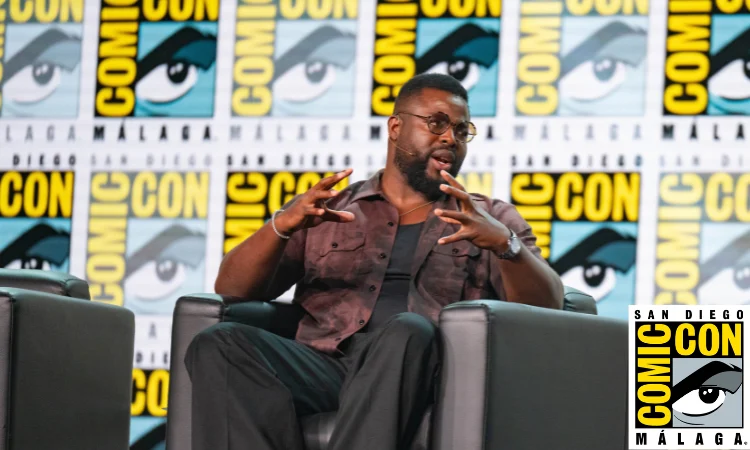
MALAGA, SPAIN — For nearly ten years, Winston Duke has inhabited one of the most commanding figures in modern cinematic history: M’Baku, the formidable, unyielding leader of Wakanda’s Jabari tribe. Yet, as the actor looks back on a journey that began with Ryan Coogler’s groundbreaking 2018 cultural phenomenon Black Panther, he admits that stepping into the role today would look fundamentally different.
Speaking during a headline panel at San Diego Comic-Con Málaga, Duke offered a candid, reflective masterclass on his evolution as a performer. Far from resting on the laurels of his established MCU persona, the actor explored the shifting landscape of his career, shared untold stories of his early days alongside fellow Yale alumnus Lupita Nyong’o, and revealed the bizarre dietary hurdle that nearly derailed his physical preparation for the role.
As Duke prepares to reprise his role in the highly anticipated Avengers: Doomsday—slated for a UK cinematic release on December 16, 2026—his reflections paint a portrait of an actor deeply engaged with the craft of storytelling, stunt advocacy, and the psychological nuance of playing a character often mislabeled as a villain.
Main Facts: A Decade of M’Baku and the Road to Avengers: Doomsday
Winston Duke’s tenure as M’Baku has cemented him as a fan-favorite cornerstone of the Marvel Cinematic Universe. Introduced as a fierce challenger to T’Challa in the original Black Panther, the character has since evolved into a vital protector of Wakanda, appearing in Avengers: Infinity War, Avengers: Endgame, and Black Panther: Wakanda Forever.
His next appearance will be in the sprawling crossover event Avengers: Doomsday, scheduled to hit UK theaters on December 16, 2026. However, Duke’s recent remarks at San Diego Comic-Con Málaga—which ran from October 1 to 4, 2026, at the FYCMA venue—signal that the actor approaches this upcoming chapter with a vastly matured artistic sensibility. Sharing the stage with Spartacus and The Hobbit star Manu Bennett and Olympic karate champion Sandra Sánchez, Duke discussed the philosophical underpinnings of his character, the realities of physical transformation, and the unseen sacrifices of the stunt community.
Chronology: From Yale Drama Classrooms to Global Marvel Stardom
To understand Winston Duke’s appreciation for the Marvel machine, one must trace his journey back to the halls of the prestigious Yale School of Drama. Long before they were household names commanding global box offices, Duke and classmate Lupita Nyong’o shared common aspirations rooted in simple enthusiasm for cinema.
The Early Days and the Dream of the Set
Recalling a period before either actor had stepped foot in a major Hollywood studio, Duke shared a memory of catching the first Avengers film on a day off from grueling drama school rehearsals.
"We both loved the Hulk," Duke reminisced, referencing his shared bond with Nyong’o, who would later star as Nakia in the Black Panther franchise. "And our dream was just to be on set."
Rather than harboring calculated ambitions of global domination or superhero iconography, Duke’s early career philosophy was refreshingly utilitarian: he simply wanted to work, tell compelling stories, and immerse himself in collaborative creative environments. That drive ultimately paved the way for both actors to become integral pillars of one of the most successful cinematic franchises in history.
The 2018 Breakthrough and the "Corn Caper"
When Duke secured the role of M’Baku for the original Black Panther, the physical demands required a dramatic body transformation. Yet, despite months of intense training and rigorous gym regimens, Duke found his physical progress mysteriously stalling.
A series of comprehensive blood tests eventually revealed a surprising culprit: unexpected food sensitivities. Among them was a staple of his diet that he consumed regularly.
"I can’t touch corn. And I was eating corn out of the can," Duke revealed.
Once he eliminated the allergen from his diet, his body responded rapidly. The transformation was so swift that by the time he stepped onto set to film M’Baku’s multi-day ritual combat challenge against T’Challa, he was shedding weight at an alarming rate. The production team was forced to scramble, executing emergency costume alterations over the weekend to accommodate his shrinking frame.
Supporting Data: Character Philosophy and the "Stress Test"
One of the most compelling insights Duke shared in Málaga centered on how he constructs his characters from the inside out. For audiences, M’Baku’s introduction cast him as an antagonist—a traditional cinematic obstacle standing in the way of the protagonist’s ascendance to the throne. Duke, however, has never viewed the character through that binary lens.
Reframing the "Bad Guy"
"For me as an actor, I never, ever judge my characters first. And I never think of them as bad guys," Duke explained. Instead of playing a villain, Duke conceptualized M’Baku’s narrative function through a specific, sociological framework:
- The Stress Test: "I’ve always played M’Baku as a stress test."
- Systemic Interrogation: "If that means testing the new prince, if that means testing the system, if that means saying the thing that everyone else in the room might be thinking, but is afraid to say, that’s the character."
This philosophy explains why M’Baku resonates so deeply with audiences. Even when he is verbally or physically opposing Wakanda’s central leadership, he does so out of an uncompromising fidelity to his own moral code and the preservation of his people, the Jabari. He may occasionally act as an antagonist, but in his own mind—and in Duke’s performance—he is fundamentally a good man doing what he believes is necessary.
Official Responses: The Evolution of a Performance
Duke’s tenure in the MCU has allowed him to grow not just as a man, but as an artist navigating the complexities of blockbuster filmmaking. Ten years after first stepping into the shoes of the Jabari leader, Duke admits that his perspective on acting has fundamentally transformed.
"It allows me to feel like a much richer actor today than I was ten years ago," Duke reflected. "If I could play in Black Panther again, it would be a completely different [M’Baku]."
This self-critique is not born of regret, but rather of celebration. For Duke, the beauty of an acting career lies in the accumulation of life experience and contextual depth.
"The excitement about being an actor is that every time you approach your craft, you approach it with the context of everything that’s happened."
This refined perspective will undoubtedly inform his performance in Avengers: Doomsday. As the MCU expands into new thematic territories, having actors of Duke’s caliber—who continuously interrogate and deepen their characters—ensures that these massive crossover events retain emotional grounding and narrative authenticity.
Implications: Stunt Coordination, Industry Respect, and the Future of MCU Action
Duke’s respect for the cinematic craft extends far beyond line delivery and character motivation. His recent work playing a stunt coordinator in the action-comedy The Fall Guy profoundly shifted his perspective on the physical mechanics of filmmaking and the unsung heroes of the industry.
Shedding Light on Stunt Work
During the Comic-Con panel, Duke spoke passionately about the immense physical sacrifices made by stunt teams—professionals who regularly put their bodies on the line to elevate actors and directors, often disappearing from productions due to injury while filming presses relentlessly onward.
"I never realised how much sacrifice they make," Duke said, noting that stunt performers are "amongst the most important people on set."
This realization carries a poetic symmetry with his MCU persona. M’Baku is a character defined by physical prowess, martial discipline, and deep-seated respect for strength and honor. In Duke’s eyes, the real-world stunt performers embody those exact virtues behind the scenes.
Looking Toward Avengers: Doomsday
As the entertainment industry looks ahead to the release of Avengers: Doomsday on December 16, 2026, the expectations for Marvel’s cinematic universe are exceptionally high. The studio is navigating a pivotal transitional phase, relying on seasoned veterans like Duke to provide continuity, emotional weight, and audience trust.
Duke’s journey—from a struggling drama student sharing cinematic daydreams with Lupita Nyong’o to a defining pillar of modern superhero cinema—underscores the unpredictability and magic of the industry. Whether he is navigating unexpected food sensitivities, redefining how villains and anti-heroes are written, or advocating for the safety and recognition of stunt coordinators, Winston Duke proves that being part of a mega-franchise is about much more than wearing a costume. It is about continuous growth, humility, and an unyielding commitment to the truth of the story.
