
The Chronicle of the Displaced: Julia Loktev Confronts the Long Shadow of Autocracy in My Undesirable Friends: Part II — Exile
Main Facts
Thirteen years after her cinematic absence following the critically acclaimed The Loneliest Planet, filmmaker Julia Loktev has engineered one of the most remarkable and uncompromising returns in contemporary documentary history. Her latest masterwork, My Undesirable Friends: Part II — Exile, continues the vast, immersive exploration of Russian journalists forced to flee Vladimir Putin’s increasingly totalitarian regime. Picking up where its predecessor—Part I — Last Air in Moscow—left off, the expansive new project chronicles the shattering of an open society and the harrowing diaspora of its most outspoken truth-tellers.
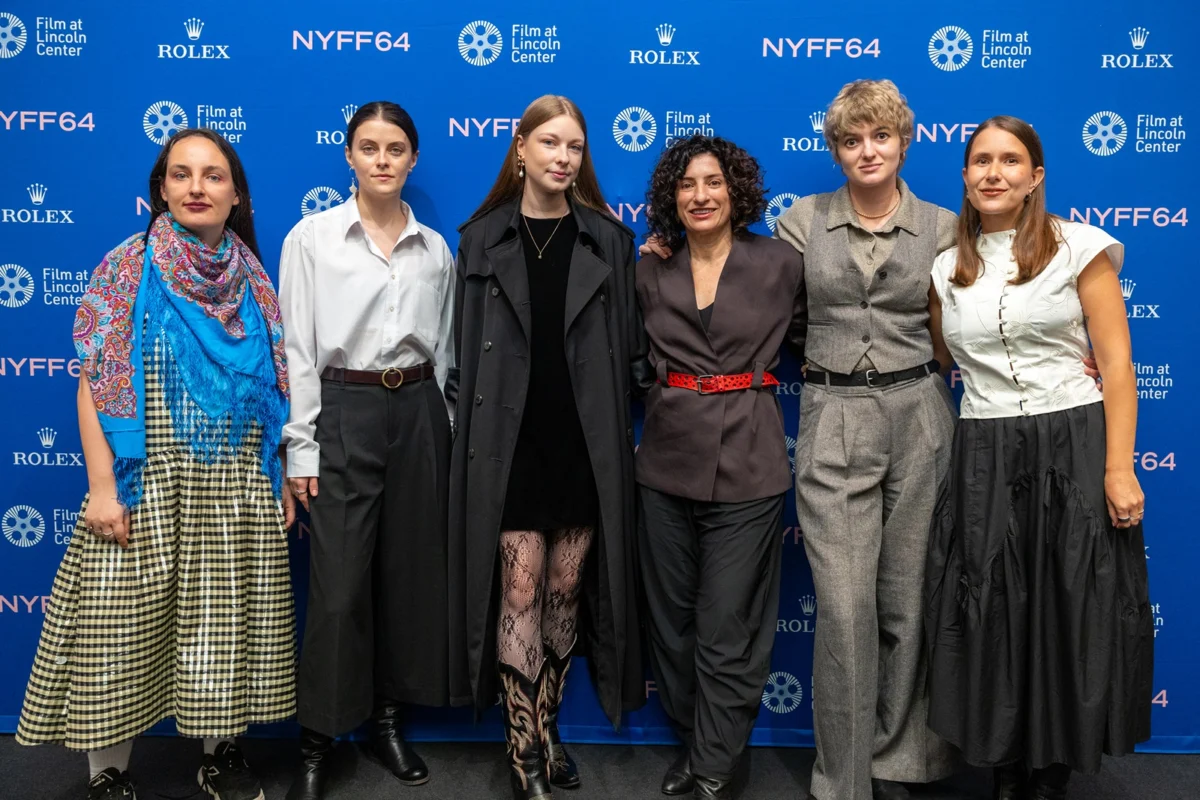
Spanning a dizzying twelve countries over four-and-a-half years, Exile shifts from the tense, open-air defiance of Moscow’s final days under the shadow of war to the indefinite, bureaucratic, and physically perilous reality of life abroad. The project arrives with high-profile backing, including executive producers Meryl Streep and Laura Poitras, and has enjoyed a prestigious festival run—from its world premiere at the Venice International Film Festival and a North American debut at the New York Film Festival to its theatrical rollout at Film Forum.
Yet, beyond the critical accolades and high-art pedigree, Loktev’s film serves as a vital historical artifact. It documents an unprecedented era of transnational repression, where journalists do not merely escape danger, but discover that the regime’s long arm—and its destabilizing geopolitical echoes—pursues them across borders, redefining the modern condition of exile.
Chronology of a Catastrophe: From Moscow’s Streets to Global Flight
To understand the architecture of My Undesirable Friends: Part II — Exile, one must look at the timeline of events that dictated Loktev’s unique filmmaking methodology.
- The Moscow Prelude (Late 2021 – Early 2022): In Part I, Loktev documented four and a half months in Moscow. During this window, citizens could still walk openly, protest the government, and speak with relative freedom—a fragile status quo that felt permanent to many until the full-scale invasion of Ukraine shattered the illusion.
- The Midnight Flight (February 2022): As the war commenced, Loktev’s subjects were forced to flee under the cover of night. In a testament to the sheer logistical terror of the operation, Loktev recalls uploading critical footage from a Russian hotel room over precarious Wi-Fi, refusing to leave the country until the data was safely mirrored in New York.
- The Transnational Labyrinth (2022 – 2025): Exile picks up two days after the exodus. Rather than capturing a single narrative climax, the film tracks its subjects through a dozen different nations. Most characters relocate multiple times, navigating temporary housing, foreign languages, and institutional alienation.
- The Inauguration and the Return of Paranoia (January 2025 – April 2025): The film’s later chapters capture the uncanny convergence of American political shifts with Russian trauma. Following subjects like Ksyusha Mironova—who films on the streets of Washington, D.C., during Donald Trump’s inauguration—Loktev captures the disorienting realization that democratic backsliding is a global, echoing phenomenon. Principal photography officially concluded in April 2025, capturing a bittersweet era Loktev refers to as "the normal not normal."
Supporting Data and Production Insights
The production of My Undesirable Friends is as radical in its form as it is terrifying in its substance. Eschewing traditional documentary artifice, Loktev relied on an ultra-minimalist, highly responsive setup.
- Equipped for Flight: Loktev shot the multi-year epic almost entirely on successive generations of the iPhone, upgrading the hardware and microphones as new models were released. This discreet approach allowed her to blend into the claustrophobic environments of her subjects’ temporary apartments—spaces characterized by what she describes as "the same gray IKEA couch."
- Scale and Scope: The combined runtime of the project approaches twelve hours. Part I occupies a single city over a compressed timeline, whereas Part II is a sprawling transnational epic crossing twelve sovereign borders.
- The Anatomy of Exile: Among the film’s core subjects are prominent Russian journalists such as Elena Kostyuchenko—who survived a harrowing, highly publicized poisoning attack while in exile—and Ksyusha Mironova, who transitioned from reporting in Moscow to studying broadcast journalism at the New York Film Academy.
Official Responses and the Realities of Transnational Repression
The release of Exile coincides with a chilling escalation in real-world events that mirror the film’s darkest themes. Investigative reports from publications such as The Guardian and The New Yorker have recently detailed uncovered Russian assassination and sabotage plots targeting dissidents and journalists residing in Western Europe and the United States.
Rather than utilizing the elite, highly trained secret agents of classic Cold War fiction, modern Russian operations frequently employ ad-hoc, task-oriented operatives recruited through organized crime networks—a reality that keeps Loktev’s subjects in a perpetual state of hyper-vigilance.

When discussing the reception of her work, Loktev emphasizes that the film is not merely a political treatise, but an emotional roadmap of endurance:
"It’s about the long haul. It’s about how you keep going. It’s not a single plot with a culmination… It’s a kind of condition. It’s made up of many plots and many challenges as one thing happens after another."
Critics and audiences alike have noted the visceral, kinetic tension of the viewing experience. The film refuses to offer easy catharsis, instead forcing viewers to inhabit the exhausting, daily friction of maintaining a professional moral duty when your homeland has criminalized your very existence.
Broader Implications: The Normal Not Normal
The ultimate triumph of My Undesirable Friends: Part II — Exile lies in its terrifying prescience. As Loktev continued to edit the final chapters of her film into early 2025, the global political landscape increasingly mirrored the descent she was documenting.
The inclusion of the U.S. presidential inauguration sequences introduces a haunting thematic parallel. Characters who fled Russia seeking sanctuary in the West found themselves confronted by domestic political rhetoric that openly disparaged independent journalism, echoing the authoritarian playbook they believed they had left behind. For subjects like Ksyusha, who grew up during the Obama era viewing America as a beacon of democratic hope, the revelation of these shared systemic vulnerabilities has been deeply destabilizing.
Yet, amidst the pervasive dread of poisoned tea, court convictions in absentia, and the permanent loss of home, Exile avoids becoming a purely nihilistic document. Loktev insists on capturing the full texture of human existence: people falling in love, mourning lost parents, raising children, and finding moments of genuine joy inside the margins of crisis.
By refusing to look away, Julia Loktev has constructed a monument to journalistic integrity and human resilience. Exile does not offer a comforting resolution because history has not offered one. Instead, it leaves us standing at the precipice of an uncertain century, capturing the exact moment the cliffside begins to fall away—and asking how we manage to keep walking anyway.
