
The Aristocracy of Obsolescence: Sian Clifford Reigns Supreme in Samuel Abrahams’ Lady
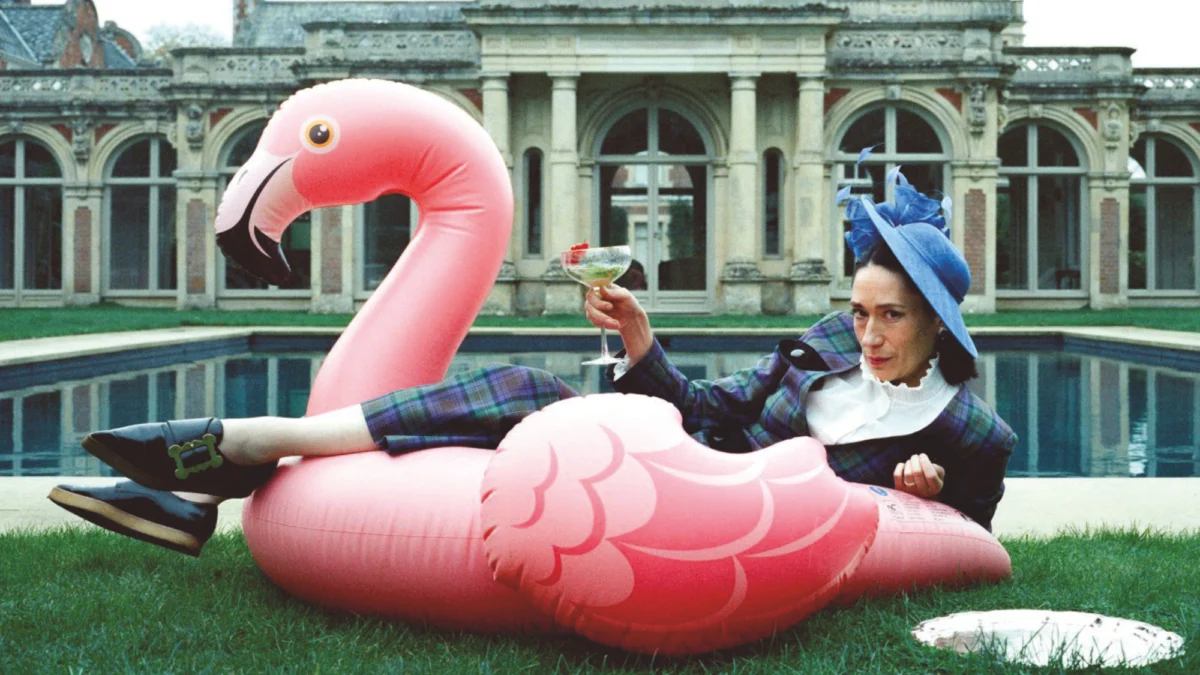
In an era defined by a crumbling social contract and the relentless, often vapid pursuit of digital relevance, the British aristocracy finds itself in a peculiar, precarious position. As the divide between the entrenched elite and the reality of modern economic struggle widens, the image of the landed gentry has shifted from one of stoic authority to something approaching the absurd. It is within this theater of the ridiculous that director Samuel Abrahams plants his feature debut, Lady—a razor-sharp, mockumentary-style character study that manages to be both a savage indictment of class privilege and a triumphant, high-wire act of comedic performance.
At the heart of this storm is Sian Clifford, an actress long relegated to the periphery of prestige television, who here seizes the spotlight with the ferocity of a performer finally unshackled. As Lady Isabella Ravenhyde, Clifford delivers a turn that is as demented as it is poignant, proving that the vacuum of celebrity can be just as potent in a drafty country manor as it is on a red carpet.
The Narrative Premise: A Portrait of Delusion
The film functions as a meta-textual investigation into the hunger for fame. The premise is deceptively simple: Sam (played with a dry, weary charm by Laurie Kynaston), a struggling young filmmaker still riding the fading fumes of a short-film award nomination, is hired to document the life of Lady Isabella Ravenhyde. Isabella, a woman whose vanity is matched only by her dwindling bank account, claims to be filming a high-profile biography for Netflix.
In reality, the project is a product of her own fevered imagination. As Sam and his crew embed themselves in her opulent, dusty estate, they become involuntary witnesses to a life of performative excess. Isabella, who refers to herself as "the aristocracy’s answer to the Kardashians," spends her days day-drinking, berating her stoic maid, Becky (Juliet Cowan), and concocting elaborate, nonsensical schemes to capture the public’s attention. The film thrives on the friction between Sam’s earnest, if misguided, desire to capture "truth" and Isabella’s desperate, frantic insistence on projecting a myth.
Chronology: From Wallflower to Whirlwind
To understand the magnitude of Clifford’s performance, one must look at the trajectory of her career. For years, audiences knew her best as the uptight, long-suffering Claire in the cultural phenomenon Fleabag. In that role, Clifford was a master of the repressed gaze—the ultimate foil to Phoebe Waller-Bridge’s chaotic energy. She was the wallflower, the woman holding the world together while it threatened to implode around her.
Following Fleabag, Clifford’s filmography was marked by a series of supporting roles that reinforced this image of the "gifted wallflower." Whether as a "dopey sadsack" in The Ballad of Wallis Island or a nondescript publicist in Mother Mary, she was an actor defined by her restraint.
Lady represents a complete rupture from this archetype. In the film’s opening act, we see the baseline of Isabella’s existence: a woman drowning in gin and delusions. As the film progresses, the viewer witnesses the breakdown of the "Lady" persona, revealing the raw, exposed nerves beneath. The middle act sees the introduction of the film’s primary conflict: the tension between the filmmaker and his subject. By the final act, the narrative devolves into a surreal, high-stakes farce—culminating in an unforgettable sequence involving a low-rent regional talent show, a bizarre crow costume, and a display of interpretive dance that is as humiliating as it is cathartic.
Supporting Data: The Craft Behind the Chaos
While the performance is the primary draw, the film’s technical execution is what elevates it from a mere sketch to a coherent cinematic work. The collaboration between director Samuel Abrahams and co-writer Miranda Campbell Bowling yields a script that is dense with "pithy quips" and scathing observations.
- Costume Design: Terri Higgins’ work is nothing short of character-defining. The wardrobe acts as a visual shorthand for Isabella’s internal state—garish, oversized, and hopelessly out of touch with the modern world.
- Editing: Josh Mallalieu’s editing is intentionally jagged, maintaining the "found-footage" aesthetic required to keep the documentary conceit believable while heightening the comedic beats.
- Comparison to The Comeback: The film invites inevitable comparisons to Lisa Kudrow’s The Comeback. Much like Valerie Cherish, Lady Isabella is a woman who sees her life through the lens of a camera, believing that if she is being watched, she must be meaningful. However, where Kudrow’s performance was rooted in a tragic, relatable desperation, Clifford’s is rooted in a specific, aristocratic delusion—the belief that the world is inherently designed to revolve around her.
Official Perspectives and Creative Vision
In discussing the film, Abrahams has noted that the project was born out of a desire to explore the "absurdity of the U.K.’s class structure" in the 21st century. By positioning Sam—a representative of the precarious, middle-class gig economy—against the backdrop of Isabella’s fading, inherited wealth, the film touches on the generational divide that defines contemporary Britain.
The production team notes that the film’s "recklessly freeform" nature allowed for significant improvisation, particularly from Clifford. This freedom is palpable in the scenes where Isabella attempts to seduce or manipulate Sam. These moments move beyond comedy, tapping into something darker: the predatory nature of someone who has lost everything but their pride.
When asked about the "one-joke" criticism often leveled at such mockumentaries, the production team has countered that the film is not about the joke, but the person. The film suggests that even if the narrative is slim, the depth of character study provides a substantial enough foundation to carry the runtime.
Implications: The Media Landscape and the Death of Privilege
The ultimate implication of Lady is a cynical reflection on our current media landscape. We live in an age where the "influencer" is the new nobility, and the "aristocrat" is merely an influencer with better real estate. Isabella’s insistence that she is the "Kardashian of the aristocracy" is the film’s most biting line, serving as a mirror to a society that values visibility over substance.
The film effectively argues that the obsession with being "seen" has democratized narcissism. Whether you are an old-money socialite or a social media star, the drive to create content out of one’s own existence is the same. By forcing the audience to sympathize with a woman who is, by all accounts, a monster of ego, the film forces us to confront our own relationship with fame and the people who seek it.
Furthermore, Lady serves as a warning about the death of institutional authority. Isabella represents a class that once dictated the social order, but now, she is a ghost in her own house, frantically trying to prove her relevance to a world that has largely moved on. The film does not ask us to pity the aristocracy, but it does ask us to look closely at the wreckage they leave behind when they are finally stripped of their power.
Conclusion
Lady is a triumph of character-driven comedy. It is a film that recognizes the inherent absurdity of its subject matter and leans into it with reckless abandon. Sian Clifford has effectively shed the skin of the "wallflower," delivering a performance that is fearless, grotesque, and undeniably magnetic.
While the storyline may be "slender," it serves its purpose as a delivery system for a profound exploration of human vanity. Whether she is barking orders at her staff or dancing in a crow suit, Lady Isabella Ravenhyde is a character that lingers long after the credits roll. In the end, Lady is not just a mockumentary about a fading aristocrat; it is a vital, sharp-witted commentary on the state of celebrity in the modern age, anchored by one of the most compelling performances of the year.
