
Zoinks and Screams: How Warner Bros. Turned Mystery Inc. Into Horror Royalty With a Brilliant Social Media Campaign
For generations, children and adults alike have viewed a Great Dane and his cowardly, sandwich-obsessed best friend as the ultimate comfort viewing. Long before teenagers tuned into prestige psychological thrillers or blood-soaked slashers, Scooby-Doo, Where Are You! served as the quintessential gateway drug for horror aficionados.
Sure, the monsters, ghosts, witches, and swamp creatures unmasked by Fred, Daphne, Velma, Shaggy, and Scooby almost always turned out to be greedy real estate developers or disgruntled amusement park owners in rubber masks. The supernatural was routinely debunked, reduced to the mundane malice of human greed. But that cynical formula never diminished the genuine atmosphere of dread, the creeping shadows of Gothic mansions, or the sheer terror in Scooby’s eyes. Mystery Inc. earned their stripes as true horror icons.
Now, Warner Bros. Animation is leaning heavily into that legacy. In a brilliant marketing push shared via the official Scooby-Doo Instagram account, the studio has released a stunning, highly detailed series of parody horror movie posters. Replacing modern cinematic monsters and cult classics with beloved characters and inside jokes from the Scooby-Doo universe, this campaign has ignited the internet. From contemporary box-office hits to timeless cinematic masterpieces, Mystery Inc. has officially invaded the dark and bloody side of cinema.
Main Facts: Deconstructing the Viral Campaign
The core of this viral sensation stems from a newly unveiled collection of illustrated one-sheet posters published by Warner Bros. Animation. Rather than promoting an upcoming series or an unannounced theatrical feature, the studio dropped the artwork purely for fan engagement, playfully mashing up iconic horror properties with Hanna-Barbera iconography.

The rollout features a mix of fresh cinematic hits and hallowed horror history:
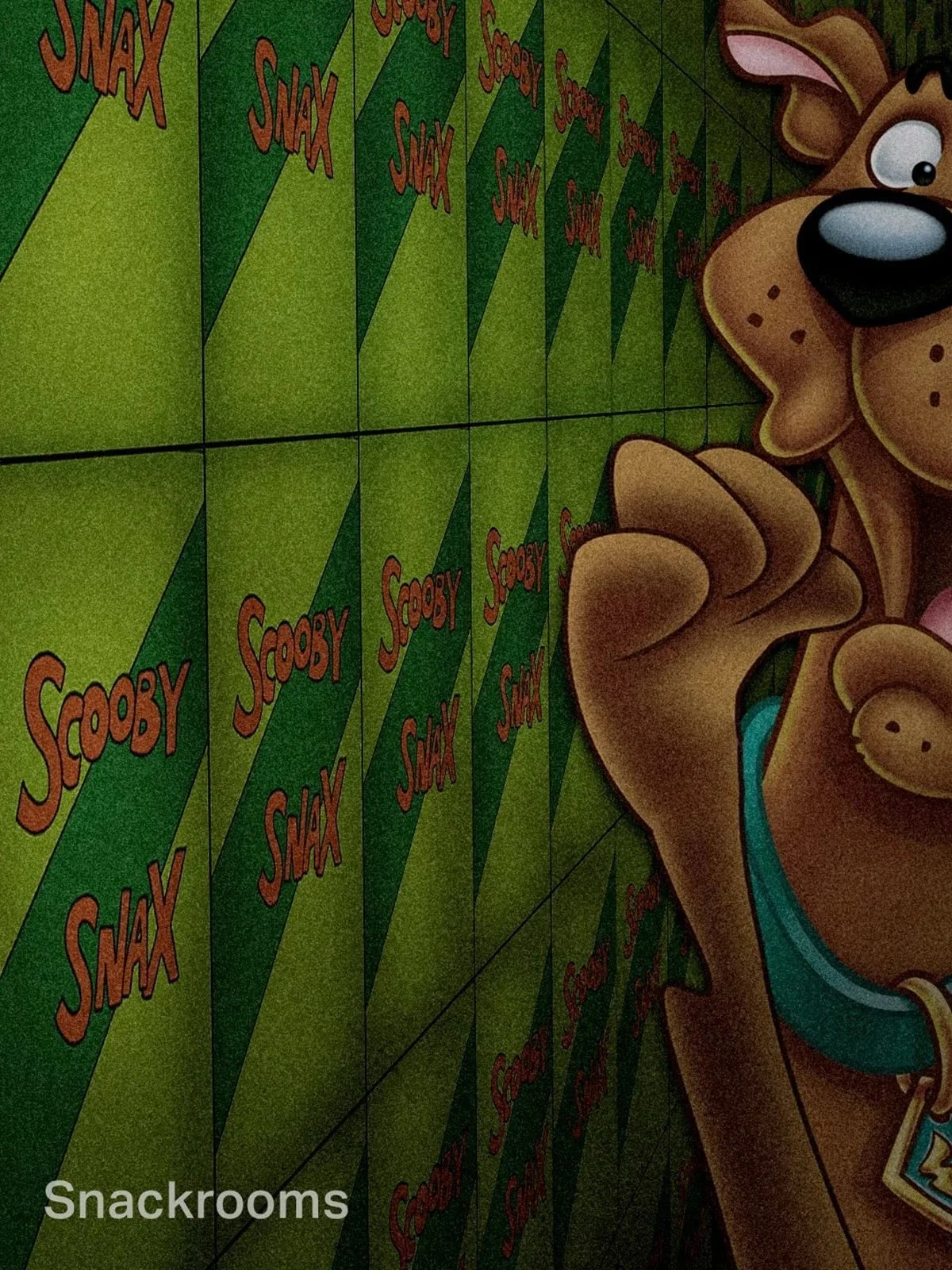
- "Snackrooms": A direct parody of the viral found-footage phenomenon Backrooms.
- "Obsessed": A nod to Curry Barker’s breakout indie horror hit Obsession.
- "Wimps": A frightened spin on the tense horror film Weapons.
- "Twit": A homage to Stephen King’s terrifying clown narrative It, featuring a classic Hanna-Barbera spook.
- "Hexed": A 1990s-soaked tribute to The Craft, starring the beloved fictional rock band the Hex Girls.
- "The Van in the Woods": A metatextual nod to Drew Goddard and Joss Whedon’s meta-horror masterpiece The Cabin in the Woods.
- "The Whining": Stanley Kubrick’s psychological terror The Shining, reimagined through the lens of Shaggy Rogers’ ravenous appetite.
Each poster faithfully mirrors the color grading, typography, and compositional framing of the original films, substituting terrifying entities with clumsy cartoon characters, liminal spaces filled with Scooby Snacks, and axes swinging through pantry doors for the sake of a late-night sub.
Chronology: The Evolution of Scooby-Doo’s Horror Integration
To understand why this poster campaign resonates so deeply, one must examine how Scooby-Doo evolved from Saturday morning children’s entertainment into an omnipresent pop-culture touchstone deeply intertwined with the horror genre.
1. The Hanna-Barbera Era (1969–1980s)
Created by Joe Ruby and Ken Spears for Hanna-Barbera, Scooby-Doo, Where Are You! premiered in September 1969. While ostensibly a comedy-mystery for kids, the show drew heavy inspiration from classic Universal Monsters, Gothic horror tropes, and Vincent Price thrillers. Villains like the Ghost Clown, the Miner Forty-Niner, and the Black Knight Ghost established a template that merged mild frights with slapstick comedy.

2. The Direct-to-Video Golden Age (1998–2001)
As the original fans aged, Warner Bros. pivoted the franchise into genuinely darker territory with direct-to-video animated films. Movies like Scooby-Doo on Zombie Island (1998), Scooby-Doo! and the Witch’s Ghost (1999)—which introduced the iconic goth-rock band The Hex Girls—and Scooby-Doo and the Alien Invaders (2000) broke the formula. For the first time, the monsters were real, the stakes were life-or-death, and the atmosphere genuinely terrified audiences.
3. The Live-Action and Meta Era (2002–2020s)
James Gunn’s scripts for the 2002 live-action Scooby-Doo film leaned into adult subtext and genuine spookiness, setting the stage for subsequent darker iterations like Scooby-Doo! Mystery Incorporated (2010–2013). This acclaimed animated series deconstructed the gang’s psychology within a deeply eerie, Lovecraftian town history.
4. The 2026 Social Media Takeover
Culminating in the October 2026 Instagram poster drop, Warner Bros. has successfully bridged the gap between classic Saturday morning nostalgia and contemporary Internet horror lore, signaling that the franchise remains culturally agile and entirely self-aware.
Supporting Data: Breaking Down the Posters
The intricate details hidden within each of the seven parody posters reveal a deep appreciation for both horror cinema and Hanna-Barbera history.

"Snackrooms" (Parodying Backrooms)
The liminal, yellow-hued endless hallways of the internet creepypasta and cinematic adaptation Backrooms get a hilarious cartoon upgrade. In this poster, Scooby-Doo navigates the disorienting, damp-carpeted labyrinth. However, instead of looming entities hiding in the dark, the infinite corridors are stacked high with towering pyramids of Scooby Snacks. As pop-culture commentators have noted, while Scooby probably prefers regular Italian pasta to internet creepypasta, he’d better devour those snacks quickly before the architectural geometry shifts again.
"Obsessed" (Parodying Curry Barker’s Obsession)
Curry Barker’s breakthrough horror hit Obsession takes a cozy, academic turn in the hands of Velma Dinkley. The poster suggests Velma made a Faustian wish for an infinite collection of tomes, resulting in a surreal, claustrophobic nightmare of falling paper and endless literature. True to character, Velma doesn’t look remotely terrified; if anything, she appears intensely curious, perfectly embodying the "Jinkies" energy fans have loved for decades.
"Wimps" (Parodying Weapons)
Poking fun at the tense cinematic thriller Weapons, this artwork features Shaggy and Scooby sprinting in absolute terror from what fans speculate is a caricature of Aunt Gladys. With the Weapons prequel slated for future release, the internet has been quick to point out that Aunt Gladys possesses the exact sort of overbearing, hyper-specific menace traditionally found in classic Scooby-Doo culprit line-ups.
"Twit" (Parodying Stephen King’s It)
Long before Stephen King ever conceived of Pennywise the Dancing Clown, Hanna-Barbera introduced viewers to the Ghost Clown in the classic Scooby-Doo, Where Are You! episode "Bedlam in the Big Top." Rebranding the terrifying epic It into "Twit," this poster elevates the creepy circus performer to his rightful place among cinema’s most unsettling clowns, proving that animated television pioneered coulrophobia decades before modern horror blockbusters capitalized on it.

"Hexed" (Parodying The Craft)
Capturing the absolute essence of 1996 teen witch cinema, this poster features Thorn, Luna, and Dusk—collectively known as the Hex Girls from Scooby-Doo and the Witch’s Ghost—striking the iconic, leather-clad stance of Neve Campbell, Fairuza Balk, Rachel True, and Robin Tunney. Fans online have universally praised this tribute, declaring that the internet "stans" the Hex Girls today just as fiercely as it did in the late ’90s.
"The Van in the Woods" (Parodying The Cabin in the Woods)
Drew Goddard’s masterclass in horror deconstruction gets a vehicular makeover as "The Van in the Woods." The Mystery Machine is depicted battered, weather-beaten, and parked ominously outside an isolated woodland shack. Given how often the van breaks down in the middle of spooky forests, it is arguably the most realistic piece of survival horror imagery in the entire collection.
"The Whining" (Parodying The Shining)
Stanley Kubrick’s psychological masterpiece The Shining is transformed into a cartoon crisis centered on Shaggy Rogers. Titled "The Whining," the poster features a wild-eyed Shaggy hacking through a wooden door with an axe—not out of murderous insanity, but out of a desperate, primal urge to find a colossal submarine sandwich. If a midnight snack requires breaking down a few hotel doors, Shaggy is more than willing to pay that toll.
Official Responses and Fan Reactions
Within hours of hitting social media, the campaign went viral across X (formerly Twitter), Reddit, and Instagram. Horror creators, film journalists, and casual fans alike flooded the comment sections with praise for the graphic design team at Warner Bros. Animation.

"The intern who greenlit these posters deserves a raise, a bonus, and a lifetime supply of Scooby Snacks," wrote one prominent horror film blogger.
Another user noted the uncanny accuracy of the branding: "They didn’t just slap Scooby’s face on a poster; they actually matched the color timing, grain, and font treatments of the original theatrical releases. It shows a genuine love for the genre."
While Warner Bros. Animation executives have not yet formally commented on whether these posters hint at a larger narrative project, the overwhelming public response has put pressure on the studio to consider expanding the concept.
Implications: The Case for "Scooby-Doo vs. Iconic Monsters"
The viral success of these parody posters highlights a massive, untapped commercial opportunity for Warner Bros. Discovery. As the media conglomerate that owns both the Scooby-Doo intellectual property and a vast catalog of cinematic horror milestones—including The Conjuring universe, It, The Exorcist, and various slasher franchises—the corporate synergy writes itself.

For years, fan art has depicted Mystery Inc. crossing paths with modern horror icons like Michael Myers, Jason Voorhees, Freddy Krueger, and Art the Clown. The internet has routinely clamored for an official crossover film where the gang’s cynical rationalizations are forced to collide with inescapable, supernatural terror.
Imagine the comedic and narrative potential: Fred attempting to construct an elaborate pulley-and-net trap for Freddy Krueger on Elm Street, only for the dream demon to casually bypass it; Velma desperately trying to explain away a demonic possession using physics while Pea-in-the-Sky terror unfolds around her; and Shaggy and Scooby attempting to bribe Annabelle the doll with a double-decker pastrami sandwich.
Warner Bros. sits on a goldmine of horror IPs. By gently poking fun at modern cinematic trends through these promotional posters, the studio has reminded the world that Scooby-Doo remains one of its most versatile and beloved cultural anchors. Whether these posters remain standalone pieces of social media ephemera or serve as a soft launch for an official cinematic crossover event, one thing is certain: the world is more than ready for Mystery Inc. to face down true cinematic terror.
Until then, grab a box of Scooby Snacks, lock your doors, and remember: if you hear a spooky noise in the hallway, it might just be Shaggy looking for a midnight snack—or it might be something much worse. Jinkies.
