
Guillermo del Toro Defends Alejandro G. Iñárritu’s ‘Digger’: A Cinematic Flashpoint in the Age of Franchise Fatigue
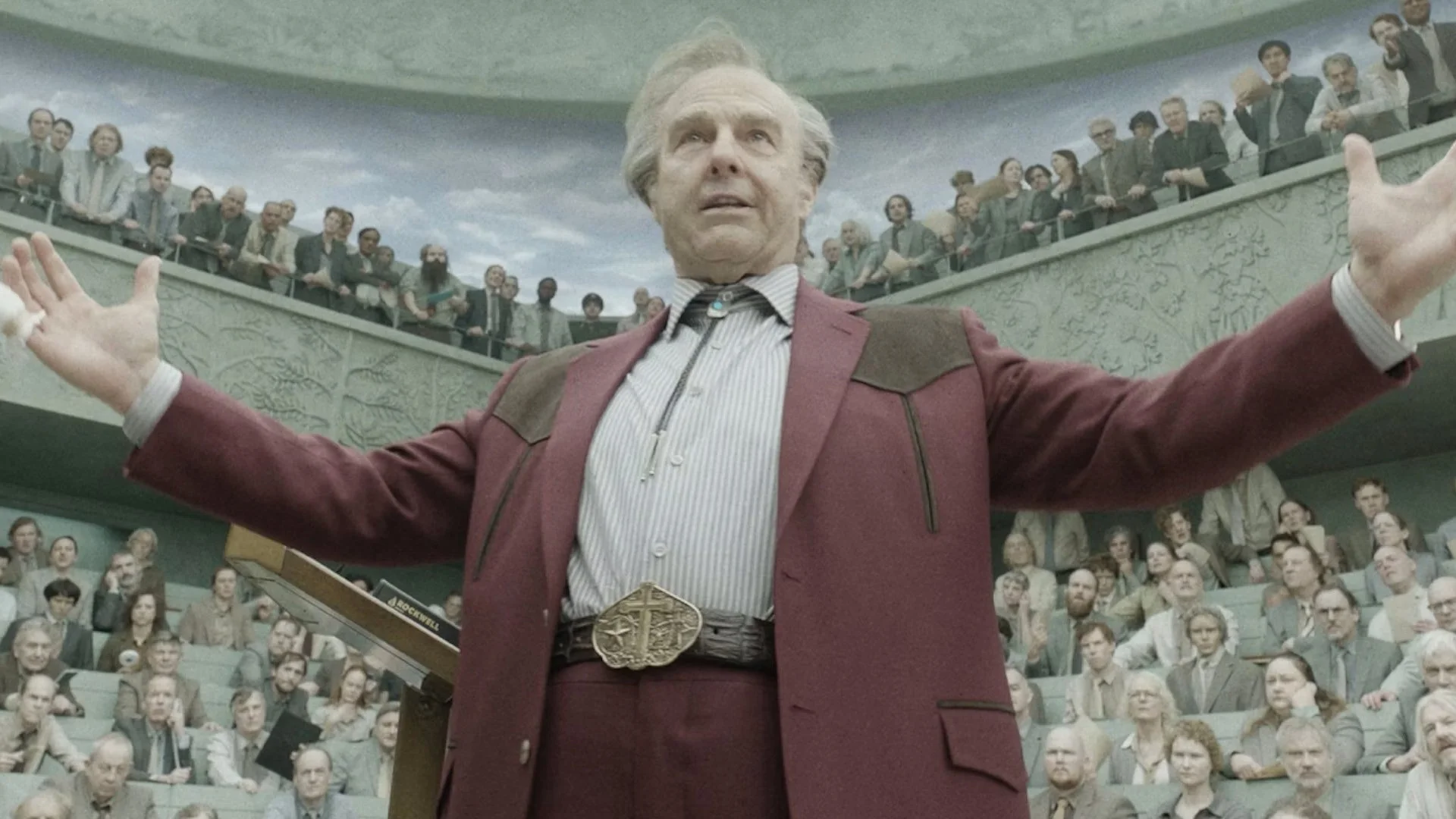
In the modern cinematic landscape, where the box office is dominated by intellectual property, sequels, and cinematic universes, the arrival of a high-budget, original vision is a rare event. Yet, when such a film arrives, it is often met with a polarized reception that highlights the widening gap between critical expectations and auteur-driven ambition. The latest flashpoint in this ongoing cultural debate is Digger, the dark, sprawling, and undeniably audacious new film from Academy Award-winning director Alejandro G. Iñárritu.
As the film faces a challenging critical reception, it has found an unlikely, high-profile champion: Guillermo del Toro. The Pan’s Labyrinth and The Shape of Water director has taken to social media to aggressively defend the film, framing the backlash not as a failure of the movie itself, but as a symptom of a cynical critical culture that has grown hostile toward bold, ambitious storytelling.
The Premise: A High-Stakes Absurdist Nightmare
At the heart of Digger lies a premise that is as ambitious as it is bizarre. The film stars Tom Cruise as Digger Rockwell, a character described as a greedy, ego-driven oil baron who holds the title of the most powerful man in the world. As a narrative, it is a biting dark comedy that seeks to satirize the intersection of corporate greed, political hubris, and the looming reality of climate change.
The plot kicks into gear when a colossal, apocalyptic iceberg from Greenland—personified with the name "Judy"—begins a trajectory that threatens global stability. Rather than a standard disaster movie, Iñárritu pivots the film toward an examination of human vanity. Digger Rockwell, convinced of his own indispensability, races against time to position himself as the world’s sole savior, navigating a labyrinth of bureaucratic nightmares and personal delusions.
For Iñárritu, Digger represents a significant departure from the grounded, often somber tones of The Revenant or Birdman. It is a film that demands a theatrical experience, relying on scale and sensory complexity to deliver its message. However, the sheer ambition of the project has proven to be a double-edged sword, alienating some critics who view the film’s "top-heavy" nature as a structural liability.
A Chronology of the Controversy
The friction surrounding Digger did not begin upon its wide release, but rather manifested in the immediate wake of its premiere screenings.
- The Pre-Release Hype: Anticipation was high, given the pairing of an auteur like Iñárritu with a global megastar like Tom Cruise. Fans of original cinema hoped for a mid-budget-style narrative blown up to a blockbuster scale—a "prestige spectacle."
- The Critical Split: As the embargoes lifted, the reviews were starkly divided. While some lauded the visual audacity, others—most notably Variety—questioned the necessity of the film’s $125 million budget and its thematic coherence.
- The "Petty" Backlash: Shortly after the first wave of negative headlines appeared, Guillermo del Toro took to X (formerly Twitter) to address the discourse. He labeled the negative coverage "entirely petty," defending the film’s right to exist as a theatrical spectacle.
- The Digital Campaign: Del Toro escalated his support throughout the week, retweeting positive audience reactions and comparing the critical dismissal of Digger to historical precedents of misunderstood masterpieces.
- The Star’s Response: Tom Cruise, ever the diplomat, issued a statement on social media expressing his pride in the project, signaling a unified front between the star and his director in the face of critical headwinds.
The Case for the Defense: Del Toro’s Theoretical Framework
Guillermo del Toro’s defense of Digger is not merely an act of professional solidarity; it is a profound statement on the current state of film criticism. By invoking the history of cinema, Del Toro has attempted to reframe the conversation. He pointedly compared the current vitriol directed at Digger to the initial, lukewarm receptions of films that have since been canonized as masterpieces: The Big Lebowski, The King of Comedy, and Ridley Scott’s The Counselor.
"The film delivers in scale, ambition and reach at a theatrical screen level," Del Toro wrote. "Daring, bold and cinematically complex. Decidedly a theatrical experience."
His argument rests on the idea that critics are judging Digger based on what they think a movie should be, rather than what the film is attempting to achieve. In his view, the film is an act of "daring," and in an era where risks are rarely taken by major studios, the punishment of such a risk-taking film is detrimental to the ecosystem of cinema. By stating, "Dig or Die—c’mon!", Del Toro is urging audiences to look past the Rotten Tomatoes percentage and engage with the film on its own terms.
Supporting Data: The Critical Disconnect
The critical consensus, as reflected by the aggregator Rotten Tomatoes, currently sits at a precarious 51%. This number represents a deep divide. For many traditional critics, the film fails to land its intended comedic punches.
Owen Gleiberman, writing for Variety, provided perhaps the most stinging indictment of the film’s philosophy: "I’m not sure that Digger is going to connect, because it’s so full of itself—so top-heavy with importance. The movie cost north of $125 million to make, and that figure is not only too big to probably justify itself; it’s a testament to the arrogance of the filmmakers—to the assumption that we’ll turn out in droves for this ponderous absurdist lecture."
This review encapsulates the primary grievance against the film: that it is a "ponderous absurdist lecture." Critics who dislike the film point to the $125 million price tag as a symbol of excess, suggesting that the resources poured into the film did not result in a cohesive or entertaining narrative. They argue that the film’s tone is muddy, shifting uncomfortably between satire and high-concept drama, ultimately failing to satisfy either audience.
The Implications for Original Cinema
The controversy surrounding Digger serves as a microcosm of the modern film industry’s greatest tension. We live in an age where audiences and critics alike frequently complain about the lack of original ideas and the endless reliance on established franchises. Yet, when an original film of this magnitude is released, it is often subjected to a level of scrutiny that blockbusters with safer, pre-sold narratives are rarely forced to endure.
1. The Cost of Ambition
When a filmmaker is given $125 million to create an original story, the pressure to be universally appealing is immense. Digger is clearly not designed to be "universally appealing." It is a prickly, difficult, and visually challenging piece of work. The implication here is that the industry may be becoming less capable of supporting "mid-budget-plus" original films because the financial stakes are so high that anything less than a massive, four-quadrant hit is viewed as a failure.
2. The Influence of the "Auteur"
Del Toro’s intervention highlights the power of social media to disrupt the traditional gatekeeping of professional criticism. By bypassing the traditional review cycle and speaking directly to his followers, Del Toro is attempting to democratize the appraisal of the film. He is asking the audience to ignore the "top-heavy" critical establishment and decide for themselves.
3. The Future of Theatricality
One of the key points in Del Toro’s defense is that Digger is "decidedly a theatrical experience." This is a crucial distinction in the era of streaming. Many films are now produced with the assumption that they will be consumed on tablets or laptops. Digger, for all its faults as perceived by its detractors, is clearly designed for the immersive environment of a cinema. Whether the public will show up to support this vision, or whether they will heed the warnings of critics like Gleiberman, will likely determine the green-lighting of similar projects in the near future.
Conclusion: A Line in the Sand
Whether Digger will eventually find the audience that Guillermo del Toro believes it deserves remains to be seen. It is possible that the film will be remembered as a misunderstood classic—a victim of its own time—or it may simply be remembered as an expensive, miscalculated experiment.
However, the discourse surrounding the film has already achieved something significant: it has forced a conversation about the nature of risk in Hollywood. If audiences want original films, they must be willing to accept that not every original film will be perfect, and that some may be messy, ponderous, or even "full of themselves."
As the film continues its theatrical run, the question for the moviegoer is simple: are you willing to "Dig," or will you "drop out"? For those who crave cinema that challenges, frustrates, and dares to be different, Digger represents an opportunity to participate in a cultural experiment. For now, the film stands as a testament to the fact that even in the most sterile of corporate environments, there are still artists willing to swing for the fences—even if they risk striking out in the process.
