
The Shadow of Absence: Unpacking the Haunting Social Commentary of Tanmay Chowdhary’s Leela
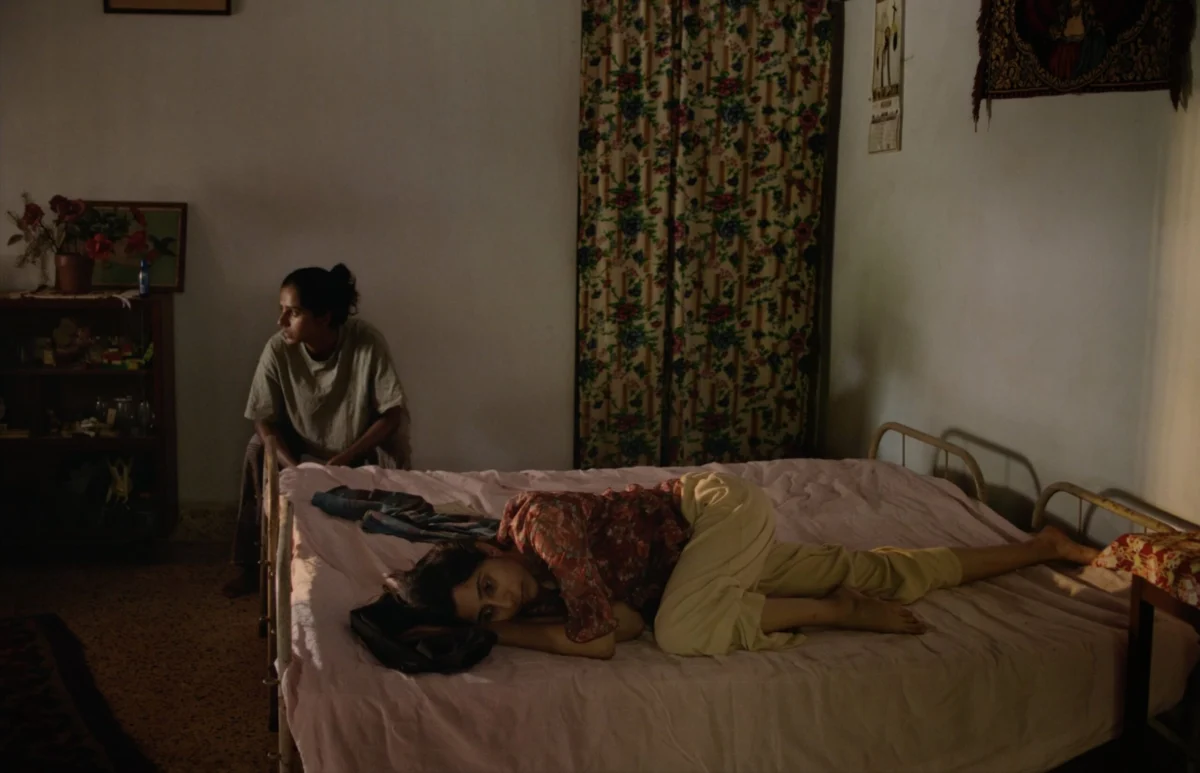
In the landscape of contemporary global short film, few works manage to capture the weight of societal decay with as much atmospheric precision as Tanmay Chowdhary’s latest directorial effort, Leela. Following his previous success with Madhu, Chowdhary returns to the screen with a narrative that is defined not by what is present, but by what is conspicuously missing. The film centers on the titular character, Leela, who vanishes from a desolate coastal community in India. Yet, in a bold creative choice, Leela never appears on screen. Instead, the audience is forced to inhabit the vacuum she leaves behind, navigating the grief, indifference, and systemic anxiety of those who remain.
By focusing on the ripples caused by her disappearance rather than the mystery of her whereabouts, Leela transcends the tropes of a standard missing-person procedural. It evolves into a haunting meditation on the normalization of tragedy and the stifling atmosphere of a community paralyzed by its own vulnerability.
The Anatomy of a Disappearance: Main Facts and Narrative Scope
At the heart of the film’s narrative structure is a dialogue-driven exploration between two young women living in a bleak, coastal town. Their conversation, written with sharp, unsettling realism by Alina Gufran, serves as the primary lens through which we view Leela’s absence.
The film opens with a mundane, almost casual acknowledgment of the disappearance. "There are rumours that she might be dead," one character remarks, a statement delivered with a chilling lack of emotional upheaval. This initial interaction establishes the film’s primary thesis: in this specific environment, the sudden erasure of a woman from existence is not a cataclysmic event, but rather a recurring, almost mundane reality.
As the narrative unfolds, the audience learns that Leela is not the only woman to have vanished from the area. Her disappearance is part of a pattern, a series of systemic losses that have begun to calcify into a grim normalcy. The film avoids the urge to provide a linear investigation. Instead, it invites the audience to bear witness to the psychological defense mechanisms of the characters—the cynicism, the callousness, and the quiet, desperate desire to escape a landscape where safety is a luxury few can afford.
A Chronology of Uncertainty: The Narrative Progression
Leela functions as a series of fragmented observations rather than a traditional three-act structure. Its chronology is dictated by the characters’ deepening realization of their own precariousness.
- The Initial Rumor: The film begins in the shadow of the news. The two protagonists speculate on Leela’s fate, oscillating between the cynical belief that she has "run away to the city" and the darker suspicion of foul play. This stage highlights the erosion of empathy in the community.
- The Discovery: The discovery of a body—though not explicitly confirmed to be Leela’s—serves as the film’s emotional fulcrum. The characters’ reaction is telling: it is a mixture of shock and a weary, resigned recognition. They are not surprised that a body has been found; they are only surprised that it has finally happened in their immediate proximity.
- The External Validation: A radio broadcast adds a layer of broader, more chilling context. The report mentions a statistical rise in suicides and, more pointedly, growing concerns regarding the safety of women in the region. This serves to pull the audience out of the immediate, claustrophobic setting and into the larger, more harrowing reality of the national crisis.
- The Stagnant Conclusion: The film concludes with the same two women discussing the possibility of escape. Despite the tragedy that has unfolded, their situation remains unchanged. They are effectively trapped—by geography, by socioeconomic limitations, and by a pervasive, invisible danger that prevents them from envisioning a different future.
Supporting Data: The Wider Context of Missing Women in India
While Leela is a work of fiction, its thematic weight is firmly rooted in the stark reality of modern India. The film acts as a cinematic mirror to the sobering statistics regarding gender-based violence and the disappearance of women in the country.
According to data from the National Crime Records Bureau (NCRB) in India, the number of missing women and children has been a subject of intense national concern for years. While urban centers often capture the headlines, the rural and coastal regions—often isolated from the oversight of mainstream media—frequently grapple with a higher rate of unreported or under-investigated disappearances.
Leela highlights the "geography of neglect." In many such communities, the absence of a woman is often attributed to elopement, migration, or personal choice, a narrative strategy used by both individuals and local authorities to avoid the burden of investigation. The film’s brilliance lies in its portrayal of how this denial becomes a form of "self-preservation." When the characters speak of Leela "finding more bitches like herself" in the city, they are not merely expressing misogyny; they are projecting a survival fantasy. If Leela is "out there" living a life of her own choosing, then their own reality is less bleak, and their fear is less palpable.
The Silence of Authority: A Lack of Institutional Response
One of the most profound aspects of Chowdhary’s film is the absence of any institutional figure. There are no detectives, no police officers, and no investigative journalists prowling the streets of the film.
This absence is an intentional creative choice. By removing the machinery of justice, Chowdhary illustrates the profound alienation of the community. The "official" word, delivered through the impersonal medium of a radio broadcast, serves as the only point of contact with the wider world. This reinforces the sense of entrapment; the characters are left to process their trauma in a vacuum, with no recourse to the state or protective institutions.
This lack of institutional intervention reflects a deeper, systemic apathy that many critics have identified as a hallmark of the way missing-person cases are handled in marginalized regions. When the state is silent, the community is left to curate its own narratives—usually resulting in a mixture of folklore, victim-blaming, and fatalism.
Implications: The Psychological Toll of Normalized Trauma
The most significant implication of Leela is its exploration of how a community survives when the "unthinkable" becomes routine.
The Mechanism of Indifference
The "callousness" of the two leads is a fascinating study in psychological survival. To live in a place where one’s peers are vanishing requires a certain degree of emotional detachment. If the characters were to fully process the grief and fear associated with each disappearance, they would be unable to function. Therefore, they adopt a veneer of cynicism. It is a protective layer, shielding them from the reality that they, too, could be the next "missing person."
The Entrapment of the Female Experience
The film’s conclusion—a deliberately unresolved state of stagnation—is deeply poignant. The characters discuss leaving, yet they remain static. This reflects the reality for many women in underserved communities, where the economic and social barriers to mobility are insurmountable. The "problem" that the film addresses is not merely the individual fate of Leela, but the systemic entrapment of women in environments where their safety is treated as secondary to local stability.
A New Voice in Global Cinema
Tanmay Chowdhary’s Leela is a testament to the power of visual and narrative restraint. By choosing what to omit, Chowdhary forces the audience to engage with the film on an intellectual and emotional level that is rarely demanded by contemporary cinema.
With this project, Chowdhary solidifies his position as a crucial voice in Indian cinema. The fact that Leela represents only the 15th Indian film featured on platforms like Short of the Week over the last 15 years is a stark reminder of the global cinematic community’s oversight. Films like Leela are not merely stories; they are vital pieces of social documentation, capturing the nuances of lives that are often overlooked by the mainstream gaze.
In its final moments, Leela offers no solace. There is no catharsis, no rescue, and no resolution. It leaves the viewer with the haunting realization that while the screen may fade to black, the cycle of disappearance, rumor, and fearful stagnation continues in the quiet corners of the world. It is a masterful, if deeply unsettling, achievement that demands to be seen, discussed, and, most importantly, felt.
