
Metal Meets the Immersive Future: Metallica’s Life Burns Faster Residency Kicks Off a New Era at the Las Vegas Sphere
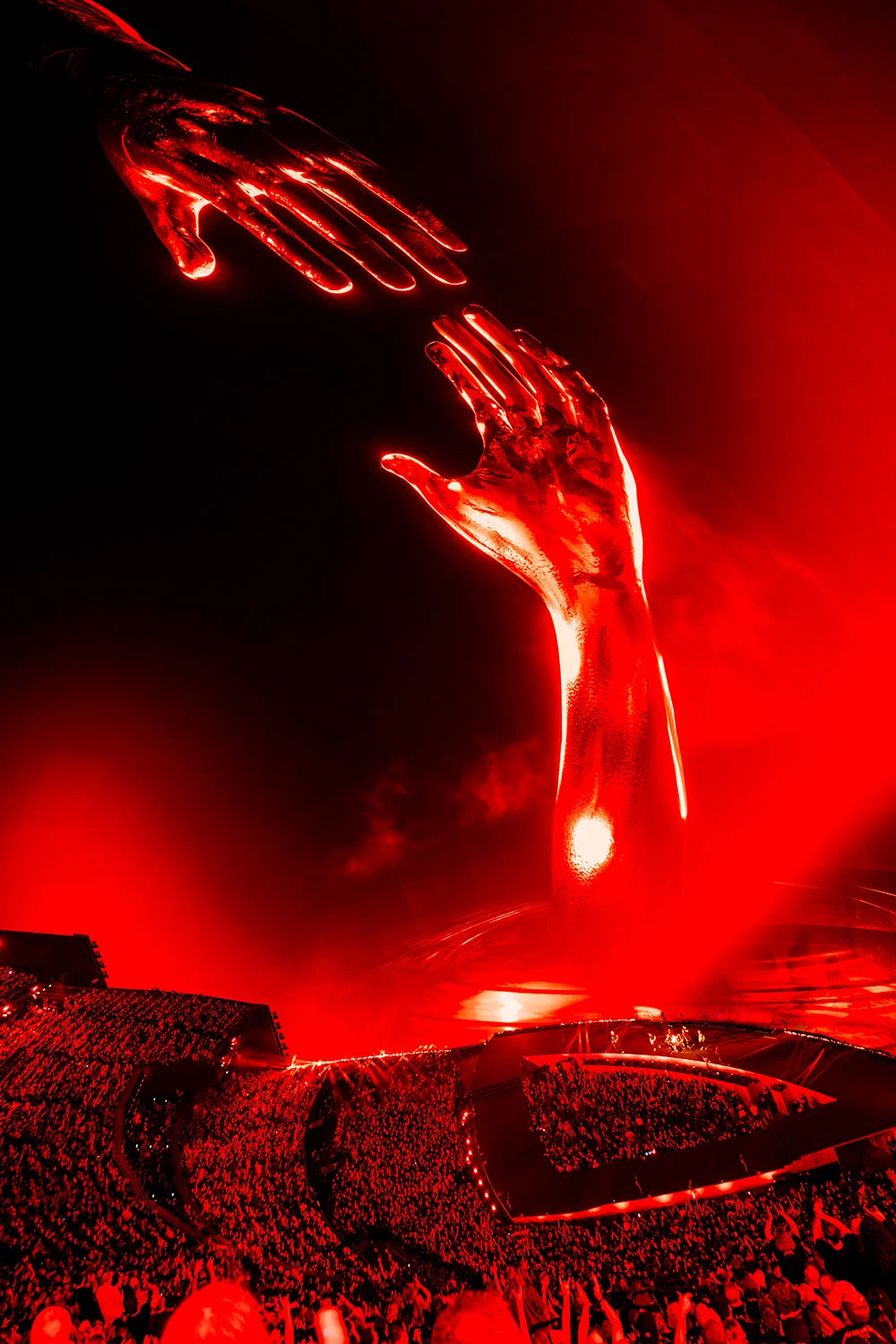
LAS VEGAS — The sea of black cotton grew visibly denser on the second night of Metallica’s sold-out Life Burns Faster residency opening weekend at the Las Vegas Sphere. Surrounding the venue’s iconic Snake Pit and spilling upward across the dizzying tiers of its steep seating bowl, the predominantly middle-aged male crowd on Saturday night somehow looked even larger than it had 48 hours earlier.
The heavy metal titans are only two nights into an ambitious 24-show run scheduled to stretch through March 2027. Yet, the second half of this opening "No Repeat Weekend" showed zero signs of logistical fatigue or momentum loss. Instead, it offered a masterclass in modern stadium spectacle, marrying the band’s relentless thrash legacy with the most advanced immersive audio-visual architecture on the planet.
Main Facts: The Stakes, the Scale, and the Concept
The "No Repeat Weekend" format is not entirely new to the Metallica faithful. The band originally introduced the concept during their sprawling 2023 M72 World Tour, challenging fans to purchase tickets for two shows in the same city—separated by a single day of rest—with the guarantee that not a single song would be repeated between the sets.
At the Sphere, however, the financial and experiential stakes are exponentially higher. Secondary market get-in prices for upcoming single-night dates have hovered stubbornly in the high-$600 to low-$700 range, with prime Saturday tickets routinely clearing $1,000. Meanwhile, two-night passes for subsequent weekends started north of $1,100.
Frontman James Hetfield appeared acutely aware of the steep financial and emotional investment required from his audience. Pausing between onslaughts, he addressed the packed house on Saturday night with candid appreciation: "We’re grateful you’ve taken the time, energy, and the cash."
Because fans are paying a premium for back-to-back performances, Metallica cannot simply rely on legacy goodwill; they have to mount a compelling argument for the second ticket. By delivering 15 completely different songs and two hours of entirely distinct, hyper-customized visuals on night two, the band successfully proved that the second night is just as vital as the first.

Chronology: Night One vs. Night Two
To understand the architecture of a Metallica residency, one must look at how the band balances the scales across a weekend.
Thursday’s Thrash History Lesson
Opening night on Thursday leaned heavily into the band’s foundational 1980s catalog, with eight of its 15 songs originating from that decade. The set list was a relentless, aggressive onslaught of thrash history:
- Opener: "Battery"
- Mid-set anchors: "Sad but True," "Nothing Else Matters," and the nearly 10-minute progressive epic “…And Justice for All.”
- The Climax: "The Memory Remains," "Seek & Destroy," and "Master of Puppets."
Saturday’s ’90s-Inflected Deep Dives
Saturday night shifted the temporal focus slightly forward, diving deeper into the band’s commercially explosive 1990s era while maintaining a brutal backbone of early material.
- Opener: "Blackened"
- The Heavy-Hitters: "The Unforgiven," "For Whom the Bell Tolls," "One," and the omnipresent anthem "Enter Sandman."
- The Dust-Offs: The real treats for die-hard fans were the long-absent rarities. "Devil’s Dance," off 1997’s Reload, made its triumphant return to the live rotation for the first time since 2008. Even more thrilling was the inclusion of the towering Load epic "Outlaw Torn," appearing live for the first time since 2019.
Despite utilizing entirely different songs, the geometric pacing of both shows mirrored one another with uncanny precision. Both nights featured calculated emotional breathers at song nine—Thursday utilized "Nothing Else Matters" followed by "The Call of Ktulu," while Saturday deployed "The Unforgiven" directly into the instrumental masterpiece "Orion."
Even drummer Lars Ulrich’s rotational geography across the irregular circular stage mirrored a reverse choreography, moving sequentially backward through his three kit positions compared to Thursday night.
Supporting Data & Production: Inside the Sphere’s Visual Arsenal
Much of the heavy lifting behind the residency’s jaw-dropping aesthetic falls on longtime Metallica production designer and show director Dan Braun. Working in tandem with the Sphere’s wraparound 160K LED screen and cutting-edge Sphere Immersive Sound system powered by HOLOPLOT, Braun transformed classic tracks into psychological landscapes.

During the performance of tracks from 72 Seasons, the interior of the Sphere was littered with towering, damaged childhood memories. Old television sets loomed overhead, casting tiny, stranded human figures inside flickering screens, while an enormous, shattered crib rested against a toxic yellow expanse.
The visual storytelling reached a fever pitch during "The Outlaw Torn." A ruined, post-apocalyptic city appeared in stark shades of arterial red, its blasted skyscrapers stretching across the dome before the entire digital horizon began folding inward, eventually swallowing the audience in a massive, swirling red vortex.
Honoring Cliff Burton
Amid the digital marvels, the weekend’s most resonant moment was deeply human. Following a soaring rendition of "The Unforgiven," the band transitioned into "Orion," dedicating the instrumental track to late bassist Cliff Burton.
Burton co-wrote the beloved instrumental before tragically dying in a tour bus crash in Sweden on September 27, 1986. With opening weekend falling precisely on the 40th anniversary of his passing, the tribute resonated profoundly with a crowd that has carried Burton’s legacy forward for decades. Surrounded by technology capable of simulating the end of the world, Metallica paused to honor the foundational spirit of their past.
A Nod to Moscow, 1991
The synergy between music and visual design reached its zenith during a back-to-back pairing of "For Whom the Bell Tolls" and "One."
The former played out as an icy Cold War nightmare—complete with a bombed-out cityscape, trench-bound soldiers, and a sky suddenly choked with falling birds. "One" deepened the psychological horror, dragging the audience through a blasted gray landscape before the entire dome erupted in a violent wash of red around silhouetted figures.

Concert historians immediately recognized the sequencing. Thirty-five years earlier, on September 28, 1991, Metallica famously played "For Whom the Bell Tolls" and "One" back-to-back at Moscow’s legendary Monsters of Rock festival at Tushino Airfield. Recreating that historic run inside the Sphere didn’t just honor the past; it weaponized it, moving the battlefield from a muddy Soviet airfield directly into the sensory architecture of the audience.
The evening culminated with "Enter Sandman," during which a massive blue orb materialized inside the dome. Hovering above the band against an empty field of color, the sphere expanded—shifting from blue to stark white, then blazing red—until the digital sphere literally consumed the physical Sphere, bringing the night to a mind-bending close.
Official Responses and Fan Reception
While official corporate press statements from Sphere Entertainment and Metallica’s management have focused on the historic nature of a multi-year residency of this scale, the real-time responses from the community tell a more nuanced story of awe and economic calculation.
Fans exiting the venue on Saturday night praised the band’s willingness to dig deep into their catalog rather than resting on a static greatest-hits tour.
"When you spend this kind of money, you worry it’s just going to be a Vegas gimmick—a giant screensaver show," said Marcus Vance, a 44-year-old fan who flew in from Chicago for the weekend. "Instead, it felt like they actually thought about how the visuals amplify the music, rather than distract from it. ‘The Outlaw Torn’ brought tears to my eyes."
Industry analysts have similarly noted that Metallica’s residency represents a watershed moment for the venue. While previous Sphere residencies by legacy pop and rock acts relied heavily on nostalgia and stationary visual loops, Metallica’s dual-night, rotating-set architecture introduces a gamified element of rarity that encourages multi-night attendance.

Implications: What Comes Next for the Life Burns Faster Residency?
As the dust settles on opening weekend, the heavy metal community is left with a slate of compelling questions about the trajectory of the remaining 22 shows leading up to March 2027:
- Set List Fluidity: Will subsequent Thursdays and Saturdays continue to mirror the structural geometry established this weekend, or will the band introduce radical structural departures?
- The Fate of Rarities: Will deep cuts like "Devil’s Dance" and "Outlaw Torn" remain in regular rotation, or will they vanish back into the vault until the next special occasion?
- The Production Bottleneck: With visuals this intensely customized and tightly synced to individual songs, how flexible can the production really be? Can an entirely new batch of deep cuts be integrated without breaking the logistical synchronization of the Sphere’s massive LED canvas?
- The Repeat Visitor Economy: Can a venue known for its singular, awe-inspiring novelty retain its shock value for fans who choose to return multiple times over the next year and a half?
For now, Metallica has successfully cleared the highest hurdle in modern live entertainment: they have justified the ticket price, honored their history, and proven that even a band four decades into their career can bend the most futuristic venue on Earth entirely to their ferocious will.
