
Breaking the Mold: Miley Cyrus Defends Her VMA Legacy, Calls Out Double Standards, and Embraces the Chaos
Main Facts
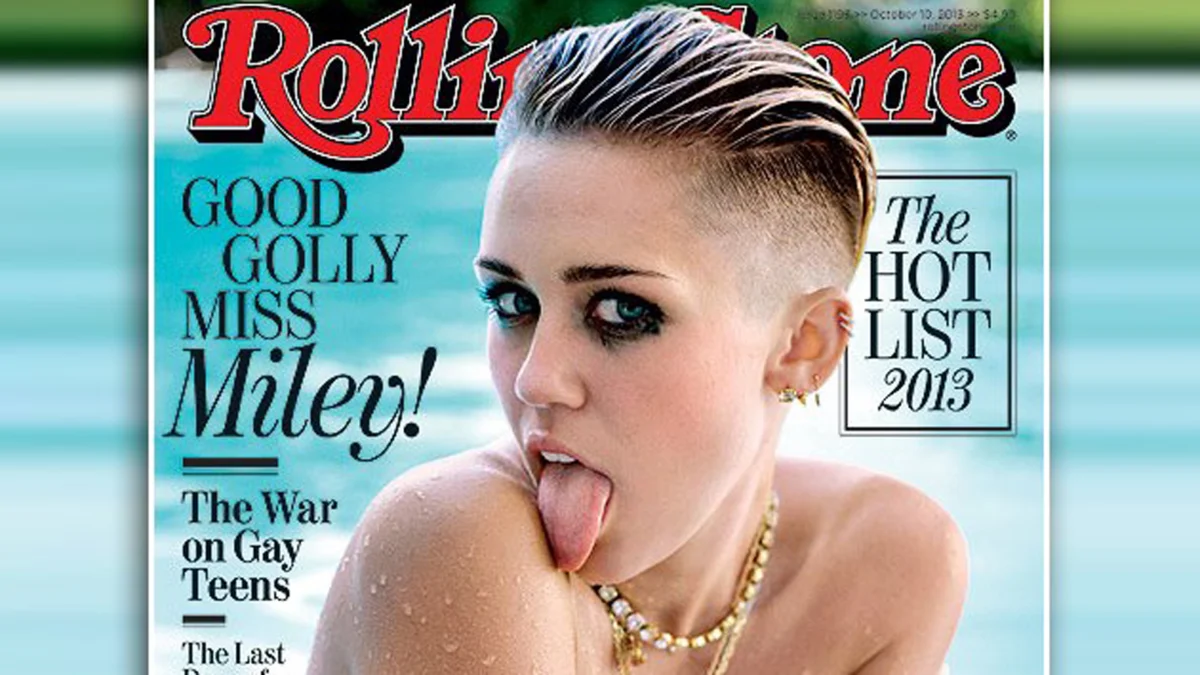
In the wake of a cultural firestorm sparked by her provocative performance at the MTV Video Music Awards (VMAs), pop superstar Miley Cyrus has broken her silence. Gracing the cover of Rolling Stone’s latest issue—striking a defiant, topless pose—the former Disney darling addressed the relentless backlash, accusations of cultural appropriation, and the media double standards that she argues defined the coverage of her infamous night with R&B singer Robin Thicke.
Rather than offering an apology, Cyrus doubled down on her artistic choices, asserting that the performance was actually toned down from what she and her creative team had originally planned. She pointedly criticized the gendered double standard of the media coverage, noting how the scrutiny fell entirely on her while her male counterpart escaped similar condemnation. Furthermore, Cyrus revealed a surprising alliance: hip-hop icon Kanye West, who visited her backstage prior to the show to offer words of encouragement and validation amid mounting pre-show tension.
As Cyrus pivots from her controversial era to new artistic horizons, her candid interview sheds light on the realities of shedding a childhood image in the modern pop landscape, the complexities of working within the music industry, and the heavy price—and power—of shocking the status quo.
Chronology: The Anatomy of a Pop Culture Earthquake
To understand the weight of Cyrus’s Rolling Stone interview, one must trace the rapid escalation of events that led to the defining moment of her career transition.
The Buildup to the VMAs
For months leading up to the August 2013 MTV Video Music Awards, Cyrus had been systematically dismantling her wholesome Hannah Montana image. Gone were the flowing blonde locks and country-pop ballads; in their place came a platinum blonde undercut, avant-garde streetwear, and a heavy immersion into urban hip-hop and trap influences. Her single "We Can’t Stop" had already become a massive commercial success, accompanied by a music video that heavily featured elements of counterculture, party lifestyle, and modern dance trends, including twerking.
The Night of the Performance
On August 25, 2013, at the Barclays Center in Brooklyn, New York, Cyrus took the stage alongside Robin Thicke to perform a medley of "We Can’t Stop" and Thicke’s ubiquitous chart-topper "Blurred Lines." Dressed initially in a teddy-bear leotard before stripping down to a flesh-toned latex bikini, Cyrus proceeded to dance aggressively, use a foam finger as a prop, and grind—or "twerk"—against Thicke.
The immediate reaction inside the arena was a mix of stunned silence, open-mouthed shock from celebrity audience members like Rihanna and Will Smith’s family, and immediate, viral pandemonium across social media.
The Backlash and Media Storm
Within hours, the performance became the most talked-about event on the internet, generating hundreds of thousands of tweets per minute. While some viewed it as harmless, boundary-pushing pop performance art in the tradition of Madonna or Britney Spears, the overwhelming majority of mainstream media outlets and cultural commentators slammed the spectacle. Criticisms ranged from accusations of desperation and cringeworthy stage presence to more severe allegations of cultural appropriation and the exploitation of Black dancers as props.
The Rolling Stone Reveal
Weeks after the dust had settled, Cyrus sat down with Rolling Stone for a comprehensive interview to reclaim her narrative. It was during this conversation that she provided her definitive perspective on the performance, the fallout, and the internal validation she received from unexpected quarters, culminating in her striking cover feature for the magazine.
Supporting Data: Contextualizing the VMA Fallout
The controversy surrounding Cyrus’s VMA appearance was not merely an isolated pop culture blip; it was a watershed moment that exposed deep-seated cultural anxieties regarding race, gender, age, and the commodification of sexuality in the entertainment industry.
The Metrics of Outrage
- Social Media Velocity: The performance generated over 300,000 tweets per minute on Twitter (now X), breaking previous records set by major events like the Super Bowl power outage earlier that year.
- Search Trends: Google searches for "Miley Cyrus VMA" spiked exponentially within hours of the broadcast, making her the most searched term globally for several consecutive days.
- Commercial Impact: Despite—or perhaps because of—the intense backlash, streams and digital sales for both "We Can’t Stop" and her subsequent single, "Wrecking Ball," experienced massive surges, cementing her commercial viability as a solo artist independent of her Disney past.
The Debate Over Cultural Appropriation
One of the most substantive criticisms leveled against Cyrus involved her adoption of elements from Black urban culture—specifically twerking and the use of Black backup dancers. Cultural critics argued that Cyrus was engaging in "blaxploitation," adopting marginalized cultural expressions for shock value and personal career rehabilitation before retreating back to her privileged position as a wealthy white pop star.
Cyrus directly addressed these accusations in her interview, rejecting the notion that her collaborators were mere accessories. "I don’t keep my producers or dancers around ’cause it makes me look cool," she stated. "Those aren’t my ‘accessories.’ They’re my homies." While her defense did little to quell academic and critical discussions regarding cultural borrowing in pop music, it highlighted her insistence on personal authenticity within her professional relationships.
Official Responses and Perspectives
Miley Cyrus: Unapologetic and Defiant
Cyrus made it abundantly clear that she felt no remorse for the performance, viewing it as entirely appropriate for the irreverent tone of the VMAs.

"Honestly, that was our MTV version," Cyrus explained to Rolling Stone. "We could have even gone further, but we didn’t. I thought that’s what the VMAs were all about! It’s not the Grammys or the Oscars. You’re not supposed to show up in a gown, Vanna White-style. It’s supposed to be fun!"
She also highlighted the glaring double standard inherent in how the media framed the physical interaction between her and Thicke:
"No one is talking about the man behind the ass. It was a lot of ‘Miley twerks on Robin Thicke,’ but never, ‘Robin Thicke grinds up on Miley.’ They’re only talking about the one that bent over. So obviously there’s a double standard."
Furthermore, Cyrus offered a humorous reality check regarding her viral mannerisms, noting that while the public had come to expect her to stick out her tongue and twerk at every turn, she had no intention of becoming a one-trick pony: "I’ll probably never do that shit again."
The Kanye West Intervention
In a surprising revelation, Cyrus shared how hip-hop visionary Kanye West offered her crucial emotional support behind the scenes. Having weathered his own historic storm of public controversies—ranging from his 2009 VMA stage interruption of Taylor Swift to his polarizing public pronouncements—West recognized a kindred spirit under immense pressure.
According to Cyrus, West watched her rehearsals and approached her backstage to offer high praise:
"There are not a lot of artists I believe in more than you right now."
The endorsement left the young star momentarily speechless. "The whole room went quiet," Cyrus recalled. "I was like, ‘Yo—can you say that again?!’ I just kept repeating that over and over in my mind, and it made me not nervous."
Implications: The Evolution of Modern Pop Stardom
The fallout from Miley Cyrus’s 2013 VMA performance and her subsequent Rolling Stone confessional reverberated far beyond the gossip columns, carrying significant implications for how artists navigate the transition from child stardom to adult autonomy, as well as how society polices female expression.
1. The Death of the Disney Clean Image
Cyrus successfully burned the bridge connecting her to her corporate past. By executing a performance so jarring that it permanently alienated conservative family audiences, she proved that young female stars do not have to age gracefully into adult pop stardom according to industry-approved scripts. She smashed the mold previously walked by predecessors like Britney Spears and Christina Aguilera, setting a precedent for subsequent pop stars—such as Ariana Grande, Demi Lovato, and Olivia Rodrigo—to navigate their own image transitions on their own terms.
2. The Mechanics of Shock Value in the Digital Age
The incident demonstrated the immense economic power of controversy in the emerging social media ecosystem. Cyrus mastered the art of leveraging outrage into sustained media dominance. The ability to polarize an audience transitioned from a career liability to a potent marketing strategy, proving that in the attention economy, being hated or criticized is often infinitely more valuable than being ignored.
3. Re-examining Gender and Agency
Cyrus’s critique of the media’s double standard opened up broader cultural conversations about misogyny in pop music criticism. By pointing out that the narrative focused exclusively on the woman’s body while erasing the active participation of her male collaborator, Cyrus tapped into feminist discourse surrounding bodily autonomy and patriarchal double standards. Whether audiences agreed with her methods or not, the conversation forced media outlets to reckon with how female sexuality is policed and penalized differently than male sexuality in the public eye.
Ultimately, Cyrus’s appearance in Rolling Stone marked the official birth of a new era—one where she refused to apologize for taking up space, shaking up the establishment, and forcing the world to look at her, tongue out or not, exactly as she chose to present herself.
