
Style Over Substance: Why AMC+’s ‘Kill Jackie’ Struggles to Find Its Footing in the Peak TV Era
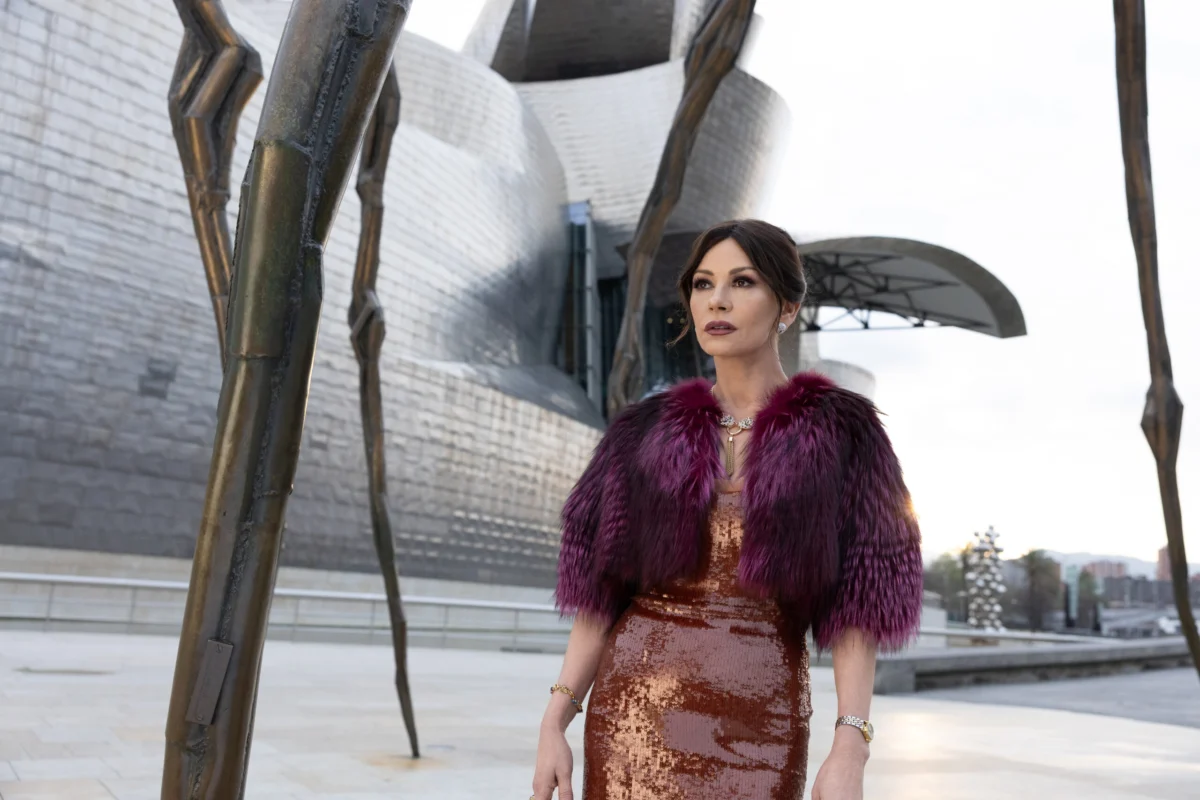
The landscape of contemporary television is currently undergoing a renaissance of the dark comedy-thriller—a genre defined by its penchant for hyper-stylized violence, sardonic wit, and morally ambiguous protagonists. With the success of Netflix’s The Gentlemen and Black Doves, along with the expansion of Paramount+’s MobLand, streaming platforms are clearly betting big on the “assassin-on-the-run” narrative. The latest entry into this crowded arena is AMC+’s Kill Jackie, an eight-episode series that promises high-octane glamour and lethal stakes.
Starring Academy Award winner Catherine Zeta-Jones, Kill Jackie is based on Nick Harkaway’s 2018 novel, The Price You Pay. Adapted for the small screen by a creative team including Conor Keane, Tom Butterworth, Peter Lawson, and Damon Thomas, the series marks a bold attempt by AMC+ to capture the zeitgeist of the “stylish criminal” subgenre. However, despite a magnetic performance from its lead and a budget that clearly prioritizes aesthetic flash, the series faces significant hurdles in balancing its narrative weight against its stylistic aspirations.
The Premise: From Drug Queenpin to Art Dealer
The narrative engine of Kill Jackie is driven by Jackie Prince (Zeta-Jones), a woman who has successfully laundered her sordid past as a drug queenpin into a sophisticated, high-end career as a luxury art dealer. For Jackie, the transition from trafficking illicit substances to curating masterworks is not just a job; it is a meticulously crafted persona designed to keep her past in the rearview mirror.
The story opens in the sun-drenched, high-stakes environment of Bilbao, Spain. Here, we see Jackie—impeccably dressed and exuding a cold, calculated confidence—negotiating a $60 million art transaction alongside her protégé and assistant, Charlie (Hattie Hook). It is a sequence meant to establish Jackie’s untouchable status. Yet, there is a palpable sense of boredom in her demeanor; she has become so detached from the adrenaline of her former life that she operates with a dangerous level of complacency. This negligence comes to a head when she returns to London, failing to secure her surroundings or ensure the disposal of burner phones.
Upon arriving at her flat, the veneer of her safe, refined existence is shattered. Jackie is ambushed by gunmen, barely escaping with her life. It is soon revealed that she has been marked for death by "The Seven Demons," a group of psychopathic, highly specialized mercenaries. What follows is a frantic, globe-trotting scramble for survival as Jackie pulls her terrified tax attorney, Sam (Daniel Ings), and the loyal Charlie into a desperate quest to identify who wants her dead and, more importantly, how to strike back.
Chronology of a Disjointed Narrative
The trajectory of Kill Jackie is a study in diminishing returns. The pilot episode is undeniably promising, setting up a compelling dichotomy between the high-fashion world of international art and the gritty, bullet-ridden reality of the criminal underworld. The show succeeds in peeling back the layers of Jackie’s past, explaining the sacrifices she made to exit the drug trade.
However, as the series progresses toward the third episode, the narrative structural integrity begins to collapse under its own weight. What begins as a focused hunt for survival devolves into a labyrinthine plot filled with an excess of secondary characters, inconsistent assassin archetypes, and unnecessary location shifts.
By the midpoint of the eight-episode season, the viewer is left struggling to maintain a grasp on the central conflict. The show’s rapid pacing, which initially feels like a stylistic choice, eventually feels like a frantic attempt to distract from a lack of narrative direction. Even when the series attempts to pivot to more intimate, character-driven moments—such as the revelation of Jackie’s deepest traumas—the scenes fail to resonate. The emotional stakes are consistently undermined by the show’s relentless need to move to the next “cool” set piece or cameo appearance.
The Assassin Archetype: Style Versus Substance
A significant portion of Kill Jackie is dedicated to the introduction of The Seven Demons. In theory, this band of hitmen should provide the necessary antagonism to propel the plot forward. In practice, they often feel like caricatures drawn from a comic book that hasn’t decided if it wants to be gritty or campy.
The ensemble includes brothers who act as a clumsy “Twiddledee and Twiddledum” duo, a mercenary who finds joy in dancing to James Brown tracks in bowling shoes, and a primary threat, The Doc (Christine Adams), who lacks the chilling presence one would expect from a master assassin. The failure to make these characters truly menacing—or even interestingly eccentric—leaves a void where the tension should be. Interestingly, the most grounded and terrifying character in the series is Zigor (Óscar Jaenada), a former member of The Demons whose tenuous, shifting loyalty to Jackie provides more genuine suspense than the entire collective of antagonists combined.
The production design, while visually stunning, often feels disconnected from the action. The inclusion of a concierge service known as "The Poltergeist," which facilitates Jackie’s every whim, and the introduction of masterminds like Karenina (Sidse Babett Knudsen), serves only to bloat an already exhausting story. While Zeta-Jones is clearly enjoying the opportunity to trade the gothic, somber aesthetic of Wednesday’s Morticia Addams for the shimmering gowns and tactical hardware of Jackie Prince, her performance is hampered by a script that refuses to grant her character any genuine depth or texture.
Implications for the Genre
The critical reception of Kill Jackie highlights a growing fatigue among audiences for the "stylish assassin" trope. When compared to the gold standards of the genre—such as Quentin Tarantino’s Kill Bill or the recent, sharp-witted Apple TV+ series Lucky—Kill Jackie feels like an imitation that hasn’t quite grasped what made its predecessors work.
The series serves as a cautionary tale for modern streamers: a high-budget production, a marquee star, and a fashionable aesthetic are not substitutes for a coherent, well-paced script. By prioritizing the "look" of the series over the emotional or narrative "why," Kill Jackie risks alienating the very audience that typically enjoys high-concept thrillers. The show occupies an awkward middle ground—it is not comedic enough to be a true satire, yet it lacks the gravitas or psychological insight to function as a serious crime drama.
Conclusion: A Misstep in the AMC+ Slate
Ultimately, Kill Jackie is a series of missed opportunities. It possesses all the individual components of a hit—a magnetic lead, a compelling premise, and a polished visual identity—but these pieces fail to coalesce into a satisfying whole. The series is weighed down by a convoluted plot and a supporting cast that feels more like an interruption than a contribution to the story.
For viewers who enjoy the spectacle of high-fashion combat and the thrill of the hunt, there may be momentary pleasures to be found in the series’ glitzy surface. However, those looking for a narrative that respects their intelligence and offers a cohesive journey will likely find themselves wondering why they started the journey in the first place.
As the series debuts on October 2 on AMC+, it will face the challenge of proving that its style is more than just a mask. With episodes airing weekly on Fridays, the show has the opportunity to course-correct in its later installments, but the heavy lifting of narrative salvage will be an uphill battle. In a market where viewers are spoiled for choice, Kill Jackie stands as a reminder that without a strong, focused story, even the most beautiful production can quickly fade into the background of an oversaturated television landscape.
