
Shielding the Set: Inside the Mule Carts Production Cart Tent and the Resilience of Ukrainian Gear Manufacturing
By the Editorial Team
Published: October 2026
In the high-pressure environment of film, television, and commercial production, gear is constantly pushed to its absolute limits. While much attention is traditionally lavished on cinema cameras, high-end optics, and stabilizing gimbals, the unsung hero of any professional set is the production cart. Acting as a mobile digital imaging technician (DIT) station, video village hub, or a portable armory for camera assistants, the cart houses tens of thousands of dollars worth of sensitive electronics exposed directly to the elements.
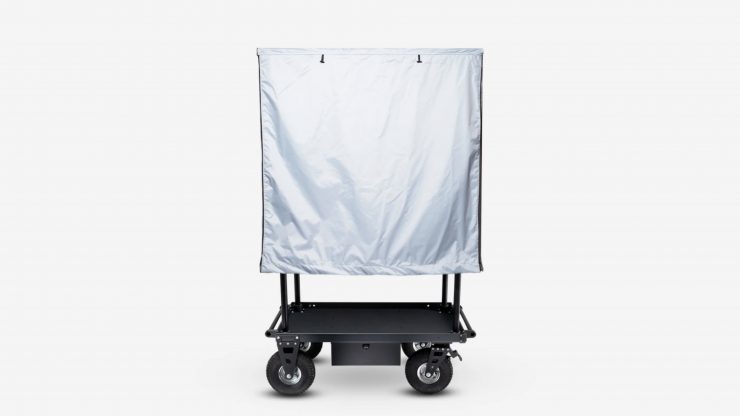
Enter the Mule Carts Cart Tent, an ingenious and rugged protective solution designed to shelter essential production gear from blinding sunlight, torrential rain, and choking dust. Hailing from Ukraine—a nation demonstrating extraordinary global resilience and industrial ingenuity—Mule Carts has carved out a specialized niche in the grip and cart accessory market.
This comprehensive report examines the design, engineering specifications, field implications, and market availability of the Mule Carts Cart Tent, while placing the product within the broader context of boutique manufacturing during times of geopolitical hardship.
Main Facts: Engineering the Ultimate Mobile Workspace Cover
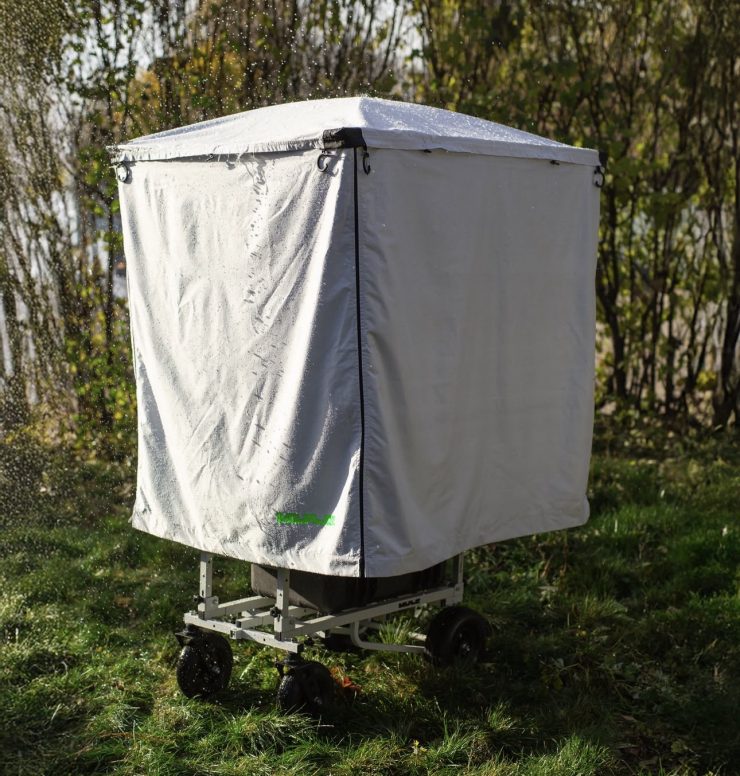
At its core, the Mule Carts Cart Tent is a purpose-built, highly adaptable shelter engineered to transform standard industry production carts into weather-sealed, glare-free mobile workstations. For DITs, videographers, and data wranglers operating under the harsh glare of the midday sun or caught in sudden downpours, the tent offers a professional-grade sanctuary for monitors, switchers, and laptop arrays.
Key Specifications & Features:
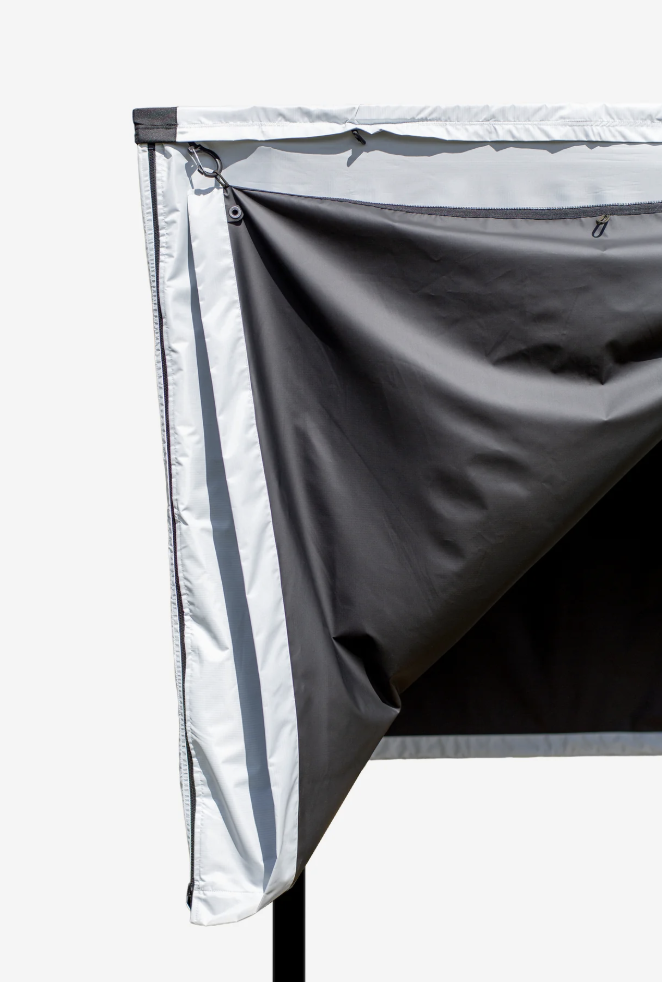
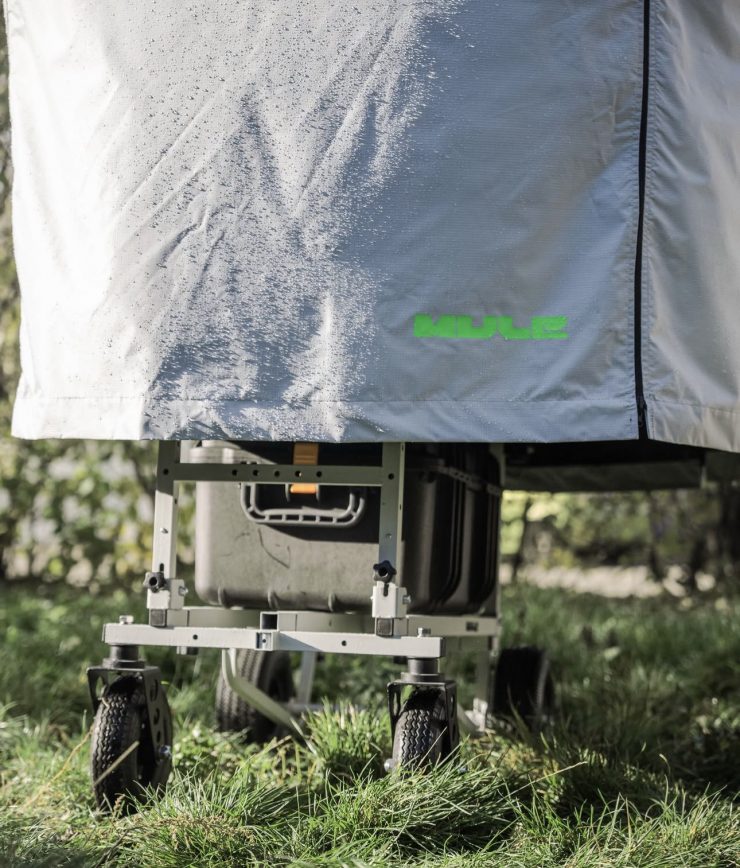
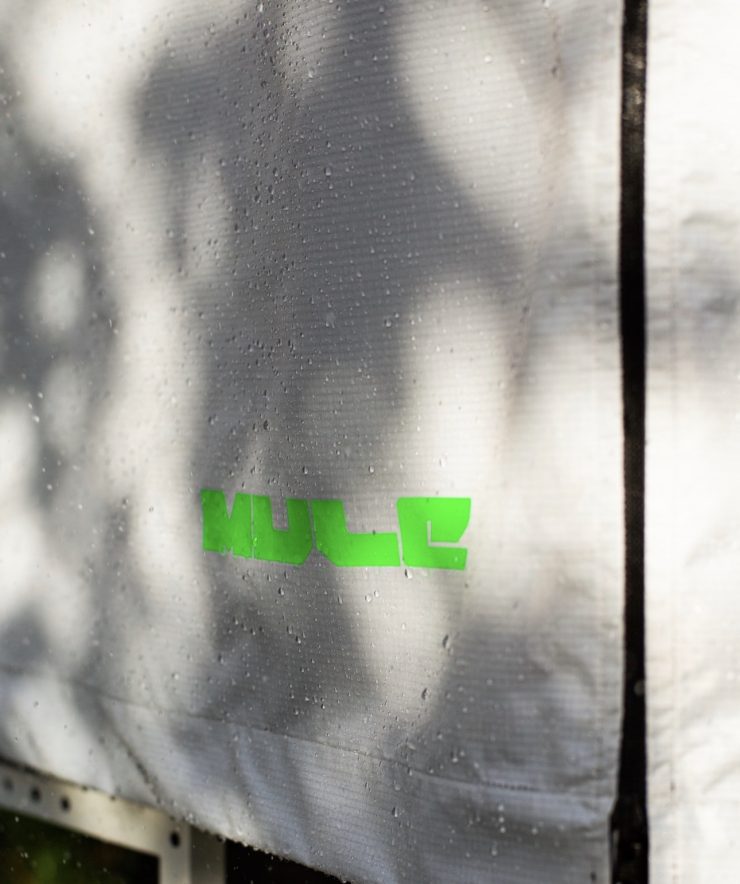
- Fabric & Optical Performance: Constructed from a heavy-duty, double-layer textile that boasts a 99% sunproof and waterproof rating. The fabric creates a controlled blackout interior environment, drastically cutting down on ambient light washout and eliminating unwanted reflections on sensitive monitor screens.
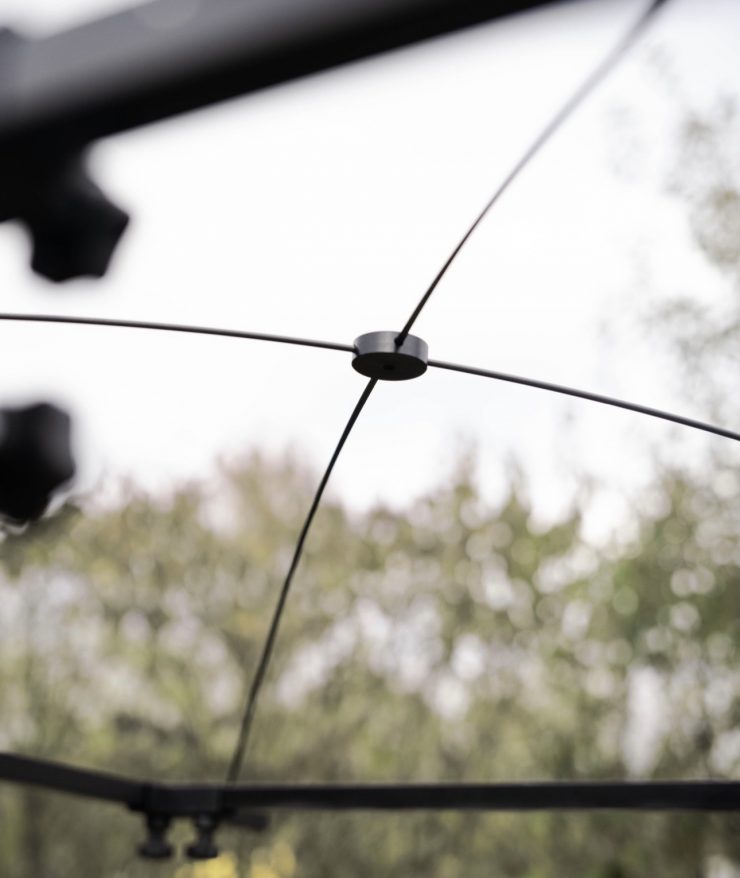
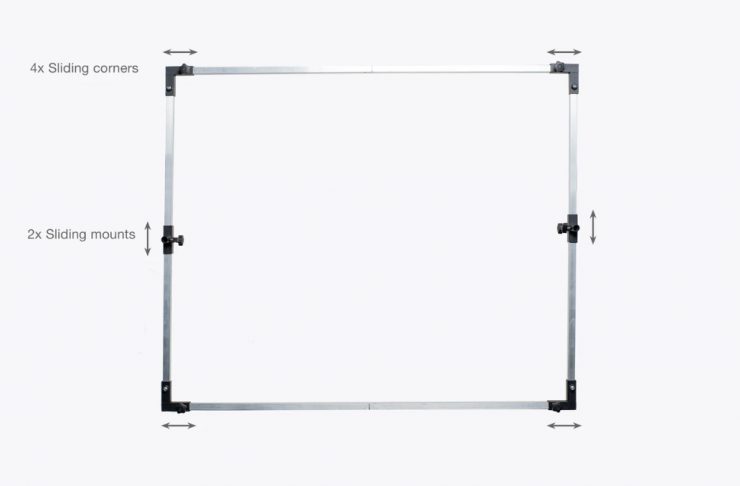
- Frame Construction: Features a lightweight yet rigid aluminum skeleton designed for rapid mounting and structural memory, allowing the frame to be easily lifted off and remounted without disassembly.
- Universal Compatibility: Fits virtually any standard production cart measuring up to 120cm / 48 inches in length.
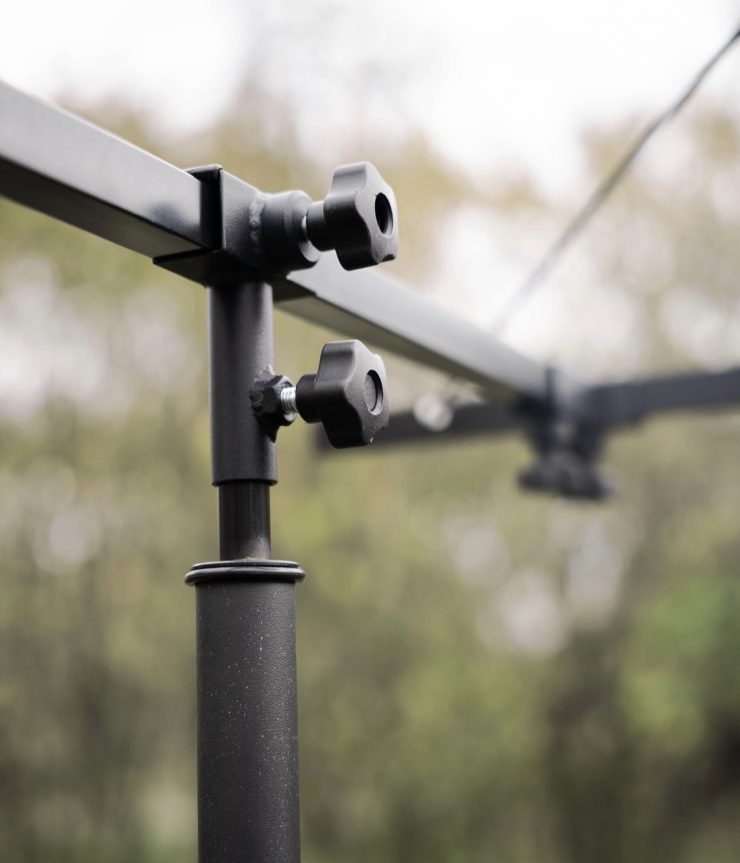
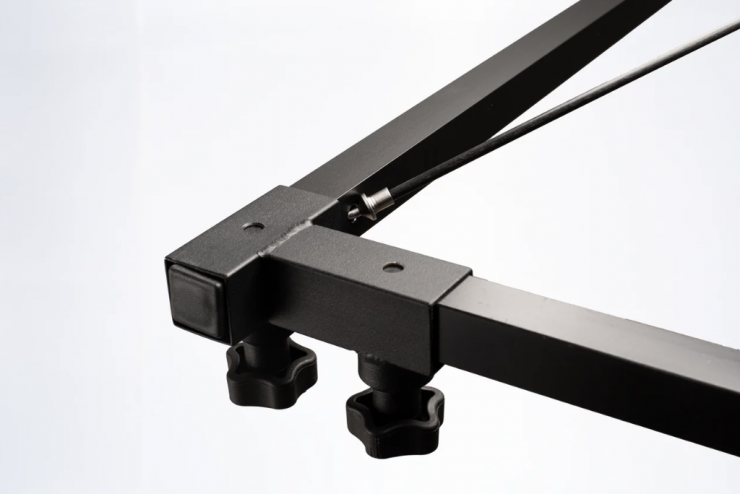
- Mounting Versatility: Utilizes the proprietary MULE Tent Mounting System, securing easily via standard 16mm / 5/8-inch pin mounts. The system incorporates rising tubes that reach up to 2m / 6.56 feet in height, coupled with industrial-grade super clamps and extensions for infinite customizability.
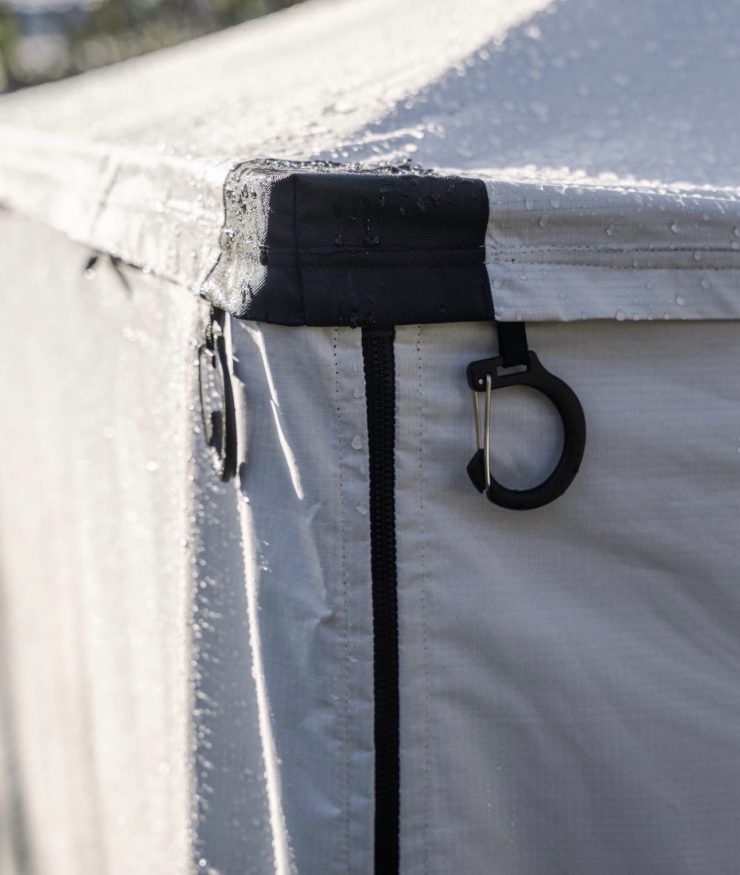
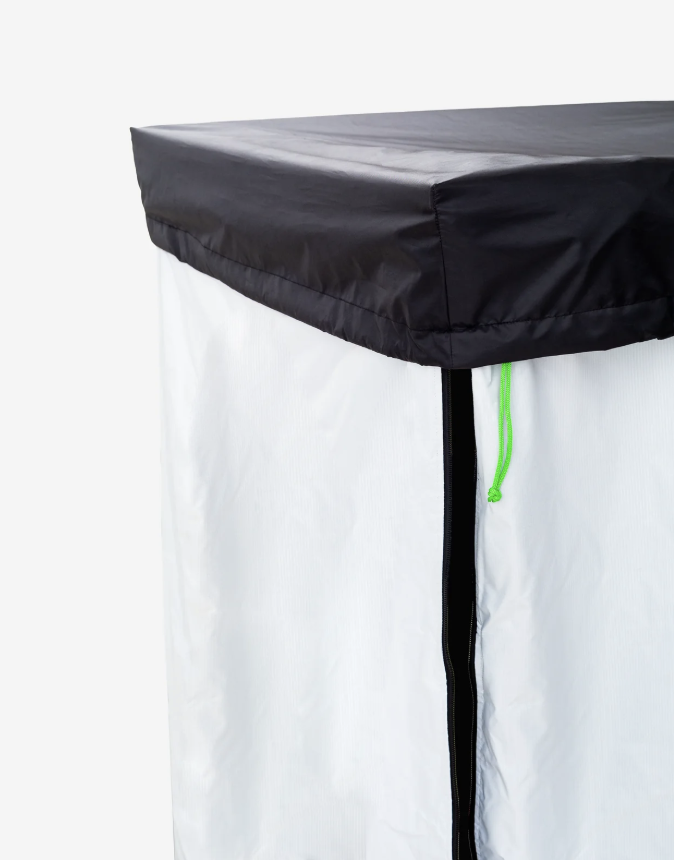
- Fast Deployment & Closure: Equipped with four heavy-duty spring zippers on every corner for a tight, secure enclosure. Sides can be rolled up and fastened with rubber straps, or swiftly raised and secured via carabiners directly beneath the roof structure for rapid pack-down.
- Weather Sealing & Transport: All roof-level seams are fully heat-sealed to guarantee absolute water intrusion defense. The entire kit packs neatly down into a single, compact carrying case.
Priced competitively at $600 USD, the Cart Tent represents a major upgrade for mobile production crews seeking to safeguard expensive investments in hardware without sacrificing on-set mobility.
Chronology: The Evolution of On-Set Shelter Solutions
To understand the necessity of products like the Mule Carts Cart Tent, it is helpful to look at how film and television crews have historically managed environmental hazards on location.
Early Days: Improvised Protection (Pre-2010s)
For decades, camera crews and DITs relied on improvised fixes to protect field monitors and equipment. Blue tarps held down by heavy grip clamps, beach umbrellas strapped to cart uprights with gaffer tape, and makeshift pop-up tents originally intended for backyard barbecues were common sights on professional film sets. These solutions were frustratingly unstable, prone to catching wind like a sail, and completely ineffective at managing light reflections for critical color-grading work in the field.
The Rise of Specialized DIT Tents (2010–2020)
As digital cinema cameras (like the RED One and ARRI Alexa) revolutionized production workflows, the role of the DIT expanded exponentially. Sets required secure, shaded environments to evaluate footage accurately. Early dedicated pop-up work tents emerged, but many were bulky, difficult to integrate directly onto standard carts (such as Backstage or Magliner carts), and required significant time to erect and dismantle between camera moves.
The Rise of Boutique Ukrainian Engineering (2020–Present)
Mule Carts entered the market as a small, agile team dedicated to solving practical problems faced by working crew members. Operating out of Ukraine, the company leaned into precision fabrication and user-driven design. Rather than designing generic outdoor gear, they focused strictly on the ergonomics of the production cart. The development of the Cart Tent culminated in a modular system that bridges the gap between heavy-duty staging tents and nimble, cart-mounted solutions. Despite regional conflicts and logistical hurdles, the team continued to refine the product, introducing features like the proprietary mounting system, reinforced corner zippers, and the optional Roof Drainage System for extreme weather conditions.
Supporting Data: Material Science and Ergonomic Efficiency
To evaluate whether the Mule Carts Cart Tent justifies its $600 price tag, industry analysts look at the metrics of field efficiency, material longevity, and risk mitigation.
1. Light Transmission and Glare Reduction
Standard outdoor ambient light can easily exceed 50,000 to 100,000 lux on a clear day. Without a shaded workspace, professional monitors—even those rated for high-brightness outdoor use (e.g., 1,500 to 3,000 nits)—suffer from washed-out contrast ratios, making accurate exposure assessment and focus pulls difficult. The double-layer blackout fabric of the Mule Carts Tent reduces light transmission by 99%, bringing interior ambient light down to levels comparable to a controlled indoor grading suite.
2. Time-Motion Efficiency on Set
Time is the most expensive commodity on any professional film set. Crew movements (company moves) happen multiple times a day.
- Traditional Pop-Up Tents: Require complete teardown, packing into separate bags, and re-assembly at the new location (Average time: 10–15 minutes).
- Mule Carts System: Designed around a lightweight aluminum frame that can remain intact or be rapidly detached from its 16mm pins, allowing crews to lift, relocate, and re-secure the entire enclosure in under 3 minutes.
3. Financial Risk Mitigation
A standard modern DIT cart configuration—including dual reference monitors, high-performance raid storage, UPS battery backups, and cart-mounted cinema computers—frequently exceeds $30,000 to $50,000 in sensitive electronics. Exposing this equipment to an unexpected downpour or persistent dust storms (common in desert locations like California’s Coachella Valley or New Mexico) can result in catastrophic equipment failure. Investing $600 in a certified waterproof, dust-sealed enclosure is a fraction of 1% of the total gear value it protects.
Official Responses and Industry Perspectives
While the Mule Carts Cart Tent is manufactured by a lean, specialized team, the broader reception within professional production communities highlights a strong demand for specialized, field-tested gear.
Manufacturer Insights
In statements regarding their product design philosophy, representatives from Mule Carts have emphasized that their gear is built "by crew, for crew." The emphasis on modularity—such as utilizing standard 16mm / 5/8-inch pin mounts and super clamps—was an intentional choice to ensure compatibility with existing grip hardware already found in every lighting and grip truck worldwide.
"We didn’t want users to be locked into a proprietary ecosystem," a Mule Carts product designer noted during the rollout of the mounting system. "If a crew member loses a clamp or needs an extension on a remote location, they can pull standard grip gear from the truck and keep the tent stable."
Early Adopters and Working Professionals
Professional Digital Imaging Technicians and video village coordinators have praised the tent’s footprint and stability.
- Markus Vance, a freelance DIT working primarily on high-end streaming commercials, shared his field experience: "Working in variable outdoor conditions is the bane of any data wrangler’s existence. The moment the sun hits your screen or a sudden coastal mist rolls in, your workflow grinds to a halt. The Mule Carts Tent creates a genuine mobile editing suite. The blackout effect is profound, and being able to strap it directly to standard cart pins means I don’t waste precious time wrangling loose tent poles when we need to roll the cart to a new setup."
- Sarah Jenkins, a veteran 2nd AC, highlighted the weatherproofing: "We recently ran through a miserable rainy two-week shoot in the Pacific Northwest. While other carts required crews to throw garbage bags over their monitors, our setup stayed bone-dry. The optional Roof Drainage System is a must-have if you’re dealing with pooling rainwater."
Implications: What This Means for the Future of Set Gear
The introduction and steady commercial availability of products like the Mule Carts Cart Tent point to several broader trends in the film and television production equipment sector.
1. The Decentralization of Specialized Manufacturing
The success of Mule Carts demonstrates that specialized, high-quality production accessories no longer need to originate exclusively from massive corporate conglomerates in Los Angeles, London, or Tokyo. Talented engineering teams in Eastern Europe—specifically Ukraine—are successfully leveraging global shipping networks and direct-to-consumer digital platforms to deliver mission-critical tools directly to working professionals worldwide. This resilience in the face of local adversity underscores the robust nature of Ukraine’s tech and hardware manufacturing sectors.
2. Increasing Focus on Ergonomics and Crew Welfare
As productions demand faster turnarounds and tighter schedules, the physical well-being and ergonomic efficiency of behind-the-scenes crew members are gaining long-overdue attention. Products that reduce eye strain (via blackout tents), prevent heat exhaustion, and minimize physical setup fatigue directly contribute to fewer on-set mistakes, better data integrity, and higher overall production value.
3. Modular Interoperability as an Industry Standard
The reliance on universal standards—such as 16mm pins, super clamps, and standard cart dimensions—signals a maturing market for cart accessories. Filmmakers are increasingly rejecting closed ecosystems that lock them into single-brand purchases. By designing equipment that plays nicely with existing grip trucks and industry-standard carts (Magliner, Backstage, Yaeger, etc.), manufacturers dramatically lower the barrier to entry for working professionals.
Conclusion and Availability
The Mule Carts Cart Tent bridges a crucial gap in the modern production accessories market. By combining industrial-grade weather protection, 99% sunproof blackout fabrics, and an exceptionally adaptable mounting system, it transforms vulnerable production carts into resilient, all-weather mobile workstations.
Priced at $600 USD and available directly through the official Mule Carts website—alongside supporting accessories like the recommended Tent Roof Drainage System—this modular tent stands out as an essential investment for DITs, videographers, and camera crews determined to keep their productions running smoothly, rain or shine.
