
Panasonic Expands the LUMIX Ecosystem: New 20mm Prime and Major Firmware Overhaul
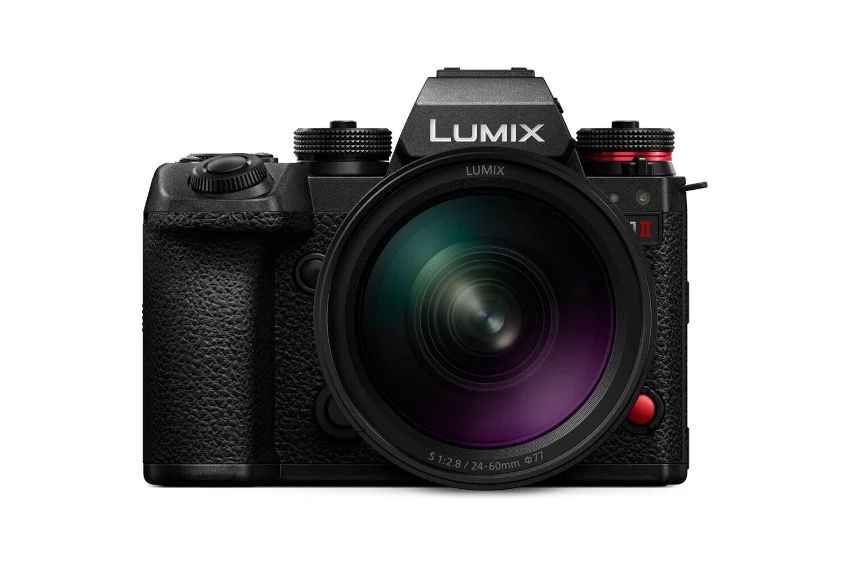
In a significant move to strengthen its footprint in the compact, full-frame creator market, Panasonic has officially unveiled the LUMIX S 20mm F2.5 (S-S20). Designed as a versatile, ultra-wide prime lens, this new addition to the LUMIX S Series is engineered specifically for the modern hybrid shooter. Alongside the lens, Panasonic has announced a sweeping suite of firmware updates for the popular LUMIX S9 and its high-end siblings—the S1RII, S1II, and S1IIE—coupled with substantial upgrades to the LUMIX Lab and LUMIX Flow software applications.
This comprehensive update signals Panasonic’s commitment to refining its "content creator" ecosystem, focusing on the synergy between portable hardware and high-performance, software-driven workflows.
Main Facts: The LUMIX S 20mm F2.5 (S-S20)
The LUMIX S 20mm F2.5 arrives as a response to the growing demand for "pocketable" full-frame glass. Weighing in at a mere 142 grams and measuring just 40.9mm in length, the lens is a masterclass in miniaturization without sacrificing optical integrity.
Optical Performance and Design
Despite its diminutive footprint, the lens features a sophisticated optical architecture centered around three aspherical elements. These elements are designed to minimize spherical aberration and distortion, ensuring that the lens maintains sharp, high-contrast rendering from the center to the periphery of the frame.
The 20mm focal length offers a "natural" ultra-wide perspective. Unlike extreme wide-angle lenses that can produce uncomfortable levels of barrel distortion or perspective warping, the 20mm F2.5 is positioned as an ideal "everyday" wide-angle lens. It is perfectly suited for interior architecture, travel vlogging, and establishing shots where a broad field of view is essential, yet subject integrity must be preserved.
Video-Centric Features
Panasonic has prioritized video creators in the design process. The inclusion of focus-breathing suppression ensures that as the focus pulls from the foreground to the background, the frame remains stable—a critical requirement for professional-looking video. The internal focus mechanism is designed for near-silent operation, ensuring that the autofocus motors do not interfere with high-quality audio recording. Furthermore, the 0.18m closest focusing distance allows for dynamic, intimate close-up shots that would otherwise be impossible with standard wider lenses.

Chronology of the Release
The rollout of these new tools is scheduled to occur in a phased approach, ensuring that current users can upgrade their workflows alongside the availability of new hardware.
- October 2026 (Early Month): The official retail launch of the LUMIX S 20mm F2.5. It will be available in standard Black, with a Panasonic Direct-exclusive Silver edition.
- October 13, 2026: The global release date for Firmware Version 2.1 for the LUMIX S9, alongside updates for the S1RII, S1II, and S1IIE. The updated LUMIX Lab and LUMIX Flow applications will also hit app stores simultaneously.
- November 2026: The introduction of the new "LUMIX S9 + 40mm F2" kit, providing a secondary entry point for those looking to build a compact, two-lens prime kit.
Supporting Data: Firmware Enhancements
The software update for the LUMIX S9 is arguably as important as the new lens itself. By listening to user feedback, Panasonic has unlocked performance capabilities that transform the S9 from a compact travel camera into a much more capable video production tool.
Firmware Version 2.1 for the LUMIX S9
The most notable addition is the inclusion of 4K 60p/50p and FHD 120p/100p/60p/50p recording options in the MP4 (Lite) format. This is a game-changer for creators who require high-frame-rate (HFR) capabilities for slow-motion sequences without the overhead of massive, uncompressed file sizes.
Furthermore, the firmware enhances the utility of the Lens Fn Button. Users can now map functions like "Crop Zoom" directly to the lens, allowing for rapid, tactile adjustments without needing to navigate the camera’s internal menu. This is particularly beneficial for run-and-gun shooters who need to shift from a wide perspective to a tighter focal length mid-shot.
Updates for the S1 Series
While the S9 receives the bulk of the "creative" updates, the flagship S1RII, S1II, and S1IIE models receive critical operational refinements. The updates target shutter-release latency and burst shooting performance when using external flash units. These "under-the-hood" improvements highlight Panasonic’s dedication to the reliability of its professional line, ensuring that the S1 series remains a robust tool for studio and event photographers.
Official Responses and Strategic Positioning
Panasonic has characterized these updates as a "holistic expansion" of the LUMIX ecosystem. By updating the software (LUMIX Lab and LUMIX Flow), the company is attempting to lower the barrier between the camera and the smartphone—a crucial link for modern content creation.

The LUMIX Lab Version 3.1.1 update is particularly noteworthy. By adding LUT category filtering and downloadable "LUT Packs," Panasonic is simplifying the color-grading process. For the average user who may not be an expert in DaVinci Resolve or Adobe Premiere, these curated LUTs offer a professional "look" with minimal effort. The ability to manage these looks via a mobile interface is a direct response to the influencer and social media market, where speed of delivery is paramount.
Additionally, the integration of the LUMIX S9 into LUMIX Flow Version 1.7.0 underscores the intent to make the S9 not just a secondary camera, but a legitimate player in a larger, multi-camera production workflow.
Implications for the Future of LUMIX
The release of the S 20mm F2.5 and the accompanying firmware updates have several far-reaching implications for the L-Mount ecosystem.
1. The Rise of the "Ultra-Portable" Full-Frame
The combination of the S9 and the new 20mm prime creates a footprint that challenges the dominance of APS-C and Micro Four Thirds systems in the travel and vlogging space. By offering a full-frame sensor in a package that weighs less than a standard bottle of water, Panasonic is betting that users will choose image quality over the smaller form factors of competitors, provided the lens selection remains compact.
2. Software as a Differentiator
In the modern camera market, hardware specifications are increasingly reaching a plateau. Panasonic’s pivot toward refining the software experience—through better app integration, LUT management, and firmware-based features like focus-breathing suppression—suggests that they view the "camera" as a service. By regularly adding features to existing bodies, they are increasing the lifecycle value of their products, which is a major selling point for professional and enthusiast users alike.
3. The "Kit" Strategy
The introduction of the S9 + 40mm F2 kit (exclusively through Panasonic Direct) indicates a shift in retail strategy. By bundling specific focal lengths, Panasonic is guiding users toward a specific type of photographic style: one that is discrete, intentional, and high-quality. This "prime-centric" approach is a departure from the traditional kit-zoom strategy and suggests that Panasonic is marketing to a more sophisticated tier of content creators.

4. Professional Reliability
The updates to the S1RII and S1II confirm that Panasonic has not forgotten its base of professional photographers. By improving flash synchronization and shutter responsiveness, they are maintaining the S1 series’ standing as a reliable workhorse for commercial and portrait photography.
Conclusion
The release of the LUMIX S 20mm F2.5, paired with the comprehensive Version 2.1 firmware update, represents a strategic maturation of the Panasonic LUMIX lineup. The hardware is lighter, the software is more intuitive, and the overall integration of the system is more seamless than ever.
For the professional filmmaker, the focus-breathing suppression and high-frame-rate options provide a tangible boost to production quality. For the travel photographer, the weight reduction and portability of the new 20mm lens remove the primary friction points of full-frame photography. As Panasonic continues to blur the lines between professional-grade video tools and accessible, high-performance daily shooters, the LUMIX system is increasingly cementing its status as the most versatile ecosystem for the modern, hybrid creator.
With availability starting in October 2026, users won’t have long to wait to see these improvements in action, as Panasonic continues to build a future where the camera is only as limited as the creator’s imagination.
