
Doom’s Infinite Odyssey: How the 1993 Shooter Conquered the 1982 Vectrex
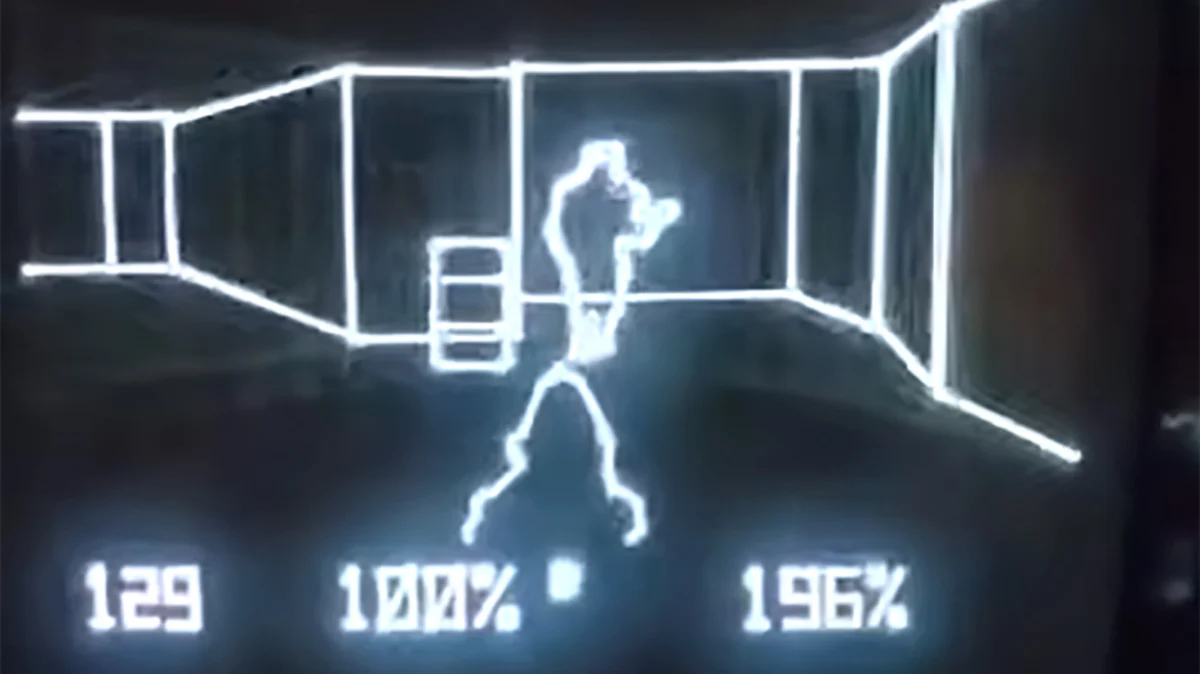
The internet has long maintained a running joke that if a device possesses a screen and a processor—no matter how primitive—someone will eventually figure out how to run Doom on it. From iPods and graphing calculators to smart refrigerators and office printers, id Software’s 1993 magnum opus has been ported to virtually every conceivable piece of hardware. However, a recent project has elevated this meme-worthy pastime into a genuine aesthetic triumph. Modder Jason Kopp, known online as ArcadeJason, has successfully brought Doom to the Vectrex, the legendary 1982 home console, resulting in a mesmerizing, Tron-like visual experience that recontextualizes the classic shooter as a piece of high-contrast, minimalist art.
The Intersection of Retro-Tech and Modern Ingenuity
To understand the magnitude of this achievement, one must first appreciate the hardware involved. The Vectrex is a historical anomaly: it is the only home video game console ever released that utilized a vector-based CRT monitor. Unlike standard televisions of the era, which rendered images using a grid of pixels (raster graphics), the Vectrex steered an electron beam to draw lines directly onto the screen. This created flicker-free, incredibly sharp, and mathematically precise imagery that defined the "arcade look" of the early 1980s.
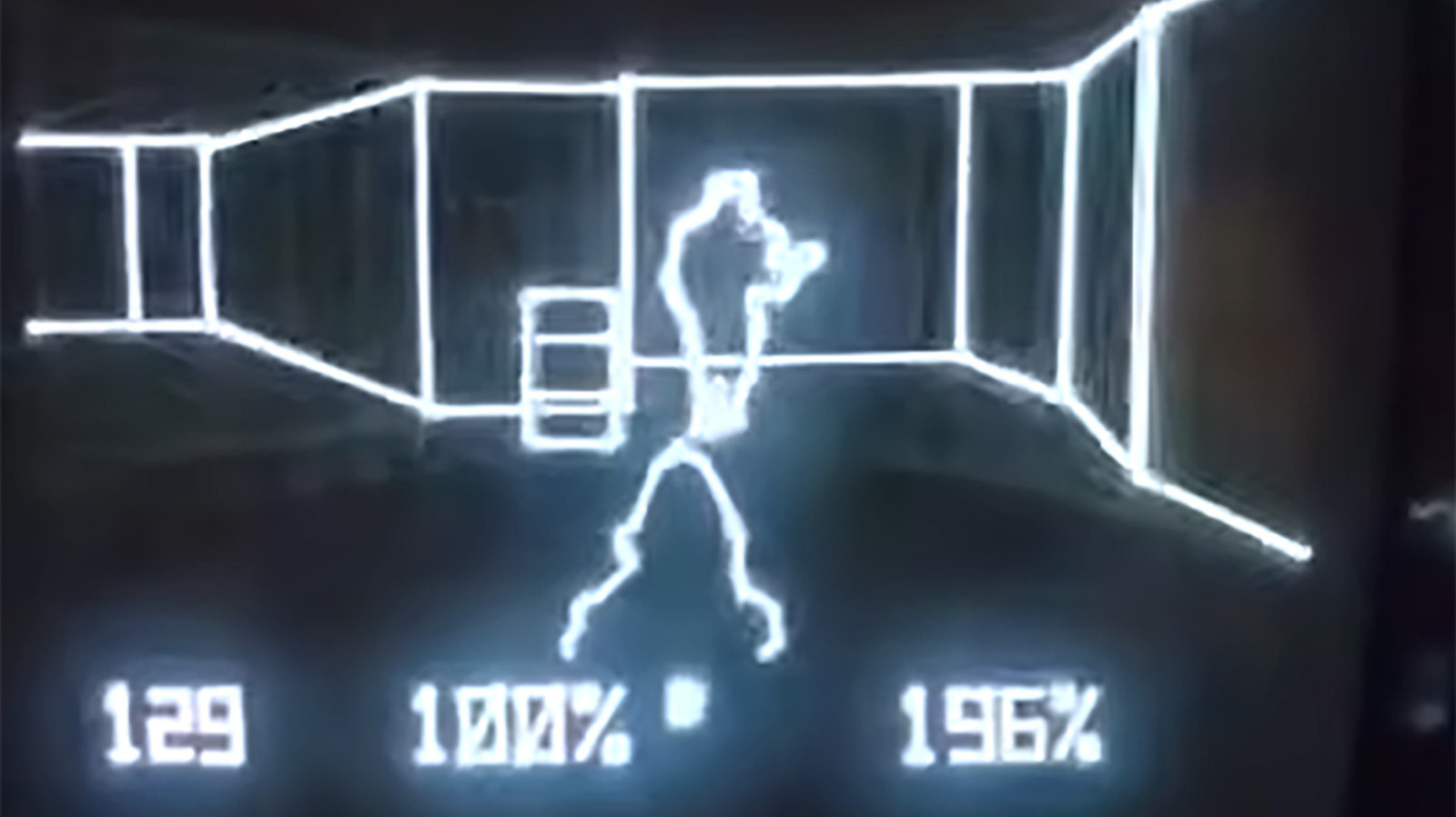
When Doom—a game fundamentally built on 320×200 pixelated raster textures—is ported to a vector display, the result is transformative. The bulky, gritty textures of the original PC version are stripped away, leaving behind clean, glowing neon lines. The environment feels less like a haunted space station and more like a high-stakes, subterranean grid from the digital frontier of Tron.
Chronology: The Evolution of "Doom-Porting"
The history of Doom ports is a testament to the perseverance of the modding community. Since id Software released the game’s source code in 1997, developers have treated Doom as the ultimate "Hello World" benchmark for hardware capabilities.
- 1993: Doom launches on MS-DOS, setting the standard for the First-Person Shooter (FPS) genre.
- 1997: The release of the Doom source code ignites a global movement of hobbyists determined to run the game on non-traditional platforms.
- 2000s: The "Doom on everything" movement gains momentum. Enthusiasts prove that Doom can run on handheld devices like the Game Boy Advance, iPods, and various mobile phones, often sacrificing frame rate or color depth for the sake of the achievement.
- 2010s: As microcontrollers like the Arduino and Raspberry Pi become affordable, the difficulty of the ports shifts from "can it run?" to "how can we make it look unique?"
- 2024–2025: Modern modding enters a new era of sophistication. Rather than simply forcing code onto incompatible hardware, projects like Kopp’s Vectrex port utilize auxiliary hardware, bridging the gap between 1982 engineering and 2025 emulation technology.
Supporting Data: The Architecture of the Port
A common misconception regarding the Vectrex Doom port is that the console itself is doing the heavy lifting. In reality, the Vectrex processor—a Motorola 68A09 running at 1.5 MHz—is far too weak to handle the complex 3D geometry and logic of a game as demanding as Doom.
Kopp circumvented this limitation by utilizing the Ultimate Vectrex Multicart 2 (UVMC2). This cartridge functions as a powerful, secondary plug-in computer. The UVMC2 handles the intense mathematical calculations and rendering logic, while the Vectrex acts essentially as an "output device," utilizing its native CRT for the display. Audio, similarly, is offloaded to the cartridge’s dedicated 3.5mm output, bypassing the console’s limited sound hardware.
The project also leans heavily on an SDK developed by modder Daniel Ferrer Guerrero. This software toolkit provides the necessary abstraction layers to translate modern C-based game logic into the vector-drawing commands that the Vectrex can interpret. The result is a smooth, responsive experience that functions as a perfect hybrid of modern software engineering and vintage display technology.
Official Responses and Community Reception
The reaction within the retro-gaming community has been overwhelmingly positive. Time Extension and other prominent industry outlets have lauded the project for its "eerie vector beauty." Unlike previous "silly" ports—such as running Doom on a toaster, which is often done for comedic impact—the Vectrex port has been received as a legitimate artistic endeavor.
Jason Kopp has been active on forums like the Arcade Museum, discussing the technical hurdles of the project. While there has been no official statement from id Software regarding this specific port, the studio has historically encouraged the modding community, famously stating that they enjoy seeing how far fans will go to keep their games alive. The consensus among the community is that this project represents the "pinnacle" of current retro-modding, setting a high bar for future developers looking to experiment with extinct display formats.
The Implications: Why We Still Play Doom
Why does the world remain obsessed with porting a 32-year-old game to obsolete hardware? The answer lies in the democratization of technology.
1. Technical Literacy
Projects like the Vectrex Doom port serve as an educational crucible. To succeed, a modder must understand binary, assembly, memory mapping, and the physics of CRT monitors. By reverse-engineering these systems, modders are effectively acting as historians, ensuring that the knowledge of how these classic systems function is preserved for future generations.
2. The Aesthetics of Constraint
Modern gaming is often criticized for its reliance on photorealism and bloat. By stripping Doom down to its geometric essence, the Vectrex port reminds players that gameplay—the "loop" of finding keys, fighting enemies, and navigating mazes—is what truly defines the experience. When you remove the textures and the lighting, you are left with the pure, mathematical skeleton of the game. It is a lesson in minimalist design that modern developers could stand to revisit.
3. Community Longevity
Doom is unique because it is "platform-agnostic." By maintaining a presence on everything from the Vectrex to modern consoles, the franchise transcends its origins. It is no longer just a piece of software; it is a shared language among hardware hackers. Every time someone finds a new device to run Doom on, they are proving that the spirit of the game is independent of the hardware it resides on.
Future Outlook
As we look toward the future of home-brew development, the Vectrex Doom port serves as a blueprint. It demonstrates that the future of retro-gaming does not lie in simple emulation, but in the hybridization of old and new hardware. By using modern, powerful flash-carts to drive vintage monitors, enthusiasts can breathe new life into technology that was previously considered "dead."
The Doom odyssey is far from over. If a 1982 vector console can be coerced into rendering the halls of a Martian base, there is no telling what the next frontier will be. Perhaps an augmented reality version, or a port to a modern smartwatch with a circular screen? Regardless of the platform, the commitment of people like Jason Kopp ensures that the legacy of Doom will continue to evolve, one line of code—and one electron beam—at a time.
For those interested in the technical minutiae, Kopp’s documentation on the UVMC2 and the Guerrero SDK is available through various arcade restoration forums. It is a deep dive into a rabbit hole that proves, once and for all, that with enough patience and a soldering iron, anything is possible. Doom has officially conquered the vector era, and in doing so, it has reminded us that the most classic games never really go away—they just find new, glowing ways to haunt our screens.
