
The Sonic Velocity of an Icon: Ben Lukas Boysen’s Score for Schumacher ’94 – The Birth of a Legend
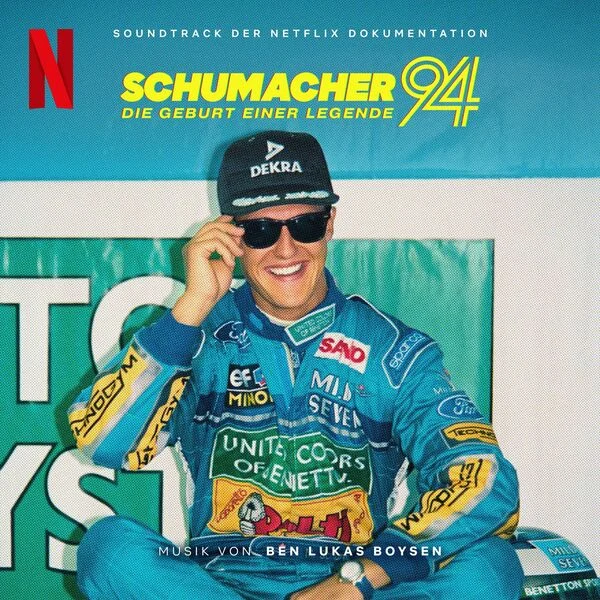
The roar of a Formula 1 engine is often described as a mechanical symphony, a high-pitched, guttural scream of combustion and engineering prowess. However, for Netflix’s latest German-language documentary, Schumacher ’94 – The Birth of a Legend (Schumacher ’94 – Die Geburt einer Legende), the sound of victory is translated into something far more atmospheric and introspective. Netflix Music has officially released the original soundtrack for the film, composed by the celebrated German composer Ben Lukas Boysen.
As the film delves into the transformative 1994 Formula 1 season—a year that would define Michael Schumacher’s career and alter the course of motor racing history—Boysen’s score serves as the emotional heartbeat of the narrative. Now available across major digital streaming platforms including Amazon, the soundtrack offers a haunting, pulse-quickening accompaniment to one of sports’ most pivotal eras.
The Genesis of a Legend: A Chronological Retrospective
To understand the weight of the soundtrack, one must first look at the subject matter. The 1994 Formula 1 season was not merely a series of races; it was a watershed moment in sporting history. Directed by Christin Freitag, Schumacher ’94 – The Birth of a Legend navigates the intense pressure, the raw ambition, and the tragic shadows that loomed over the sport during that year.
The Rise of the Titan
The film utilizes rare archival footage and intimate, personal interviews to reconstruct the ascent of Michael Schumacher. In 1994, Schumacher was a young, hungry talent in a field dominated by established veterans and the lingering legacy of Ayrton Senna. The documentary meticulously tracks his journey from a promising driver for Benetton to the man who would eventually claim his first World Championship title.
The Turning Point
The 1994 season is remembered as one of the most volatile in the history of the FIA Formula One World Championship. The narrative arc of the documentary centers on the tension between Schumacher’s clinical, almost machine-like precision on the track and the chaotic, often dangerous environment of the sport at the time. By focusing on the "Birth of a Legend," Freitag explores the psychological shift required to become a champion—a transformation that Boysen mirrors through his minimalist yet driving electronic compositions.
The Sound of Speed: Analyzing Ben Lukas Boysen’s Score
Ben Lukas Boysen is no stranger to crafting scores that demand emotional nuance. Known for his work on Beat, The Collini Case, and The Lazarus Project, Boysen has built a career on blending organic instrumentation with cold, precise synthesis. For Schumacher ’94, he faced the unique challenge of scoring a documentary that requires both historical gravity and the adrenaline-fueled pacing of high-speed racing.
Track List Breakdown
The album, consisting of 15 tracks, functions as a narrative progression:
- Pretitles (1:38) – Sets the stage with an atmospheric introduction.
- Idols (2:12) – A reflective piece exploring the weight of expectation.
- Balancing Act (3:15) – Captures the technical precision required for F1.
- Part of the Family (2:02) – A softer, more humanistic melody.
- Unconditional (2:10) – Explores the devotion of the racing team.
- Protect Myself (2:35) – A darker, more defensive texture.
- We Shouldn’t Race (1:16) – A somber, minimalist interlude.
- Greater Forces (3:03) – The crescendo of the competitive spirit.
- Traction Control (2:05) – Rhythmic, percussive elements mimicking the track.
- Formation Lap (2:22) – Building tension before the green flag.
- Flames (2:18) – A nod to the danger and fire of the era.
- Give Something Back (1:05) – A moment of reprieve.
- Out of Control (2:05) – The dissonance of the racing incident.
- Champion (3:27) – The thematic climax of the score.
- 1994 (1:00) – A final, evocative closing statement.
The Composer’s Intent
Boysen’s choice of instrumentation—characterized by pulsing basslines and ethereal, sustained pads—creates a "racing soundscape." Rather than relying on bombastic orchestral fanfares, Boysen opts for a restrained, modern sound that feels tethered to the 90s era while remaining contemporary. The tracks like "Traction Control" and "Formation Lap" emphasize the technicality of the sport, while "Champion" serves as the triumphant, albeit melancholic, resolution of the narrative arc.
Supporting Data: The 1994 Season Context
The documentary’s reliance on archival footage is bolstered by the historical context of 1994. The season was marred by the tragic deaths of Ayrton Senna and Roland Ratzenberger at the San Marino Grand Prix. Any musical score for this period must strike a delicate balance between the celebration of a new champion and the mourning of fallen icons.
Boysen’s score succeeds because it acknowledges this duality. The track "We Shouldn’t Race" is particularly indicative of the somber, reflective atmosphere that permeates the documentary. It is an acknowledgment that the "birth of a legend" did not happen in a vacuum, but in a world where the stakes were, quite literally, life and death.
Official Responses and Production Insights
Netflix’s decision to release the soundtrack as a standalone product highlights the importance of original music in the streaming era. In recent years, Netflix has shifted its strategy to position its documentary soundtracks as high-value intellectual property.
Director Christin Freitag noted in recent press discussions that the music was integral to the pacing of the edit. "We didn’t want a traditional sports score," Freitag remarked. "We wanted something that felt like the inside of Michael’s head—focused, intense, and sometimes isolating. Ben Lukas Boysen understood that vision immediately."
The film, which premiered last Friday on Netflix, has already garnered significant attention for its unflinching look at the controversy surrounding the 1994 season, including the collision between Schumacher and Damon Hill in the season finale at Adelaide. The soundtrack provides the emotional buffer that allows the audience to digest these high-stakes moments without the film feeling like a standard procedural sports recap.
Implications: The Evolution of Sports Documentaries
The success of Schumacher ’94 – The Birth of a Legend signals a broader trend in documentary filmmaking: the elevation of the "sports biography." Gone are the days of simple highlight reels narrated by a single voiceover. Modern audiences expect a cinematic experience that rivals scripted dramas.
Why the Score Matters
By investing in high-caliber composers like Boysen, Netflix is effectively blurring the lines between documentary and narrative cinema. The score elevates the archival footage, giving it a modern sheen that makes historical events feel immediate and urgent. This approach not only attracts F1 enthusiasts but also draws in cinephiles who appreciate the intersection of sports history and high-concept electronic music.
The Legacy of 1994
As we look back at 1994 through the lens of this documentary, the music serves as an anchor. It reminds us that Schumacher was a man who navigated extreme pressure to reach the pinnacle of his sport. For fans of Formula 1, the music acts as a visceral trigger, reminding them of the sound of the V10 engines, the smell of burnt rubber, and the sheer tension of a title race that went down to the final corner.
Conclusion: A Sonic Legacy
Schumacher ’94 – The Birth of a Legend is a testament to the power of collaboration between visual storytelling and musical composition. Ben Lukas Boysen has created a soundtrack that does not merely sit in the background; it drives the documentary forward, pushing the narrative through the curves and straights of one of the most intense seasons in sporting history.
Whether you are a devotee of Formula 1, an admirer of minimalist electronic music, or simply a fan of compelling biographical storytelling, this soundtrack is a masterclass in atmospheric composition. You can stream the score on all major platforms and catch the full documentary on Netflix now. As the final track, "1994," fades out, the listener is left with a lingering sense of awe—not just for the man who became a legend, but for the complex, dangerous, and beautiful sport that forged him.
The soundtrack for ‘Schumacher ’94 – The Birth of a Legend’ is available now via Netflix Music. Experience the full, immersive journey on Netflix.
