
FilmConvert Expands Post-Production Powerhouse: Dedicated RED V-RAPTOR Support Arrives for Nitrate and CineMatch
August 31, 2026
By 4KS Editorial
Main Facts
In the modern landscape of digital cinematography, multi-camera shoots have become the baseline standard for everything from high-end feature films and television series to commercial productions and music videos. However, combining footage captured on diverse camera systems introduces a notorious post-production headache: color science fragmentation. Each cinema camera manufacturer—whether RED, ARRI, Sony, or Canon—implements a proprietary color response, sensor science, and recording profile. Harmonizing these disparate elements into a unified, visually cohesive timeline requires substantial time, precision, and technical overhead.
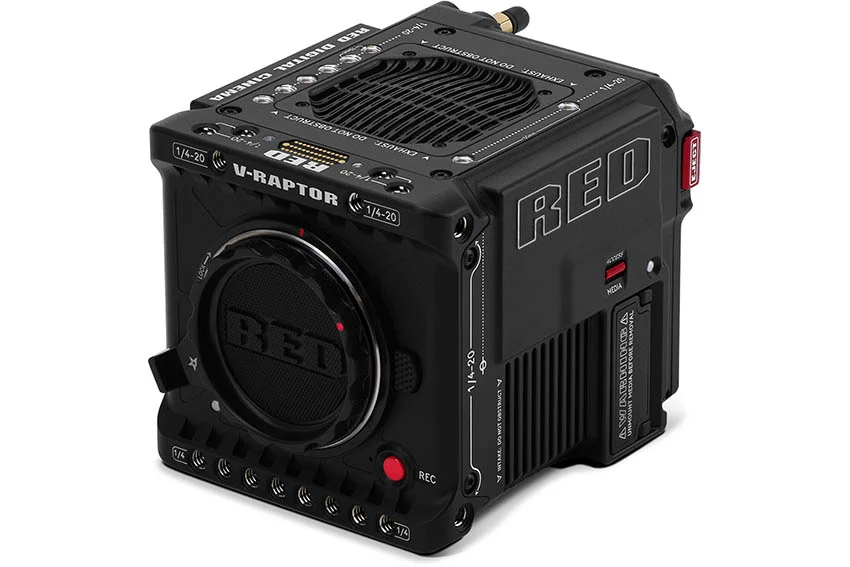
Addressing this persistent industry challenge, FilmConvert has officially announced the rollout of dedicated RED V-RAPTOR camera profiles for both of its flagship post-production plugins: FilmConvert Nitrate and CineMatch.
This newly released update eliminates the need for guesswork when handling high-end RED sensor data. By introducing precise, camera-specific profiles tailored explicitly to the RED V-RAPTOR 8K VV platform, the update provides colorists, directors of photography, and editors with an optimized technical foundation. Rather than relying on generic Log or RAW inputs, users can now leverage exact sensor data mapping within FilmConvert Nitrate for authentic film stock emulations, or utilize CineMatch to seamlessly bridge the V-RAPTOR with other disparate cinema camera packages on multi-cam sets.
Chronology: The Evolution of Color Management and Plugin Integration
To understand the significance of the RED V-RAPTOR integration, it is helpful to contextualize how color grading workflows have evolved over the past decade, and how FilmConvert has systematically built its ecosystem to address them.
- The Early Days of Digital Emulation: When digital cinema first began aggressively replacing celluloid, plugins were largely generic. Filmmakers applied heavy-handed, one-size-fits-all film stock looks over digital footage, frequently resulting in clipped highlights, muddy skin tones, and unnatural color shifts due to the mismatch between digital sensors and photochemical responses.
- The Introduction of Camera-Specific Profiling: Recognizing that an ARRI Alexa responds fundamentally differently than a RED Epic or a DSLR, FilmConvert pioneered accurate camera-matching technology. By profiling individual sensors, their software could mathematically translate sensor data to match exact film stocks (such as Kodak 5219 or Fuji 8543) with mathematical precision.
- The Launch of CineMatch: As multi-camera shoots grew ubiquitous—especially with the proliferation of compact cinema bodies and mirrorless hybrids used alongside A-cameras—FilmConvert introduced CineMatch. This tool revolutionized on-set color matching by allowing users to effortlessly convert footage from Camera A to Camera B before launching into creative color grading.
- The Rise of the RED V-RAPTOR: Since its introduction, the RED V-RAPTOR has established itself as an industry workhorse, prized for its high frame rates, global/rolling shutter options, incredible dynamic range, and versatile 8K Vista Vision sensor. However, integrating its unique color science into varied hybrid pipelines has demanded ongoing software updates from third-party developers.
- August 31, 2026 — The V-RAPTOR Profile Release: FilmConvert bridges the gap for high-end RED users by releasing native, dedicated support for the V-RAPTOR across both Nitrate and CineMatch, streamlining download mechanics and ensuring frictionless integration within major non-linear editing (NLE) systems.
Supporting Data: Understanding the Technical Pipeline
Color science is only as good as the math underpinning it. To appreciate how the new RED V-RAPTOR camera pack functions, one must examine how FilmConvert Nitrate and CineMatch process RAW and Log data under the hood.
1. FilmConvert Nitrate: Precision Emulation for RAW and Log Workflows
FilmConvert Nitrate is engineered specifically for cinematographers and colorists who want the organic texture of real celluloid grain combined with advanced color grading controls. When working with high-end cinema formats like REDCODE RAW (R3D) or RED Log3G10, maintaining a clean technical baseline is imperative.
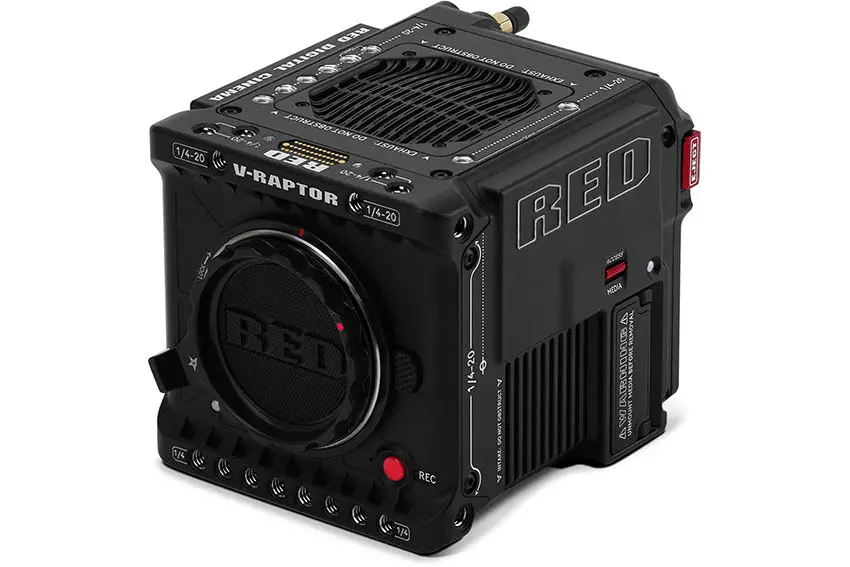
If a colorist applies a film emulation without a camera-specific profile, the plugin processes the footage through a generic curve. This can lead to unnatural color responses, particularly in saturated highlights or deep shadows. With the new RED V-RAPTOR profile active:
- The plugin recognizes the exact color response curves of the V-RAPTOR sensor.
- It scales the dynamic range accurately before applying custom print film emulations.
- Users retain full control over film grain characteristics, color wheels, and advanced grading tools without degrading the foundational integrity of the RED image.
2. CineMatch: Sensor-to-Sensor Harmonization
CineMatch operates on a different architectural principle. Its primary objective is camera matching rather than artistic grading. In a typical documentary, narrative, or commercial production, a RED V-RAPTOR might serve as the primary A-camera, while a secondary or tertiary camera (such as a cinema-line mirrorless or a specialized compact body) handles tight angles or gimbal work.
Historically, matching a RED image to another manufacturer’s color science required extensive manual manipulation of lift, gamma, gain, and secondary color correctors. CineMatch automates this transition:
- The user sets the source camera profile (e.g., RED V-RAPTOR) and the target camera profile.
- The software calculates a custom transformation matrix, aligning white balance, exposure curves, and color gamuts.
- The resulting baseline matches the footage so closely that subsequent creative grades can be applied globally across all cameras on the timeline without individual scene-by-scene corrective tweaks.
3. Installation Architecture and Usability
FilmConvert has designed the deployment of the new profile to be entirely frictionless:
- In-App Downloader: Rather than forcing users to manually visit a website, download installers, and restart their entire computer, the profile can be fetched directly from within the plugin’s native camera-profile system.
- Instant Refresh: If the RED V-RAPTOR option does not instantly populate the dropdown list upon updating, a simple restart of the host NLE (such as Adobe Premiere Pro, DaVinci Resolve, or Final Cut Pro) refreshes the directory, instantly making the profile available for selection.
Official Insights and Developer Perspective
While FilmConvert has kept the release focused and streamlined—avoiding flashy marketing overhauls in favor of under-the-hood technical excellence—the company’s ongoing software philosophy centers entirely on workflow transparency.
According to technical documentation released alongside the update, the primary goal of the RED V-RAPTOR camera pack is to remove technical barriers for high-end cinematographers. In professional environments, time is money, and spending hours trying to manually match a B-camera to a V-RAPTOR steals valuable time away from the creative coloring process.
Industry professionals have long noted that while RED cameras offer incredible latitude and resolution, unlocking their full cinematic potential requires robust metadata and color pipeline support. By offering native profiling, FilmConvert ensures that directors and cinematographers shooting on the V-RAPTOR do not have to compromise their preferred post-production toolsets or resort to clumsy, workaround conversion LUTs that can degrade image quality.

Implications for the Post-Production Industry
The introduction of dedicated RED V-RAPTOR support within FilmConvert Nitrate and CineMatch carries several significant implications for modern filmmakers, colorists, and post-production facilities:
1. Accelerated Turnaround Times in High-End Post
Time is arguably the most valuable commodity in commercial and episodic television post-production. Editors and assistant editors frequently pass timelines to colorists with mixed-camera media. By standardizing the input phase via CineMatch’s new V-RAPTOR profile, post-production teams can cut down preliminary conform and balance times drastically, freeing up creative colorists to focus on the look and mood of the project rather than technical firefighting.
2. Preservation of RED’s Dynamic Range and Detail
The RED V-RAPTOR is renowned for capturing staggering amounts of shadow and highlight detail. Generic input profiles often clip these extremes or distort mid-tone contrast ratios. Because FilmConvert’s camera packs are meticulously mapped to the camera’s actual sensor response, users can push and pull their grades harder within Nitrate without introducing digital artifacts, banding, or unnatural color shifts.
3. Democratization of High-End Workflows
As high-end cinema tools become increasingly accessible to independent filmmakers and mid-tier production companies, the technical demands of handling RAW and high-bitrate Log footage trickle down. Software updates like this one ensure that independent creators utilizing rented or owned RED V-RAPTOR bodies can achieve the same polished, filmic look traditionally reserved for heavily budgeted studio features, all within standard NLE environments.
4. Continued Relevance of Third-Party Color Ecosystems
With native color management tools built directly into modern editing suites (such as DaVinci Wide Gamut/DaVinci YRGB Color Managed or Adobe’s managed color workflows), some might question the necessity of third-party plugins. However, updates like FilmConvert’s V-RAPTOR integration prove that specialized plugins still hold a vital place in the market. By offering unique, organic film emulations and specialized sensor-matching algorithms that go beyond standard color-space transforms, FilmConvert continues to secure its place as an indispensable asset in the professional filmmaker’s digital toolkit.
Final Thoughts
The integration of the RED V-RAPTOR into FilmConvert’s Nitrate and CineMatch plugins may be classified as a targeted, focused software update, but its impact on everyday editing and coloring workflows is profound. By providing a mathematically accurate, camera-specific technical foundation, FilmConvert spares filmmakers the frustration of wrestling with generic color profiles.
Whether you are grading a gritty cinematic narrative in Nitrate using authentic celluloid emulations or frantically matching multi-cam interview footage in CineMatch, the addition of dedicated RED V-RAPTOR support ensures a cleaner, faster, and more predictable post-production journey from the very first cut to the final exported master.
