
A Haunting Identity Crisis: Analyzing Arthur Harari’s The Unknown [NYFF 2026]
At the 64th Annual New York Film Festival, one of the most polarizing and structurally ambitious projects to emerge is The Unknown, the latest offering from director Arthur Harari. Co-written by Lucas Harari, Arthur Harari, and Vincent Poymiro, the film attempts to marry the existential dread of modern psychological thrillers with the high-concept, surreal mechanics of a body-swap narrative. While the film boasts a powerhouse performance from Léa Seydoux and a hauntingly committed turn from Niels Schneider, it ultimately struggles to reconcile its lofty philosophical ambitions with its own sprawling, often inscrutable, runtime.
The Premise: When Identity Becomes a Prison
The narrative architecture of The Unknown centers on a chance encounter that rapidly devolves into a nightmare of physical and psychological displacement. The story introduces us to David Zimmerman (Niels Schneider), an artsy, introspective photographer whose life is seemingly defined by his ability to capture the essence of others. At an elite party, he crosses paths with Eva Helsinger (Léa Seydoux), an enigmatic and alluring actress.
What begins as a moment of magnetic, steamy attraction takes a dark, supernatural turn. Following an intimate encounter, the film establishes a reality-bending scenario: the characters find themselves trapped in the "wrong" vessels. The central conceit suggests that the body is merely a host, yet the film pushes this into discomforting territory by forcing its leads to grapple with the dissonance of occupying a physical form that fundamentally contradicts their internal gender identity and lived experiences.
A Chronology of Confusion: The Structural Decay
The film’s progression can be described as a slow descent into abstraction. In its opening act, The Unknown is precise and cold, reminiscent of the atmospheric tension found in cult classics like It Follows. We see the immediate, jarring aftermath of the swap, where the physical disconnect between spirit and shell is explored through a nearly silent, observational lens.
However, as the film crosses the one-hour mark, the narrative coherence begins to fray. The pacing slows to a crawl, and the plot—which initially promised a tight, character-driven mystery—begins to meander. The introduction of Malia (Lilith Grasmug) as a third pivot point in this identity triangle adds a layer of complexity that borders on the impenetrable. By the time we reach the final act, the film has abandoned traditional storytelling logic, opting instead for a series of vignettes that are thematically rich but narratively disjointed. At two hours and twenty minutes, the film asks the audience to endure a level of ambiguity that, rather than inviting intellectual curiosity, eventually breeds exhaustion.
Supporting Data: The Performative Heavy Lifting
Despite the film’s narrative shortcomings, the performances serve as the bedrock that prevents The Unknown from collapsing entirely.
Léa Seydoux: A Masterclass in Subtlety
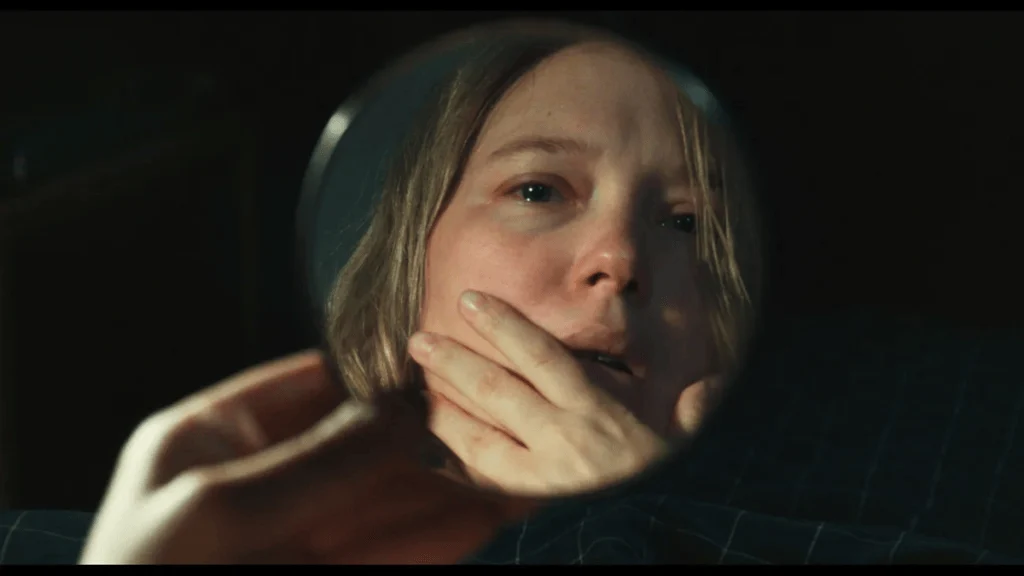
Léa Seydoux is arguably one of the most versatile performers working today, and The Unknown offers her a unique challenge. She is tasked with playing "Eva" while embodying a spirit that is not her own. Her beauty is notably de-emphasized here, replaced by a haunting, wide-eyed vulnerability. She captures the frustration of a character searching for an answer to a question that the universe refuses to answer.
Niels Schneider’s Tragic Intensity
Niels Schneider, playing opposite Seydoux, is the emotional anchor of the film. His portrayal of David Zimmerman is nothing short of courageous. He avoids the pitfalls of caricature that often plague body-swap films, instead choosing to lean into a somber, tragic intensity. His scenes of interaction—particularly those where he confronts his own history through the eyes of another—provide the film with its most visceral moments of human connection.
Ensemble Dynamics
The supporting cast, including Valérie Dréville, Radu Jude, and Victoire Du Bois, provides the necessary texture to the world. A standout sequence involves David (in his new form) confronting the character played by Radu Jude, who is meant to be the father of the person whose body he is inhabiting. The scene serves as a masterclass in tension, as David demonstrates an impossible knowledge of the father’s past, forcing the audience to reconcile the physical absurdity of the situation with the emotional truth of the performance.
Behind the Lens: The Artistic Intent
Arthur Harari’s direction is marked by a desire to push the audience toward a state of constant discomfort. The film is aesthetically cold, utilizing wide, empty shots that emphasize the isolation of the characters. However, there is a clear tension between the script’s intellectual goals and its execution. The film seems preoccupied with the concept of "intimacy"—how can we truly know another person when we cannot even fully possess our own bodies?
![Film Review: THE UNKNOWN: A Body Swap Drama That Sounds Better Than it Actually Plays [NYFF 2026]](https://film-book.com/wp-content/uploads/2026/09/Lea-Seydoux-The-Unknown-01-1200x675-1.png)
While this philosophical exploration is noble, the film’s refusal to provide even a hint of a "why" leaves the viewer feeling alienated. In cinema, ambiguity can be a powerful tool, but here it feels more like an omission. By refusing to ground the "swapping" mechanism in any form of logic—scientific, supernatural, or psychological—the film misses an opportunity to turn its high-concept premise into a truly cohesive narrative.
Implications: The Failure of the Resolution
The ultimate tragedy of The Unknown is its inability to stick the landing. As the credits roll, the viewer is left with a sense of hollowness. The film presents a series of intense, haunting revelations, but it fails to weave them into a satisfying conclusion.
The implications of the characters’ journeys—the loss of self, the trauma of physical displacement, and the search for home—are all present, yet they remain unresolved. The film ends not with a bang, or even a whisper, but with a lingering, unresolved question mark. For some, this may be considered "haunting"; for others, it is simply a failure of structure.
Critical Assessment and Final Verdict
The film is an ambitious, beautiful failure—a piece of art that looks and sounds spectacular but ultimately lacks the substance to justify its bloated length.
Strengths:
- Visual Language: The cinematography captures a dreamlike, surreal landscape that perfectly matches the film’s tone.
- Acting: Seydoux and Schneider deliver career-defining work, navigating complex roles with grace and raw honesty.
- Atmosphere: It succeeds in creating a persistent sense of unease that will likely stay with viewers long after they leave the theater.
Weaknesses:
- Pacing: The 140-minute runtime is excessive, with several scenes that serve no clear narrative purpose.
- Vagueness: The lack of any underlying logic to the premise makes the plot feel untethered, eventually leading to frustration.
- Resolution: The ending fails to provide a thematic or narrative resolution, rendering the emotional stakes of the characters somewhat futile.
In conclusion, The Unknown is a film that demands to be seen for its ambition and its performances, but it is not a film that will be easily loved. It is a cautionary tale of what happens when a director becomes so enamored with a concept that they lose sight of the audience’s need for a coherent journey. While Arthur Harari has certainly crafted a film that is "haunting," it is a shame that it haunts for all the wrong reasons. It is a work of immense talent that, unfortunately, needed a stricter hand in the editing room to find its true, beating heart.
Final Rating: 6/10
For more coverage of the 64th New York Film Festival, including deep dives into international cinema and interviews with the cast of this year’s most discussed projects, keep checking back with our film reviews section. If you enjoy our independent film criticism, consider supporting us on Patreon.
