
Shift into Reverse or High Gear? Peacock Greenlights Live-Action Fast & Furious Series for 2028
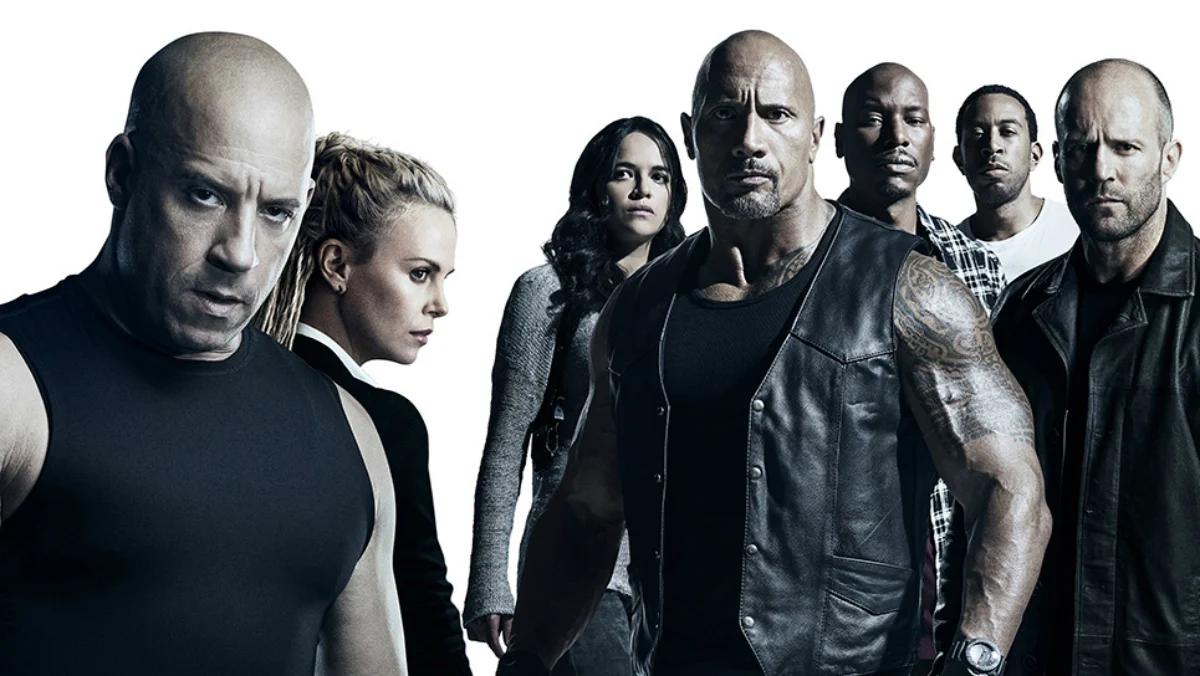
LOS ANGELES — The nitrous oxide is officially flowing on the small screen. Following months of speculation and teasers from franchise patriarch Vin Diesel, Peacock has officially greenlit a live-action television series set within the sprawling, physics-defying universe of Fast & Furious. Slated to premiere in 2028, the project marks a major milestone for one of the most lucrative and enduring intellectual properties in modern Hollywood history, bridging the gap between cinematic blockbuster status and episodic streaming television.
The announcement cements a massive expansion for the Universal Pictures-owned franchise. Not only is the high-octane universe leaping to television, but it is arriving during a pivotal year for the brand, colliding directly with the theatrical swan song of the core film series. As Universal prepares to park Dom Toretto’s iconic Charger for good on the silver screen, the streaming era of Fast & Furious is just beginning to accelerate.
Main Facts: What We Know About the Peacock Series
The television adaptation is moving forward at Peacock under the guidance of writers and co-showrunners Mike Daniels and Wolfe Coleman, who will steer the creative direction of the project. Franchise anchor Vin Diesel—who has frequently referred to himself as the "architect of mythology" for the series—is locked in to serve as an executive producer alongside Daniels and Coleman.
While plot details remain closely guarded in the franchise’s secret garage, the series is expected to maintain the high-stakes, action-heavy DNA of the films. However, major questions remain regarding casting. It is currently unconfirmed whether any actors or legacy characters from the feature film side will cross over into the episodic format, or if the series will entirely build a new roster of drivers, operatives, and adversaries.
What is certain, however, is the targeted launch window. The series will officially premiere in 2028, placing it in direct tandem with the theatrical release of the franchise’s supposed final cinematic installment.

Chronology: From Street-Racing Roots to Streaming Dominance
To understand the weight of a Fast & Furious television show, it helps to look back at the unexpected evolution of the property over the last three decades:
- 2001: The Fast and the Furious premieres in theaters, starring Vin Diesel and the late Paul Walker as a gritty, street-level crime drama about underground Los Angeles street racing and DVD-player heists.
- 2009–2011: Fast & Furious (2009) and Fast Five (2011) pivot the franchise away from mere street racing into a bombastic, globe-trotting heist genre, massively expanding the scale and box-office returns.
- 2019: Universal tests the waters of serialized storytelling outside the main films with the animated Netflix spin-off Fast & Furious Spy Racers, which runs for six seasons.
- May 2024: During NBCUniversal’s Upfront presentation, Vin Diesel casually stuns industry insiders by revealing that a live-action television show is in active development, alongside hints of an even larger television expansion.
- Late 2026: Industry trade Deadline officially breaks the news that Peacock has formally greenlit the project, locking in writers Mike Daniels and Wolfe Coleman.
- March 17, 2028: Fast Forever (the 11th main film and 12th overall) is scheduled to hit theaters, setting the stage for the streaming series premiere later that same year.
Supporting Data: The Blockbuster Footprint of ‘Fast & Furious’
The decision by Peacock to invest heavily in the Fast & Furious universe is backed by staggering historical data. Since its modest inception in 2001, the franchise has grown into a multi-billion-dollar global phenomenon.
- Box Office Dominance: Cumulatively, the Fast & Furious films have grossed well over $7 billion worldwide at the global box office, making it one of the top ten highest-grossing film franchises of all time.
- The Global Appeal: A significant percentage of the franchise’s box office revenue is generated internationally, with massive, dedicated fanbases across Latin America, Asia, and Europe. This international marketability is precisely what executives believe will translate well to global streaming platforms like Peacock.
- The Animated Precedent: While this marks the first live-action television series for the franchise, the IP successfully tested the television waters via DreamWorks Animation’s Fast & Furious Spy Racers, which proved that family-friendly, episodic storytelling could resonate with younger audiences on streaming.
Official Responses: From Skepticism to Universal Unity
The journey toward a live-action television series was not an instantaneous greenlight. In fact, Vin Diesel himself has admitted to initial hesitation regarding translating his cinematic "mythology" to the small screen.
Speaking at NBCUniversal’s Upfront presentation, Diesel revealed that it took convincing from Universal Studios chief Donna Langley to change his mind. Diesel credited Langley with alleviating his concerns, ultimately leading him to believe that "the integrity of the characters, the international appeal, what makes us all feel like family will be protected in the TV space."
That initial conversion blossomed into a massive vote of confidence. Rather than limiting the expansion to a single experimental series, Diesel famously teased that Peacock is quietly developing three additional Fast & Furious television projects, suggesting that the studio views the street-racing saga not just as an ending, but as a sprawling television universe in the vein of Yellowstone or the Marvel Cinematic Universe.

Implications: Can the Big-Screen Magic Survive the Small Screen?
As exciting as a multi-show expansion sounds to die-hard "Fast Family" members, the transition from megaplex cinemas to television screens presents distinct creative hurdles.
The Scale Challenge
The defining characteristic of the Fast & Furious franchise over the last decade has been its escalation of scale. What started as racing modified Hondas through Los Angeles eventually evolved into driving cars out of airplanes, launching a Pontiac Fiero into outer space, and treating global security crises like demolition derbies.
Television budgets, even for high-profile streaming series on platforms like Peacock, rarely match the $200M+ production budgets of modern summer blockbusters. The risk, critics argue, is that scaling down the action could flatten the specific brand of joyful, self-aware absurdity that fans expect. If the characters are suddenly constrained to dialogue-heavy, low-budget room conversations rather than jumping sports cars between skyscrapers in Abu Dhabi, it risks losing the very spectacle that revitalized the brand.
The 2028 Convergence
Timing the series premiere to coincide with the release of Fast Forever (the 11th main installment, arriving March 17, 2028) creates a unique narrative crossover opportunity. If the series functions as a de facto sequel or concurrent spin-off to the final cinematic chapter, it could keep the franchise’s momentum alive indefinitely.
Ultimately, the Fast & Furious television universe has a much harder race to win than its cinematic predecessor. It must prove that the concept of "family" can survive the transition from IMAX screens to living room televisions without running out of gas. But if the franchise has taught audiences anything over the past 27 years, it is to never, ever bet against Dom Toretto.
