
Threading the Needle of Madness and Memory: Bea Lema’s Corpus Christi Eyes the 2027 Oscars
As the global animation community sets its sights on the upcoming Academy Awards cycle, a new wave of cinematic contenders is stepping into the spotlight. In anticipation of the 2027 Oscars, Cartoon Brew has launched its exclusive series profiling the finest animated shorts that have successfully qualified for Academy consideration. Leading the charge is Corpus Christi (El Cuerpo de Cristo), a striking 12-minute Spanish-language short film that has already turned heads across the international festival circuit.
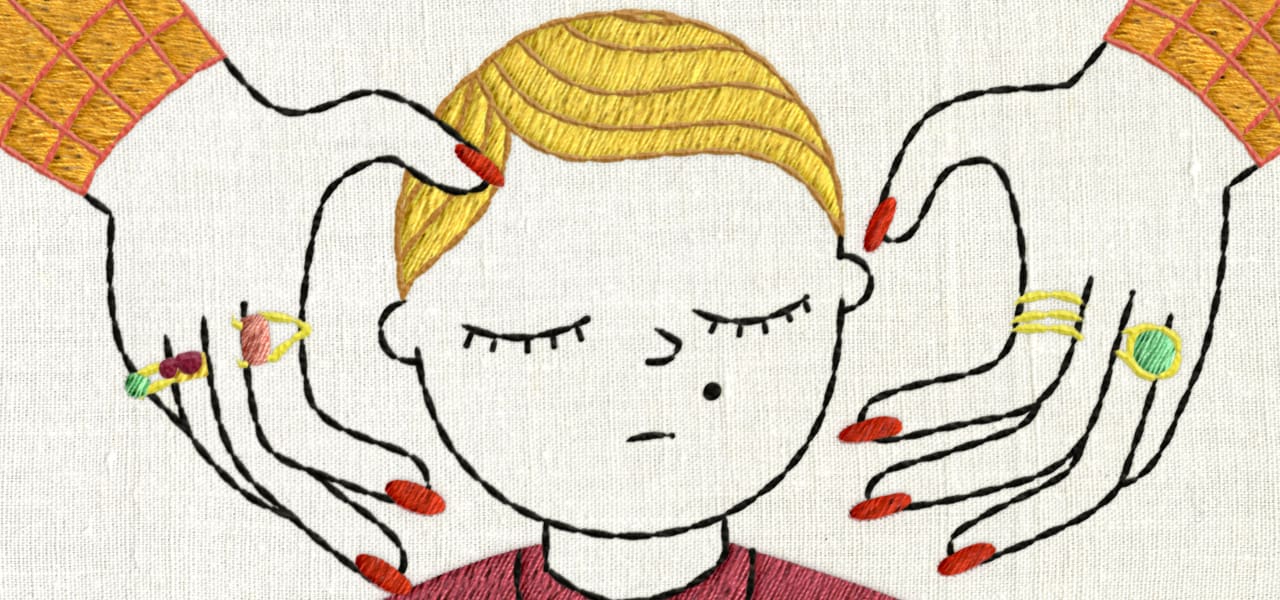
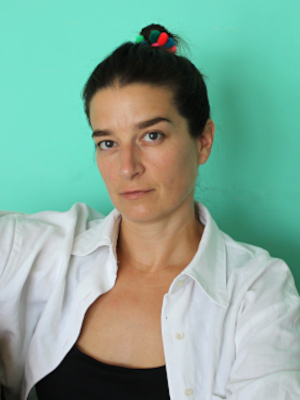
Directed by multidisciplinary artist Bea Lema, the film brings a profound, deeply personal exploration of mental illness, womanhood, and faith to the screen. Through a breathtaking and labor-intensive hybrid technique that fuses traditional textile embroidery with digital animation, Corpus Christi stands as a triumph of modern independent filmmaking.
Main Facts: A Triumph of Craft and Personal History
At its core, Corpus Christi is an adaptation of Lema’s critically acclaimed graphic novel of the same name, which previously captured Spain’s prestigious National Comic Award. The narrative centers on Adela, a woman grappling with an undiagnosed mental illness in 1950s rural Spain. When traditional medical professionals and her own family fail to comprehend or properly treat her psychological suffering, Adela seeks solace in the realms of religion, folk rituals, and traditional healers.
The production is a pan-European collaborative effort, produced by Iván Miñambres at Spain’s Uniko and Chelo Loureiro at Abano Producións, with festival distribution expertly managed by Miyu Distribution. The short secured its coveted Oscar-qualifying status by taking home the prestigious Silver Dragon for Best Animated Short at the 2026 Krakow Film Festival—a milestone that immediately positioned it as a heavy favorite in the competitive race for the 2027 Academy Awards.
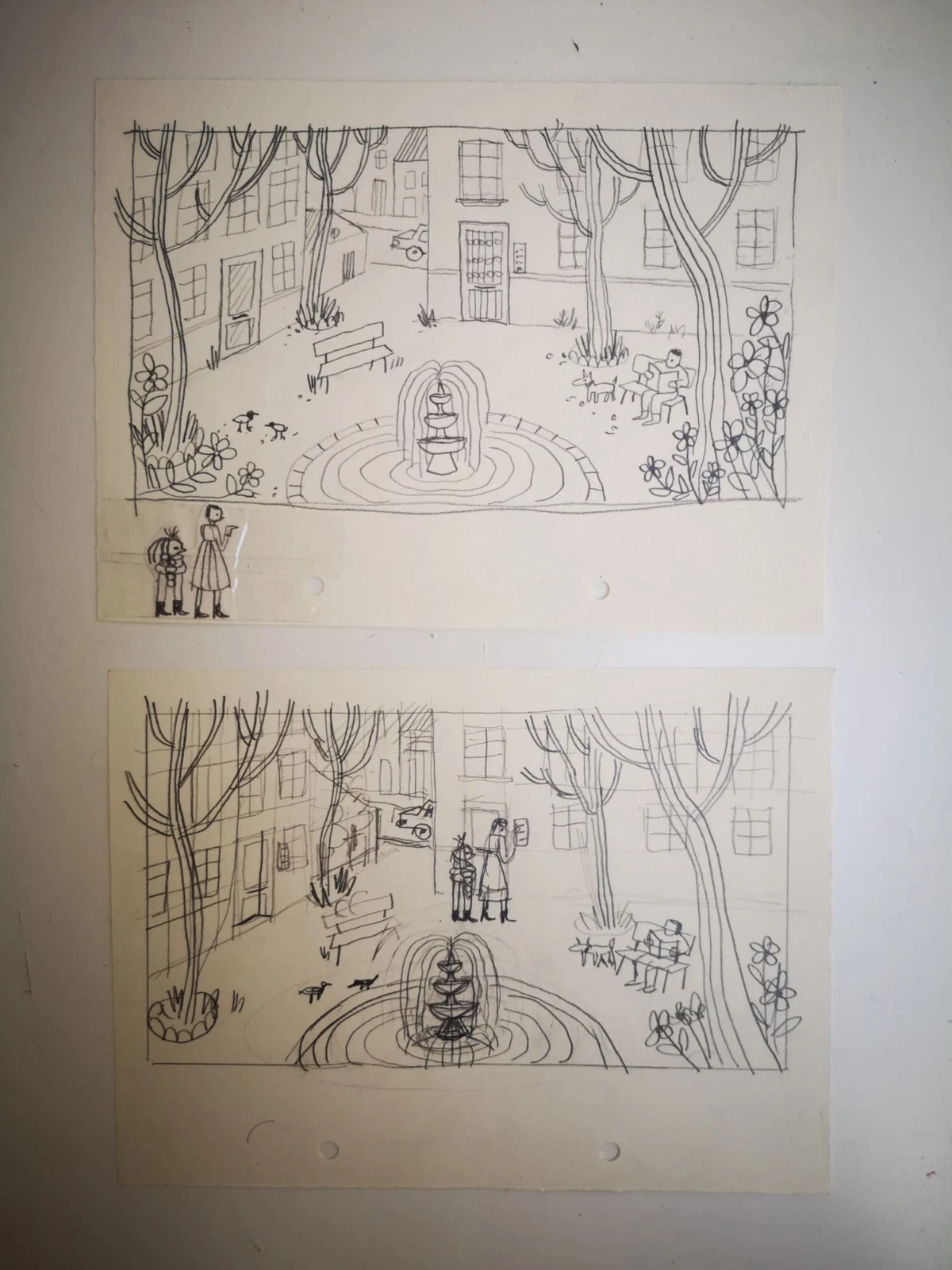
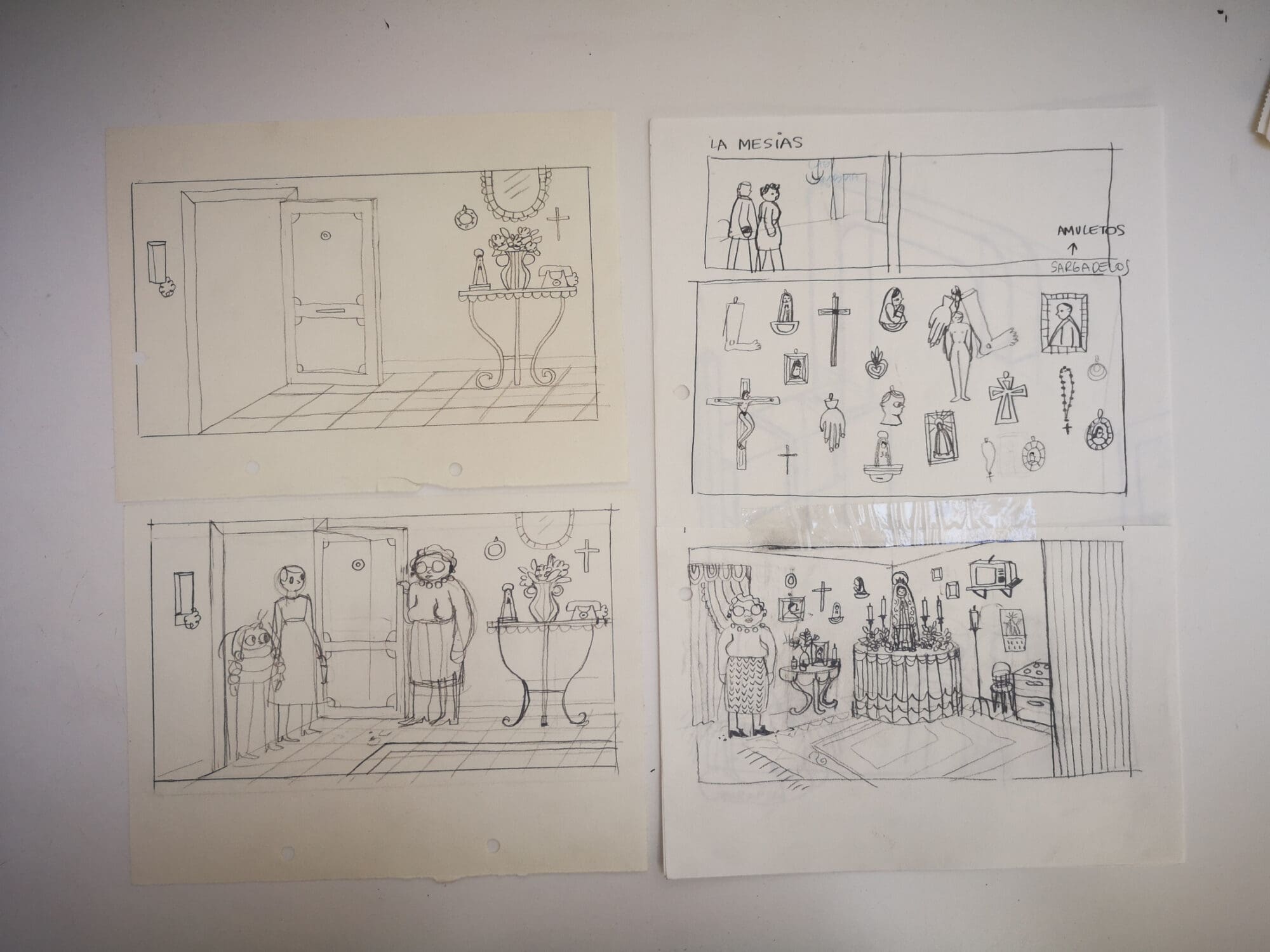
What sets Corpus Christi apart from its peers is its radical visual aesthetic. Eschewing traditional ink-and-paint or pure 3D rendering, Lema and her team developed a hybrid framework where over 170 physical backgrounds were meticulously hand-embroidered using thread, fabric, and classic sewing techniques. These textured textile environments were then scanned, housing digitally animated characters designed to mimic the tactile, frame-by-frame logic of stitches and woven fibers.
Chronology: From Lived Experience to International Acclaimed Short
To understand the magnitude of Corpus Christi, one must trace its journey from a childhood memory to an award-winning cinematic piece. The origins of the project stretch back decades, rooted in Lema’s upbringing and her intimate proximity to her mother’s battles with psychosis.
.png)
- Childhood and Adolescence: Growing up, Lema witnessed her mother enduring severe psychological distress, marked by prolonged periods in bed, unsettling hallucinations of a malignant, demon-like presence, and hidden caches of psychiatric medication. With neither medical professionals nor traditional healers offering a clear understanding or a unified support system, the reality of the illness remained shrouded in familial silence.
- Adulthood Discovery: It was not until Lema reached adulthood that she happened upon a psychiatric report labeling her mother’s condition as a delusional disorder. This long-delayed clarity sparked an urgent creative compulsion in Lema to decode the madness that had consumed her mother’s life.
- The Graphic Novel Phase: Lema initially channeled these heavy, complex themes into the medium of sequential art. Her graphic novel, El Cuerpo de Cristo, was published to widespread critical acclaim, ultimately earning Spain’s National Comic Award and cementing Lema as a vital new voice in contemporary storytelling.
- Transition to Animation: Recognizing the temporal and dimensional possibilities of motion, Lema partnered with producers Iván Miñambres and Chelo Loureiro to adapt the comic into an animated short film. This phase required years of technical research to translate the intimate physical texture of thread and cloth into a dynamic moving image.
- The Festival Circuit and Oscar Qualification (2026): Following its completion, Corpus Christi began making waves on the international festival circuit, culminating in its triumph at the 2026 Krakow Film Festival, where it won the Silver Dragon for Best Animated Short, officially securing its qualification for the 2027 Oscars race.
Supporting Data and Production Insights: The Anatomy of Embroidery in Motion
The production of Corpus Christi was an exercise in extreme patience and artisanal dedication. In interviews detailing the creative process, Lema revealed the staggering scale of manual labor required to bring Adela’s world to life.
Every single background in the film—totaling more than 170 distinct visual settings—physically exists as an embroidered textile art piece. Utilizing fabric, various weights of thread, and centuries-old sewing methods, Lema imbued every frame with the physical weight of manual labor.
+-----------------------------------------------------------------+
|                  CORPUS CHRISTI: PRODUCTION METRICS             |
+---------------------------+-------------------------------------+
| Total Runtime             | 12 Minutes                          |
| Hand-Embroidered BGs      | 170+ Physical Textile Artpieces     |
| Primary Producers         | Uniko & Abano Producións            |
| Festival Distributor      | Miyu Distribution                   |
| Qualification Milestone   | Silver Dragon, 2026 Krakow Film Fest|
+---------------------------+-------------------------------------+
When asked about her choice of medium, Lema emphasized that embroidery carries deep cultural and emotional resonance. Traditionally associated with femininity, domesticity, care, and the preservation of memory, embroidery served as the ideal metaphorical vehicle for exploring psychological vulnerability.
"I’m interested in the mark left by manual labor," Lema noted, highlighting how the unavoidable imperfections and tactile quality of physical thread mirror the frayed edges of human sanity. While the characters are digitally animated, careful attention was paid to ensure their movements adhered to the logic of sewn textiles, bridging the gap between digital precision and handcrafted warmth.
Official Responses and Creative Philosophy: Navigating Faith and Mental Health
One of the most delicate narrative tightropes Lema walks in Corpus Christi is the intersection between psychological distress and religious devotion. Set against the backdrop of 1950s rural Spain—a time and place where spiritual beliefs held immense societal sway—the film examines how Adela turns to the church and folk healers when modern science fails her.
Rather than dismissing folk remedies or framing religion as a symptom or a delusion, Lema approaches the subject with profound documentary-style neutrality.
"Part of the short film is set in rural Spain in the 1950s, where religion and popular beliefs carried great weight," Lema explains. "The protagonist ends up turning to religion in the face of the lack of understanding she encounters both within her family and from the medical profession. In the traditional healer’s surgery, she finally feels listened to and finds a place of hope and peace."
Crucially, Lema refuses to reduce faith to a mere psychological crutch or an explanation for mental illness. Her work is an exercise in empathy and respect for alternative ways of processing suffering. By portraying the traditional healer’s office as a space of genuine solace, Lema honors her mother’s lived reality without imposing modern medical condescension onto historical or deeply personal coping mechanisms.
Furthermore, Lema views the broader human need for spirituality—whether channeled through organized religion or creative expression—as an enduring universal trait. In her own life, the grueling, meditative process of stitching frame after frame became her personal vehicle for processing grief, memory, and transcendence.
Implications: A Shift Toward Tactile Authenticity in Modern Animation
As Corpus Christi charges toward the 2027 Academy Awards, its success signals broader, significant implications for the landscape of independent and international animation:
- The Renaissance of Mixed-Media Storytelling: For years, the animated short film category has been dominated by clean digital pipelines and stop-motion standard practices. Corpus Christi proves that audiences and festival juries are hungry for unconventional hybrids that honor tactile, analog materials. By successfully merging physical embroidery with digital movement, Lema has opened new doors for textile artists and creators working outside traditional studio animation pipelines.
- De-stigmatizing Mental Health Through Art: By grounding a narrative about psychosis in personal family history rather than sensationalized tropes, Lema provides a masterclass in empathetic storytelling. The film’s critical and festival-circuit momentum demonstrates that deeply vulnerable, culturally specific narratives can resonate on a global scale.
- Elevating European Co-Productions: The logistical triumph of Corpus Christi—supported by Spanish powerhouses Uniko and Abano Producións and distributed by France’s Miyu Distribution—underscores the power of cross-border European funding models. These systems continue to foster high-risk, high-reward artistic experiments that commercial studio hubs might otherwise overlook.
As the race for the 2027 Oscars intensifies, Bea Lema’s embroidered masterpiece stands tall as a beacon of uncompromising artistic vision. Corpus Christi does not merely tell a story of pain and isolation; it stitches memory, empathy, and faith directly into the fabric of cinema, ensuring that the hidden struggles of the past are woven into the collective consciousness of the present.
