
The Invisible Artistry of ‘Heart of the Beast’: How VFX Supervisor François Dumoulin Brought a Survival Epic to Life
In an era of cinema dominated by bombastic spectacles and overt digital artifice, David Ayer’s latest feature, Heart of the Beast, stands as a masterclass in restrained, character-driven filmmaking. Starring Brad Pitt as a retired Special Forces veteran and his combat-hardened dog, Odin, the film is a visceral 58-mile trek through the unforgiving Alaskan wilderness. While the narrative—a story of survival, PTSD, and an unbreakable interspecies bond—is grounded in raw emotion, the technical execution behind it represents a sophisticated convergence of practical filmmaking and cutting-edge visual effects.
Led by visual effects supervisor François Dumoulin, the team at Framestore faced the daunting challenge of creating a film that, by design, refuses to look like a "VFX film." From a harrowing plane crash to a treacherous river crossing and an aggressive wolf pack, Dumoulin’s mission was to ensure that the audience remains anchored in the emotional stakes, never once questioning the reality of the characters on screen.
The Core Challenge: Capturing the Soul of Odin
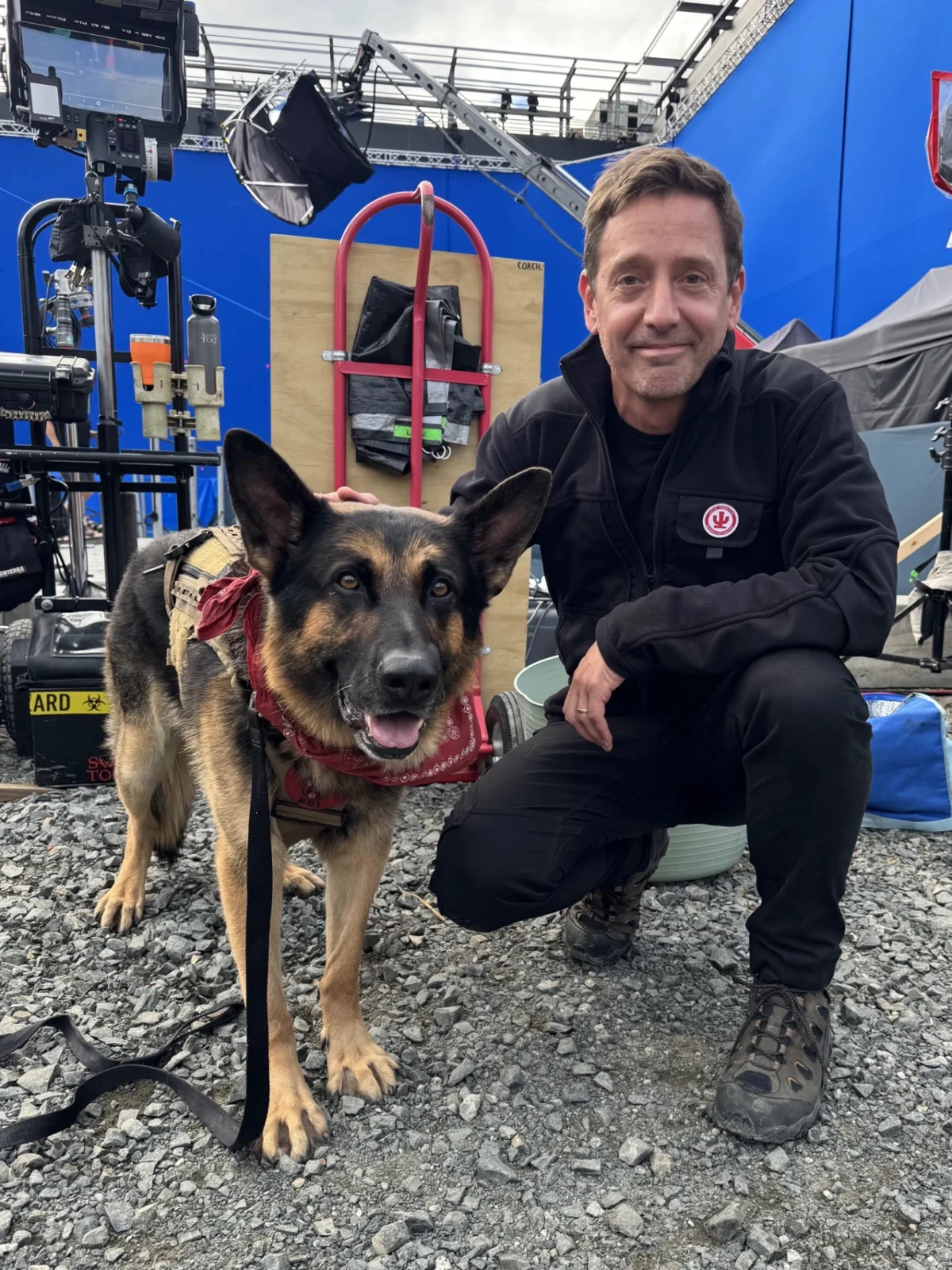
The production’s most critical task was the realization of Odin, the veteran combat dog. For the role, the production cast a German Shepherd named Uber, a former search-and-rescue dog, supported by three of his sons who served as specialized stunt doubles.
"When I joined the project, there was a lot of anxiety around the dog," Dumoulin explains. "We had an extremely short preparation time—less than two months—and we were shooting in New Zealand, which has strict biosecurity laws that made importing animals for extended periods difficult."
The team relied on a hybrid approach. While practical dogs were used for the majority of the hero shots, a digital replica was essential for scenes where the level of danger was too high for a real animal, or where the required performance proved elusive. To ensure a seamless blend, the team used photogrammetry and high-end scanning to build a digital asset that was anatomically perfect from the inside out—starting with the skeleton and building muscles, fascia, and skin layers to replicate the authentic movement of the canine.
The most notable digital feat involved the character’s titanium teeth. Because the real dogs were naturally docile, capturing a "snarling" performance was impossible. Dumoulin’s team executed a "Frankenstein" approach: they kept the body and head movement of the real dog but digitally replaced the muzzle and jaw to convey the aggression required for the character’s backstory, ensuring that the visual cues of the titanium implants were revealed at the perfect narrative moment.
Chronology of Production: From Previs to Post
The production moved with remarkable speed. Following his tenure on the documentary series Prehistoric Planet, Dumoulin brought a documentarian’s eye for realism to Heart of the Beast.
The Plane Crash
The plane crash sequence serves as the film’s inciting incident, setting the tone for the survival struggle ahead. Director David Ayer was adamant about in-camera authenticity. The team mounted a real Cessna on a gimbal on a sound stage, allowing Brad Pitt to film the initial flight and subsequent crash maneuvers in front of a bluescreen.
To bridge the gap between the cockpit plates and the external environment, the production used a six-camera array on a helicopter to capture spherical background maps. For the final impact into the lake, a hollowed-out cockpit was dropped into a water tank on a backlot, creating a real splash that was later augmented by Rodeo FX to integrate the surrounding environment.
The River Rapids Crossing
Perhaps the most complex sequence was the river crossing. The location, while stunning, was logistically inaccessible for a full crew. The team used LiDAR scanning to map the real-world location and then reconstructed key segments—such as the massive rock formations and the "tree bridge"—on a backlot.

"We weren’t just guessing the distance to the water," says Dumoulin. "We used a Total Station to triangulate the exact relationship between the camera, the actors, and the geography. This allowed us to match the lighting and camera physics perfectly, making the transition between the backlot and the location completely imperceptible."
Supporting Data: The Role of Performance
A central tenet of Dumoulin’s philosophy was the inclusion of tactile performance elements. Rather than relying on tennis balls or green-screen markers, he collaborated with Brian Fisher of Practic Creations to build simple, lightweight puppets for the animal encounters.
"When you have a puppet, everyone on set—from the director to the lighting team—instinctively knows where to look, how to pull focus, and how the light should react," Dumoulin notes. "It turned a technical challenge into a creative dialogue."
This methodology was particularly vital during the wolf attack sequence. Working closely with the stunt department, the team choreographed the interaction between stunt performers in gray suits and the lead actor. By blocking these scenes with physical performers, the team ensured that when the wolves were eventually rendered digitally by Framestore, the weight, physics, and interaction with the environment were based on real-world movement and reactions.
Official Responses and Creative Vision
Director David Ayer’s vision for the film was "timeless." While the setting is Alaska, the visual language was crafted to feel almost mythological. The transition from the pristine reality of the early film to the surreal, ethereal environments of the final act was a deliberate choice.
"David told me early on, ‘I’m not interested in a documentary,’" recalls Dumoulin. "He wanted a classical, timeless piece. We started with reality and twisted it just enough to make it feel like a spiritual realm."
This shift is most apparent in the "Eye of God" sequence, a psychedelic, mind-bending moment that deviates from the survival narrative to explore the protagonist’s internal state. By avoiding traditional, heavy-handed VFX, the team ensured that these moments felt like a natural evolution of the story rather than a jarring departure from the film’s established reality.
Implications for Future VFX
The success of Heart of the Beast underscores a shifting trend in visual effects. By prioritizing "VFX as a storytelling tool" rather than a spectacle in itself, the production has set a new standard for how high-budget films can handle creature-heavy, high-stakes environments.
The project proves that the "black box" of visual effects can be opened. By involving other departments—from set design to stunt coordination—early in the process and utilizing tools like Gaussian splats and real-world 3D mapping, the production team minimized the need for expensive, time-consuming post-production fixes.
As the industry continues to grapple with the capabilities of AI and high-end digital simulation, Heart of the Beast serves as a poignant reminder that the most effective visual effects are the ones the audience never notices. Through the synthesis of practical, in-camera photography and nuanced, character-driven digital work, Dumoulin and his team have created a film that is not just a triumph of technical skill, but a profoundly moving spiritual journey.
