
Back to Hillman: How the A Different World Revival Claimed the No. 1 Spot and Redefined Legacy Television for a New Generation
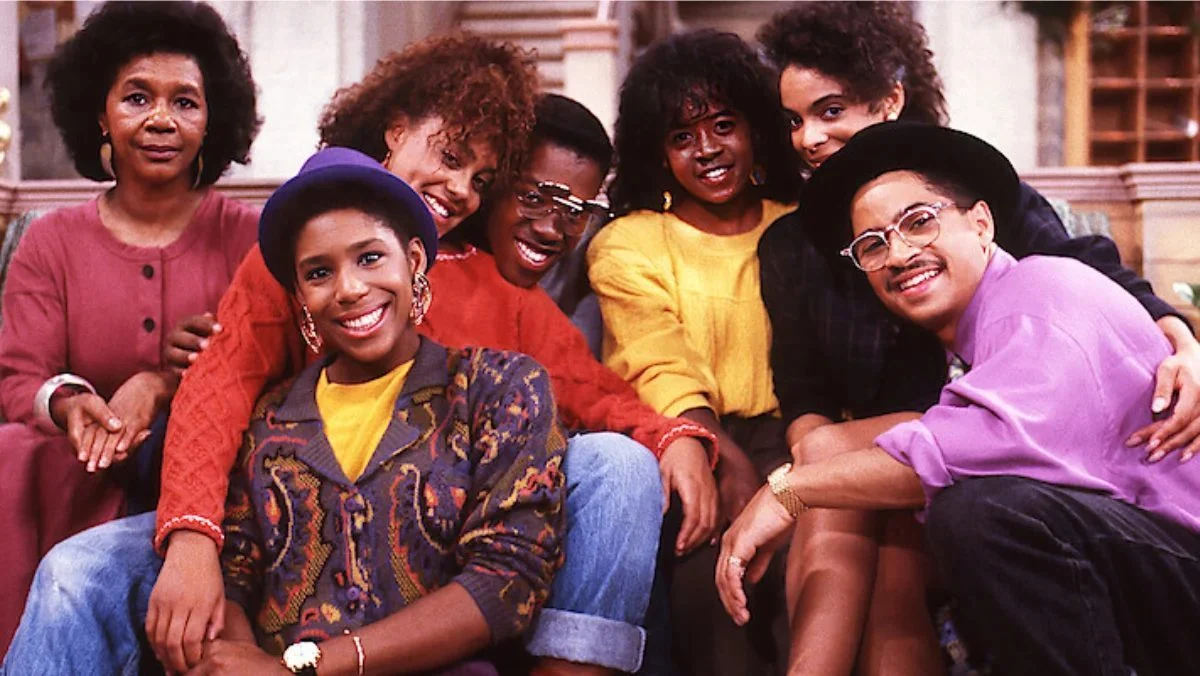
LOS ANGELES — School is officially back in session at Hillman College, and audiences are paying close attention. Decades after the beloved 1980s and ’90s cultural touchstone originally signed off, the 2026 continuation of A Different World has surged to the No. 1 spot on Netflix, officially securing a swift and enthusiastic renewal for Season 2.
The triumph of the revival arrives at a crucial cultural crossroads. For years, television analysts and nostalgic fans alike have lamented a persistent drought in the television landscape: a dearth of culturally rich, character-driven Black sitcoms that capture the magic of era-defining classics like Martin, Family Matters, and Living Single. Too often, these foundational shows were abruptly canceled or denied the proper send-offs they deserved, leaving permanent gaps in the cultural lexicon. Yet, attempting to resurrect these worlds carries immense risk. How does a creative team honor a sacred 20th-century legacy without falling into the trap of cheap pastiche?
Showrunner Felicia Pride answered that question not by looking backward, but by looking squarely at the present. Under her stewardship, the A Different World continuation has proven that legacy revivals can transcend nostalgia, transforming into vital, contemporary television by asking a singular, forward-thinking question: What does Hillman College mean to a generation of students navigating the trials of the 21st century?
Main Facts: A Triumphant Return to Campus
The newly minted iteration of A Different World follows a fresh crop of students at the fictional Historically Black College or University (HBCU), blending deep-rooted legacy characters with an entirely new student body. At the heart of the narrative is Deborah Wayne—portrayed by Maleah Joi Moon—the brilliant and ambitious youngest daughter of original series icons Whitley Gilbert and Dwayne Wayne, as she embarks on her freshman journey.
Deborah is not the only familiar surname gracing the campus roster. Shaquille Johnson, played by Cornell Young IV, arrives as a five-star athletic recruit and the son of original fan-favorite Ron Johnson. Early episodes establish a complex, dynamic relationship between Deborah and Shaquille that quickly transcends mere platonic camaraderie.

However, the real anchor of the series lies in its sprawling, diverse ensemble of new student characters. The show introduces criminal justice major Rashida (Alijah Kai Haggins), spiritual anchor and prayer warrior Hazel (Kennedi Reece), and unhoused student Amir (Jordan Aaron Hall). Furthermore, the series broadens its lens to encompass the global Black experience through Kojo (Chibuikem Uche), an ambitious international student whose parents immigrated from Nigeria and Ghana.
Complementing this new generation are cherished legacy appearances. Original cast members Kadeem Hardison (Dwayne Wayne), Jasmine Guy (Whitley Gilbert), Cree Summer (Freddie Brooks), and Darryl M. Bell (Ron Johnson) return in recurring roles, bridging the generational divide alongside tightly guarded cameo surprises that have sent social media into a frenzy.
Chronology: From 1980s Groundbreaker to 2026 Streaming Phenomenon
To understand the cultural magnitude of the 2026 revival, one must trace the timeline of the property’s enduring impact:
- 1987: A Different World premieres on NBC as a spin-off of The Cosby Show, initially focusing on Denise Huxtable (Lisa Bonet) before expanding into a sprawling ensemble-led love letter to HBCU culture.
- Season 2 (Late 1980s): Executive producer and creative visionary Debbie Allen joins the series, steering the show toward deeper social commentary, political consciousness, and authentic representations of Black collegiate life.
- 1991: In a landmark moment for television history, the show addresses the escalating HIV/AIDS epidemic by airing the episode "If I Should Die Before I Wake," responding directly to NBA legend Magic Johnson’s public diagnosis.
- 1993: The original series concludes its run, leaving behind a profound cultural legacy that influences generations of students to enroll in real-life HBCUs—a phenomenon often referred to as "The Hillman Effect."
- Decades Following: Fans continue to rewatch, debate, and mourn the lack of comparable contemporary programming, keeping the spirit of the show alive in syndication and streaming platforms.
- Mid-2020s Development: Showrunner Felicia Pride, encouraged by Debbie Allen, takes on the challenge of developing a continuation. Pride builds an entirely Black writers’ room and establishes an official council of current HBCU students to guarantee absolute authenticity.
- 2026: The new series drops on Netflix, immediately dominating global charts, claiming the No. 1 spot, and earning a rapid Season 2 renewal.
Supporting Data and Creative Vision
The commercial and critical success of the Netflix series is no accident; it is the result of meticulous research, deliberate staffing, and a commitment to nuance.
In an interview with The Hollywood Reporter, Felicia Pride articulated the core philosophy driving the writers’ room: "The timing is right in terms of the fact that we need to hear from Black students, Black young people, and also the need for hope. That hope is at the center of the new series."

Pride’s collaborative approach stands out in modern television production. Rather than relying on Hollywood assumptions about college life, she established a dedicated advisory council of actual HBCU students. This initiative ensured that everything from campus fashion and slang to modern academic pressures reflected contemporary realities.
Data from the streaming release indicates that the show struck a chord across multiple demographics. It successfully captured aging Gen X and Millennial viewers who grew up with the original series, while simultaneously pulling in younger Gen Z audiences who see their contemporary struggles—ranging from housing insecurity to shifting socio-political climates—reflected on screen.
Official Responses and Creative Leadership
The transition from 20th-century television icon to 21st-century streaming powerhouse required a bridge between eras. That bridge was built by legendary multidisciplinary artist and executive producer Debbie Allen.
Allen, whose creative imprint defined the golden era of the original series, recognized Pride’s unique capability to shepherd the property into a modern era. It was Allen who directly encouraged Pride to take on the daunting task of reviving the franchise.
Behind the scenes, the production placed a heavy emphasis on authentic cultural representation—not just of African Americans, but of the wider African diaspora. Through the character of Kojo and his immigrant parents, the series tackles complex generational friction. Kojo’s father carries deep-seated misconceptions about the African American community in the United States, providing a vehicle to explore internal prejudices and cultural misunderstandings within the global diaspora.

Reviewers and cultural critics have praised this narrative choice. Rather than painting the Black community as a flat monolith, the revival leans into uncomfortable, necessary conversations—a hallmark of the original series’ DNA.
Implications: Tackling Modern Realities and the Future of Black Television
While television formatting has evolved away from the traditional multi-cam sitcom format—classifying the new iteration as a contemporary drama-comedy hybrid rather than a standard sitcom—its structural DNA remains deeply connected to the political and social utility of its predecessor.
The original series was renowned for using its platform to dismantle myths and engage with urgent social issues. Beyond its pioneering work on HIV/AIDS in 1991, the 1980s and ’90s series fearlessly tackled Apartheid, sexual assault, domestic violence, interracial dating, and socioeconomic stratification across its six seasons.
Today, the revival steps seamlessly into that tradition. In 2026, real-world HBCUs face a barrage of contemporary crises, including high-profile bomb threats, systemic budget cuts, and student housing displacements. The new series weaves these headlines into the fabric of campus life, ensuring that Hillman College remains a mirror to the actual socio-political landscape of Black higher education.
By refusing to sanitize the college experience and instead focusing on the resilience, joy, and complex identity formation of its characters, A Different World has proven that legacy IP does not have to rot in cynical cash-grabs. Instead, when handled with cultural reverence, sharp writing, and generational partnership, a revival can chart a bold path forward—reminding audiences that the journey of discovering who you are and who you want to be is timeless.
