
The Great Celebrity Retreat: Why A-Listers Like Glen Powell, Sydney Sweeney, and Jennifer Lawrence Are Stepping Away from the Political Arena
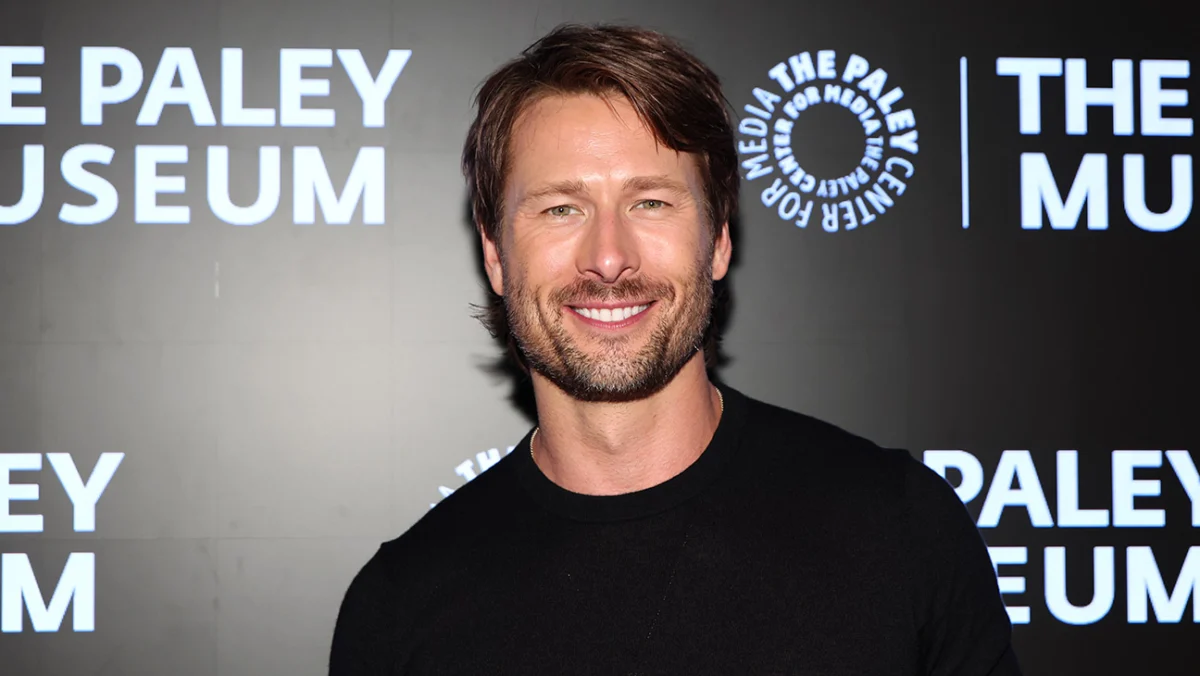
By Entertainment and Culture Desk
Updated: February 2026
Main Facts
In the modern entertainment landscape, a profound ideological shift is quietly taking place among Hollywood’s premier box-office draws. Glen Powell, the breakout star of Top Gun: Maverick, Anyone But You, and Edgar Wright’s upcoming adaptation of Stephen King’s The Running Man, has explicitly drawn a line in the sand regarding public political discourse. In a wide-ranging, comprehensive cover story for Esquire, Powell made it clear that he has no interest in participating in the modern political arena, citing a toxic contemporary discourse that he believes drives people further apart rather than bringing them together.
Powell is far from alone. His reluctance to engage in political posturing mirrors a broader, industry-wide retreat by some of the biggest names in film and television. Co-stars and contemporaries alike—including Anyone But You co-star Sydney Sweeney and Academy Award winner Jennifer Lawrence—have recently expressed deep skepticism regarding the value, efficacy, and overall health of celebrity political activism.
This growing reluctance to weigh in on matters of state is not merely a matter of personal preference; it represents a fundamental recalibration of how Hollywood stars manage their public brands in an era defined by intense hyper-polarization, social media scrutiny, and corporate upheaval. Furthermore, Powell’s recent Esquire profile shed light on the unpredictable corporate realities of modern studio filmmaking, specifically addressing the difficult box-office rollout of The Running Man amidst sweeping corporate layoffs and restructuring at Paramount Pictures.
Chronology
To understand how Hollywood arrived at this current era of political detachment, it is helpful to examine the timeline of how public figures have navigated—and increasingly rejected—activism over the past decade:
- The First Trump Administration (2017–2021): An era characterized by peak celebrity political engagement. A-listers routinely used award show stages, social media platforms, and late-night talk shows to voice their opposition to the Trump administration, organize rallies, and urge voter mobilization. Actresses like Jennifer Lawrence were heavily vocal, operating under the assumption that high-profile advocacy could help steer political outcomes.
- Late 2024 to Early 2025: A gradual sobering effect takes hold within the industry. Following successive election cycles that demonstrated the limited direct impact of celebrity endorsements on voter behavior, A-listers began quietly rethinking their public positioning.
- November 2025: Jennifer Lawrence speaks candidly with The New York Times Magazine and its The Interview podcast, publicly questioning the utility of celebrity outrage and stating that her previous activism felt like "running around like a chicken with my head cut off" while ultimately adding "fuel to a fire that’s ripping the country apart."
- November 14, 2025: The Running Man, starring Glen Powell and directed by Edgar Wright, theatrical releases nationwide amidst a turbulent backdrop of studio restructuring at Paramount.
- January 2026: Sydney Sweeney graces the cover of Cosmopolitan, directly addressing the social media fallout from her viral American Eagle jeans advertising campaign. She explicitly states, "I’m not a political person. I’m in the arts," reinforcing her boundary against political pigeonholing.
- February 2026: Glen Powell’s landmark Esquire cover story hits newsstands, detailing his upbringing under a Reagan-era Treasury Department official mother, his aversion to modern political debate, and the behind-the-scenes hurdles that hindered The Running Man’s box office performance.
Supporting Data & Background
To fully grasp the weight of Glen Powell’s statements, one must examine his background and the specific mechanics of the entertainment ecosystem he navigates. Born in Austin, Texas, Powell grew up in a household with a connection to public service: his mother, Cyndy Powell, worked within the U.S. Treasury Department during the Reagan administration. Yet, despite having a direct link to the inner workings of the federal government, Powell reveals that current events and partisan debates were notably absent from his family’s dinner-table conversations. Reflecting on this upbringing, Powell offered a succinct word of gratitude: "Thank God."
Elaborating on his worldview in the Esquire profile, Powell noted that his perspective on public discourse has evolved:
"Over time, I’ve realized that politics divide people. People trying to prove their point — for me, it’s the worst version of a conversation. I genuinely do not like the discourse. It’s not as healthy as it once was."
While acknowledging the passion of those on the front lines of civic engagement, Powell was firm about his own personal limitations and professional calling:
"I applaud people for jumping into those things and fighting for what they believe in. If I were a political person, I would be talking about it. For me, my calling is elsewhere."
This sentiment is echoed by fellow box-office powerhouse Sydney Sweeney. Following intense, politically charged online debates surrounding her high-profile American Eagle campaign in late 2025, Sweeney addressed her stance head-on during a January interview with Cosmopolitan. Rejecting attempts by internet commentators to label her or drag her into cultural warfare, Sweeney clarified:
"I’ve never been here to talk about politics. I’m not a political person. I’m in the arts. I’m not here to speak on politics. That’s not an area I’ve ever even imagined getting into. It’s not why I became who I am. I became an actor because I like to tell stories, but I don’t believe in hate in any form. I believe we should all love each other and have respect and understanding for one another."
Adding to this chorus, Jennifer Lawrence reflected on her own burnout from political activism during an appearance on The New York Times podcast The Interview. Lawrence admitted that during the first Trump administration, she felt compelled to speak out constantly, but subsequent election cycles forced a hard realization:
"As we’ve learned, election after election, celebrities do not make a difference whatsoever on who people vote for. So then what am I doing? I’m just sharing my opinion on something that’s going to add fuel to a fire that’s ripping the country apart. We are so divided."
Official Responses and Industry Realities
Beyond cultural commentary, Powell’s Esquire profile also turned inward, addressing the unpredictable financial realities of Hollywood distribution and studio mergers. The conversation shifted to the disappointing box office performance of The Running Man, a high-stakes sci-fi action project that many industry watchers anticipated would solidify Powell’s status as a generational action star.
Rather than deflecting blame or hiding behind generic PR statements, Powell pointed directly to systemic corporate turbulence at Paramount Pictures as the primary culprit for the film’s theatrical stumble.
"They let go of an entire marketing department a month before our movie came out in the middle of a merger," Powell revealed to Esquire.
The timeline supports the actor’s candid assessment. The Running Man opened in theaters on November 14, 2025. Just weeks prior, on October 29, 2025, The Hollywood Reporter broke the news that Paramount had initiated a massive wave of layoffs under the leadership of David Ellison, impacting approximately 1,000 employees across various departments, including vital publicity and marketing divisions.
When The Hollywood Reporter reached out to Paramount Pictures for official comment regarding Powell’s claims about the dismantled marketing apparatus, the studio did not respond prior to publication. This silence highlights the precarious relationship between marquee talent and corporate ownership during an era defined by consolidation, streaming transitions, and cost-cutting measures.
Implications
The convergence of celebrity political neutrality and corporate vulnerability carries significant implications for the future of the entertainment industry.
1. The Death of the Moral Celebrity Monolith
For years, awards season monologues, social media feeds, and red carpets functioned as megaphones for progressive and conservative causes alike. However, as Powell, Sweeney, and Lawrence demonstrate, stars are increasingly calculating that the risk-to-reward ratio of political engagement is deeply unfavorable. In a hyper-fragmented media landscape, taking a definitive stance on polarizing political issues alienates large segments of the global audience, potentially jeopardizing a film’s box office returns. By retreating to the safer harbor of "storytelling" and "the arts," these performers are attempting to rebuild a universal appeal reminiscent of 20th-century Hollywood icons.
2. Corporate Chaos Meets Box Office Anxiety
Powell’s public critique of Paramount’s pre-release layoffs breaks an unwritten industry rule: talent rarely airs dirty corporate laundry in major magazine profiles. The willingness of a premier draw like Powell to openly criticize studio infrastructure signals mounting frustration among creatives. As legacy studios undergo continuous mergers, private equity acquisitions, and massive workforce reductions, the collateral damage often hits mid-budget and tentpole marketing campaigns alike.
3. A Shift Toward Pure Escapism
Ultimately, the retreat from politics by Powell and his peers suggests that audiences may be entering an era where movies are valued primarily as a sanctuary from real-world polarization. If the industry’s biggest stars refuse to serve as moral or political arbiters, Hollywood may pivot back toward a pure entertainment model—one where the primary objective is to tell compelling stories, sell tickets, and leave the culture wars outside the theater doors.
