
From Dust We Spin: How South Africa’s Defiant Motorsport Became a Cinematic Testament to Resilience
Introduction: The Asphalt Arena
In the sprawling, sun-drenched landscape of South Africa’s Cape Flats, where socio-economic hardship often threatens to stifle ambition, a roar of engines serves as more than just a mechanical sound—it is the heartbeat of a community. From Dust We Spin, the award-winning documentary directed by Julia Jansch, captures this visceral energy, chronicling the rise of "Spinning," an outlawed motorsport that has transformed from an act of apartheid-era defiance into a vital lifeline for the marginalized.
Following its triumph at the Durban International Film Festival, where it secured the award for Best South African Documentary, the film is poised for its international debut at DOC NYC. It offers more than a technical look at car culture; it is an intimate exploration of grief, intergenerational mentorship, and the pursuit of freedom.
The Genesis of a Movement: A Chronology of Spinning
To understand the gravity of From Dust We Spin, one must first understand the historical context of the sport.
The Apartheid Roots (1980s–1990s)
Spinning emerged during the twilight years of apartheid. In the townships, where systemic oppression limited access to traditional sporting venues, young men reclaimed the streets. By hijacking abandoned lots and open stretches of tarmac, they repurposed stolen or repurposed vehicles to perform high-speed, controlled rotations. It was a visual language of rebellion—spinning tires until the smoke masked the authorities, a literal and metaphorical act of "blurring" the lines of control imposed by the regime.
The Evolution into Sport (2000s–2010s)
As the nation transitioned into democracy, Spinning began its slow migration from the fringes of criminality to the center of cultural identity. It became a sanctioned, albeit still gritty, professional sport. It required immense precision, courage, and a deep understanding of vehicle mechanics. By the 2010s, it had become a cornerstone of the Cape Flats economy, providing a legitimate outlet for youth who might otherwise be pulled into the cycle of gang violence.
The Cinematic Lens (2020–2026)
Director Julia Jansch began her documentation of this subculture with a singular focus: to strip away the sensationalism and reveal the human stories buried in the tire smoke. The resulting project, From Dust We Spin, serves as a bridge between the historical defiance of the past and the desperate, creative hope of the present.
The Narrative Core: Grief and the "Infinity"
At the heart of the documentary lies the relationship between a young, aspiring female spinner and her mentor—a man whose own life is a mosaic of past failures and redemption.
The film focuses on the physical and psychological toll of mastering the "infinity" move—a signature figure-eight maneuver that requires the driver to maintain perfect balance amidst chaotic motion. As the protagonist practices this move, she is not merely learning to drive; she is learning to navigate the precarious geometry of her own life.
For her coach, the stakes are equally personal. Having been nearly destroyed by the cycles of poverty and violence endemic to the region, he sees his own redemption in her progress. The "infinity" symbol becomes a metaphor for the endless loops of trauma that he is desperate to help her escape. The film captures the raw vulnerability of these two individuals as they confront their pasts in the center of a smoky, asphalt arena.
Supporting Data: The Socio-Economic Landscape of the Cape Flats
The Cape Flats remains one of the most challenging environments in South Africa. Statistics from regional NGOs and government social development departments highlight the following realities that underpin the film’s narrative:
- Youth Unemployment: In the areas where Spinning is most prevalent, youth unemployment rates hover well above the national average, leaving a vacuum often filled by illicit gang activity.
- Access to Sports: Infrastructure for youth development is historically sparse in these districts. Spinning, which requires little more than a car and a patch of concrete, represents one of the few accessible avenues for developing technical skills and community standing.
- The Economy of "Spin": The sport has developed a localized economy, involving mechanics, event organizers, and vendors. It is estimated that thousands of individuals are indirectly supported by the growth of Spinning events across the Western Cape.
In Conversation: Insights from the Creators
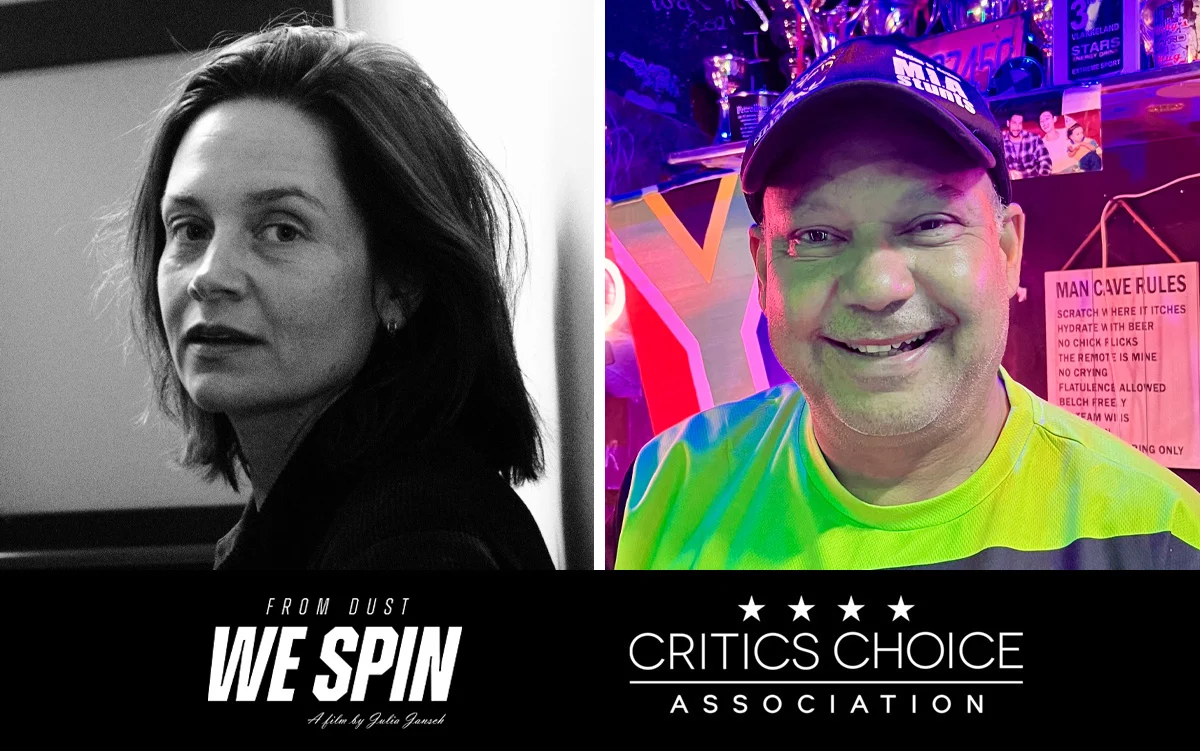
The Critics Choice Association recently hosted a conversation with director Julia Jansch and the film’s featured subject and narrator, Ricky Weaver. Their discussion shed light on the collaborative process of bringing such a volatile subject to the screen.
On the Directional Approach
Jansch emphasized that her goal was not to "observe" the subculture, but to participate in its emotional reality. "When you film in the Cape Flats, you have to earn your place," she noted. "The smoke and the noise are intense, but the silence between the maneuvers is where the real story happens. It is a story about people who have been told they don’t matter, finding a way to make their own space."
On the Mentorship Dynamic
Ricky Weaver, whose presence in the film provides a grounded, authoritative narrative voice, spoke to the significance of the mentor-mentee bond. "In the spinning circle, your life is literally in your hands. But when you are teaching someone else, you are holding their life, too. You are teaching them that they have the power to control the spin, and by extension, the power to control their trajectory out of the gang life."
Implications: The Global Reach of Local Defiance
The international premiere at DOC NYC marks a significant milestone for South African documentary filmmaking. The implications of From Dust We Spin reaching a global audience are threefold:
1. Challenging Global Perceptions
The film forces international audiences to move past the reductive labels of "township violence" or "reckless driving." By framing the sport as a sophisticated, culturally rich practice, it invites viewers to appreciate the ingenuity born from necessity.
2. A New Model for Mentorship
The documentary provides a compelling case study for community-based mentorship programs. It demonstrates that the most effective interventions in high-risk areas are often those that leverage existing cultural strengths rather than imposing external structures.
3. The Future of the Sport
As the film gains traction, there is a growing conversation about the formalization of Spinning. While purists fear that regulation may strip the sport of its raw, rebellious spirit, others argue that official recognition is the only way to ensure the safety and long-term viability of the community that relies on it.
Conclusion: The Persistence of Motion
From Dust We Spin is a testament to the idea that movement, however chaotic, is a form of survival. As the protagonist masters the figure-eight, she is not just spinning in circles; she is drawing a map for her future.
The documentary does not promise a clean resolution or a sudden escape from the systemic challenges of the Cape Flats. Instead, it offers something more honest: the realization that within the struggle, there is grace. As the engines fall silent and the dust settles, the viewer is left with the indelible image of a community that has found a way to spin its own destiny out of the very ground that was meant to hold it down.
For those attending DOC NYC, From Dust We Spin is an essential viewing experience—a visceral, poignant, and ultimately hopeful look at what it means to reclaim one’s own narrative in a world that would prefer you stay still.
