
From Small-Town Malaise to Spiritual Liberation: A Critical Look at Avalon Fast and Jillian Frank’s ‘Drinking and Driving’
When you title your feature film Drinking and Driving—assuming it is not some bizarrely miscalculated pun leading into a wholesome family comedy about a NASCAR driver named Richard Driving—you preemptively lower everyone’s expectations regarding the moral compass of the characters they are about to see on screen. Yet, in the case of Avalon Fast and Jillian Frank’s provocative new slice-of-life dramedy, that blunt, unvarnished honesty is entirely warranted.
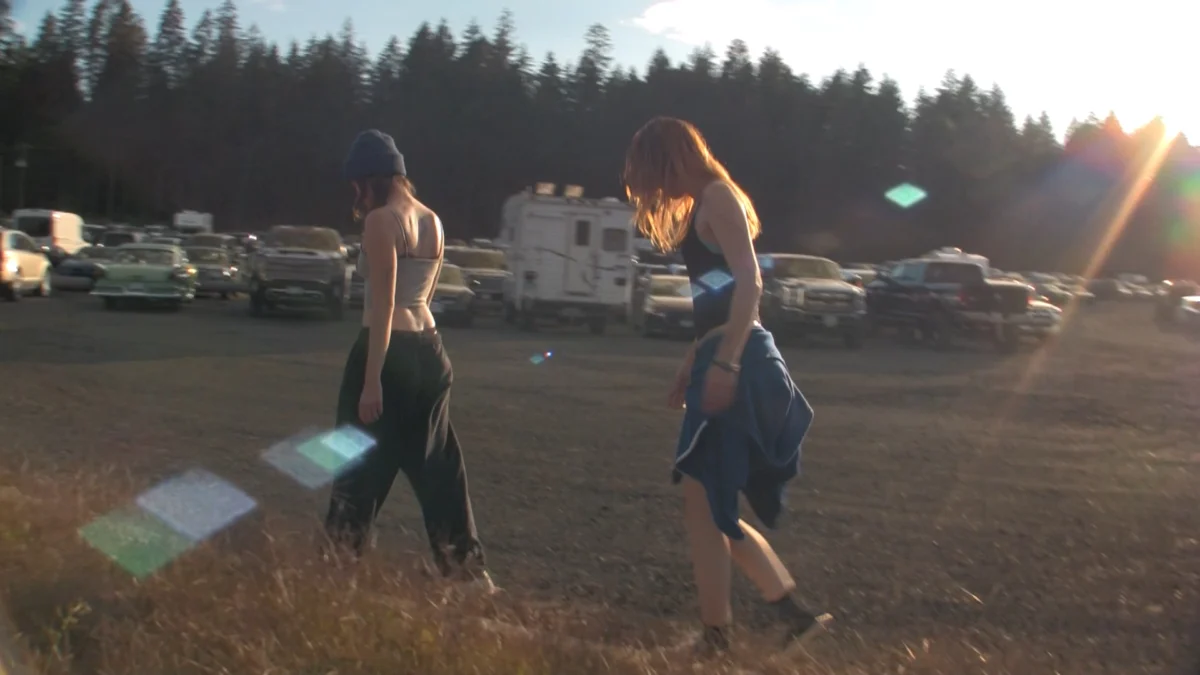
Drinking and Driving dives headfirst into the empty recklessness of early adulthood, tracking two young women as they wile away their days in a small, economically stagnant rural hometown fueled by an endless stream of substance abuse. For protagonists Palmer (played by Avalon Fast) and Iris (played by Jillian Frank), getting behind the wheel after a few too many has become as mundane a part of their routine as taking 5 a.m. cocaine bumps or curing brutal hangovers with molly after another late-night party in a loose acquaintance’s basement.
Distributed by Muscle Distribution, the film presents an unflinching look at contemporary 2020s malaise, capturing a liminal space where the past is not worth remembering and the future offers nothing to look forward to. Drinking and Driving screened at BAM Rose Cinemas, generating considerable discourse among critics for its uncompromising, documentary-style approach to modern rural apathy.
Main Facts and Production Overview
At its core, Drinking and Driving is a micro-budget character study that operates with an improvisational, Jarmusch-esque rhythm. The narrative centers on Palmer and Iris, two inseparable friends tethered to their rural roots by a lack of economic mobility and the gravitational pull of familiarity.
- Directors/Writers: Avalon Fast and Jillian Frank
- Lead Cast: Avalon Fast (Palmer), Jillian Frank (Iris), Ethan Hawksworth (Levi), and Henri Gillespi (Phoenix)
- Distributor: Muscle Distribution
- Genre: Slice-of-Life Dramedy / Indie Drama
- Runtime & Style: Modeled with a cinéma vérité aesthetic, favoring raw naturalism and unpolished framing over Hollywood slickness.
- Thematic Core: Explores stagnation, small-town cycles, substance-dependent social lives, and the unexpected search for transcendence within dead-end environments.
Chronology of the Narrative: A Summer of Stagnation
The progression of Drinking and Driving mirrors the sluggish, cyclical nature of its subjects’ lives. Rather than relying on a traditional three-act structure with high-stakes inciting incidents, the film unfolds across loosely connected vignettes.
Act I: The Natural Habitat
The opening act functions almost like a wildlife documentary. Palmer and Iris are introduced in their natural habitat: working the same dead-end restaurant job, returning to the same cramped living spaces, and occasionally sharing a bed on nights they manage to make it home. Their social circle is microscopic. They hang out with the same bored neighbors and gravitate toward the same toxic group of local young men—youths who resemble failed iterations of Post Malone.

Directors Fast and Frank establish early on that these characters enjoy themselves about 60 percent of the time. They drift effortlessly from backyard porches to dirt bike tracks, piling into cars with little regard for safety or destination.
Act II: The Arrival of Levi and Phoenix
The loose "plot" kicks into gear when Palmer and Iris cross paths with Levi (Ethan Hawksworth), an acquaintance passing through town, and his cousin Phoenix (Henri Gillespi). The addition of the two young men introduces a temporary injection of momentum. The foursome drift from place to place without a plan, bouncing between dilapidated houses, outdoor drinking spots, and late-night drives.
Throughout these sequences, the film maintains an objective distance. It documents this lifestyle without overt idealization or heavy-handed moral condemnation. Moments of genuine, spontaneous joy puncture the gray atmosphere, yet they are immediately juxtaposed against the crushing emptiness of lives going nowhere.
Act III: Toward Spiritual Liberation
As the narrative winds down, Drinking and Driving plays with conventional coming-of-age tropes—specifically the cinematic mandate that "the party has to end eventually." However, because Palmer and Iris have no conventional adulthood or stable career tracks waiting for them upon graduation or maturity, the film pivots. Instead of forcing a traditional, moralizing coming-of-age arc, Fast and Frank steer their protagonists toward a strange kind of spiritual liberation. The film asks a lingering, uncomfortable question: Can true transcendence be found through shared physical pleasures with unremarkable people who just happen to occupy the same geographic coordinates? While no definitive answer is given, the film lingers in that gray area.
Supporting Data and Aesthetic Choices
A massive component of Drinking and Driving’s impact stems from its deliberate aesthetic choices, which reinforce the psychological state of its characters.
- Deliberately Ugly Cinematography: The color palette is washed out, dominated by muddy greens, grays, and browns that visually encapsulate a town "you never make it out of."
- Handheld Camera Work: The cinematography mimics old, low-definition home videos, creating an intimate yet jarringly voyeuristic viewing experience.
- Socioeconomic Context: Without turning the characters into helpless victims, Fast and Frank drop subtle context clues regarding mediocre parenting and depressed local economies. This framing prevents viewers from instantly writing off Palmer and Iris as unlikable, grounding their self-destructive behavior in systemic weariness.
- Stylistic Shift: Compared to Avalon Fast’s earlier, expressionistic work (such as the camp horror project Camp), Drinking and Driving represents a massive tonal shift toward stark, unadorned realism.
Official Responses and Critical Reception
Upon its festival and repertory screenings—including its run at BAM Rose Cinemas—Drinking and Driving polarized audiences while earning respect from indie film critics for its uncompromising artistic vision.

Critics have pointed out that while individual scenes are rarely riveting on their own, the film coalesces into a remarkably cohesive statement on contemporary youth culture. Reviewers noted that Fast and Frank successfully bypass the trap of cinematic exploitation. Instead of fetishizing rural drug culture or lecturing the audience on the dangers of substance abuse, the co-directors treat their subjects with empathy.
IndieWire’s critical evaluation awarded the film a C+, summarizing its paradoxical appeal:
“‘Drinking and Driving’ seems to exist in a liminal space where the past is not worth remembering, and the future is nothing to look forward to, so all there is to do is squeeze any hedonistic pleasure that you can out of today… The small-town American setting grounds the film in a sense of regional specificity, but that sense of 2020s malaise and the pockets of joy that it occasionally creates should be universal.”
Implications for Independent Cinema and the Representation of Rural Youth
The release and reception of Drinking and Driving carry broader implications for how contemporary independent cinema addresses rural America and Gen Z/early-millennial despair.
- Rejecting Hollywood Gloss: For decades, Hollywood has either romanticized small-town rebellion (via slick coming-of-age teen dramas) or exploited rural poverty through sensationalized "hillbilly elegy" tropes. Drinking and Driving bypasses both extremes, offering an observational, low-stakes portrait that refuses to sensationalize or sanitize addiction.
- The Rise of Micro-Budget Collaborative Authorship: Co-directed by Avalon Fast and Jillian Frank, the film highlights the viability of micro-budget, hyper-local filmmaking where young female creators take total control of writing, directing, and starring roles to tell hyper-specific, uncompromised stories.
- Reflecting the 2020s Nihilism: The film captures a distinct cultural zeitgeist: a pervasive economic and existential stagnation among young adults who feel alienated from traditional milestones like homeownership, stable careers, and upward mobility. By translating this macro-level societal burnout into a localized story about late-night drives and basement parties, Fast and Frank tap into a universal anxiety defining the current decade.
Ultimately, Drinking and Driving may not offer clean resolutions or traditional role models, but it succeeds in holding up an uncomfortably clear mirror to a generation driving blindly through the dark, searching for brief sparks of life wherever they can find them.
