
The Haunting Sound of Truth: Matthew Herbert Scores HBO’s ‘The Pet Cemetery Murders: A Ghost Story’
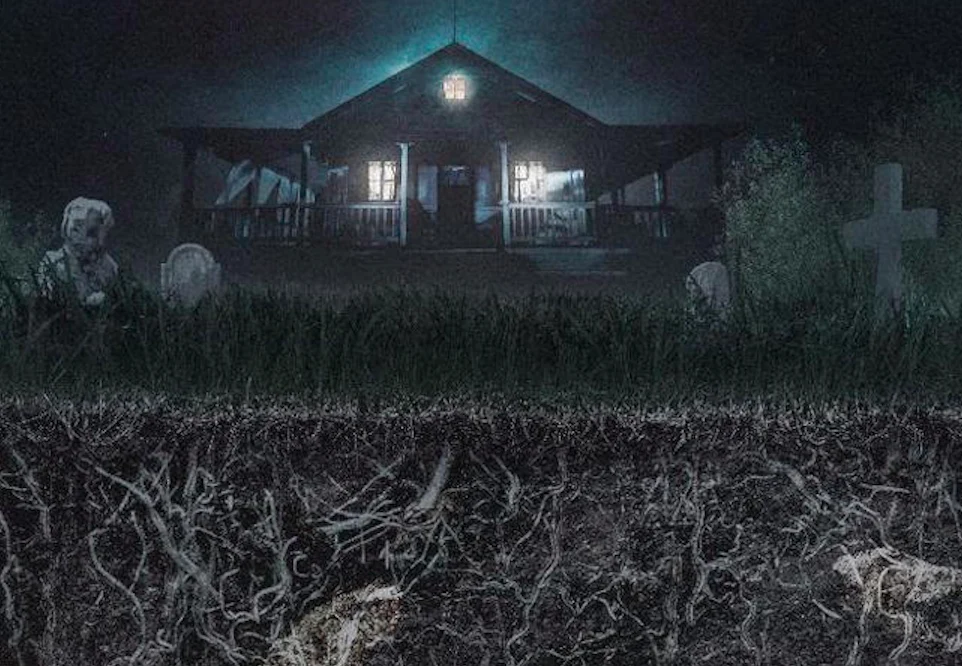
The landscape of true-crime documentary filmmaking is shifting. As audiences move away from sensationalist retellings toward atmospheric, deep-dive investigative journalism, HBO’s latest project, The Pet Cemetery Murders: A Ghost Story, emerges as a chilling fusion of historical trauma and modern detective procedural. Central to this immersive experience is the original score composed by acclaimed British musician and sound artist Matthew Herbert.
As the series premieres tonight on HBO and HBO Max, it promises to be more than a simple whodunit; it is a layered exploration of the ghosts—literal and metaphorical—that continue to define the cultural topography of New Orleans.
Main Facts: A Labyrinthine Mystery in the Crescent City
The Pet Cemetery Murders: A Ghost Story is a three-part documentary series that centers on the brutal, unexplained murder of a local pet cemetery owner in New Orleans. While the premise may initially sound like a niche regional crime, director Philip Cairney (Being Beethoven) elevates the narrative by framing it through the eyes of a persistent local police detective whose investigation uncovers a history far more gruesome than a single homicide.
As the detective pulls at the threads of the case, the scope of the narrative expands from a isolated murder into a multi-generational saga. The series explores a "labyrinthine tale" involving decades of unsolved disappearances, deeply buried family secrets, and evidence of centuries-old massacres that have been scrubbed from the official record of the community.
The Creative Engine
The project is a significant undertaking from the production house Lightbox. Executive produced by industry heavyweights Simon Chinn (Man on Wire, Searching for Sugar Man) and Jonathan Chinn (The Mission, Whitney), the series boasts a pedigree of documentary excellence. They are joined by a robust team of executive producers, including Suzanne Lavery, James Marsh—the Academy Award-winning director of The Theory of Everything—and Silvia Sacco, alongside HBO’s own Nancy Abraham, Lisa Heller, and Tina Nguyen.
However, the heartbeat of the series lies in its sonic identity. Matthew Herbert, a composer renowned for his ability to translate complex emotional landscapes into avant-garde musical scores, was tasked with soundtracking the series. With a resume that includes A Fantastic Woman, The Wonder, and The Responder, Herbert brings a signature blend of organic texture and unsettling dissonance that perfectly mirrors the eerie subject matter of the Louisiana bayou and the urban decay of New Orleans.
Chronology: From a Small-Town Crime to Historical Reckoning
To understand the weight of The Pet Cemetery Murders, one must look at the timeline of the production and the events it portrays. The case, which spans several decades of local history, is presented in three distinct thematic movements:
Part I: The Discovery
The series opens with the immediate aftermath of the pet cemetery owner’s death. The initial investigation focuses on the immediate neighborhood, characterized by tight-knit, suspicious residents and an aging law enforcement apparatus. The score here is sparse, relying on the ambient sounds of the environment—the hum of cicadas, the rustle of Spanish moss, and the mechanical clicks of police recording equipment.
Part II: The Unraveling
As the investigation proceeds, the scope widens. The narrative transitions from a present-day murder to a series of cold cases that occurred within the same geographic footprint. Here, the documentary utilizes archival footage and interviews with local journalists and scholars who argue that the death was not an anomaly, but a symptom of a larger, systemic erasure of violence in the region.
Part III: The Reckoning
The final installment confronts the "centuries-old massacres." By connecting the pet cemetery—a place where the community buries the things they love—to the forgotten mass graves of the past, the documentary suggests that the land itself is the primary antagonist. Herbert’s score reaches its crescendo here, utilizing layered, mournful strings and distorted field recordings to emphasize the weight of history crashing into the present.
Supporting Data: A Multi-Disciplinary Investigation
The credibility of The Pet Cemetery Murders rests on the diversity of its sources. Unlike traditional true-crime programs that rely solely on law enforcement testimony, this series synthesizes input from four distinct pillars:
- Neighbors: Providing the "lived experience" of the community, these voices offer the psychological context of the victim. They reveal the contradictions of a person who cared for the dead while harboring dangerous, private secrets.
- Law Enforcement: Retired and active detectives provide the procedural framework. Their perspective highlights the limitations of traditional policing when confronted with crimes that are tied to historical cycles of violence.
- Local Journalists: These experts provide the socio-political context, detailing how the media and municipal powers have historically ignored the plight of the marginalized populations affected by these crimes.
- Scholars: Historians and sociologists provide the structural analysis, linking the specific murder to the broader historical context of New Orleans and the legacies of racial and class-based violence in the South.
This multi-pronged approach ensures that the documentary functions as both a compelling narrative and a serious piece of historical investigation.
Official Responses and Creative Intent
In a recent press statement, director Philip Cairney emphasized that the goal of the documentary was to avoid the "exploitation" common in the genre. "We wanted to treat the tragedy with the gravity it deserves," Cairney noted. "The pet cemetery is a metaphor for the secrets we keep—the things we bury in the backyard in hopes that they will stay dead. But in New Orleans, the ground is soft, and the past has a way of rising to the surface."
Matthew Herbert, when discussing his compositional process, highlighted the importance of "sonic archaeology."
"For this project, I didn’t want a traditional orchestral score," Herbert stated. "I wanted the music to feel like it was unearthed from the earth itself. We spent time recording the sounds of the location—the way wind moves through the cemetery gates, the specific frequency of the local humidity. I wanted the audience to feel the environment before they even understood the crime."
The executive producers have also lauded the collaboration between the creative team and HBO’s documentary department. Simon and Jonathan Chinn noted that the project represents the "pinnacle of what documentary filmmaking can achieve," bridging the gap between high-stakes investigative journalism and cinematic storytelling.
Implications: The Future of the True-Crime Genre
The release of The Pet Cemetery Murders arrives at a pivotal moment for HBO. As streaming competition intensifies, the network has doubled down on high-concept, auteur-driven documentary series. The implication is clear: audiences are demanding more than just facts. They are seeking meaning, nuance, and artistic intent.
Challenging the Status Quo
By framing a contemporary murder within the context of centuries-old massacres, the series challenges the "bad apple" theory of crime. Instead, it posits that violence is often systemic and environmental. This narrative shift has significant implications for how true crime will be produced in the future. Expect to see a move away from the "sensationalist" tone of early 2010s podcasting and toward the "investigative-artistic" hybrid pioneered by this team.
The Role of Sound as Narrative
Furthermore, Matthew Herbert’s involvement signals a growing trend of "prestige scoring" for non-fiction content. By treating the documentary score with the same level of care and artistic ambition as a feature film, the production elevates the emotional stakes for the viewer. This will likely become the standard for documentary series moving forward, as production companies recognize that sound design is not merely atmospheric—it is an essential tool for historical storytelling.
A Cultural Reckoning
Finally, the series serves as a mirror to contemporary American discourse regarding the acknowledgment of historical trauma. By focusing on a location—the pet cemetery—that serves as a site of memory, the show forces the audience to consider how they interact with their own local history. Are there places in our own communities that hold stories we are afraid to hear? The Pet Cemetery Murders suggests that until those stories are exhumed, they will continue to haunt us.
Conclusion: A Must-Watch Event
The Pet Cemetery Murders: A Ghost Story is not an easy watch, but it is an essential one. Through the combined vision of Philip Cairney, the Chinn production team, and the haunting, masterfully crafted score by Matthew Herbert, the series succeeds in being a transformative viewing experience.
It reminds us that the past is never really behind us; it is beneath us, waiting to be heard. As the series hits HBO and HBO Max tonight, viewers are encouraged to listen closely—not just to the dialogue, but to the silence, the atmosphere, and the score. It is in those spaces that the truth of the mystery is finally laid bare.
The Pet Cemetery Murders: A Ghost Story is available to stream on HBO Max starting tonight.
