
"NAZA": The Documentary Shaking the Foundations of Cinematic Distribution and Political Accountability
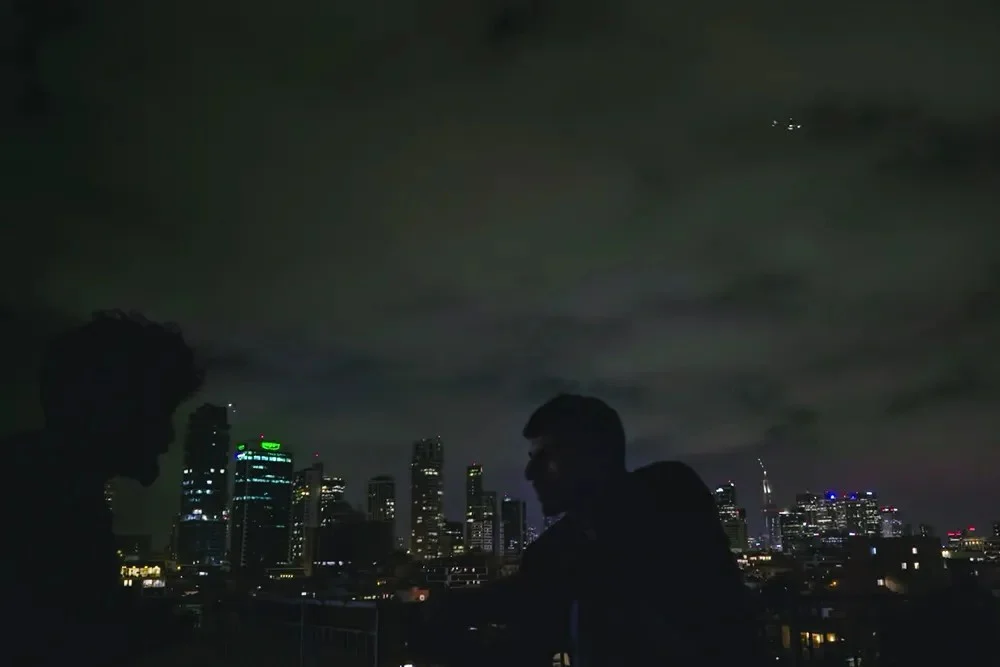
In an era where the intersection of technology, warfare, and human rights has become the central focus of global discourse, few films have managed to capture the raw, harrowing reality of modern conflict as effectively—or as controversially—as NAZA. A blistering investigative documentary that deconstructs the automated systems and surveillance infrastructure utilized by the Israeli military in its operations within Gaza, the film has defied industry skepticism to become a genuine box-office phenomenon.
Despite being rejected by major indie studios that deemed the subject matter too volatile for commercial distribution, NAZA has bypassed the traditional gatekeepers to connect directly with arthouse audiences. As the film approaches a domestic box-office milestone of $500,000 within just two weeks of release, it stands as a testament to the power of independent cinema to force uncomfortable conversations into the public square.
A Box Office Defiance
The commercial trajectory of NAZA has been nothing short of remarkable, particularly for a nonfiction work navigating such a politically charged landscape. The film’s theatrical run began with a powerful, concentrated debut at New York’s prestigious IFC Center, where it pulled in over $125,000 in its opening eight-day window.
The momentum did not stall there. Producers, led by The Guardian and the French distribution powerhouse mk2, executed a strategic expansion into 85 theaters across 30 major North American cities. This move proved prescient, as the documentary earned an additional $298,240 over its three-day weekend, with an estimated $378,200 haul during the four-day holiday frame. By the following Monday, the film’s domestic total was projected to hit $504,074.
This financial success is not merely a number; it is a signal that audiences are increasingly seeking transparency in reporting, even when that reporting arrives through the medium of high-stakes documentary filmmaking. With plans to make the film available for free streaming on The Guardian’s website starting in November, the producers are prioritizing accessibility and public awareness over traditional profit models, a choice that reinforces the film’s status as a piece of activist journalism.
The Minds Behind the Lens: A Legacy of Courage
NAZA is the latest collaboration from the creative team of Rachel Szor and Yuval Abraham, whose previous work, No Other Land, set the blueprint for their uncompromising approach. No Other Land, a searing examination of Israeli settler violence in the West Bank, defied similar industry hurdles to eventually claim the Academy Award for Best Documentary.
With NAZA, the duo has pivoted toward the technological front of the conflict. The film relies on the testimonies of anonymous IDF sources who break ranks to reveal the internal mechanics of how artificial intelligence and mass phone surveillance are synthesized to designate targets in Gaza. The result is a chilling portrait of algorithmic warfare, illustrating the direct link between data-driven decision-making and the subsequent mass loss of Palestinian civilian life.
The film’s international reception was immediate and overwhelming. At the Venice Film Festival, it was met with a thunderous 25-minute standing ovation, eventually securing the festival’s prestigious Special Jury Prize. Currently, NAZA is widely considered a frontrunner for the upcoming Oscars, signaling that the global film community is prepared to acknowledge the weight of its revelations.
Chronology of a Controversial Release
The path to NAZA’s release has been characterized by intense friction between the creators and the state apparatus they are investigating.

- Development and Production: Over an 18-month period, Szor and Abraham gathered testimonies and analyzed data, working in secrecy to protect their sources—many of whom are current or former members of the IDF who feared retaliation for their whistleblowing.
- The Festival Circuit: The documentary’s premiere at Venice earlier this year acted as a flashpoint. As the film gained critical acclaim, the rhetoric from Israeli government officials intensified.
- Theatrical Rollout: Faced with a lack of interest from risk-averse major studios, the directors chose a self-distribution model. The film debuted in New York in mid-September, followed by a rapid, nationwide expansion that caught industry analysts off guard.
- The Streaming Mandate: The producers announced that, following the theatrical run, the film will be provided for free to the global public via The Guardian, ensuring that the information contained within the documentary remains beyond the reach of censorship.
Official Responses and the Threat of State Retaliation
The reaction from the highest levels of the Israeli government has been as sharp as the film’s own accusations. Unlike typical critiques regarding "bias" or "fairness," the official response to NAZA has focused on state-level punitive measures.
IDF Chief of Staff Eyal Zamir has publicly pledged to use "every tool at our disposal" to halt the film’s distribution. This statement has been interpreted by civil rights groups as a veiled threat against the filmmakers’ ability to operate. Perhaps more alarming is the rhetoric emanating from Prime Minister Benjamin Netanyahu’s office, which has hinted at the revocation of citizenship for the Israeli participants interviewed in the documentary.
Israel’s Culture Minister has been particularly vocal, explicitly accusing Szor and Abraham of "treason." This framing—positioning investigative journalism as an act of subversion against the state—has sparked a global debate about the limits of artistic freedom and the responsibilities of filmmakers living in conflict zones. The legal and social pressure placed upon the production team has turned NAZA into a symbol of the struggle for free speech in Israel, drawing support from international film guilds and human rights organizations.
The Implications: AI, Surveillance, and the Future of Warfare
Beyond the immediate political fallout, NAZA serves as an essential case study on the future of warfare. By detailing the integration of AI in target acquisition, the film moves the conversation away from the abstract horrors of war and toward the concrete, mechanical systems that facilitate them.
The film raises profound ethical questions:
- Accountability in the Age of Algorithms: If an AI identifies a target and an automated system executes a strike, where does the moral and legal burden of "collateral damage" lie?
- The Surveillance State: By exposing the depth of phone surveillance used to track civilians, NAZA highlights how modern technology has erased the distinction between the battlefield and the home.
- The Role of the Journalist: The film forces a confrontation with the duty of the filmmaker. Should they prioritize their own safety and the norms of the industry, or should they act as a conduit for those within the machine who wish to expose its failures?
Conclusion: A New Standard for Impact
NAZA is more than a documentary; it is an intervention. By bypassing the corporate distribution model that often sanitizes or silences dissent, Szor and Abraham have proven that there is a massive, attentive audience for cinema that challenges the status quo.
As the film continues its theatrical run and prepares for its global digital release, it faces a dual challenge: surviving the legal and political pressures of a state that seeks to suppress it, and maintaining its momentum in the high-stakes race for the Academy Awards. Whatever the outcome, NAZA has already succeeded in its primary objective—it has made the invisible visible, and it has ensured that the systems of modern warfare can no longer hide behind the screen of "national security."
In the months to come, the legacy of NAZA will likely be felt in how we discuss the intersection of artificial intelligence and human rights. For now, it stands as a defiant, necessary reminder that in the face of institutional silence, the camera remains one of our most potent tools for seeking the truth.
