
Conquering the Chaos: How the DPA 4060 Miniature Microphone Mastered the Soundscape of IBC2026
Main Facts
Conducting professional-grade interviews on a bustling trade show floor is one of the most persistent and formidable challenges in broadcast journalism and corporate video production. The acoustic environment of a major exhibition center is a chaotic confluence of ambient noise: echoing footfalls, roaring air conditioning units, competing audio demos from neighboring booths, loudspeaker announcements, and the constant, high-energy murmur of tens of thousands of attendees.
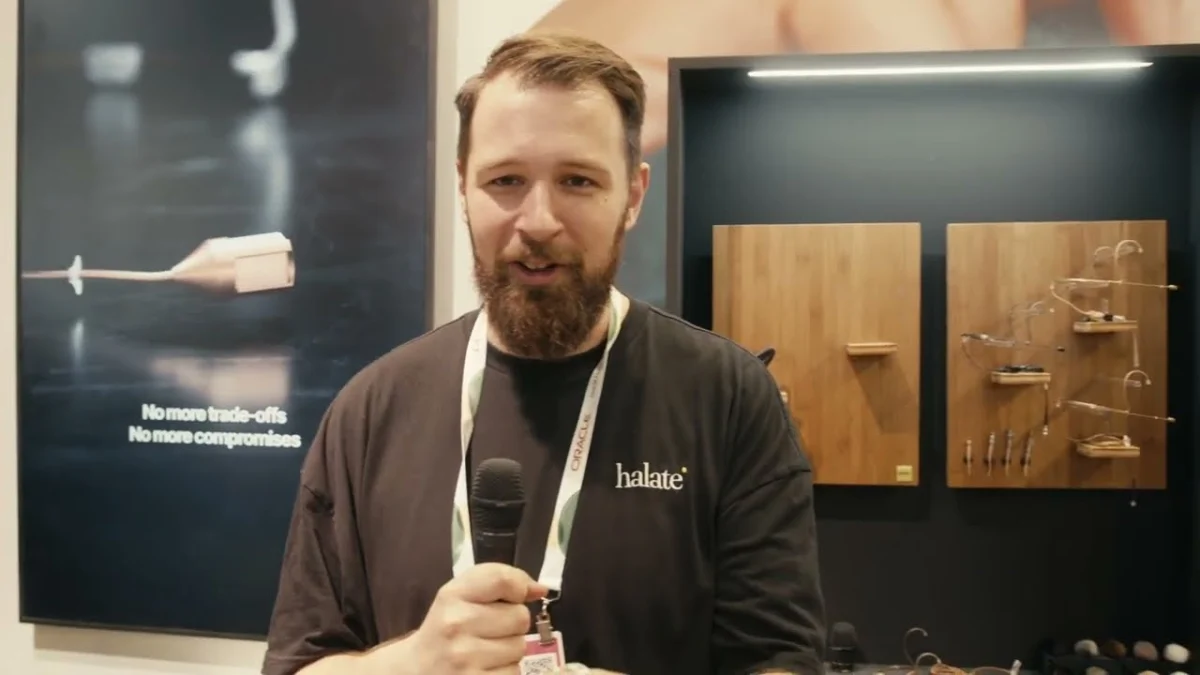
For IBC2026—one of the media and entertainment technology industry’s most premier global gatherings—producing pristine audio seemed like a tall order. However, videographer Jesse Calis, representing Halate, successfully tackled this acoustic minefield while capturing RedShark’s official video coverage. The secret weapon behind the crystal-clear dialogue in these segments was the DPA 4060 miniature microphone, a renowned lavalier solution celebrated in professional audio circles for its durability, transparency, and high SPL (Sound Pressure Level) handling.
According to Calis, the DPA 4060 played a pivotal role at the point of capture, naturally attenuating the overwhelming ambient cacophony of the exhibition hall. By combining the mic’s tight acoustic performance with targeted post-processing workflows, the production team successfully isolated interview subjects from the surrounding tumult of the venue. The final result was broadcast-ready audio that sounded as though it had been recorded in a controlled studio environment rather than the middle of a packed Saturday afternoon trade show.
Chronology
The Pre-Event Acoustic Assessment
Weeks before the doors of the RAI Amsterdam opened for IBC2026, the production team at Halate faced a rigorous pre-production planning phase. Capturing high-tier interviews meant moving rapidly across massive exhibition halls, dealing with unpredictable lighting, and, crucially, confronting unpredictable acoustic challenges. Knowing that standard onboard camera microphones or poorly isolated dynamic handhelds would pick up too much room reflection and background drone, Jesse Calis and his team sought an audio capture solution that combined ultra-low profile aesthetics with uncompromising fidelity. The choice quickly narrowed to the DPA 4060 miniature lavalier microphone, famous for its discrete form factor and natural off-axis response.
Day One: Setting Up on the Show Floor
As IBC2026 kicked off, the sheer scale of the event immediately tested the equipment. Day one introduced the crew to the acoustic fingerprint of Hall 7—historically one of the busiest and most acoustically reflective spaces in the venue. Calis deployed the DPA 4060 on various talent and interviewees, clipping the miniature condenser securely to lapels and clothing. Right away, the mic demonstrated its ability to remain virtually invisible on camera while capturing intimate, highly detailed vocal recordings that cut straight through the initial rising tide of morning convention traffic.
The Saturday Peak: Surviving Hall 7
By Saturday afternoon, IBC2026 reached its peak attendance. The exhibition floor transformed into a tempest of sound, featuring competing audio demos, roaring crowds, and background clatter from adjacent booths. This represented the ultimate stress test for the DPA 4060. Despite the overwhelming environmental noise, the microphone’s capsule design maintained incredible clarity. Calis noted that the mic successfully managed the high acoustic pressure levels without distorting, capturing clean raw stems that required minimal heavy lifting during subsequent editing phases.
Post-Production and Delivery
With the raw footage safely captured, the final phase of the workflow transitioned to the edit suite. While the DPA 4060 performed the heavy lifting at the point of capture by isolating the voices, Calis applied light post-processing to finesse the audio tracks. A subtle touch of targeted noise reduction and EQ fine-tuning effectively pushed the remaining crowd chatter and neighboring-stand bleed into the background. The resulting videos were seamlessly compiled, published to RedShark’s channels, and made available for global audiences to enjoy without acoustic fatigue.
Supporting Data
To understand why the DPA 4060 miniature microphone performed so exceptionally well at IBC2026, it is helpful to examine the technical specifications and acoustic engineering principles that govern miniature lavalier design.
- Capsule Technology: The DPA 4060 utilizes a pre-polarized condenser capsule based on the company’s proprietary vertical diaphragm technology. This design yields an exceptionally wide dynamic range and an extraordinarily low noise floor for a microphone of its physical size (just 5.4mm in diameter).
- SPL Handling: Built to withstand high sound pressure levels—up to 134 dB SPL before clipping—the microphone can comfortably sit close to loud speakers or enthusiastic talkers without experiencing distortion, making it ideal for chaotic, unpredictable live environments.
- Frequency Response: The 4060 features a controlled 20 Hz to 20 kHz frequency range, typically incorporating a subtle 4 to 6 dB soft boost around 8 kHz to 20 kHz for the high-boost grid variant (or a flat response with the soft-boost grid). This helps preserve vocal intelligibility, allowing speech to slice through competing mid-range frequencies commonly found in trade show noise profiles.
- Durability and Reliability: Designed to endure moisture, sweat, and physical stress, the mic’s dual-diaphragm redundancy and robust cable reinforcement ensure uninterrupted performance under grueling field conditions.
Official Responses
Reflecting on the grueling acoustic realities of covering a massive international exhibition, Jesse Calis shared insights regarding the deployment of the audio gear during the event:
"If you’ve ever tried to have a conversation in the middle of a busy trade show, you know how noisy they can be. The DPA 4060 helped significantly reduce background noise right at the point of capture. By applying a little extra post-processing, we were able to bring the level of the crowd and neighboring-stand noise down even further. The result was clean interview audio despite the difficult conditions. When you’re coping with the storm and bluster of Hall 7 on a Saturday afternoon at IBC, that’s quite simply all you can ask for."
Industry peers and audio engineers have similarly praised the DPA 4060 family for its versatility. Broadcasters frequently cite its ability to maintain a natural, uncolored frequency response regardless of whether it is pinned to a heavy woolen jacket or a lightweight summer shirt. This adaptability minimizes the need for drastic EQ corrective measures in post-production, preserving the natural timbre of the speaker’s voice.
Implications
The successful deployment of miniature lavalier microphones like the DPA 4060 in high-noise environments like IBC2026 carries significant implications for the future of mobile video journalism, corporate media production, and field broadcasting.
Elevating Content Standards in Chaotic Environments
Historically, audiences have been willing to forgive subpar audio on trade show floors due to the inherent difficulties of the location. However, as consumer consumption shifts toward higher-fidelity platforms and expectations rise, media organizations can no longer afford to deliver hollow, echo-prone, or noise-swamped interviews. Solutions that combine hardware-level isolation with intelligent software processing establish a new baseline for professional field production, proving that high-end studio quality is achievable anywhere.
Streamlining Production Workflows
Time is the most valuable commodity on a fast-paced trade show floor. When production teams spend less time troubleshooting audio issues, masking background noise, or re-recording unusable dialogue, they can focus their creative energies on capturing better B-roll, asking deeper interview questions, and accelerating turnaround times. Tools that minimize post-production friction directly impact a media outlet’s ability to break news and publish content rapidly.
The Convergence of Hardware and Software
The success at IBC2026 underscores a broader industry trend: the symbiotic relationship between high-performance acoustic hardware and modern post-processing tools. While software-based noise suppression algorithms have advanced dramatically in recent years, relying on them exclusively can lead to artifacts, phase cancellation, and a "chewed-up" vocal tone. By starting with a clean, high-grade acoustic capture from a DPA 4060, editors only need to apply light, transparent processing, thereby preserving the natural warmth and clarity of the human voice.
As trade shows continue to grow in scale, sound pressure, and sensory overload, the techniques and tools utilized by Jesse Calis and Halate at IBC2026 serve as a blueprint for modern field production. Through careful gear selection and meticulous execution, capturing broadcast-quality audio amidst the storm and bluster of the convention floor is no longer a matter of luck—it is a matter of engineering excellence.
