
The Meta-Documentary Odyssey: Alex Ross Perry’s Dual Deep Dive into the 90s
By [Your Name/Journalistic Staff]
In the landscape of contemporary independent cinema, few figures are as idiosyncratic or as polarising as Alex Ross Perry. Known for his jagged, character-driven studies of human dysfunction in films like Listen Up Philip and Her Smell, Perry has spent the better part of the last three years pivoting toward a new, experimental frontier: the non-fictional essay film. His latest projects, Videoheaven and Pavements, represent a bold, genre-bending departure from his narrative roots. Neither film has yet seen a traditional theatrical release, festival premiere, or wide-scale marketing campaign, yet they are already being whispered about as the most significant, if inscrutable, works of pop-cultural scholarship to emerge in years.
The Genesis of a Double Feature: Main Facts
At the heart of these two films lies a shared obsession with the 1990s—a decade that serves as the crucible for both projects. Videoheaven is a three-hour, voiceover-driven meditation on the metaphysics of American video-store culture. It traces the arc from the medium’s inception in the early 1980s through its corporate zenith and eventual dissolution. In contrast, Pavements is a kaleidoscopic, quasi-documentary exploration of the influential indie-rock band Pavement.
While the films appear disparate, Perry insists they function as a logical double feature. Both works rely on a "handmade" aesthetic, heavily indebted to the essayistic traditions of filmmakers like Thom Andersen. However, they refuse to settle into the comfortable rhythm of standard documentaries. Pavements, in particular, defies categorization; it is a film that incorporates scripted sequences, a jukebox musical, and meta-commentary, intentionally blurring the lines between what is "real" and what is a performance of reality.
A Chronology of Obsession
The timeline of these projects is as layered as the films themselves. Videoheaven began its life in 2014, inspired by Daniel Herbert’s academic text Videoland. For Perry, the film was a "Plan B" born from the ashes of several failed attempts to secure corporate funding for a television series about the video-store era. As he saw his scripted pitches for Amazon and other platforms wither, the essay film became an increasingly private, necessary labor of love.
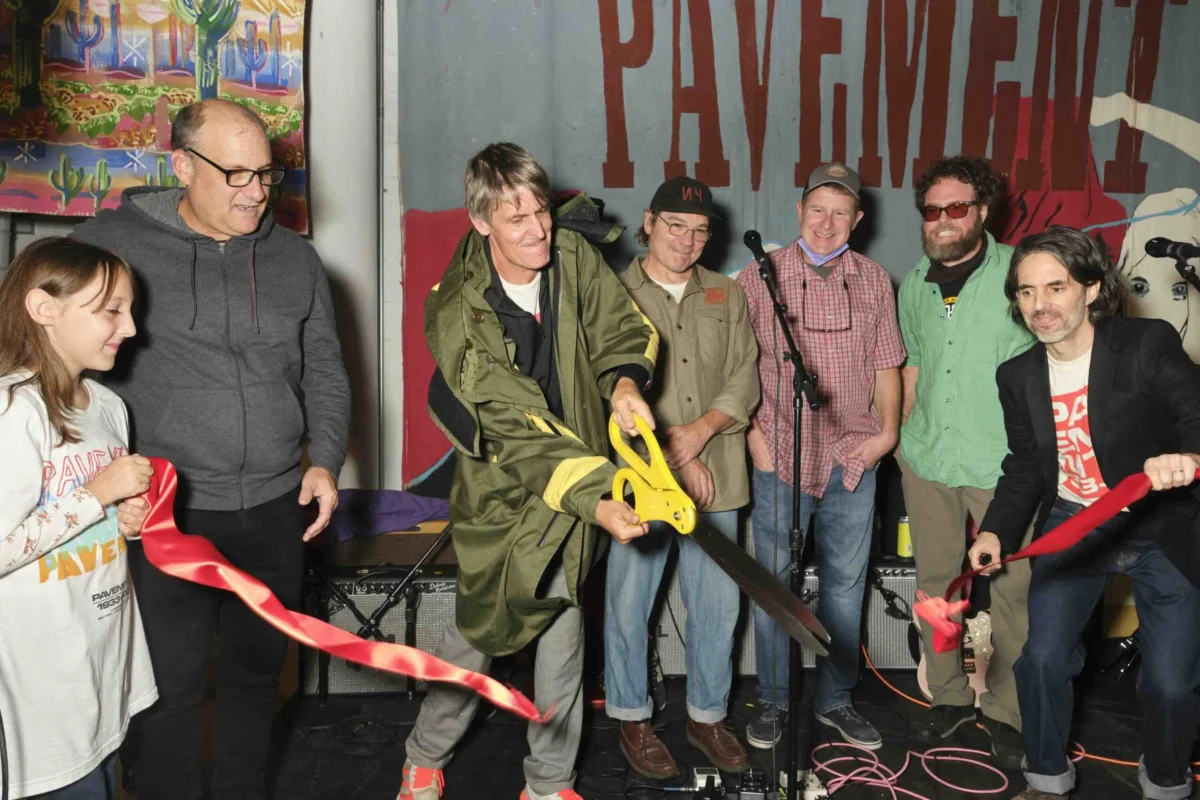
Pavements arrived later, triggered by an inquiry from a producer who suggested, perhaps jokingly, that Stephen Malkmus—the frontman of Pavement—was an "Alex Ross Perry character." This sparked a three-and-a-half-year process of archival gathering, interviews, and public-facing stunts. Unlike a standard biopic, the production involved the construction of a physical Pavement museum and the staging of an entire jukebox musical. The documentary crew wasn’t just capturing history; they were manufacturing it in real-time, waiting to see how the band and the public would react to the fabricated narrative.
Supporting Data and Methodology
The production of these films was a lean, iterative process. For Videoheaven, Perry collaborated with editor Clyde Folley, a veteran of Criterion Channel’s editorial wing. The film relies on nearly 200 clips, navigating the treacherous waters of fair-use law to tell a cohesive story. According to Perry, the "source wizardry" involved in securing and clearing these excerpts was a task as demanding as the writing itself.
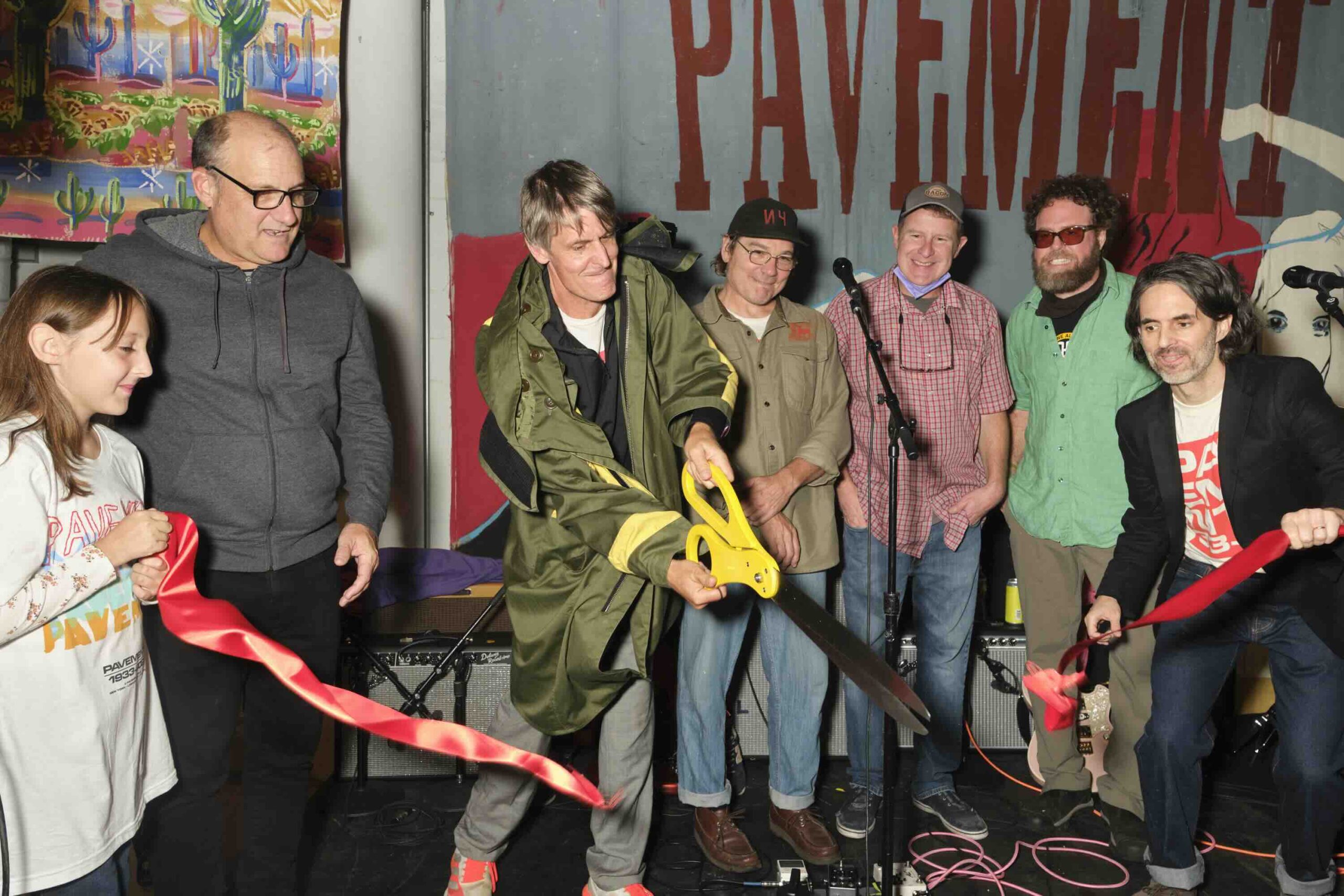
Pavements utilized a different methodology: the "staged documentary." By organizing public events—like the installation of the Pavement museum—Perry created a self-fulfilling prophecy. Attendees accepted the museum at face value, thereby validating the "importance" of the band that the film sought to posit. This process allowed the film to capture authentic reactions to artificial stimuli, turning the documentary into a reflection of how we, as a culture, assign meaning to the things we love.
Official Responses and Reflections
In a candid discussion regarding the dual nature of his work, Perry acknowledged that his interest in traditional narrative cinema has waned. When asked about his impulse to move away from fiction, he noted, "I don’t think that Videoheaven and Pavements would make for an illogical double feature… but that’s mostly a product of my increasing lack of interest in traditional filmmaking."
Regarding the "misanthropy" often attributed to his work, Perry argues that his subjects—whether they are video-store clerks or rock stars—are simply fascinating case studies in human behavior. He compares his role to that of a scholar, albeit one who is more interested in the "why" of human action than the "what." He remains self-aware about the potential for his films to be perceived as insular or overly niche, yet he views this as a necessary byproduct of making something deeply personal. "It’s a dinner with five entrees and no side dishes," he says of Pavements, inviting the audience to find their own meaning within the abundance of information.
The Implications of Cultural Nostalgia
The primary question at stake in both films is the function of nostalgia. We are living in an era where the 1990s are being recycled, packaged, and sold back to a generation that grew up in the shadow of Blockbuster and the sound of Crooked Rain, Crooked Rain. Perry’s films grapple with the "obsolete cohort" of people who view these artifacts as sacred.
- The Death of the Physical Space: Videoheaven suggests that the video store was the final "social hub" of a pre-internet age. The loss of this space has fundamentally altered how we discuss, categorize, and form communities around art.
- The Myth of the Auteur: In Pavements, Perry challenges the hagiographic nature of music documentaries. By contrasting the band’s "don’t care" indie ethos with the intense, perfectionist labor of a stage musical, he exposes the tension between an artist’s public persona and their private commitment to craft.
- The Meta-Documentary Future: Both films imply that the traditional "fly-on-the-wall" documentary is becoming an artifact of the past. In an age of total surveillance and performative social media, the only way to uncover a "truth" is to introduce a lie and observe the fallout.
A Final Note on Discourse
As these films prepare to emerge from the "vimeo-link-and-festival-circuit" ether, they are poised to become lightning rods for film criticism. Whether they are viewed as rigorous cultural histories or elaborate, self-indulgent feedback loops, their existence serves a vital purpose. They force us to confront why we care so deeply about the cultural detritus of our youth.
For critics and fans alike, the discourse surrounding these works will likely be as contentious as the films themselves. For Alex Ross Perry, however, the goal was never to settle the debate. It was to document the process of being a fan, a historian, and a filmmaker all at once. As he puts it, "I’d still like to see a three-hour Edvard Munch-style dramatization of the life of Malkmus, but even I had to stop somewhere."
These films represent an end to a chapter of Perry’s career, but they open a complex, recursive door for the future of the essay film. They are, at their core, a testament to the fact that while the formats may change, the need to analyze, romanticize, and occasionally dismantle our cultural heroes remains a fundamental, and perhaps inescapable, human impulse.
