
Brewing Magic: Inside the Creative Alchemy of Disney’s ‘Hexed’
As Walt Disney Animation Studios approaches its latest cinematic venture, Hexed (slated for a November 25, 2026 release), the studio is making a bold, nostalgic, yet thoroughly modern statement. During an exclusive sneak peek, attendees were treated to 30 minutes of footage—ranging from evocative shadow-puppet prologues to the vibrant, geometrically complex kingdom of Hexe. The film promises not just another fantasy romp, but a sophisticated examination of intergenerational dynamics, legacy, and the messy, beautiful reality of mother-daughter relationships.
The Core Narrative: A Magical Coming-of-Age
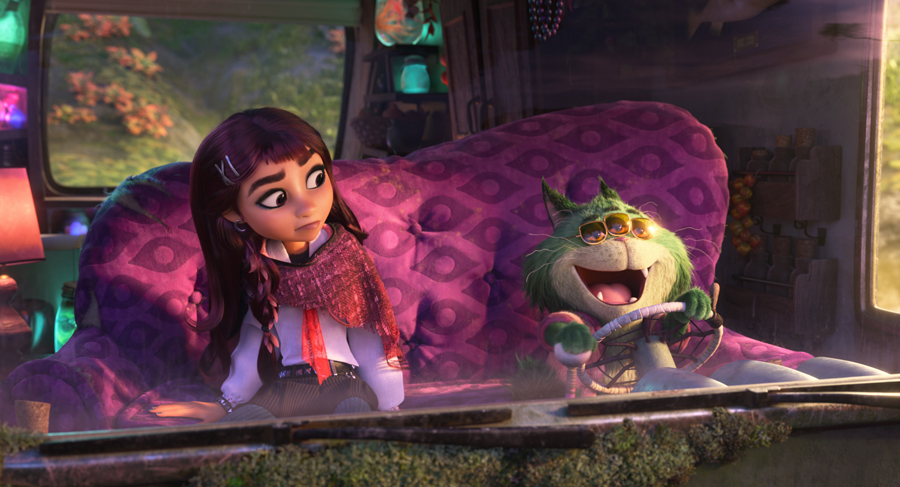
At the heart of Hexed is Billie, a rebellious teenager with a penchant for combat boots and a deep-seated frustration with the stifling, monochromatic atmosphere of her hometown, Plainsville. Voiced by Hailee Steinfeld, Billie is a character defined by uncontained potential and a volatile magical signature. Her life is strictly managed by her mother, Alice, voiced by Rashida Jones, whose protective nature serves as a foil to Billie’s restless spirit.
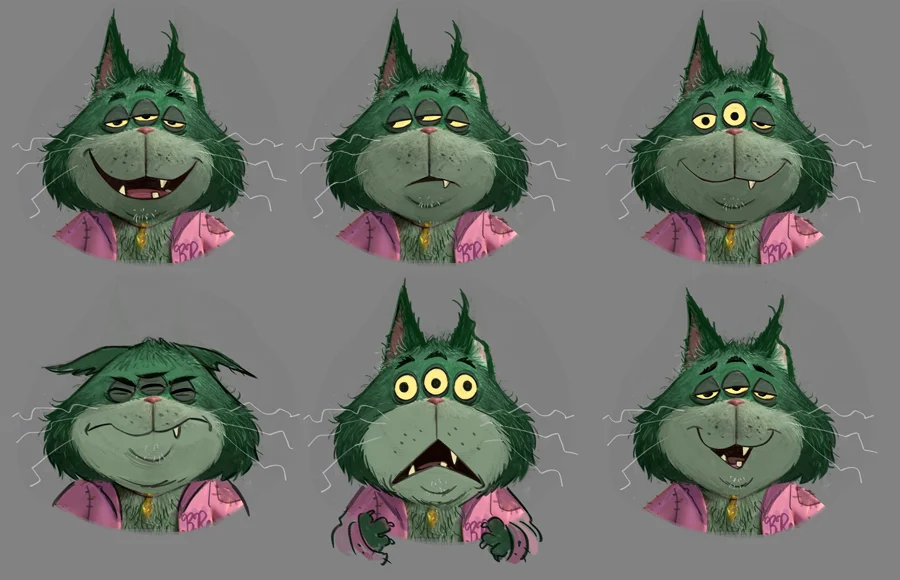
The inciting incident of the film occurs when Billie inadvertently discovers her own latent magical abilities, a revelation that forces her and Alice to venture into the hidden, mystical realm of Hexe. Here, the narrative shifts from a domestic drama to an epic quest, as the pair must unravel long-buried family mysteries. They are guided by B.R. Crummchuk—an eccentric, three-eyed green cat voiced by Walton Goggins—and ultimately find themselves at odds with the film’s formidable antagonist, the witch queen Celeste, marking a major voice-over debut for Jodie Foster.
Chronology of Production and Creative Vision
The genesis of Hexed began with a desire to marry the "Bronze Age" of Disney—specifically the aesthetic sensibilities of the 1970s and 80s—with the high-fidelity CG capabilities of the modern era. Directors Fawn Veerasunthorn (Wish) and Jason Hand (Moana 2), alongside co-director Josie Trinidad (Zootopia+), spearheaded a vision that prioritizes a distinct visual language.
Phase 1: Conceptualizing Hexe
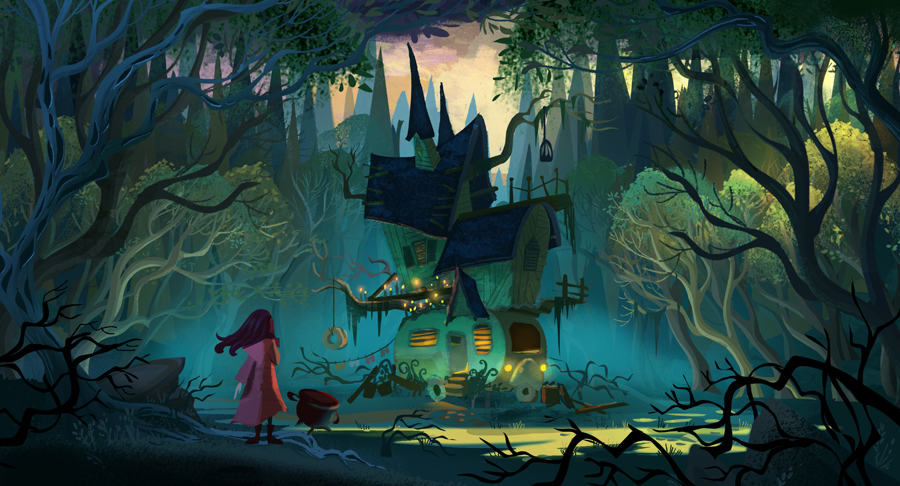
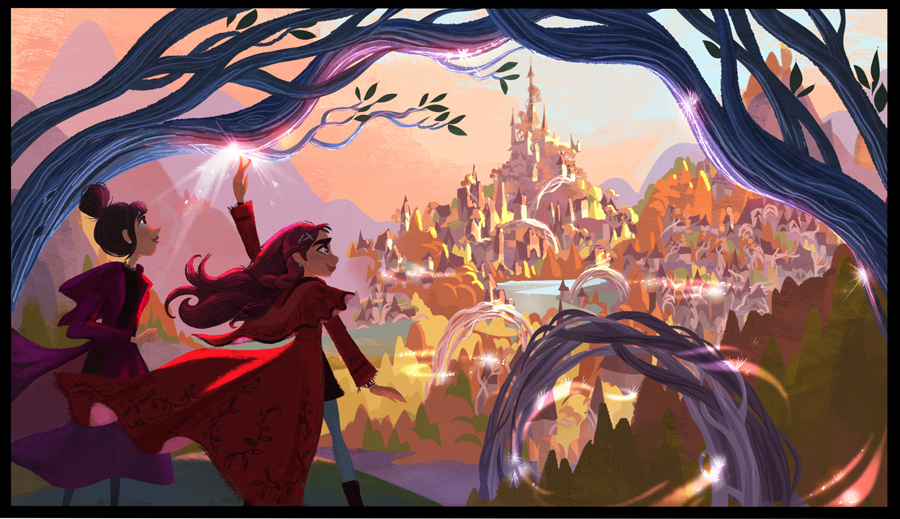
Production designer Lorelay Bové drew heavily from the 1970–1988 era of Disney animation, focusing on "triangular and square" architectural shapes that give Hexe a rigid yet inherently magical silhouette. This structural foundation is softened by organic, colorful embellishments, creating a world that feels both ancient and refreshingly new.
Phase 2: Technical Innovation
The animation team faced significant hurdles in bringing characters like B.R. Crummchuk to life. The three-eyed cat features complex physical transformations—including the spontaneous manifestation of limbs—which required a complete overhaul of the studio’s existing rigging systems. Producer Yvett Merino noted that these "stretch" mechanics had never been attempted with such fluidity in the studio’s previous CG projects.
Phase 3: The Integration of 2D and 3D
Filmmakers utilized 2D animation as a "proof of concept" for all magical signatures. Animator Tyler Pacana’s initial shadow-puppet tests served as the North Star for the film’s visual identity. By mapping out the "sparks" of Billie’s volatile magic versus the controlled, elegant movements of Celeste’s power in 2D, the technical team was able to build a more robust CG pipeline that preserved the personality of the hand-drawn sketches.
Supporting Data: Influences and Artistic Lineage
The production team openly credits the "Disney canon" for the film’s stylistic foundations, yet they are careful to note that Hexed is not a retread of past successes.
The "Sword and the Stone" Connection
Jason Hand cited the 1963 classic The Sword and the Stone as a primary influence for the film’s comedic tone and character design. "Bill Peet’s storyboarded wizard duel was something we studied a million times," Hand explained. The influence is evident in the film’s penchant for "magical objects" that possess their own agency and personality.
The Renaissance Echo
For Fawn Veerasunthorn, growing up in Thailand, the Disney Renaissance of the early 90s provided the template for immersive storytelling. Specifically, the "magical objects" trope from Beauty and the Beast finds a modern, spicier iteration in Hexed. Objects like Ms. Quill’s enchanted pen and Elias Quire’s bewitching journal are not merely helpful tools; they possess an attitude, often challenging Billie rather than catering to her. As Veerasunthorn puts it, "They aren’t pouring tea for you; they’re asking you, ‘Do you even belong here?’"
Official Responses from the Filmmaking Team
The creative team emphasized that while the magic provides the spectacle, the emotional core is the "mother-daughter" dynamic.
- Fawn Veerasunthorn on Character Depth: "We’re all animation nerds, so we looked at Alice in Wonderland for inspiration. But from a personality standpoint, we wanted to focus on the struggle of wanting what’s best for our kids versus letting them find their own path. Having mothers in the story room was vital to capturing the authenticity of that conflict."
- Jason Hand on Magic Signatures: "Billie is dangerous—she can’t control her sparks. Celeste is the polar opposite; she is masterful and elegant. The way they interact with their magic tells the audience everything they need to know about their internal states."
- Roy Conli on Technical Evolution: "I’ve been through many iterations of our technical process, from lighting to rendering. With Hexed, we finally reached a place where our tools perfectly matched the imagination of our artists. However, the magic is really just a metaphor. The true magic of the film is how Billie and Alice fulfill one another’s potential."
Implications for the Future of Disney Animation
Hexed represents a potential shift in the studio’s output strategy. By leaning into "legacy aesthetics" while tackling mature, complex character studies, Disney appears to be pivoting away from pure fairy-tale adaptations toward more character-driven narratives that prioritize the "why" of the character over the "what" of the world-building.
The "Spicier" Protagonist
The decision to make the supporting magical elements—the enchanted books and quills—less subservient and more critical of the protagonist suggests a desire to modernize the "Disney sidekick" trope. By making the environment itself a character that pushes back against the lead, the film ensures that Billie’s growth feels earned rather than gifted.
Technical Scalability
The success of the new rigging system developed for B.R. Crummchuk could have long-term implications for how Disney handles non-humanoid characters in the future. The ability to seamlessly blend the "squash and stretch" philosophy of traditional 2D animation with the high-resolution rendering of CG opens new doors for expressive character animation that was previously deemed too difficult or time-consuming.
Legacy as a Foundation
Perhaps the most significant takeaway from the Hexed preview is the studio’s comfort in acknowledging its own history. Rather than trying to outrun the "Disney look," the team has embraced the Bronze and Renaissance eras as a stylistic North Star. This suggests a studio that is confident in its identity—no longer feeling the need to reinvent the wheel, but rather, to refine it for a new generation of viewers who value both visual spectacle and emotional honesty.
As the release date of November 25 approaches, Hexed stands as a testament to the idea that even in a world of high-tech digital rendering, the most powerful element of animation remains the human connection. Whether it is the mother-daughter bond at the film’s core or the dedication of an animation team looking back to the legends of the past, Hexed is poised to be a significant chapter in the ongoing history of Walt Disney Animation Studios.
