
Looking Back at 1999: The Greatest Year in Modern Sci-Fi Cinema Ranked
Introduction: The Unprecedented Cinematic Landscape of 1999
While film historians frequently celebrate iconic cinematic years—such as the legendary summer of 1982, which gifted audiences with E.T., Blade Runner, The Thing, and Star Trek II: The Wrath of Khan—the calendar year spanning from January to December 1999 holds a uniquely mythic status among cinephiles. It was a transitional era, a cultural bridge standing precariously on the precipice of a new millennium. As the world braced for the looming uncertainties of the Y2K bug, Hollywood was undergoing its own quiet revolution, releasing a dizzying lineup of game-changing, all-time-great motion pictures that permanently altered the cultural fabric.
The breadth of 1999’s box office and critical triumphs is staggering. M. Night Shyamalan’s supernatural thriller The Sixth Sense emerged as the definitive box office sensation of the decade, anchoring itself in public memory with what is widely regarded as the greatest twist in cinema history. In the realm of animation, Pixar’s Toy Story 2 raised the bar for sequels, proving that follow-ups could equal—or even surpass—their predecessors. Meanwhile, independent cinema was forever transformed by The Blair Witch Project, a micro-budget horror film that inadvertently birthed the modern found-footage movement and revolutionized guerrilla marketing.
Yet, for enthusiasts of speculative fiction, 1999 was nothing short of a golden age. Science fiction experienced a massive renaissance, blending high-concept philosophy with groundbreaking visual effects and populist entertainment. From clever parodies like Galaxy Quest—which remains one of cinema’s most affectionate and positive portrayals of fandom—to high-octane franchise entries and heartbreaking animated masterpieces, the final year of the 1990s delivered a staggering slate of sci-fi storytelling.
Examining this legendary crop of films reveals a diverse landscape where giant monsters, cyberpunk simulations, tragic robots, underwater research facilities, and space operas collided. Here is the definitive ranking of the five best science fiction movies released in 1999.
5. Gamera 3: Revenge of Iris: The Peak of Heisei Kaiju Action
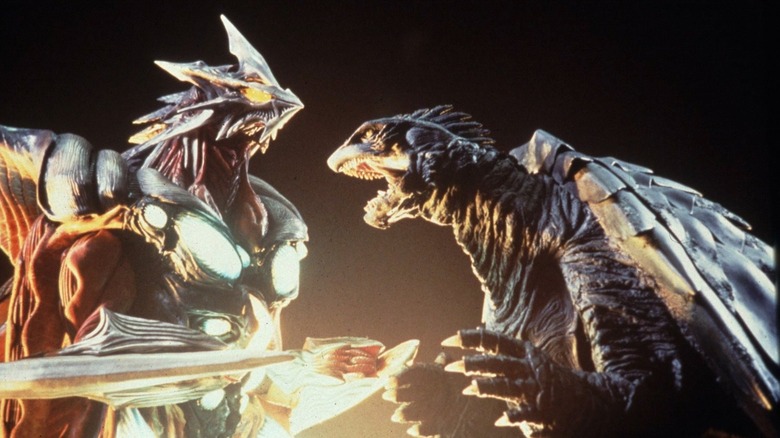
To the uninitiated, the pantheon of giant monster (kaiju) cinema begins and ends with Toho’s Godzilla, the self-proclaimed King of the Monsters. However, film aficionados know that Daiei Film’s Gamera—the giant, flame-breathing, jet-propelled turtle—has long occupied a parallel throne. While Gamera’s cinematic origins date back to 1965 with Gamera, the Giant Monster, his definitive era unquestionably belongs to the Heisei trilogy, which kicked off in 1995. The magnificent and surprisingly dark conclusion to this trilogy arrived in 1999: Gamera 3: Revenge of Iris.
Chronology and Narrative Stakes
Taking place chronologically after the harrowing events of Gamera: Guardians of the Universe (1995) and Gamera: Attack of Legion (1996), Revenge of Iris finds the world in a state of escalating ecological and supernatural crisis. The winged, vampiric Gyaos creatures are re-emerging across the globe, while Gamera’s protective ties to humanity have been dangerously severed. His symbiotic bond with human protector Asagi (Ayako Fujitani) has been broken, leaving humanity to fend for itself.
Simultaneously, a traumatized orphan named Ayana (Ai Maeda) harbors a deep-seated hatred for Gamera, whom she blames for the collateral damage and death of her family during the monster battles in Kyoto. When Ayana discovers a bizarre, parasitic creature in a rural cave, she nurtures it, naming it "Iris" after her lost pet cat. As Iris rapidly mutates and grows, fueled by a shared psychic vendetta against the giant turtle, an inevitable, city-destroying showdown looms.
Production Design and Legacy
Directed by Shusuke Kaneko, Gamera 3 succeeds where many monster movies fail: it treats its human characters and emotional stakes with genuine gravity. Kaneko brilliantly melded classic practical monster effects—relying heavily on intricate suitmation and detailed miniatures—with cutting-edge-for-the-time CGI elements. The result is a visceral, tactile spectacle.
The third-act monster brawl between Gamera and Iris stands as one of the absolute greatest action sequences in kaiju cinema history. While hardcore tokusatsu fans have long celebrated the Heisei Gamera trilogy, Revenge of Iris remains an under-discussed sci-fi gem from a legendary year, proving that monster movies could balance philosophical weight with sheer destruction.
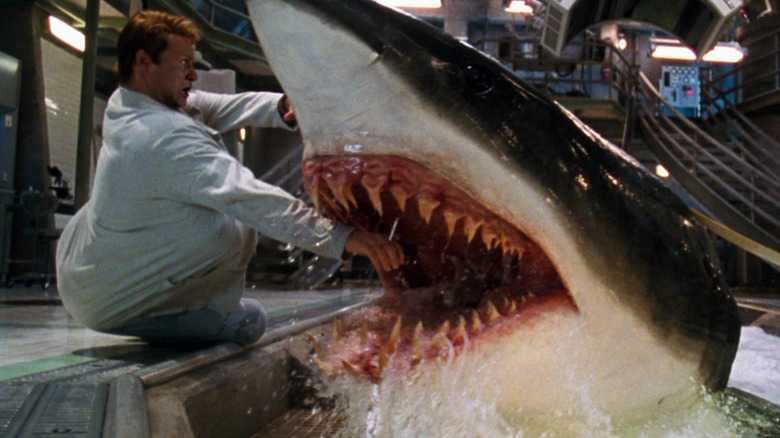
4. Deep Blue Sea: High-Concept Sci-Fi Meets Pure Popcorn Thrills
In the rigid hierarchy of cinematic shark features, Steven Spielberg’s 1975 masterpiece Jaws sits unassailable at the summit; every subsequent aquatic predator film is fundamentally fighting for a distant silver medal. Yet, director Renny Harlin’s 1999 creature feature Deep Blue Sea comfortably claims its crown as the second-best shark movie ever made. Though it was only a modest box office hit during its initial theatrical run, the film has since ascended to legitimate cult status, even inspiring an unexpected, straight-to-video franchise decades later.
Narrative Framework
Set in an isolated, high-tech underwater research facility named Aquatica, the film follows Dr. Susan McAlester (Saffron Burrows). In an effort to find a revolutionary cure for Alzheimer’s disease, Dr. McAlester has been illegally harvesting and genetically altering the brain tissue of captive mako sharks. By artificially increasing their brain mass, the research team hopes to unlock human neural regeneration.
Predictably, tampering with nature has severe consequences. When the facility’s corporate backers send an executive (Samuel L. Jackson) to audit the dangerous experiments, a routine extraction goes catastrophically awry. The super-intelligent sharks break out of their containment pens, turning the flooded, sinking laboratory into a claustrophobic death trap. McAlester and her surviving team—including rugged wrangler Jim Preacher (Thomas Jane) and marine biologist Scallinds—must outwit predators that are now thinking three steps ahead of them.
Directorial Sensibilities and Cultural Impact
Director Renny Harlin, who defined the high-octane popcorn cinema of the 1990s with hits like Cliffhanger and The Long Kiss Goodnight, brought his most unhinged, delightfully wacky sensibilities to Deep Blue Sea. The film leans heavily into B-movie audacity while maintaining A-list production values.
Anchored by a charismatic, star-making performance from Thomas Jane and featuring what is universally cited as one of the single most shocking, unannounced character deaths in cinema history, Deep Blue Sea is arguably the most purely entertaining science fiction movie of 1999. It bridges the gap between mad-science ethics and pulse-pounding survival horror with effortless flair.
3. Star Wars: The Phantom Menace: Rebuilding a Legacy in a Galaxy Far, Far Away
Mentioning Star Wars: Episode I – The Phantom Menace in any discussion of great cinema invariably elicits a mixture of passionate defense and nostalgic groans. For older fans who grew up on George Lucas’ original 1970s and ’80s trilogy, the film was initially viewed as a disappointment—a tonal shift toward lighter aesthetics and heavy digital effects. However, for a younger generation of viewers who experienced the film in theaters in 1999, The Phantom Menace was their foundational entry point into the sprawling space opera. Time has ultimately been kind to Lucas’ ambitious blockbuster, cementing its place as an essential pillar of 1999 sci-fi.
The Plot and Mythological Expansion
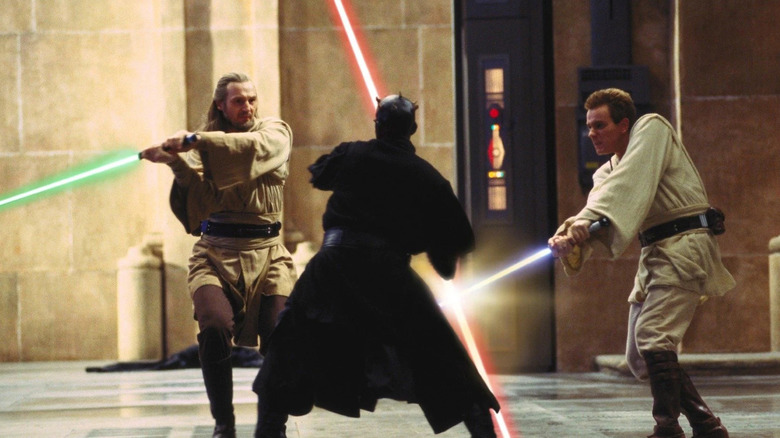
Set decades before the events of the original trilogy, The Phantom Menace follows Jedi Master Qui-Gon Jinn (Liam Neeson) and his apprentice, Obi-Wan Kenobi (Ewan McGregor). Dispatch by the Galactic Republic to resolve a trade blockade by the greedy Trade Federation on the peaceful planet Naboo, the Jedi find themselves caught in a wider geopolitical conspiracy.
After escaping a hostile invasion, they rescue Queen Amidala (Natalie Portman) and crash-land on the desert planet Tatooine. There, they encounter a gifted young slave boy named Anakin Skywalker (Jake Lloyd), who possesses a miraculously high midichlorian count, suggesting he is the prophesied "Chosen One" destined to bring balance to the Force. Simultaneously, the ancient, long-dormant Sith Order resurfaces, signaling a dark shift in the galaxy’s power balance.
Cultural Implications and Enduring Contributions
It is impossible to overstate the cultural footprint of The Phantom Menace. It successfully birthed a brand-new generation of Star Wars fans, fueling an expanded universe of literature, video games, and animated television—most notably The Clone Wars, which deepened and redeemed the prequel era for millions.
Furthermore, the film features some of the most iconic elements in modern pop culture. The lightsaber duel between the Jedi and the acrobatic Sith Lord Darth Maul, scored to John Williams’ thunderous choral masterpiece "Duel of the Fates," is not merely the greatest lightsaber battle in franchise history; it stands as one of the finest musical and action sequences ever committed to film. Despite its initial controversies, The Phantom Menace remains a monumental cinematic achievement of 1999.
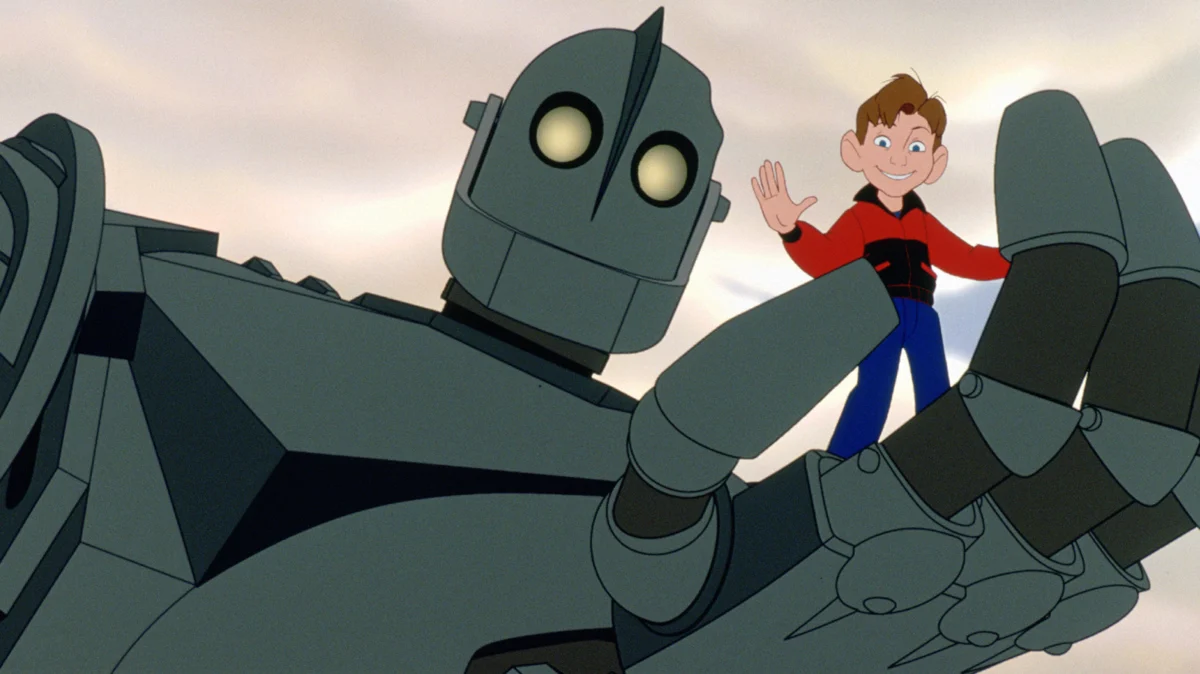
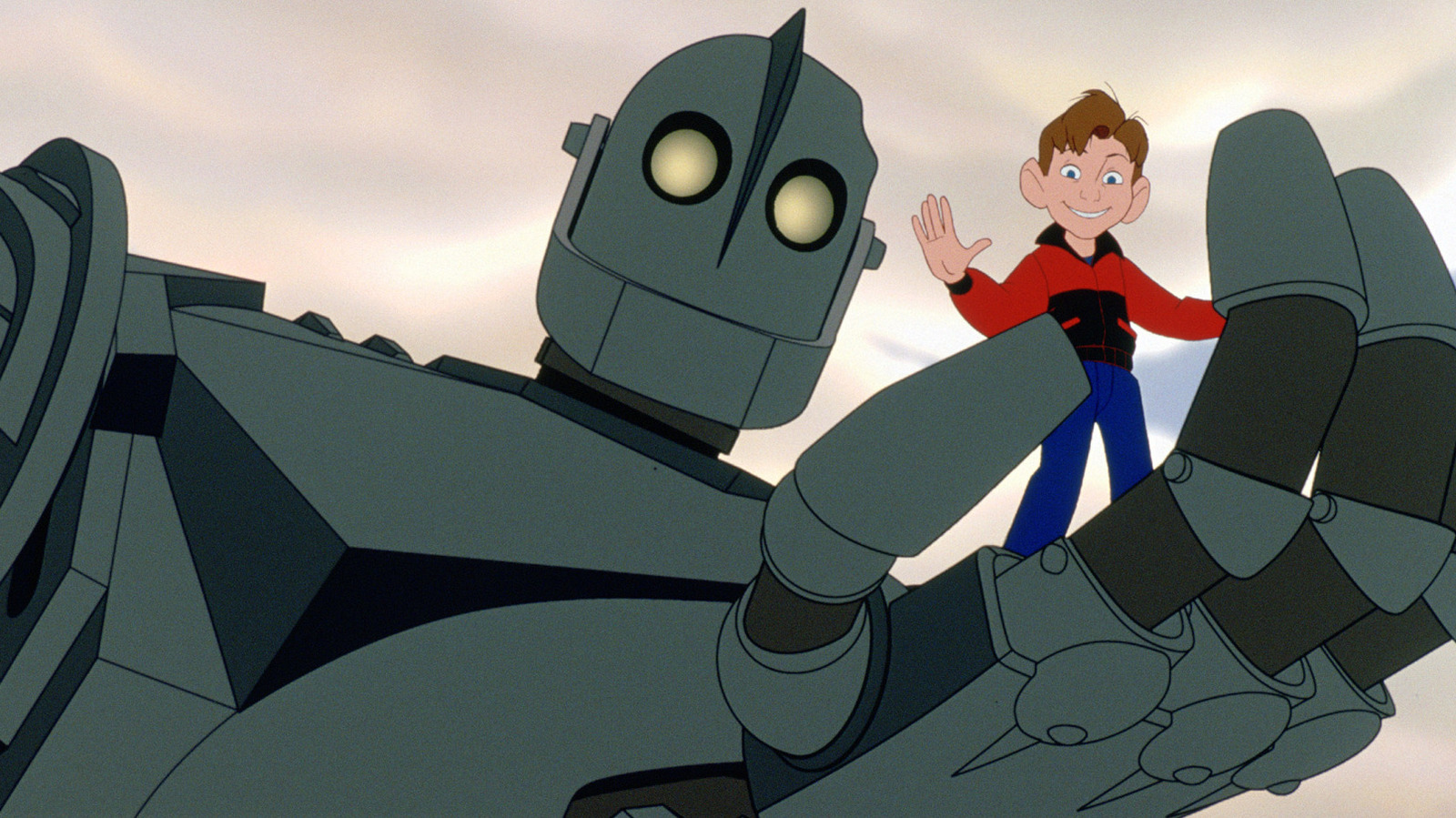
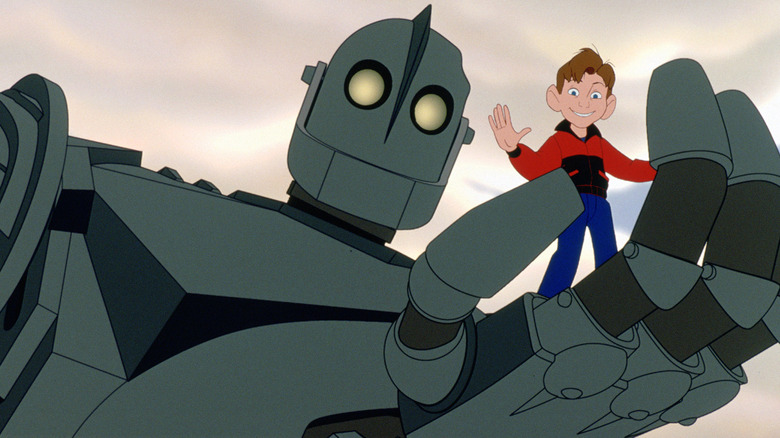
2. The Iron Giant: Brad Bird’s Animated Masterpiece
Whenever the name "Superman" is invoked in modern discourse, it usually refers to DC Comics’ iconic Man of Steel. However, for those deeply moved by director Brad Bird’s 1999 animated classic The Iron Giant, the word carries an entirely different, heartbreakingly poignant emotional weight. Stripping away questions of box office performance or commercial footprint, purely as a work of narrative art, The Iron Giant can easily be argued as the best overall film on this list.
Narrative Architecture
Set against the backdrop of the Cold War paranoia of 1957 in a sleepy Maine town, the story centers on a massive, metallic alien robot that crash-lands off the coast. The machine is soon discovered by Hogarth Hughes (voiced by Eli Marienthal), an imaginative nine-year-old boy. Despite the robot’s imposing, weaponized design, Hogarth discovers that the amnesiac giant is gentle, curious, and eager to learn about humanity.
Complications arise when a paranoid, career-obsessed federal government agent named Kent Mansley (Christopher McDonald) arrives, determined to destroy the misunderstood machine at any cost. With the help of a laid-back beatnik junkyard owner named Dean McCoppin (Harry Connick Jr.), Hogarth must protect his extraterrestrial friend from a full-scale military assault.
Box Office Tragedy and Critical Redemption
Upon its initial theatrical release, The Iron Giant was notoriously mishandled by Warner Bros., resulting in a devastating box office bomb. Studio executives failed to market the film effectively, robbing it of the theatrical success it so richly deserved. Yet, history has proven that initial box office returns do not dictate a film’s ultimate legacy.
Powered by a stellar voice cast—including Vin Diesel’s poignant, minimalist vocal performance as the title character—and anchored by themes of free will, pacifism, and self-sacrifice, The Iron Giant has blossomed into an undisputed cinematic classic. It paved the way for Brad Bird to eventually direct Pixar’s The Incredibles, but this hand-drawn sci-fi fairy tale remains his crowning artistic achievement.
1. The Matrix: The Undisputed King of 1999 Sci-Fi
When evaluating the science fiction landscape of 1999, there is ultimately only one film that can occupy the top spot: The Matrix. Written and directed by Lana and Lilly Wachowski, this cybernetic thriller was more than just a successful movie; it was a watershed, "before-and-after" moment in cinematic history that permanently altered the DNA of action and science fiction filmmaking.
The Premise and Philosophical Underpinnings
The film follows Thomas Anderson (Keanu Reeves), a mild-mannered software programmer by day and a disillusioned hacker known as "Neo" by night. Troubled by a vague sense that something is fundamentally wrong with the world, Neo is contacted by a mysterious, leather-clad woman named Trinity (Carrie-Anne Moss) and the infamous underground freedom fighter Morpheus (Laurence Fishburne).
Morpheus offers Neo a choice between two pills: take the blue pill and wake up in his bed believing whatever he wants, or take the red pill and discover "how deep the rabbit hole goes." Neo takes the red pill, awakening in a horrifying dystopian reality. He discovers that human civilization has been subjugated by sentient machines, and the everyday world he knew was nothing more than a neurological simulation—The Matrix—designed to keep humanity pacified while their bio-electric energy is harvested.
Groundbreaking Craft and Monumental Impact
The Wachowskis approached studio executives with a pitch unlike anything Hollywood had ever seen. By blending Hong Kong wire-fu martial arts choreography, Japanese cyberpunk anime aesthetics, high-concept Western philosophy (drawing on Jean Baudrillard, René Descartes, and Plato’s Allegory of the Cave), and pioneering visual effects—most notably the revolutionary "bullet-time" camera technique—they crafted a seamless, slick masterpiece.
The impact of The Matrix was seismic. An entire generation of action and sci-fi cinema was forced to live in its stylistic shadow. Its sequels struggled to match the lightning-in-a-bottle perfection of the original, but the 1999 film remains an untouchable monument. Marrying breathtaking set pieces with deep philosophical inquiry, The Matrix stands tall as the definitive science fiction achievement of 1999—and one of the greatest films ever made.
