
"She Is a Fascist": Denise Gough Shatters All Hopes of a Redemption Arc for Andor’s Dedra Meero
By [Your Name/Staff Writer]
Published in Entertainment & Culture
Main Facts: The Uncompromising Nature of an Imperial Monster
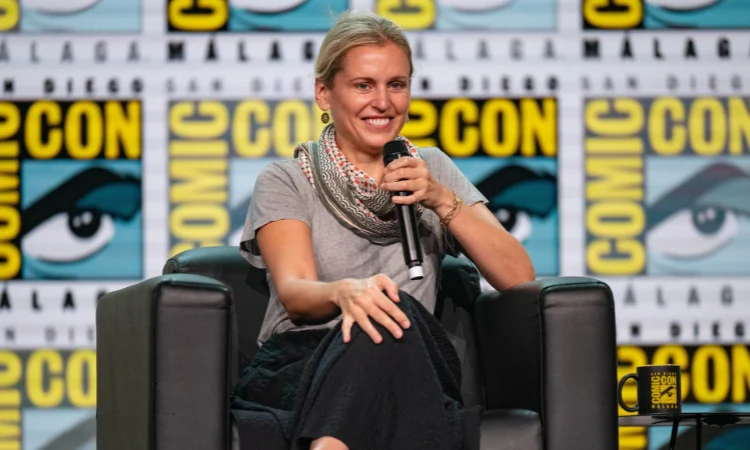
For fans who spent the first half of Andor Season 1 secretly rooting for Imperial Security Bureau (ISB) supervisor Dedra Meero, actress Denise Gough has a definitive message: stop waiting for a redemption arc. Speaking to a packed Hall M at San Diego Comic-Con Málaga, Gough systematically dismantled any lingering fan theories that her character is merely a misunderstood "girlboss" trapped within a cold, bureaucratic military machine.
According to Gough, Meero is not a victim of circumstance, nor is she waiting in the wings for a heroic turnaround. She is, first and foremost, a dedicated, unrepentant villain.
"Dedra is cruel. Dedra is dangerous, and Dedra is a fascist, and even after season two, when we see her in prison at the end, I believe she will remain a fascist," Gough told the captivated audience. "I get tired of watching female characters who are always redeemed."
Her remarks cut straight to the heart of what makes Andor—Disney+’s critically acclaimed, gritty entry into the Star Wars canon—so distinct from its franchise siblings. Unlike stories that seek to humanize antagonists by offering them tragic backstories that excuse their actions, Andor presents fascism not as a momentary lapse in judgment, but as a deeply held, active choice. Gough’s portrayal of Meero anchors this theme, refusing to offer audiences the comfort of a moral compromise.
Chronology: From "Woman in a Man’s World" to Unmasked Torturer
To understand how fans fell into the trap of sympathizing with Meero, one must look back at the carefully constructed trajectory of Andor Season 1.
When the series first premiered, Gough described Meero to interviewers as "a woman in a man’s world." In a galaxy dominated by the patriarchal, monolithic structure of the Galactic Empire, watching a sharp, ambitious female officer claw her way up the ranks through sheer competence and tenacity felt, to some viewers, like a groundbreaking narrative beat.
However, Gough revealed that this framing immediately sparked backlash from sections of the fandom. "People got very angry that I was trying to make Star Wars feminist," she recalled. Her response to the early critics was simple: "Just let them watch."
And watch they did. For the first eight episodes of Season 1, the creative team pulled off a brilliant narrative misdirection. Meero was framed as the underdog—a brilliant investigator stonewalled by her lazy, misogynistic male colleagues. But the illusion shattered definitively in Episode 9. In that harrowing sequence, Meero methodically oversees the brutal torture of Bix Caleen (played by Adria Arjona), stripping away any lingering illusions that the ISB supervisor possessed a heart of gold.
"We did good PR for Dedra for episodes 1 to 8," Gough acknowledged. "And then in episode nine, we showed you who she really was."
The narrative arc culminates in Season 2, where Meero finds herself facing the consequences of her unwavering loyalty to the regime, ultimately landing behind bars. Yet, Gough insists, imprisonment will do nothing to soften her ideological stance.
Supporting Data: The Creative Tug-of-War and the Contrast with Syril Karn
Gough’s unyielding interpretation of Meero stands in fascinating contrast to the perspective of Andor showrunner Tony Gilroy. According to the actress, Gilroy occasionally leaned toward a softer view of the ISB supervisor during production.
"When I talk about her, he’s like, ‘Oh, Denise, come on, Dedra. Poor Dedra. She just believed in something,’" Gough shared, imitating the showrunner. But Gough rejected this sympathetic gloss: "Lots of people have a terrible childhood, lots of people have awful things happen to them, and they don’t end up torturing people and organizing genocides!"
This uncompromising moral stance is further highlighted by her dynamic with Syril Karn, played by Kyle Soller. At the close of Season 1, the fastidious, disgraced Imperial bureaucrat saves Meero’s life, a plot twist that initially filled Gough with dread.

"I was angry with Tony at the end of the first season because Syril saves Dedra’s life," she admitted. "And I was like, ‘Oh, great. Now she’s gonna fall in love. And then suddenly she’s like a nice woman.’"
Fortunately, Gilroy avoided the cliché romantic trap. Instead of softening Meero, their dynamic curdled into something far more toxic and complex. "Yes, Dedra found somebody who matched her level of weirdness, but she didn’t change," Gough said. "She got heavier into the darkness, because that can happen."
For Gough, the divergence between Karn and Meero comes down to their relationship with the wider galaxy:
- Syril Karn: "Went and experienced the culture of the other and started to wake up."
- Dedra Meero: "Is isolated in a world of darkness away from the other, so [she] finds it easier to dehumanize them."
Ultimately, Gough warned fans against reading a conventional romance into Meero and Karn’s association. "We project, ‘Oh, but maybe she’s in love with Syril,’" she noted. "But really, she lost control. Dedra is a dark force."
Official Responses and Behind-the-Scenes Insights
Denise Gough’s appearance at San Diego Comic-Con Málaga offered rare, unfiltered insight into the philosophy driving Andor. For an actress who has built a celebrated career across stage and screen, Andor holds a singular place in her professional life. She described the series as "the work that I am most proud of that I have ever done on screen."
Her dedication to the role stems not from a misplaced affection for the character, but from a profound understanding of why portraying a fascist convincingly matters in contemporary storytelling.
"It’s important we understand the enemy," Gough emphasized to the Hall M crowd. "It’s really important. We need to understand how they fucking work because we have to take them on."
This deep-seated revulsion toward real-world fascism has even bled into her interactions with fans. When signing autographs, Gough faces a unique psychological hurdle: "I find it really difficult to write as myself, ‘Long live the Empire,’ because truly, fuck the Empire in real life."
Her parting words to the audience—flanked by members of the 501st Legion in full stormtrooper regalia—served as both a humorous meta-commentary and a sobering reminder of the show’s core themes: "Always be part of the Alliance. But study the Empire."
Implications: What Dedra Meero Means for the Future of Star Wars Storytelling
The cultural footprint of Andor cannot be overstated, and Denise Gough’s uncompromising stance on Dedra Meero cuts to the core of why the series resonates so deeply with adult audiences.
For decades, space opera villains—from Darth Vader to Kylo Ren—have often been granted the narrative luxury of redemption. While redemption is a powerful and time-tested trope in myth-making, its overuse can inadvertently sanitize the nature of real-world authoritarianism. By refusing to give Meero a redemptive arc, Andor insists on a harsher, more realistic truth: some people are not misunderstood heroes waiting to break free; they are true believers in oppressive systems who choose cruelty, control, and domination.
Gough’s vocal rejection of the "redeemed female villain" trope also marks a notable milestone in media criticism. Women in villainous roles are frequently subjected to fan demand for "softening" or romance-driven character arcs that explain away their malice. By forcefully slamming the door on any such narrative for Meero, Gough and the creative team behind Andor have carved out space for female antagonists to be just as unapologetically monstrous, complex, and unredeemable as their male counterparts.
As Andor Seasons 1 and 2 stream on Disney+, Meero stands as a masterclass in villainy. She is cold, calculating, brilliant, and completely devoid of remorse—a reminder that against systemic tyranny, understanding the machinery of the enemy is the first, vital step toward dismantling it.
