
Rediscovering Connection: Andreas Dresen’s ‘Love, After All’ Explores the Nuances of Aging and Matrimony
By Alex Billington | October 2, 2026
In an era where cinema is often dominated by high-octane spectacle and complex, multi-verse narratives, there remains an essential, grounding power in the quiet examination of human intimacy. This autumn, German auteur Andreas Dresen—a filmmaker renowned for his empathetic, observational approach to the human condition—returns to the screen with Love, After All (originally titled Alte Liebe). Premiering at the 2026 Zurich Film Festival, the film offers a poignant, humorous, and deeply authentic look at the complexities of a marriage that has weathered four decades of life’s turbulence.
Main Facts: A Portrait of Long-Term Intimacy
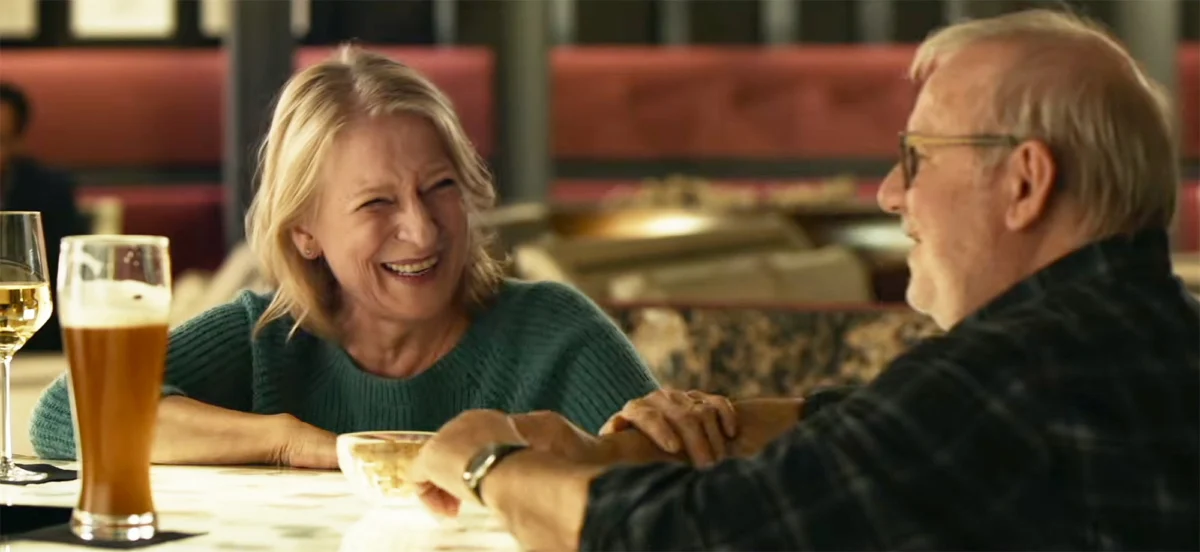
Love, After All centers on the relationship between Lore (played by the formidable Dagmar Manzel) and Harry (portrayed by the venerable Joachim Król). After forty years of shared history, the couple finds themselves in a state of stagnant routine. They are at a crossroads common to many long-married partners: the children have moved on, the pressures of professional life have subsided, and they are left to confront the reality of their own aging identities.
The narrative engine of the film is sparked by two catalysts: the visit of their young granddaughter and the surprising announcement from their daughter, Gloria. Gloria plans to marry for the third time, selecting a wealthy industrialist who happens to be nearly her father’s age. This development forces Lore and Harry to confront their own marital stagnation, their differing expectations for their twilight years, and the underlying, often unspoken, love that brought them together in the first place.
The film, adapted from the novel by Elke Heidenreich and Bernd Schroeder, is not merely a drama about growing old; it is a witty, down-to-earth exploration of the "second act" of marriage. As the Zurich Film Festival programmers have noted, the film stands out for its refusal to sugarcoat the realities of domestic friction, instead opting for a refreshing, grounded sincerity.

Chronology: From Page to Screen
The development of Love, After All reflects the careful, deliberate pacing characteristic of Dresen’s career.
- Literary Roots: The project began with the critically acclaimed novel Alte Liebe by the literary duo Elke Heidenreich and Bernd Schroeder. The book gained a significant following for its candid, often stinging portrayal of aging, earning praise for its realistic dialogue and emotional resonance.
- Pre-Production and Adaptation: Screenwriter Laila Stieler, who has collaborated with Dresen on multiple projects, joined forces with the director to adapt the source material. Their goal was to maintain the acerbic wit of the original text while infusing it with the visual, emotive language of cinema.
- Production Phase: Filming took place over the last year, with production handled by Alexandra and Meike Kordes. The production team focused on creating a "lived-in" aesthetic—environments that reflect forty years of habitation, from the cluttered corners of a home to the familiar landscape of a well-tended garden.
- The Zurich Premiere: The film officially premiered at the 2026 Zurich Film Festival in October 2026. The reception at the festival has been characterized by praise for the lead performances, with critics highlighting the chemistry between Manzel and Król as the emotional anchor of the film.
- Theatrical Rollout: Following its festival circuit, the film is scheduled for a wide theatrical release across Germany starting in October 2026.
Supporting Data: The Artistic Pedigree
Andreas Dresen is no stranger to the delicate art of character-driven drama. His filmography serves as a map of the German soul, ranging from the melancholic beauty of Cloud 9 (2008) to the historical depth of Gundermann (2018) and the recent From Hilde With Love.
His collaboration with Dagmar Manzel and Joachim Król is particularly notable. Both actors are titans of German cinema, possessing the range to portray characters who are simultaneously frustrated with their partner’s quirks and deeply reliant on their shared history.
- Key Cast Members:
- Dagmar Manzel (Lore): Known for her ability to convey internal conflict through subtle expressions.
- Joachim Król (Harry): A master of the "everyman" archetype, lending Harry a sense of weary dignity.
- Supporting cast: Includes Anna von Seld and Liane Düsterhöft, who provide the necessary friction to propel the narrative forward.
The film’s production quality is bolstered by the Kordes sisters’ production house, known for championing high-quality European independent cinema. The adaptation of the Heidenreich-Schroeder novel remains faithful to the themes of "old love" (the literal translation of Alte Liebe), which suggests that love in one’s later years is not a fading light, but a different, more durable kind of heat.
Official Responses and Critical Reception
Early responses from the Zurich Film Festival have been overwhelmingly positive. Critics have frequently cited the film’s "authentic characterization." One reviewer noted, "Dresen avoids the trap of sentimentality. Instead, he gives us a couple who argue about the small things because they are afraid to address the big things. It is a masterclass in domestic realism."

The marketing campaign for the film, emphasizing the slogan "To us. My Lore. Your Harry," has resonated with older demographics who feel underrepresented in contemporary cinema. The official trailer, which debuted on YouTube alongside the festival news, highlights the humor inherent in the couple’s bickering, framing their arguments not as a sign of a failing marriage, but as a language of their own.
Implications: Why This Story Matters
The success of Love, After All in the current film market has several broader implications for the industry.
The "Grey Wave" in Cinema
As the global population ages, there is an increasing demand for stories that reflect the lives, desires, and anxieties of the demographic over 60. Love, After All proves that these stories are not only commercially viable but artistically vital. It challenges the industry standard that equates "romance" exclusively with youth.
The Evolution of the "Domestic Drama"
Dresen’s work suggests a shift in how domestic dramas are framed. Rather than focusing on a singular crisis—an affair or a divorce—the film focuses on the "stagnation of routine." This is a more relatable, if less sensational, conflict. It speaks to the millions of long-term couples who find themselves living in a state of comfortable, yet occasionally suffocating, familiarity. By turning the lens on this quiet "disruption," the film invites audiences to reconsider their own relationships.
The Power of Independent Distribution
While the film is currently set for a German release, the buzz generated at the Zurich Film Festival positions it as a strong candidate for international distribution. In the current climate, where mid-budget and independent dramas often struggle for shelf space, films like Love, After All rely heavily on festival prestige to secure international interest. Its success at ZFF is a vital step toward finding a global audience.

Conclusion: A Love Letter to Resilience
Love, After All is a testament to the idea that love is not a static destination but a continuous, often difficult, negotiation. Andreas Dresen has crafted a film that feels less like a piece of fiction and more like a mirror.
For Lore and Harry, the garden, the house, and the decades of shared breakfast tables are not just settings—they are the geography of a life built together. As the film hits theaters this October, it invites viewers to look past the surface of their own routines and perhaps find the same "old love" that keeps these two characters anchored to one another.
While a U.S. release date remains unconfirmed, the international film community is watching Love, After All closely. It is a reminder that in the face of uncertainty, routine, and aging, the most radical act remains the choice to stay, to listen, and to love all over again. As the film suggests, the most compelling stories aren’t always the ones that start with a spark, but the ones that survive the long, quiet burn of a lifetime.
