
The Architect of Agony: Why Clive Barker is Calling ‘Hellraiser: Revival’ a Masterpiece of Defiance
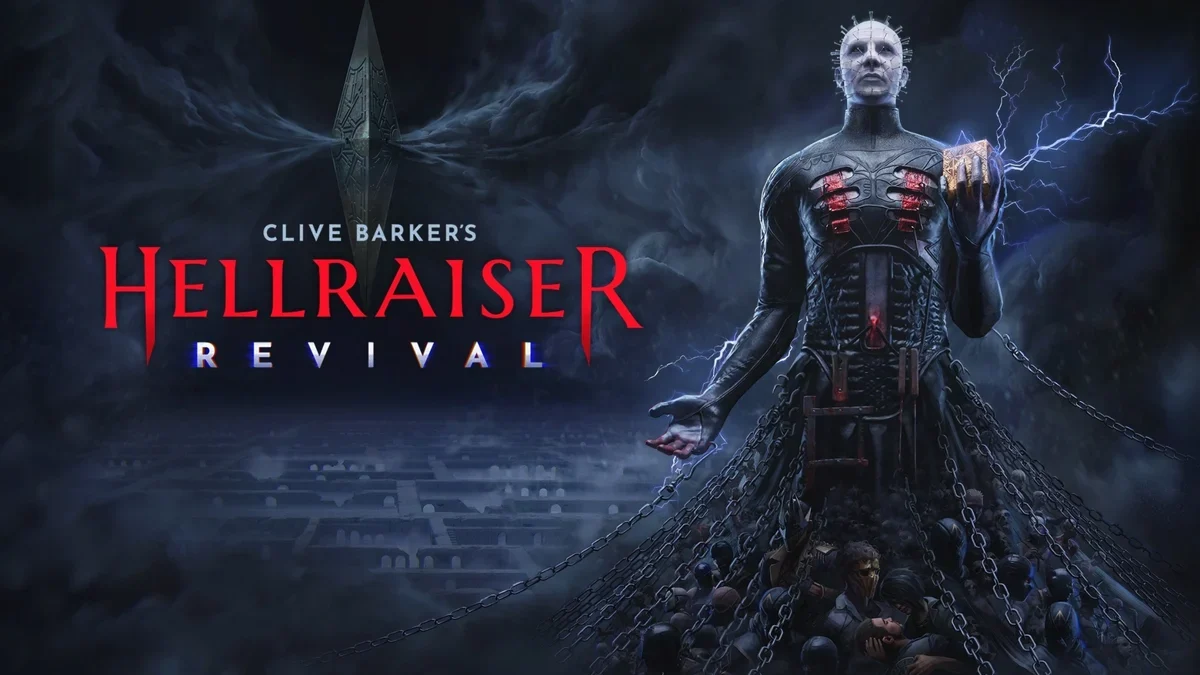
For decades, the name Clive Barker has been synonymous with the visceral, the erotic, and the deeply unsettling. Since the 1987 debut of Hellraiser, his vision of the Cenobites—beings for whom pain and pleasure are indistinguishable—has permeated the cultural consciousness. However, the transition of such a complex, transgressive franchise into the interactive medium of video games has historically been fraught with uneven results. That narrative, it seems, has been shattered by the release of Clive Barker’s Hellraiser: Revival.
In an exclusive interview regarding the game’s recent launch, the horror icon didn’t mince words about his involvement with Boss Team Games. When asked if the latest digital descent into his mythology carries his seal of approval, Barker was unequivocal: “I’m proud as fuck at the end result.”
The Main Facts: A Return to the Labyrinth
Hellraiser: Revival is not merely a licensed product; it is a meticulously crafted, old-school horror experience that demands players confront the very boundaries of their comfort zones. The game, which follows a protagonist venturing into the depths of Hell to rescue a loved one from the clutches of the Cenobites, has been praised for its uncompromising fidelity to Barker’s original vision.
Unlike previous attempts to adapt the IP, Revival embraces the grotesque, the sexual, and the depraved, refusing to scrub the edges of its source material for mass-market consumption. The result is a title that captures the claustrophobic terror of the Lament Configuration, earning it significant critical acclaim, including a 4/5 rating from Dread Central, which hailed it as "a new frontier in single-player horror."
Chronology: From Theater Stages to Digital Realms
The story of Hellraiser: Revival actually begins long before the game’s code was written—it starts in the formative years of Barker’s friendship with Doug Bradley. Their creative partnership spans decades, predating the puzzle box that would define their careers.
![Clive Barker Was “Astonished” by How Far ‘Hellraiser: Revival’ Goes: “I’m Proud as Fuck” [Exclusive]](https://www.dreadcentral.com/wp-content/uploads/2026/10/Hellraiser-Revival-torn-up-bodies-in-hallway.jpg)
- The Pre-Hell Era (1970s): Barker and Bradley began their collaborative journey in theater, working together for seven to eight years without the benefit of formal theater school. It was here, in the crucible of low-budget, high-concept stage work, that they developed their unique artistic shorthand.
- The Genesis of Horror (1987): The duo brought their theatrical sensibilities to the screen, where Barker famously instructed Bradley to “do less.” This restraint, born of years of mutual trust, defined the iconic, cold, and detached performance of Pinhead.
- The Development of ‘Revival’ (2024–2026): Boss Team Games approached Barker with a proposal that sought to capture the "defiance" of the early Hellraiser films. Barker admits he was initially "fearful" that the project would be subjected to excessive censorship by corporate stakeholders.
- The Release (October 2026): Hellraiser: Revival launches across PlayStation 5, Xbox Series X|S, PC, and Nintendo Switch 2, marking a triumphant return for the franchise in the gaming space.
Supporting Data: The Anatomy of a Cult Classic
The success of Hellraiser: Revival can be attributed to three distinct pillars: the return of Doug Bradley, the refusal to censor the source material, and the game’s deep-seated respect for its own mythology.
The Return of the High Priest
Perhaps the most significant factor in the game’s reception is the participation of Doug Bradley. For Barker, the actor and the character are inextricably linked. "Doug is Pinhead and Pinhead is Doug," Barker noted during our conversation. "They occupy the same space."
Barker reflects on the necessity of Bradley’s performance, noting that his ability to deliver lines with a chilling, understated malice is a lost art. He posits that in a different timeline, the same gravitas Bradley brings to the role of the Lead Cenobite could have made him an icon of the James Bond franchise—a testament to his range.
The "Defiance" Factor
The game’s technical and narrative quality stems from its refusal to sanitize the grotesque. Video games, as an interactive medium, often face scrutiny that films do not. Barker expressed his astonishment that the developers were able to maintain the transgressive nature of his world. By leaning into the "sex, depravity, and grotesque imagery," the game creates an environment that feels authentically Barker-esque.
Cultural Easter Eggs
The attention to detail in the game has already begun to delight fans. Notably, the inclusion of tributes to metal legends Ozzy Osbourne and Lemmy Kilmister—hidden within the hellish landscapes—serves as a nod to the franchise’s deep ties to counter-culture and heavy metal aesthetics, further grounding the game in the identity of the Hellraiser brand.
![Clive Barker Was “Astonished” by How Far ‘Hellraiser: Revival’ Goes: “I’m Proud as Fuck” [Exclusive]](https://www.dreadcentral.com/cdn-cgi/image/width=788%2Cheight=444%2Cfit=crop%2Cquality=65%2Cgravity=auto%2Cmetadata=none%2Cformat=auto%2Conerror=redirect/wp-content/uploads/2026/10/Hellraiser-Revival-torn-up-bodies-in-hallway.jpg)
Official Responses and Creative Philosophy
Barker’s enthusiasm for the project is palpable. When discussing the collaborative process, he highlighted the "extraordinary quality" produced by Boss Team Games. His fear of censorship was, in his own words, completely mitigated by the final product.
"I was fearful at one point that the game would be overly censored but I’m genuinely astonished by how far they’ve been able to push it," Barker stated. "I think for the audience that loves Hellraiser and horror video games, this will be a knockout."
Furthermore, the rapport between the creator and the development team appears to be a burgeoning one. Barker hinted that this is likely not a one-off collaboration, explicitly stating, "I’m looking forward to working with them again on some other projects." This suggests that the Hellraiser universe may see continued expansion in the interactive space under the guidance of the creative minds behind Revival.
Implications: A New Standard for Horror Gaming
The success of Hellraiser: Revival carries significant implications for the horror genre in gaming. It proves that there is a hunger for high-fidelity, uncompromising horror that does not shy away from mature, uncomfortable themes.
The "Auteur" Influence
Barker’s direct involvement highlights a growing trend in gaming where original creators are becoming more integrated into the development process. By ensuring that the "soul" of the IP is protected, developers can avoid the common pitfalls of licensed games that feel like hollow cash-grabs.
![Clive Barker Was “Astonished” by How Far ‘Hellraiser: Revival’ Goes: “I’m Proud as Fuck” [Exclusive]](https://www.dreadcentral.com/cdn-cgi/image/width=788%2Cheight=443%2Cfit=crop%2Cquality=65%2Cgravity=auto%2Cmetadata=none%2Cformat=auto%2Conerror=redirect/wp-content/uploads/2026/09/w3uJk7L.jpg)
Legacy and Longevity
The game also serves as a masterclass in how to treat a long-standing franchise. By bringing back original talent like Doug Bradley and maintaining the specific tone of the source material, the game has managed to satisfy long-time devotees while introducing the Cenobites to a new generation of players. It validates the idea that the "old-school" approach—focusing on atmosphere, character, and psychological tension—remains the most effective way to craft a truly terrifying experience.
Final Assessment
As the industry moves forward, Hellraiser: Revival will likely be cited as the gold standard for how to translate a cult-classic horror film into a modern video game. It is a rare example of a collaboration where the creator’s vision and the developer’s technical prowess aligned to create something that feels dangerous, vital, and entirely in line with the legacy of the original 1987 work.
For those who have yet to open the box, the consensus is clear: the journey into Hell has never been more refined, more frightening, or more rewarding. Barker’s pride is well-founded; he has successfully shepherded his most iconic creations into a new digital afterlife, and if his recent comments are any indication, the suffering—and the pleasure—has only just begun.
