
Spooky Season at the Multiplex: Can Tech Giants and Supernatural Doppelgängers Save a Slumping Box Office?
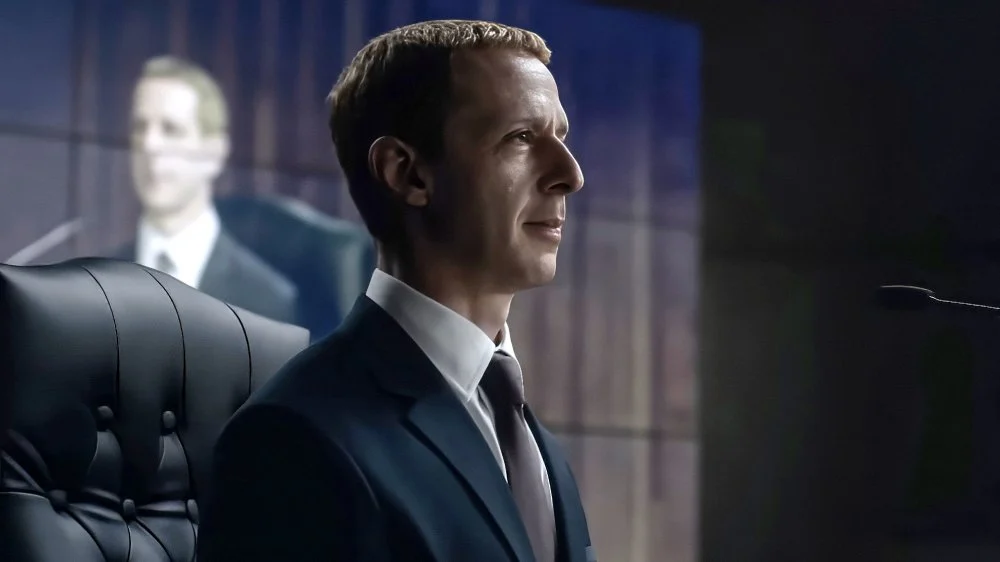
The autumn box office is officially entering its "spooky season," but the frights are not confined to the silver screen. For theater exhibitors, the current climate is a high-stakes thriller of its own, characterized by plummeting attendance and a desperate need for a breakout hit. As the industry attempts to recover from a disastrous October 2025—which saw record-low ticket sales and a series of high-profile flops—this weekend’s arrivals are tasked with a monumental challenge: reviving the theatrical experience for a fickle, post-pandemic audience.
The marquee features arriving in theaters this weekend offer a stark contrast in genre and intent. Sony Pictures is betting on prestige and controversy with The Social Reckoning, Aaron Sorkin’s latest deep dive into the corporate machinations of Silicon Valley, featuring Jeremy Strong as a cold, calculating version of Mark Zuckerberg. Opposite this cerebral drama is the visceral, campy horror of Other Mommy, starring Jessica Chastain. Together, these films aim to capture the disparate demographics of adult drama enthusiasts and horror aficionados, respectively, in a bid to stabilize a market that has been left reeling by the spectacular failure of recent tentpoles.
A Tale of Two Villains: The Breakdown of New Releases
The industry’s focus is currently split between the intellectual weight of The Social Reckoning and the pure genre thrills of Other Mommy.
The Social Reckoning, directed by Aaron Sorkin, arrives with a heavy burden of expectation. Acting as a "companion piece"—rather than a direct sequel—to the 2010 masterpiece The Social Network, the film centers on the internal rot of Facebook, following an engineer (played by Mikey Madison) who orchestrates a massive leak of sensitive documents. Jeremy Allen White portrays the journalist who breaks the story. Despite its pedigree, projections for its North American debut are modest, ranging from $7 million to $8 million.
This performance stands in stark contrast to the 2010 original, which opened to $22 million (not adjusted for inflation) and went on to gross $224 million globally. Sony has been careful to manage expectations, consciously distancing the film from its predecessor’s legacy. With a lean production budget of $30 million, the studio is not looking for a billion-dollar blockbuster, but rather a sustainable run that resonates with an adult audience—a demographic that has proven notoriously difficult to lure back to cinemas in the post-COVID era.
In contrast, Other Mommy is positioned as the weekend’s box office workhorse. Produced by horror maestro James Wan and directed by Rob Savage, the film is tracking for a $20 million opening from 3,200 theaters. With a shoestring production budget of $18 million, the film is already well-positioned to turn a profit. The narrative, which focuses on a paranormal entity assuming the guise of a mother, taps into the reliable appetite for high-concept horror that has consistently kept theaters afloat when other genres have floundered.
Chronology of a Slump: From Digger to the Present
To understand the stakes of this weekend, one must look at the recent, grim history of the box office. The industry is currently haunted by the failure of Digger, the Tom Cruise-led project that was expected to anchor the autumn schedule. Instead, Digger posted a catastrophic $8 million opening, a figure that has sent shockwaves through the studio system.
The chronology of this decline began in mid-October 2025, when a string of high-profile releases failed to connect. The cumulative effect of these misses created a vacuum in theater programming, leading to empty auditoriums and a loss of momentum that has persisted into the current month. The industry’s reliance on "legacy" stars—a strategy that has worked for decades—has hit a wall, as audiences increasingly signal that brand recognition is no longer enough to guarantee a ticket purchase.
With Digger now tracking toward a historic loss—having grossed only $20 million globally against a massive $160 million production budget—theater owners have been forced to take drastic measures. In a sign of desperation, exhibitors have opted to bring Christopher Nolan’s The Odyssey back to IMAX and 70mm screens. This move serves as a dual-purpose strategy: it fills the cavernous IMAX auditoriums that Digger failed to occupy, and it appeals to the cinephile demographic that remains the most loyal to the large-format experience.
Supporting Data: The Cold Hard Numbers
The current box office landscape is defined by a significant gap between expectations and reality. The following data points highlight the volatility of the current market:
- The Social Reckoning Baseline: While the film is projected to open at $7–8 million, its success will depend on long-term legs and critical reception. Reviews have been mixed; Variety’s critic, Guy Lodge, noted that the procedural drama—centered on the 2021 "Facebook Files"—feels "behind the curve," despite being "clever enough and true enough."
- The Horror Advantage: Other Mommy represents the "low-risk, high-reward" model. With an $18 million budget and a projected $20 million opening weekend, it is the most efficient asset currently in theaters.
- The Verity Holdover: Amazon MGM’s Verity, which took the top spot last weekend, is expected to see a 50% to 60% drop. Having earned $34 million domestically and $65 million worldwide, it serves as the current benchmark for moderate success in the thriller category.
- The Digger Disaster: With a budget north of $160 million, the film’s current global gross of $20 million marks it as one of the most significant financial failures of the decade. The 50% drop expected for its second weekend underscores the lack of positive word-of-mouth.
Official Responses and Strategic Shifts
Studio executives have been largely tight-lipped regarding the ongoing slump, but their actions reveal a strategic pivot. Sony’s decision to label The Social Reckoning a "companion piece" is a calculated move to avoid direct comparison with the Fincher-directed original. By managing the narrative, the studio hopes to lower the "prestige burden" that often sinks sequels that fail to reach the heights of their predecessors.
Furthermore, the decision by theater chains to re-release The Odyssey suggests a broader industry realization: the current slate of new releases is not enough to maintain the health of premium large-format (PLF) screens. As one exhibition insider noted, "If we don’t have a blockbuster, we have to leverage the back catalog. The audience for high-end, immersive cinema is there, but they aren’t coming out for original content that feels derivative or ‘safe.’"
Future Implications: Can the Industry Rebound?
The industry is now looking toward the horizon, pinning its hopes on a slate of upcoming releases that includes Paramount’s Street Fighter, Disney’s Whalefall, and the highly anticipated DC-inspired Clayface. These films represent a shift back toward established intellectual property, a strategy that the industry hopes will reset the baseline for audience engagement.
However, the implications of the current slump are profound. If the combination of The Social Reckoning and Other Mommy fails to move the needle, we may see a significant contraction in the number of films released in the final quarter of the year. Studios may choose to push their most expensive projects into 2026, effectively clearing the calendar to avoid the "October effect."
Ultimately, the box office is currently in a state of recalibration. The era of the "guaranteed hit" appears to be over, replaced by a more fragmented landscape where horror movies and niche dramas are forced to carry the weight previously held by global blockbusters. Whether this transition leads to a more sustainable, diverse ecosystem or a further retreat from theatrical exclusivity remains the central question for the industry as we head into the holiday season. The spooky season has begun, but for the executives on Wall Street and the owners of local cinemas, the true horror may be the math.
