
Silicon Valley Invades Hollywood: How ‘Artificial’ and ‘You Can See Everything’ Shook Up the 2027 Oscar Race
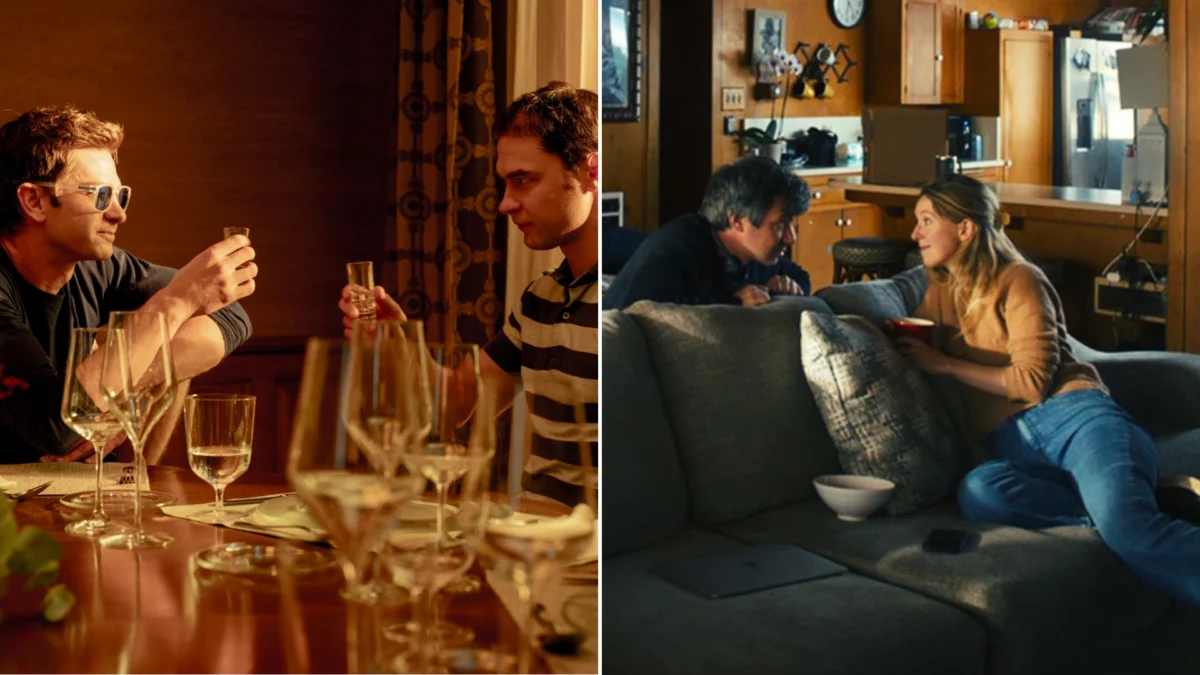
Main Facts
The 2027 Academy Awards race has officially entered uncharted waters as Big Tech and contemporary corporate corruption crash the Hollywood conversation. Fuelled by rapturous festival buzz, stellar critical notices, and shifting industry politics, two unique features—Luca Guadagnino’s OpenAI drama Artificial and the Nathan Fielder–Lance Oppenheim Elizabeth Holmes documentary-thriller You Can See Everything—have emerged as the most volatile and closely watched contenders on Gold Derby’s Best Picture leaderboard.

Both films have experienced massive upward surges over the past week, climbing to within striking distance of the elite 10-film Best Picture field. Artificial, which chronicles the turbulent founding of OpenAI with Andrew Garfield delivering a career-defining heel turn as Sam Altman, has jumped an extraordinary 13 percentage points following high-profile screenings in New York and Los Angeles. It currently occupies the No. 12 spot with a 25% statistical probability of securing a nomination.

Meanwhile, A24’s You Can See Everything has cemented its status as the best-reviewed film of the year. Co-directed by Nathan Fielder and Lance Oppenheim, the fly-on-the-wall feature captures disgraced Theranos founder Elizabeth Holmes in the tense, isolating weeks before her imprisonment. Holding a pristine 100% on Rotten Tomatoes and a staggering 97 on Metacritic, the film has climbed over 10 percentage points following its own bi-coastal showcases. It now sits at No. 14, boasting a near-14% chance at a historic achievement: becoming the first documentary ever nominated for Best Picture.

Chronology: From Festival Whispers to Industry Seismic Shifts
The trajectory of these two unexpected players underscores how modern awards campaigns are forged not just on studio lots, but through the crucible of corporate drama and viral festival receptions.

- Early Festival Season (New York and Los Angeles Screenings): Both Artificial and You Can See Everything quietly held private and festival-adjacent industry screenings in major metropolitan hubs, immediately setting off alarm bells—and waves of excitement—among critics and guild members.
- The Amazon MGM Fallout: The path to prominence for Artificial was paved by controversy. Originally developed under the Amazon MGM umbrella, the project was abruptly dropped by the studio—a move widely attributed to parent company Amazon’s cozy, multi-billion-dollar commercial and infrastructural partnerships with OpenAI.
- Neon Sweeps In: Sensing a cultural zeitgeist and a rare David-vs.-Goliath narrative, independent powerhouse Neon swiftly acquired Artificial, turning the film’s corporate rejection into a badge of honor and a potent marketing tool for the indie sector.
- The Current Surge: Following widespread critical rollouts and explosive review aggregates, both titles captured the attention of Gold Derby prognosticators, triggering dramatic upward movements on the Best Picture leaderboard and transforming niche industry talking points into mainstream awards frontrunners.
Supporting Data & Leaderboard Breakdown
While the top tier of the 2027 Oscar race is solidifying, the volatile middle and lower tiers of the Best Picture predictions are proving to be a bloodbath. According to current aggregate data from industry forecasters:

The Safe Zone (Top 6)
At this early juncture, the front-running pack appears virtually locked in. Pictures such as The Odyssey, La Bola Negra, Wild Horse Nine, The Debut, Project Hail Mary, and The Invite have won over both critics and early voting blocks. Each of these films enjoys a 90% or higher mathematical probability of securing a Best Picture nomination.

The Established Heavyweights
Sitting comfortably at No. 7 is Denis Villeneuve’s sci-fi epic Dune: Part Three. Though the film will not screen for voters until December, it commands an 89% chance of a nomination based on the immense goodwill and Academy pedigree of its two predecessors, both of which competed for the top prize.

The Chaotic Middle Field (The Battle for the Final Three Slots)
Beyond the top eight, the field fractures into a free-for-all. Blockbusters like Obsession and Michael are jockeying for position alongside festival darlings such as Elsinore, All of a Sudden, Fjord, I Play Rocky, and Club Kid. It is within this chaotic ecosystem that Artificial and You Can See Everything have carved out their momentum.

- Artificial (No. 12, 25% nomination probability): Gaining ground rapidly due to timely topicality.
- You Can See Everything (No. 14, ~14% nomination probability): Breaking traditional genre barriers as a documentary-style feature gunning for Academy history.
Official Responses and Industry Reactions
The intersection of real-world Silicon Valley titans and prestige Hollywood filmmaking has inevitably generated intense behind-the-scenes commentary.

Execs within major traditional studios have privately expressed awe—and a degree of apprehension—over Neon’s aggressive embrace of Artificial. By positioning the film as an unfiltered look at the ethical frontiers of artificial intelligence, Neon has tapped directly into the existential dread currently pervading the acting, writing, and directing guilds. Andrew Garfield’s transformation into Sam Altman has been praised by peers for avoiding caricature, instead presenting a chillingly plausible portrait of modern techno-authoritarianism.

On the other hand, A24’s handling of You Can See Everything represents a masterclass in guerrilla marketing. By pairing Nathan Fielder’s signature deadpan, hyper-methodological social observation with Lance Oppenheim’s documentary precision, the studio has forced the Academy to confront a long-standing structural bias: the unwritten rule that non-fiction features belong strictly in the Best Documentary Feature category. Prominent guild members have noted that the film’s cinematic framing, immersive sound design, and psychological depth push it far beyond traditional documentary boundaries, making a Best Picture push not just a publicity stunt, but a legitimate artistic argument.

Implications for the 2027 Academy Awards
The rise of Artificial and You Can See Everything carries profound implications for the future of Oscar campaigns and Hollywood’s relationship with corporate America.

- The Death of Timidity: For years, major studios shied away from producing content that directly criticized active corporate partners or reigning tech monopolies out of fear of corporate retaliation or distribution blacklists. Neon’s rescue of Artificial proves that independent distributors can thrive by leaning into controversy, turning corporate censorship into a badge of artistic integrity.
- Challenging Institutional Boundaries: If You Can See Everything successfully breaches the Best Picture barrier, it will shatter a glass ceiling that has kept documentary filmmaking cordoned off from the industry’s highest honor. This could permanently alter how hybrid non-fiction/narrative projects are submitted, marketed, and evaluated by Academy branches.
- The AI Anxiety Factor: As generative artificial intelligence continues to threaten traditional crafts across the entertainment industry, voters are increasingly looking for art that processes this trauma. Artificial provides a cathartic, ripped-from-the-headlines outlet for an industry grappling with its own obsolescence.
As the fall festival circuit transitions into the grueling winter awards campaigning season, the question is no longer whether Big Tech and modern corporate scandals can infiltrate the Academy Awards—they already have. The real question is whether traditional Oscar voters will be bold enough to reward these disruptive reflections of our digital age when nomination ballots are cast.
