
Beyond the Binary: How James Ortiz Crafted the Soul of Rocky in "Project Hail Mary"
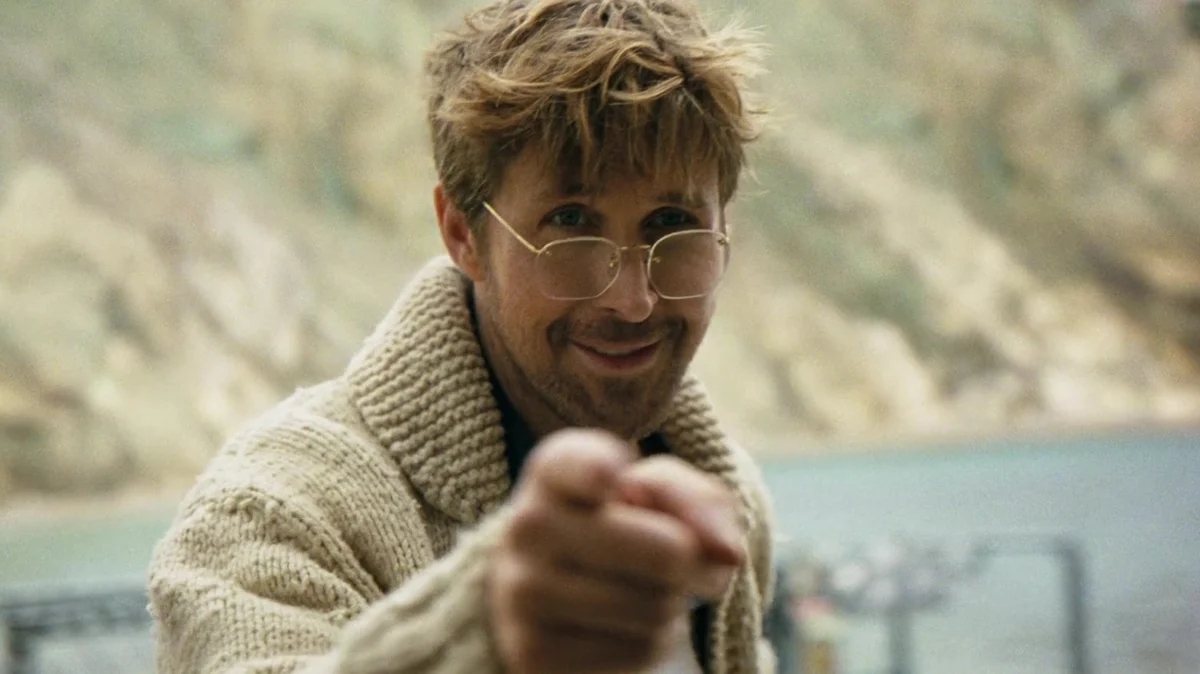
In the landscape of modern science fiction cinema, few relationships have resonated as profoundly with audiences as the bond between Dr. Ryland Grace—played with frantic, intellectual charm by Ryan Gosling—and his extraterrestrial counterpart, Rocky. Based on Andy Weir’s best-selling novel and directed by the visionary duo of Phil Lord and Christopher Miller, Project Hail Mary has been lauded as a masterclass in genre storytelling. Yet, the film’s emotional anchor rests on a technical and artistic tightrope: the portrayal of an alien engineer who communicates through musical chitters, filtered through a computerized translator.
Central to this achievement is actor and puppeteer James Ortiz. In an exclusive interview, Ortiz revealed that the success of the character was not merely a matter of technical execution, but a hard-fought battle to ensure that Rocky transcended the role of a traditional sci-fi "sidekick." By meticulously balancing the constraints of a mechanical translator with the raw vulnerability of a grieving friend, Ortiz turned a four-foot, stone-like tarantula into one of the most compelling characters of the decade.
The Anatomy of an Alien: Establishing the Foundation
The premise of Project Hail Mary is a high-stakes survival narrative. Dr. Ryland Grace awakens on a starship with no memory of his identity or mission, only to discover he is humanity’s last hope. He soon encounters Rocky, an intelligent alien from the Eridani system. Because their biologies and languages are fundamentally incompatible, Rocky’s speech is mediated by a computer interface.
For James Ortiz, the challenge was twofold. First, he had to provide the physical puppeteering that gave Rocky his distinct, skittering presence. Second, he had to provide a vocal performance that felt alien enough to be believable, yet human enough to be empathetic.
"I was really hellbent on making sure that Rocky just wasn’t a punchline or a sidekick," Ortiz explained. "There is a tendency in high-concept sci-fi to use the alien as a plot device—a tool for the human protagonist to utilize. I wanted to ensure that Rocky had his own agency, his own intellectual growth, and his own emotional landscape."

A Chronology of Collaboration: From Concept to Catharsis
The development of Rocky’s arc was an iterative process that spanned the duration of the film’s production. Initially, the script focused heavily on the mechanics of their survival—the science of the mission. However, as the production moved into the ADR (Additional Dialogue Recording) phase, the filmmakers and Ortiz began to refine the character’s arc through the lens of their evolving friendship.
The defining moment of this creative journey occurred during the filming of a critical, late-act scene. Dr. Grace, faced with the reality of his impending death, attempts to shut himself away from the emotional toll of the mission. Rocky, witnessing his friend’s despair, must intervene.
Initially, the lines written for this scene leaned into overt emotionalism. "I remember the first pass," Ortiz recalled. "It was something like, ‘Rocky will not watch Grace die.’ It was emotional, but it felt wrong for the ‘operating system’ of the character. It felt too human, too melodramatic, and it broke the logic of the computerized translator."
Ortiz admitted that the disconnect between the scene’s emotional necessity and the character’s established linguistic constraints kept him awake at night. The pressure to get the beat right was immense; if the line felt "too human," the audience would lose the illusion of the alien character. If it felt "too robotic," the friendship would lose its stakes.
The Three-AM Epiphany: Refining the Dialogue
The breakthrough came in the middle of the night. After days of ruminating on the limitations of the translator, Ortiz realized that the solution lay in the language they had already established throughout the film.

"I sprang out of bed at 3:00 AM," Ortiz said. "I texted Phil [Lord] and Chris [Miller] immediately. I asked, ‘What if earlier he says, "Could not fix" regarding the ship? What if here, we say, "Grace say Grace will die. Rocky fix?"’"
This small, subtle adjustment proved to be a stroke of narrative genius. By repurposing the phrase "Rocky fix"—a recurring motif throughout the film that usually referred to engineering repairs—into an existential promise to save his friend, the line gained a weight that transcended simple grammar.
"It did a couple of things that made me so happy," Ortiz explained. "It showed that Rocky had moved from a place of mourning and pain to a place of proactive love. It demonstrated that he was applying his engineering mindset to his friend’s life. It was simple, it was logical, and it was perfectly in character."
Implications: The Evolution of Voice Acting
The collaborative nature of Project Hail Mary represents a significant shift in how voice and puppetry performances are treated in blockbuster filmmaking. Typically, a puppeteer might be brought in for a short window of time, providing a performance that is then replaced or heavily altered by CGI and post-production voice-over work.
However, Lord and Miller fostered an environment where improvisation and "on-the-day" brainstorming were encouraged. Ortiz noted that this level of input is rare for a project of this scale. "That doesn’t normally happen on a job like this, where you’re a puppet in a film who normally shoots for three days and that’s it," he noted.

This environment allowed Ortiz to treat Rocky not as a digital puppet, but as a lead actor. The result is a performance that feels cohesive, regardless of whether the audience is looking at a physical puppet or a CGI-enhanced frame. It serves as a strong argument for the inclusion of voice and puppetry work in major award categories. While the Academy of Motion Picture Arts and Sciences has historically been hesitant to recognize voice acting, performances like Ortiz’s underscore the depth of craft involved in bringing non-human characters to life.
Why Project Hail Mary Stands Out
The film’s success—which has seen it hailed by critics and fans alike as one of the best sci-fi movies in recent memory—is a testament to the balance between high-concept physics and low-concept, human-centered emotional storytelling. By allowing the alien character to grow, learn, and express complex emotional states through his own unique linguistic prism, the filmmakers avoided the "sidekick trap."
Rocky is not just a companion; he is the mirror in which we see the best parts of Dr. Grace. Through James Ortiz’s meticulous, sleepless nights of refining dialogue and his dedication to the "operating system" of his character, Project Hail Mary transformed from a space-survival thriller into a profound exploration of empathy across the stars.
As the film continues to find new audiences on platforms like Prime Video and Fubo, the legacy of Rocky as a fully realized character is secured. James Ortiz may not have a golden statue on his mantle yet, but in the annals of sci-fi history, he has achieved something arguably more significant: he made an audience fall in love with a rock-like tarantula, proving that in the vast, cold reaches of space, it is our willingness to "fix" one another that truly matters.
