
Neon Acquires Yuval Abraham and Rachel Szor’s Explosive Documentary ‘Naza’ as It Sweeps Awards Season and Crosses Box Office Milestones
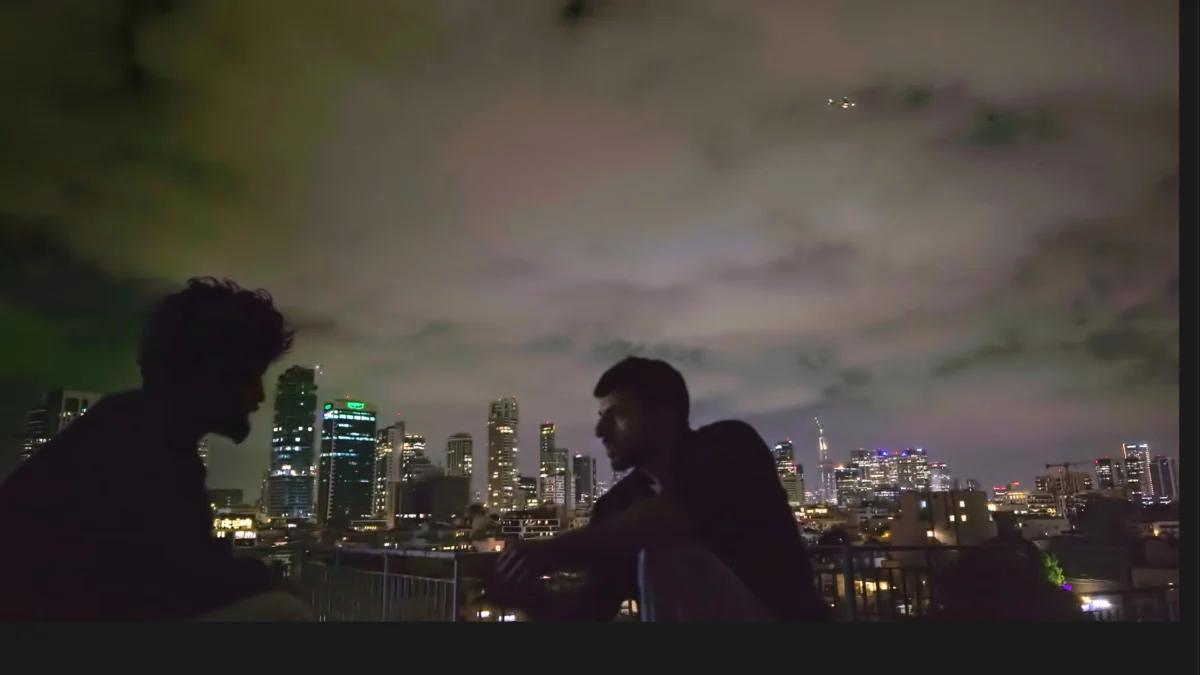
By the GoldDerby News Desk
Updated October 21
Main Facts
Independent cinema has found a new heavyweight champion as Neon officially boards Naza, the incendiary, critically acclaimed documentary directed by Yuval Abraham and Rachel Szor. Announced on Wednesday, the acquisition marks a major turning point for a film that has taken the international festival circuit and the domestic box office by storm. Until now, Naza had operated entirely without a U.S. distributor, relying on a grassroots rollout that has nonetheless propelled the feature past $800,000 at the domestic box office and nearly $7 million worldwide.

Under the newly minted partnership, Neon will work in tandem with the filmmakers to significantly expand the documentary’s theatrical footprint across North America. A Neon spokesperson didn’t mince words regarding the film’s magnitude, calling it “one of the best films of the year” and putting it in the rare company of landmark sociopolitical documentaries such as Laura Poitras’s Citizenfour and Joshua Oppenheimer’s The Act of Killing.
Clocking in with a devastating premise, Naza features stark, clinical interviews with 24 Israeli intelligence members discussing their roles in remote killings of Palestinian civilians in Gaza. The film’s title is derived from nezek agavi—a Hebrew military acronym for “collateral damage” used by intelligence officers to calculate expected civilian casualties during airstrikes. Co-produced by The Guardian and executive produced by Academy Award-winning filmmaker Jonathan Glazer (The Zone of Interest) alongside his longtime producer James Wilson, the film has quickly transformed from an underground festival sensation into a defining piece of modern cinema.

Chronology of an Independent Phenomenon
The journey of Naza from a quiet production shot on Tel Aviv rooftops to an international lightning rod is marked by rapid-fire milestones:
- September 24: Initial coverage of the project establishes anticipation as the fall festival circuit approaches.
- September 25: The release of the film’s striking two-minute trailer—featuring nighttime rooftop footage of drone strikes in real time—ignites global discourse.
- September 26: Naza makes its highly anticipated North American premiere at the New York Film Festival.
- September 30: The documentary opens theatrically at the IFC Center in New York, initiating an independent U.S. rollout that eventually scales to 85 theaters across 30 cities.
- October 21: Neon announces its official acquisition of the documentary, guaranteeing a massive expansion and paving a clear path toward the upcoming awards season.
Supporting Data and Box Office Metrics
Despite entering the North American market entirely unmoored from a major studio or specialized distributor—a stark contrast to Abraham and Szor’s previous directorial effort, No Other Land, which famously struggled to secure traditional distribution—Naza has shattered expectations for documentary profitability.

- Box Office Performance: The film has grossed over $800,000 domestically and amassed nearly $7 million worldwide. Overseas, it has secured theatrical distribution deals in more than 50 countries.
- Critical Acclaim: At the Venice Film Festival, Naza made history by capturing a staggering 25-minute standing ovation—believed to be a record for modern film festivals. Competing as the sole documentary for the Golden Lion, it walked away with a Special Jury Prize.
- Aggregated Scores: The film holds a near-flawless 96 rating on Metacritic and a 100% Tomatometer rating on Rotten Tomatoes, making it the best-reviewed non-fiction feature of the festival season.
- Festival Circuit Dominance: Beyond Venice, Naza claimed the Audience Award at San Sebastián, the Critics Prize at the Hot Springs Documentary Film Festival, and a coveted spot on the Doc NYC Short List. It has also picked up three major nominations at the Critics Choice Documentary Awards, including Best Documentary.
Official Responses and Growing Controversy
While critics and festival audiences have praised Naza for its piercing aesthetic and unflinching gaze into the mechanics of modern warfare, the film has drawn ferocious pushback from the Israeli government and political figures.
Prime Minister Benjamin Netanyahu has publicly called for directors Yuval Abraham and Szor to be stripped of their Israeli citizenship and slapped with heavy defamation fines, suggesting that statutory penalties for defamation be ratcheted up "twentyfold." Meanwhile, the Israel Defense Forces (IDF) announced plans to assemble a multi-agency "team of experts" to strategize a counter-offensive against the film’s narrative. The military officially released a statement slamming Naza as "a distorted, misleading and disingenuous picture."

The backlash has spilled over dangerously into the personal lives of the filmmakers. Far-right political actors staged demonstrations outside the home of Szor’s parents, where speakers reportedly called for the directors’ execution. Speaking on The New York Times podcast The Daily, Abraham revealed that the threats have escalated to the point where their families are begging them not to return home.
"We want to go back home to Israel, but we cannot go back right now," Abraham stated.

Conversely, the artistic community has rallied around the directing duo. More than 1,000 Israeli filmmakers have signed an open petition expressing solidarity with Abraham and Szor, emphasizing their right to creative expression and political critique.
Implications for Awards Season and Industry Standards
With Neon now steering its distribution ship, Naza is positioned as an absolute juggernaut heading into the 2027 awards race.

Currently sitting comfortably at the top of Gold Derby’s combined Oscar odds for Best Documentary Feature, the film looks to replicate the success of Abraham and Szor’s 2024 collaborative project, No Other Land, which won the Academy Award for Best Documentary Feature at the 2025 Oscars. That previous victory served as a definitive signal that Oscar voters were willing to confront the geopolitical realities of Israel and Palestine directly, brushing aside the coordinated industry backlash that targeted executive producer Jonathan Glazer following his incendiary acceptance speech at the 2024 ceremony.
The acquisition also raises a tantalizing industry question: Can a documentary finally break the Best Picture barrier? While no non-fiction feature has ever secured a Best Picture nomination in Academy history, industry analysts note that if Naza sustains its current level of cultural resonance, critical adoration, and commercial momentum under Neon’s promotional might, it just might be the film to rewrite the history books.
