
The Anatomy of Discomfort: Richard Gadd’s Half Man Tests the Limits of Character-Driven Television

Main Facts: Stepping Out of the Autobiography Shadow
When Richard Gadd burst onto the global entertainment landscape with Baby Reindeer, the industry recognized a rare phenomenon: a creator who had successfully translated an intensely specific, deeply harrowing personal trauma into a universally resonant, culturally seismic piece of television. Streaming platforms are perpetually flooded with high-concept hooks and calculated algorithm-pleasing narratives, but Baby Reindeer succeeded because of its raw, bruising authenticity. It was a story born from real life.
However, television history is littered with brilliant autobiographical breakout artists who stumble when forced to pivot away from their own lives. Enter Half Man, Gadd’s follow-up project starring Jamie Bell alongside Gadd himself. Premiering to intense industry scrutiny, Half Man ditches the safety net of direct autobiography to answer a fundamental screenwriting question: Can a creator build something monumental purely out of imagination, or does great art require the crutch of lived experience?
The pilot episode introduces Niall, a mild-mannered man on the verge of getting married. In a jarring opening sequence, his friend—or perhaps brother—Ruben drags him into a private room at his own wedding reception and brutally beats him. The narrative then cuts back 20 years to explore the twisted, volatile dynamic of their shared youth, raising critical questions about plot, character, and the delicate equilibrium required to sustain a modern television series.
Chronology: From the Genesis of Baby Reindeer to Half Man
To understand the creative architecture of Half Man, one must trace the timeline of Gadd’s ascent and the unique hurdles of post-breakout television writing:
- The Baby Reindeer Era (Pre-2024): Gadd navigates years of personal trauma involving stalking, identity, and abuse. He processes these events first through a critically acclaimed Edinburgh Fringe Festival stage show, followed by the global Netflix phenomenon that dominates cultural conversations.
- The Creative Crossroads (2024–2025): Following his Emmy-winning triumph, Gadd faces the ultimate test for any breakout creator: how to write a sophomore project without drawing directly from personal diary entries.
- The Conception of Half Man (Late 2025): Gadd develops a story centered on two half-brothers whose lives intertwine in a toxic mix of love, resentment, and psychological manipulation.
- Production and Casting (Early 2026): Production begins, casting Jamie Bell alongside Gadd to explore a gritty, character-first dynamic set across multiple timelines.
- The Premiere and Industry Reaction (Mid 2026): Half Man debuts, sparking immediate debate among critics, screenwriters, and viewers regarding the absence of a traditional, plot-driven engine versus the sheer intensity of its character work.
Supporting Data: Box Office Trends and Narrative Mechanics
The broader television and film ecosystem provides a fascinating backdrop to the release of Half Man. Recent box office triumphs—such as The Devil Wears Prada 2 pulling in a remarkable $77 million on a modest budget—highlight a broader industry correction. After years of Hollywood attempting to force female demographics into traditionally male-dominated genre formulas (such as Star Wars or heavy-handed comedy reboots), studios are successfully leaning into distinct, gender-targeted curation. Hits like Wicked, Wuthering Heights, The Housemaid, and It Ends With Us demonstrate that distinct audience appeals yield massive financial dividends.
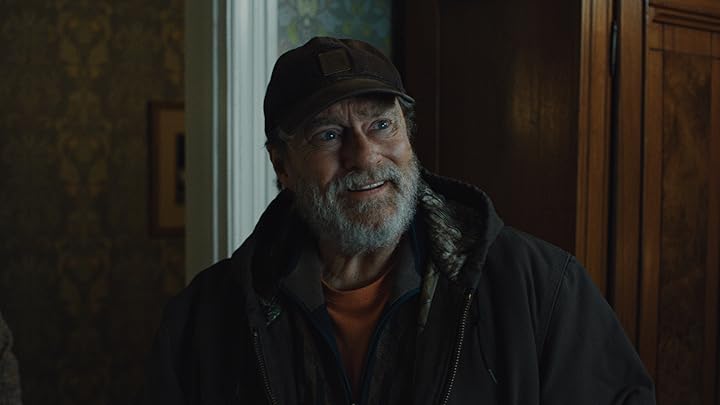
Yet, on the prestige television side, the financial and creative stakes are entirely different. Half Man enters a streaming market dominated by high-plot conceptual giants like Apple TV’s Widow’s Bay—a series boasting a clear, externalized premise featuring a sleepy island town besieged by ghosts, forcing a skeptical mayor into a massive tourist-driven cover-up.
By contrast, Half Man operates on a micro-budget of psychological tension:
- Total Episode Count: 8 episodes.
- Estimated Scene Count: Approximately 25 scenes per episode, totaling roughly 200 scenes across the season.
- The Core Conflict Engine: 200 scenes primarily driven by the interpersonal friction and shifting power dynamics between two conflicted half-brothers, largely devoid of a grand, externalized plot engine.
Official Responses and Industry Perspectives
Critical and creative commentary surrounding Half Man has centered on the eternal screenwriting debate: Is it possible to write something great with only strong plotting or only strong character creation, or do you need both?
Industry insiders and veteran screenwriters point out that basing narratives on real life drastically reduces the friction of early draft writing. Generic placeholder characters—the curse of many first-time specs—are naturally replaced by authentic behavioral quirks when an author draws from memory. For instance, the polarizing, unpredictable trans narrative threads in Baby Reindeer only worked because they organically mirrored Gadd’s lived reality; in a purely fictionalized stalking thriller, such left turns might have felt contrived. Even the eccentric title, Baby Reindeer, stemmed directly from the literal moniker used by Gadd’s real-life stalker.
When stripping away autobiography to create Half Man "out of nothing," critics note that Gadd’s signature superpower—the ability to generate agonizing discomfort—remains intact. Reviewers have highlighted standout sequences, such as a harrowing moment where Niall is forced to witness Ruben engaging in sexual intimacy in the adjacent bed, ultimately manipulating the situation to facilitate Niall’s own awkward sexual awakening.
However, industry analysts remain divided. While the psychological realism is undeniable, many argue that character conflict alone cannot structurally support an eight-episode television arc without a robust, overarching plot.
Implications: The Future of Prestige Television Writing
The reception of Half Man carries significant implications for how writers approach original content in an era of fractured media landscapes:
- The Autbenticity Trap: Writers who break out with autobiographical projects face an uphill battle when transitioning to pure fiction. Without real-life anchors, creators risk subconsciously falling back on familiar, overused cinematic tropes.
- Plot Versus Character Equilibrium: The consensus emerging from Half Man is that great storytelling demands an airtight marriage of both plot and character. When a show relies exclusively on character friction without a driving external story, pacing suffers, and audience fatigue can set in.
- The Value of Emotional Resonance: Despite structural criticisms, Half Man proves that television can still evoke visceral, physical reactions from viewers. In a media landscape oversaturated with safe, predictable, and ultimately forgettable content, the willingness to make an audience deeply uncomfortable remains a rare and valuable commodity—even if it leaves viewers questioning whether they are willing to sign up for a second season.
