
The Uncanny Landscape: How ‘Flock’ Redefines the Welsh Short Film
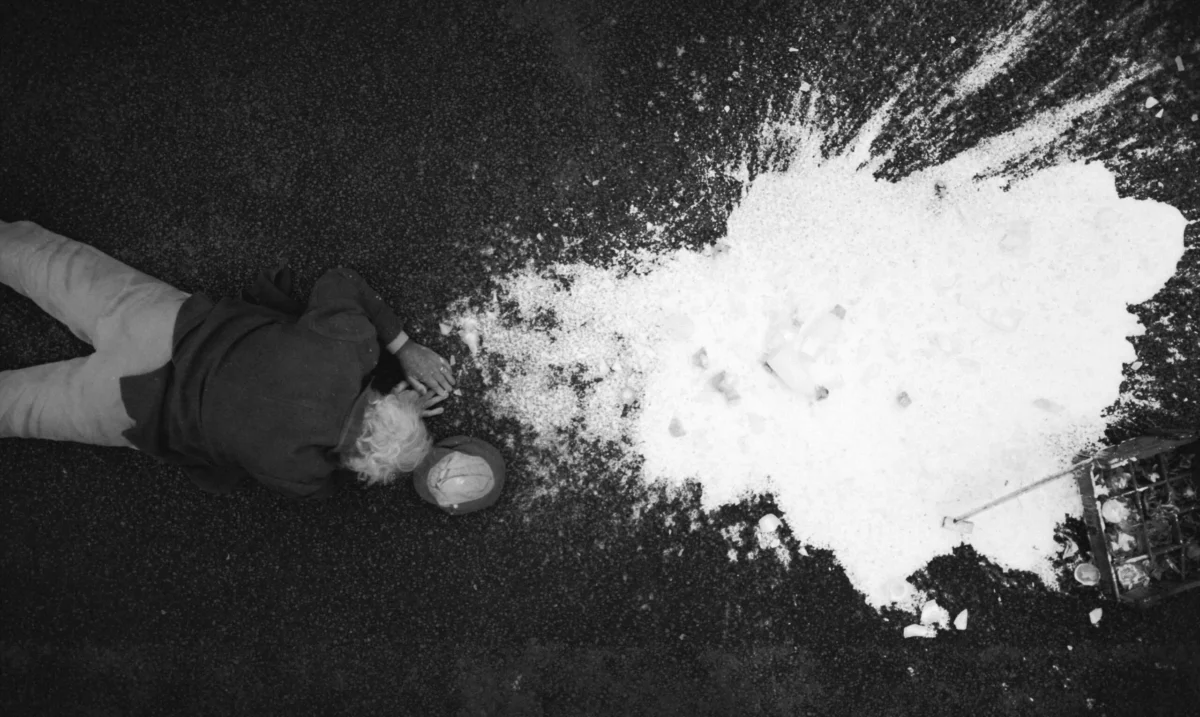
In the landscape of contemporary independent cinema, short films are often treated as mere calling cards—brief exercises in narrative economy meant to pave the way for feature-length ambitions. However, director Mac Nixon’s latest project, Flock, arrives as a defiant exception to this rule. Backed by the prestigious BFI and Film4 "Future Takes" initiative, Flock is not merely a short film; it is a masterclass in atmospheric tension, technical ambition, and cultural subversion. Through a surreal, black-and-white lens, Nixon explores the intersection of rural livelihood, supernatural dread, and the problematic tropes that have long defined the cinematic representation of Welsh identity.
The Architecture of Unease: A Study in Suspense
From its opening sixty seconds, Flock announces itself as a film operating strictly on its own terms. As grainy, archival footage of sheep flickers across the screen, set against an eerie, tension-building score, the audience is immediately thrust into an atmosphere that feels simultaneously pastoral and deeply sinister. Within ninety seconds, Nixon delivers a sequence that will likely stand as one of the most striking cinematic set-ups of the year: an extraordinary long take capturing the inexplicable, total disappearance of an entire flock.
This is filmmaking that understands the profound power of withholding information. By allowing an image to linger just long enough, Nixon forces the viewer to confront the uncanny nature of the ordinary. The silence that follows the disappearance is not merely a lack of sound, but a narrative vacuum, compelling the audience to fill the space with their own anxieties. It is a bold, confident opening that suggests a director in complete command of his visual language—one who values the slow burn of psychological horror over the cheap thrills of conventional jump scares.
The "Blockbuster Short": Technical Prowess and Aesthetic Vision
Nixon has frequently described Flock as a "blockbuster short film," a term that, while perhaps oxymoronic in the traditional sense, perfectly captures the sheer scale of his vision. Supported by the Future Takes scheme—a fund specifically designed to foster innovative and ambitious storytelling—Nixon utilizes the resources at his disposal to craft a cinematic experience that defies the budget limitations typically associated with short-form content.
The film’s aesthetic is a deliberate choice: stark, high-contrast black and white photography that elevates the Welsh landscape into something almost mythic. This is not a stylistic flourish designed for visual vanity; it is an integral component of the film’s world-building. By stripping away the color of the verdant Welsh hills, Nixon highlights the textures of the land—the jagged rock faces, the encroaching fog, and the isolation of the community.
The film’s set pieces are meticulously orchestrated, blending impressive practical effects with a keen sense of scale. In a scene where the livestock vanish, the choreography of the cinematography suggests a grand, unfolding disaster. This technical prowess serves a greater purpose: to anchor the film’s surreal premise in a physical, tangible reality. The audience is invited to believe in the impossible because the mundane world surrounding it is rendered with such grit and authenticity.
The Genesis of the Story: From Chernobyl to Cultural Critique
The narrative of Flock is rooted in a strange, historical intersection. As Nixon has revealed, the initial seed of the idea was planted by accounts of how the fallout from the Chernobyl disaster—and the subsequent irradiated weather patterns—impacted Welsh sheep populations. The historical trauma of the 1980s, where Welsh farmers found their livestock contaminated and their livelihoods decimated by invisible, foreign forces, serves as the thematic bedrock of the film.
However, as the project evolved, the focus shifted. What began as a historical meditation on rural catastrophe gradually transformed into a broader inquiry: "How does a community react when their livelihoods are suddenly, inexplicably taken away from them?"
This question brings us to the core of the film’s sociological ambition. Nixon was motivated by a deep-seated frustration with the way Welsh life is frequently portrayed in the media. He posits that there is a persistent, lazy tendency to depict the Welsh as "simple people with simple problems who all come together in a crisis and go home happy." This trope, which simplifies the complexities of regional identity into a cozy, digestible folk-tale, is exactly what Flock aims to dismantle.
Challenging the "Simple Life" Narrative
In Flock, the supernatural mystery is a vessel for a much more grounded, gritty reality. By placing a surreal event into the middle of a Welsh community, Nixon is not looking for a "happily ever after." Instead, he uses the genre elements of horror and suspense to mirror the cracks in the social fabric.
The "simple life" is a myth that often masks systemic neglect and the intense pressure of isolation. By resisting the comforting resolutions that audiences have come to expect, Nixon forces the viewer to sit with the ambiguity of the situation. There is no easy return to normalcy; there is only the aftermath. The film suggests that the real horror is not the disappearance of the sheep, but the way a community is forced to grapple with its own identity when the foundation of its existence is pulled out from under it.
Supporting Data and Production Context: The Future Takes Initiative
The success of Flock cannot be separated from the BFI and Film4’s Future Takes program. This initiative was created to address a perceived stagnation in the British short film market, providing not just financial support, but the creative freedom to take risks. For Flock, this meant the ability to prioritize the film’s unique aesthetic vision over the pressure to produce a traditional narrative arc.
Data regarding the project’s production highlights the meticulous nature of its creation. While exact budget figures remain proprietary, the resources allocated under the Future Takes umbrella allowed for a shooting schedule that prioritized natural lighting conditions and the use of practical, on-location effects. This commitment to "in-camera" storytelling contributes to the film’s visceral, grounded feel, separating it from projects that rely too heavily on post-production visual effects.
Implications for Future Filmmaking
Flock serves as a powerful argument for the importance of regional storytelling. By rooting the film in the specificities of Welsh life—the weather, the geography, the historical echoes of the land—Nixon demonstrates that the most universal stories are often those that are the most locally specific.
The implications for the industry are significant. As streaming platforms continue to demand high-concept, genre-driven content, there is a danger that unique regional voices will be sanded down to fit a global, homogenized mold. Flock proves that it is possible to maintain a "blockbuster" scale while simultaneously challenging the cultural stereotypes that global audiences might hold.
For aspiring filmmakers, the film is a masterclass in intent. It shows that you do not need a massive feature-length runtime to make a lasting impact. You need a singular vision, a clear understanding of your thematic objectives, and the courage to refuse the easy, comfortable ending.
Conclusion: A New Direction for the Welsh Short
Ultimately, Flock is a dark, haunting folktale for the modern age. It is a work that demands to be seen and discussed, not just for its technical achievements, but for its uncompromising refusal to play into the hands of conventional tropes. Mac Nixon has crafted something that feels both ancient and contemporary—a film that lingers in the mind long after the screen goes dark.
As we look toward the future of British cinema, Flock stands as a beacon. It confirms that when filmmakers are given the space to explore the specificities of their own communities, they can create work that transcends the limitations of its format. It is a reminder that the most compelling stories are not always the ones that offer us safety; they are the ones that force us to look at the landscape we inhabit and realize that we never truly knew it at all. In the silence of the Welsh hills, Nixon has found a story that is as vast, as unsettling, and as profound as the land itself.
