
The Astra-Spark Alliance: Redefining the Future of Content Creation at MIPCOM 2026
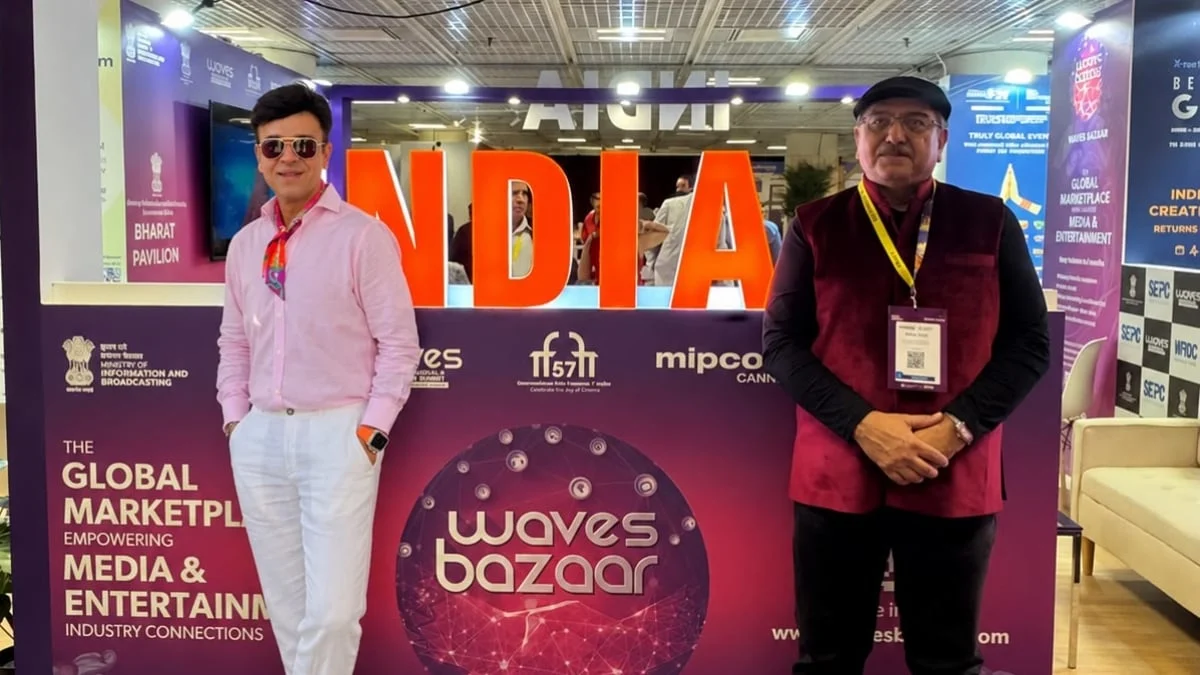
At the prestigious MIPCOM 2026 in Cannes, a seismic shift occurred in the landscape of digital media production. Astra Studios, the Hombale Group-backed powerhouse, and VerSe Innovation, the parent company of India’s digital giant Dailyhunt, announced the formation of the Astra-Spark Alliance. This strategic partnership aims to bridge the gap between human creative intuition and the raw, transformative power of Artificial Intelligence, promising to overhaul how films, series, animation, and brand content are conceived, produced, and distributed.
The alliance is anchored by the launch of AstraLabs—Astra Studios’ dedicated technology and IP arm—and centers on the implementation of SparkStation, an AI-native content operating system developed by VerSe Innovation. By merging high-end cinematic craftsmanship with a sophisticated AI pipeline, the partners claim they can reduce production costs by up to 75% and condense production timelines from months to mere weeks.
The Core Innovation: Solving the "Continuity Crisis"
For years, the promise of AI in filmmaking has been hampered by a single, stubborn obstacle: visual inconsistency. While generative AI models have excelled at creating striking static images or short, surreal clips, they have historically struggled to maintain "persistence of vision"—the ability to keep characters, costumes, locations, and props consistent across multiple shots or long-form narratives.
The Astra-Spark Alliance addresses this through the SparkStation architecture. Unlike standalone AI tools that handle isolated tasks, SparkStation functions as a comprehensive operating system for the entire production lifecycle.
The Continuity Engine
At the heart of the platform lies a proprietary "continuity engine." This system acts as a digital anchor, locking facial features, emotional expressions, wardrobe textures, and architectural details across an entire production. By routing specific tasks to a curated array of global AI models, the system ensures that a character appearing in a wide shot remains indistinguishable from the same character in a close-up, regardless of the lighting or camera angle.
End-to-End Pipeline
The workflow is designed to be truly "AI-native," covering every stage of the production funnel:
- Ideation and Pre-production: Automated scripting, storyboarding, and asset generation.
- Production: Multi-angle shot generation, dialogue syncing, and music composition.
- Post-production: Intelligent editing, captioning, and final rendering.
- Distribution: Native integration and formatting for global platforms, supporting over 60 languages with seamless exports to industry-standard software like Adobe Premiere, Final Cut Pro, and DaVinci Resolve.
Chronology of the Development
The genesis of this alliance reflects a growing trend of "creative-tech" convergence in the Indian media landscape, which has increasingly become a global hub for VFX and animation services.
- Early 2025: Astra Studios, under the leadership of Biren Ghose (formerly the India country head of Technicolor Creative Studios), begins internal exploration into bridging high-end VFX workflows with generative AI to combat rising production costs.
- Late 2025: VerSe Innovation, leveraging its success with platforms like Dailyhunt and Josh, pivots its technological focus toward Nexverse.ai, refining its AI-content OS, SparkStation.
- Q1 2026: Initial discussions between Astra Studios and VerSe Innovation reveal a shared vision: the need for an industrial-grade AI pipeline that respects the artistic integrity of film and television.
- October 2026 (MIPCOM): The official unveiling of the Astra-Spark Alliance. The companies announce that the partnership is already active, with AstraLabs serving as the testing ground for a slate of original IP that will demonstrate the pipeline’s efficacy.
Supporting Data and Technical Architecture
The claims made by the alliance are bold, but they are supported by a unique operational model that combines Astra’s creative pedigree with VerSe’s massive, local-language tech infrastructure.

AstraLabs: The Creative Crucible
AstraLabs is not merely a software developer; it is an R&D hub focused on "shot construction." By integrating final refinement stages into the AI workflow, the company ensures that human directors, cinematographers, and animators remain the architects of the story. The AI is positioned as a sophisticated instrument—a tool that executes the vision of the artist rather than replacing the artist entirely.
The Cost-Efficiency Paradigm
The reduction of production costs by 75% is attributed to the elimination of redundant manual labor in asset generation. By automating the creation of secondary assets—such as background characters, environmental textures, and localized dialogue dubbing—the budget is redirected toward high-value creative decisions. Furthermore, the ability to work in over 60 languages simultaneously allows producers to aim for global distribution from day one, drastically increasing the Return on Investment (ROI) for independent and large-scale projects alike.
Official Perspectives
The vision behind the alliance is rooted in the belief that we are entering a new "aesthetic age."
Biren Ghose, Founder and CEO of Astra Studios
"The next aesthetic age will be shaped by the people who bring imagination and intelligence into the same creative workflow," Ghose stated during the announcement at Cannes. "The Astra-Spark alliance puts cinematic craft inside the architecture of AI production. We are inviting producers, broadcasters, and brands everywhere to build their next stories with us."
Ghose’s transition from the world of Technicolor—where he oversaw massive-scale VFX pipelines—to the head of Astra Studios signals a shift in his philosophy: the future of high-end visual storytelling lies in the democratization of production tools, provided those tools are governed by experienced creative leadership.
Umang Bedi, Founder and CEO of VerSe Innovation
Umang Bedi, whose leadership at VerSe has prioritized hyper-local, high-volume content, views the alliance as a barrier-breaker. "We are collapsing the distance between imagination and production so that extraordinary stories are no longer limited by budgets, geographies, or languages," Bedi noted. "At Cannes, we are not unveiling a vision of tomorrow. We are signing the deals that make it real today."
Implications for the Global Media Industry
The Astra-Spark Alliance poses significant implications for the future of the media and entertainment industry, particularly for independent creators and global brands.
1. The Democratization of High-End Production
Traditionally, high-quality animation and VFX were reserved for projects with massive budgets. The Astra-Spark pipeline effectively lowers the barrier to entry, allowing mid-sized studios and indie creators to produce content that rivals the visual fidelity of major studio releases.

2. A New Business Model for IP
The alliance offers three specific ways for external partners to engage:
- Co-production: Partnering with Astra/VerSe on original IP.
- Commissioning: Utilizing the alliance to produce films, series, or branded content.
- Licensing: Integrating the SparkStation OS into existing studio pipelines.
This flexibility suggests that the alliance is positioning itself as a platform-as-a-service (PaaS) entity, potentially challenging traditional production houses that rely on slow, labor-intensive workflows.
3. The Future of Globalized Content
With native support for 60+ languages and automated localization, the alliance is perfectly positioned to capture the "global-local" content market. Stories that were previously considered too niche due to linguistic or cultural barriers can now be produced and localized for worldwide audiences with unprecedented speed.
4. Labor and Artistic Integrity
While the 75% cost reduction is a headline-grabbing figure, it raises valid questions about the future of the animation and VFX workforce. However, the alliance maintains that by shifting the focus from "labor-intensive tasks" to "creative direction," the industry will see a rise in new roles, such as AI-Prompt Cinematographers and Narrative Architects. The goal is not to eliminate the human element, but to redefine it as the central node of the production engine.
Conclusion
The Astra-Spark Alliance marks a pivotal moment in the digital transformation of storytelling. By successfully solving the technical riddle of visual continuity and wrapping it in a professional-grade production OS, the partnership is effectively turning the AI hype cycle into a tangible, industrial reality.
As AstraLabs prepares to roll out its initial slate of properties, the industry will be watching closely to see if the "SparkStation" can truly deliver on its promise. If successful, the collaboration between Astra Studios and VerSe Innovation may well be remembered as the moment the film industry moved beyond the constraints of traditional budgeting and into an era of limitless, AI-augmented imagination.
