
Defying the Odds: How an Amateur 180-Page Period Script Smashed Its Way Into the Top 25
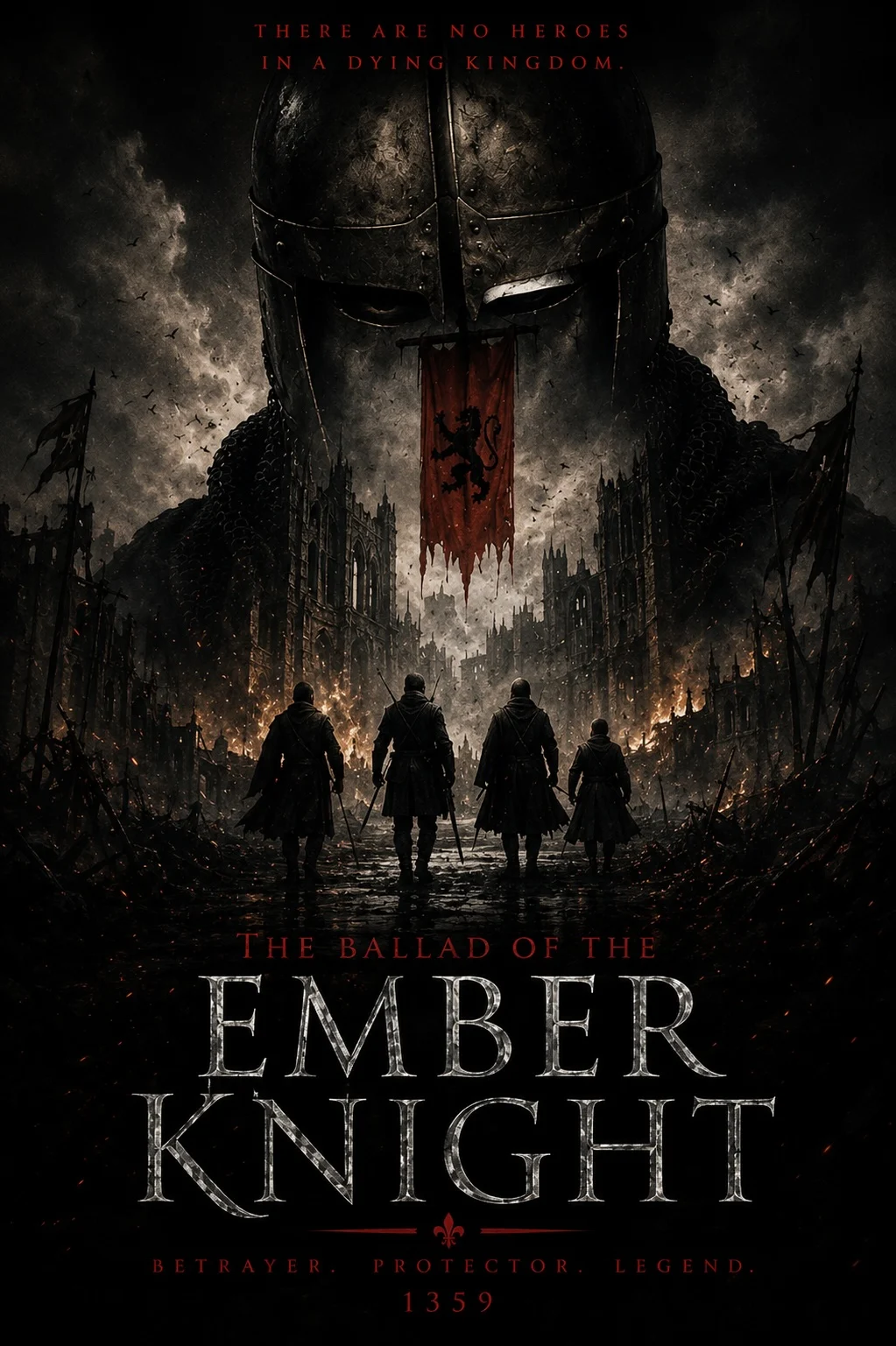
Main Facts: A Historic Screenwriting Milestone
In the hyper-accelerated media landscape of 2026, the unproduced spec screenplay operates under rigid industry laws. The absolute golden rule of modern screenwriting dictates a strict page count: 110 pages. Anything stretching past 130 pages is typically treated by Hollywood executives as a dead-on-arrival liability, discarded before the first act break due to presumed structural bloat and wandering focus.
Yet, against all conventional industry wisdom, an epic 186-page amateur script titled The Ballad of the Ember Knight has shattered these invisible barriers. Written by sibling writing duo Kieran and Brennan O’Dea, the gritty, 14th-century period-adventure has not merely secured a glowing review—it has bludgeoned its way directly into the elite "Top 25 Screenplay List" curated by industry critic and Scriptshadow founder Carson.
Set amidst the war-torn devastation of 14th-century France, the story follows a mysterious, disgraced knight on the run who reluctantly allies with a ragtag group of misfits to restore a shattered nation. Merging the grand, primal sweep of classic cinematic odysseys with a dark, uncompromising adult sensibility, The Ballad of the Ember Knight has reignited debates among filmmakers about pacing, scene construction, and the undeniable power of emotional sacrifice in storytelling.
Chronology: From a Desperate "Hail Mary" to Critical Glory
The journey of The Ballad of the Ember Knight to the upper echelons of screenwriting acclaim is a masterclass in persistence, structure, and high-stakes execution.
Phase 1: The Weight of an Impossible Page Count
For Kieran and Brennan O’Dea, shopping a massive 186-page manuscript presented an uphill battle. In an industry where executives suffer from acute attention fatigue, asking a professional reader to commit three hours to an unknown writer’s historical epic is a steep hill to climb. More importantly, Hollywood rejections rarely stem from a simple aversion to reading; they stem from the assumption that a writer penning a 186-page script lacks the discipline to streamline their narrative.
After meeting dead ends through traditional, unrepresented submissions, the O’Dea brothers sent the script to Carson as a literal "Hail Mary," paying for a professional script consultation. Due to standard consultation pricing rules—where every page past 130 incurs an additional fee—the massive manuscript arrived with fair warning of its daunting heft.
Phase 2: Entering the Dark World of 1359 France
Upon diving into the text, the initial dread of navigating a complex historical timeline, massive secondary character lists, and dense world-building quickly evaporated. The O’Dea brothers established an immediate, visceral grip on the reader by dropping them directly into the bleak reality of 14th-century France.
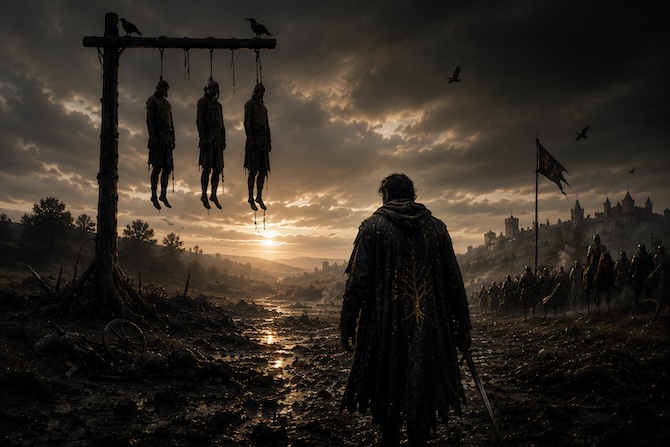
The narrative introduces its antihero, a filthy, rag-clad wanderer known only as "The Prisoner," who is desperately seeking to cross the border and escape a haunted past. When he checks into a rural inn, he overhears a sadistic royal, Sir Jean Devar, inform the innkeeper’s daughter, Marie, of his plans to assault her later that night. Though initially resolved to keep his head down and avoid detection, The Prisoner ultimately breaks. He storms the room, beats Devar to death, and inadvertently alters the geopolitical landscape of France.
Phase 3: The Gathering Storm and the Unlikely Fellowship
The fallout from Devar’s murder forces The Prisoner to steal the dead royal’s garments to bypass military checkpoints, unknowingly adopting the identity of one of the realm’s most reviled men. In doing so, he encounters young Thomas, Devar’s former squire who insists on serving him, and subsequently crosses paths with two cloaked monks fleeing assassins.
The younger monk is revealed to be Prince Charles, the sole surviving heir to the French throne, while the older monk, Bernard, serves as his protector. Realizing they need muscle to reach Avignon safely, Bernard hires The Prisoner and Thomas for five thousand gold pieces. Joined eventually by a bizarre local hermit who knows the secret backroads, the group embarks on a treacherous cross-country odyssey, hurtling toward a devastating confrontation when the young prince inevitably learns that his protector is the legendary "Ember Knight"—the very man rumored to have murdered his father and brothers.
Supporting Data: Structural Breakdown and Metrics of Success
To understand why The Ballad of the Ember Knight succeeds where countless other period epics fail, one must examine the fundamental mechanics of its construction.
| Metric / Parameter | Industry Standard Spec | The Ballad of the Ember Knight |
|---|---|---|
| Page Count | 110 – 120 Pages | 186 Pages |
| Setting | Contemporary / Familiar IP | 14th-Century France (Unfamiliar Historical Era) |
| Primary Arc | Localized / Static Environment | Geographic Odyssey (Hero’s Journey) |
| Inciting Cost | Low-stakes / Convenient Plot Points | High-Cost Sacrifice (Jeopardizing Escape) |
| Pacing Strategy | Rapid-fire Exposition & Movement | Deliberate Scene Milking & Tension Buildup |
The Power of Costly Heroism
A critical takeaway from the script’s success lies in how it handles character introduction and moral choice. Screenwriting guides often emphasize making a protagonist likable in their opening scenes. However, the O’Dea brothers elevate this rule by constructing a scene where the protagonist makes a choice that comes with profound personal sacrifice.
By murdering a high-ranking royal to save an innocent woman, The Prisoner actively sabotages his primary objective: remaining invisible and escaping the country. Amateur scripts frequently feature acts of heroism that cost the protagonist very little, flattening the dramatic impact. By making the rescue of Marie a direct threat to The Prisoner’s freedom and life, the writers forge an unbreakable bond between the audience and the character. Viewers do not just root for him; they become "ride or die" for him.
Weaponizing the Disguise
Another shining example of elite structural engineering in the script is how the writers utilize Roland’s disguise. Lesser writers employ disguises as convenient, consequence-free narrative cheat codes to fast-track characters past security checkpoints. The O’Dea brothers, conversely, weaponize the disguise by ensuring that the stolen uniform belongs to a universally hated rapist and tyrant. This clever choice turns a protective asset into a dangerous liability, repeatedly dragging the protagonist back into conflict and generating continuous dramatic friction throughout Act Two.
Official Responses and Industry Reception
While The Ballad of the Ember Knight has not yet been formally optioned by a major studio, its underground circulation within elite reading circles has sparked immediate speculation regarding its commercial future.
Industry analysts tracking the script’s trajectory have pointed out a stark reality regarding its adaptation potential: its page count and unfamiliar historical setting make it a difficult sell for traditional Hollywood studios constrained by box-office risk profiles and conventional runtimes.
"When a writer is ready... when they understand plotting, stakes, and the specific challenges of their story, none of the other stuff matters."
— Scriptshadow Review Excerpt
Instead, insiders suggest that streaming giants—specifically Netflix—represent the ideal landing ground for the project. Unburdened by traditional theatrical runtime limits and possessing the financial capital required to mount a large-scale, gritty historical period piece, a platform like Netflix provides the perfect ecosystem for a sprawling, character-driven epic.
Directors tracking the review have also noted a profound pedagogical lesson regarding scene execution. Traditional screenwriting orthodoxy preaches relentless momentum: get into a scene late, get out early, and push the plot forward. Yet, The Ballad of the Ember Knight demonstrates the rare confidence to "milk" a high-tension dramatic sequence. By allowing the confrontation between The Prisoner, Marie, and Sir Jean Devar to breathe, build, and saturate the reader with dread, the writers achieve a rich textual texture that rapid-fire exposition could never replicate.
Implications: A Return to the Adult Epic Odyssey
The unexpected triumph of The Ballad of the Ember Knight carries broader implications for the future of speculative screenwriting and cinematic tastes.
For decades, the cinematic landscape has been dominated by localized franchises—the Matrix sequels, Harry Potter wizarding hubs, and Avatar planetary strongholds—where characters rarely embark on vast, geographically punishing journeys. The foundational blueprints for the classic cinematic hero’s journey remain anchored to generational touchstones like the original Star Wars and The Lord of the Rings.
However, modern adult audiences frequently find contemporary attempts at these genres overly juvenile or sanitized. The Ballad of the Ember Knight proves that an appetite still exists for a mature, morally grey, high-stakes adventure tailored for adults who grew up on classic fantasy and space operas but demand the raw grit and psychological complexity of contemporary prestige television.
Ultimately, the script’s ascension into the Top 25 serves as an encouraging reminder to unproduced writers everywhere: rules regarding page counts and genre trends are ultimately secondary to the fundamentals of masterclass storytelling. When a script features a beloved protagonist, a high-stakes mission, relentless narrative conflict, and emotional weight, page counts cease to be an obstacle—they become an immersive invitation.
